
If you live in Europe, then chances are that last week was very hot for you, record-breakingly so. The UK broke its own highest June temperature record three days in a row and almost half of Europe’s 850 largest cities endured the most severe combination of heat and humidity on record for June.
There’s been a lot of media coverage about the heatwave, and rightly so; however, one aspect that has been overlooked is the impact that heatwaves have on farmed animals. A huge part of the problem is that the data on the number of animals dying in heatwaves is limited due to it being an issue that is given very little consideration. That being said, it was reported that millions of chickens died on UK farms during a heatwave in 2022.
While it is hard to find an abundance of reporting on the impact that last week’s heatwave had on animals, Reuters reported during the heatwave that it was responsible for killing hundreds of thousands of chickens in France. Since then, it’s becoming clear that those numbers were likely an underestimate. In the French region of Brittany, rendering facilities used to discard the carcasses of animals who have died on farms became overwhelmed by the unprecedented number of dead farmed animals they were being given to render. The company who owns the rendering facilities stated that mortality rates during the heatwave were six to seven times higher than during normal temperatures.
This led to farmers burying dead pigs and chickens on farms; in fact, the regional branch of the Ministry of Agriculture in Brittany estimates that 5000 tons of animal carcasses have been buried, meaning millions of chickens and tens of thousands of pigs are likely to have died due to the heatwave. This is not even going to represent the full impact of the heatwave, although it gives a pretty clear indicator that we’re talking about a staggeringly high number of lives, especially when considering that it will most likely be a similar story across many countries in Europe.
One thing that definitely doesn’t help draw attention to this important issue is when people try to claim that animals have better legal protections than humans, an extraordinary claim that was made by the British radio presenter James O’Brien during his LBC radio show:
‘There are legal limits on the temperature in which cattle can be transported. Legal limits. If you’ve got a lorry full of cattle, if the temperature exceeds a certain threshold, you’ve got to get them off the lorry. You can’t transport them until things have cooled down a bit.
There is no such thing for humans. There is no maximum workplace temperature.’
Yes, that’s right – if only humans were given the same rights as animals who are being transported to slaughterhouses to be killed.

Strangely, even though there are apparently laws around the temperature that animals can be transported in, UK government figures show that thousands of animals died during summer 2025 while being transported. One reason for this is that it is not actually technically illegal to transport animals in high temperatures, instead it is government guidance to not do so. This is why the government page on transporting animals in extreme temperatures states ‘you should not transport animals in temperatures over 30°C’, rather than ‘you must not transport animals in temperatures over 30°C’.
A driver could in theory be prosecuted for transporting animals in extreme temperatures if it was ruled that he had broken broader animal welfare laws around suffering and harm, but the idea that animals are strictly protected from extreme temperatures is as absurd as it is ignorant. Again, thousands of animals died last year while being transported, how many of those drivers have been punished for breaking animal welfare laws?
For those of us who know what animal farming is really like, we know that even the laws should be taken with a pinch of salt, as not only are animal welfare laws routinely broken, but there’s no accountability when they are. Case in point, routine tail docking of piglets has been illegal in the UK since 2006, yet as many as 85% of piglets in the UK still have their tails cut off each year. A law is only as good as its enforcement, and in the case of animal welfare laws, calling the enforcement of them an abject failure would be too high a compliment.
So, contrary to what James O’Brien decided to tell his listeners, cattle aren’t taken off lorries and allowed to relax and cool down if a legal threshold is reached. How would that even practically work anyway? Do we have designated cattle-cooldown spots across the UK where the animals are brought into luxurious air-conditioned barns where farmers hand feed them bunches of grapes until the temperature cools down?
Even if the legal protections he claimed existed did, what exactly would that prove? There is a huge difference between a lorry filled with cattle being transported to slaughterhouses to be killed, and a bus or train with humans on their way to work. If you don’t think there’s a difference, just ask yourself: ‘Which situation would I rather be in?’
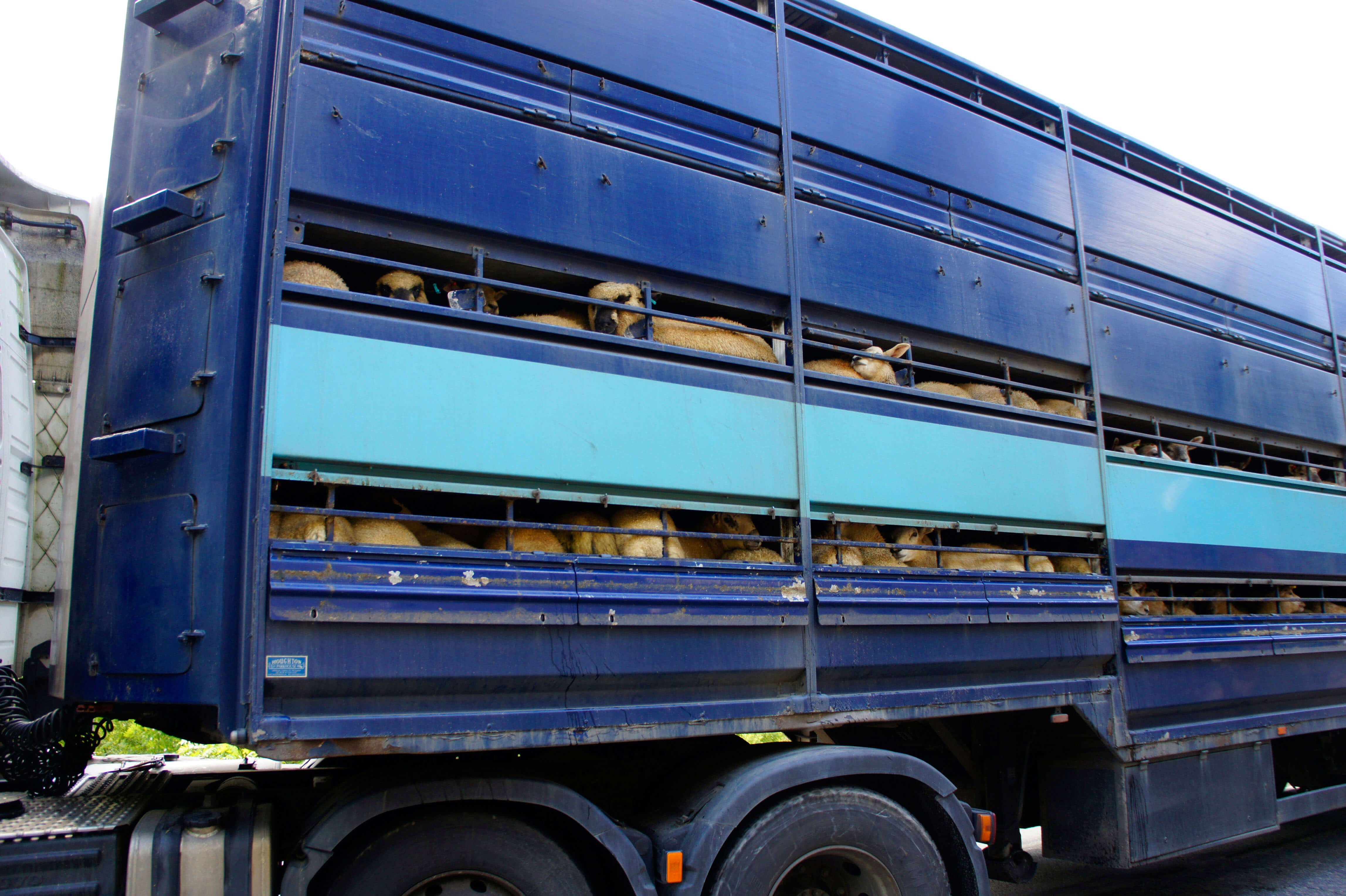
That being said, humans do suffer during heatwaves too. For example, I have seen videos and read reports of bus drivers in London suffering from heat stroke and being forced to get out of the bus to cool down because the heat has made them very unwell. Clearly this is unacceptable and better protections for humans do need to be implemented, but the insinuation that during heatwaves animals are treated more ethically and humanely than humans is a gross distortion of reality.
I also find the implicit overtures of what James is saying really telling: even cattle are given legal protections. Humans must really be being exploited if even cattle aren’t legally allowed to travel in these temperatures. How about instead of pitting working people against animals, we instead highlight who we should really feel animosity towards, which is the lobbyists, fossil fuel and animal agriculture executives, and politicians – not animals who are about to have their throats cut.
Of course, one thing that James also fails to mention is that if an animal dies due to the heat on the way to the slaughterhouse, they can no longer be butchered and sold for human consumption. During heatwaves, animals may be transported in lorries with air cooling or during cooler periods of the day, but only because slaughterhouses want to make sure the animals aren’t dead before they have the chance to kill them.
Of course, it’s not just farmed animals who suffer during heatwaves, wild animals also suffer from heat stroke and dehydration. Last week, the heatwave led to wildlife centres becoming overwhelmed due to the number of wild animals being brought to them for care. Heatwaves also impact companion animals, with reports documenting how vets had to provide emergency care to cats and dogs last week.
Another aspect that has been overlooked is the impact that animal farming has on the climate. While the heatwave has brought attention to the impact of climate change and has renewed calls for more to be done, reporting on animal farming during the heatwave has focussed more on how farmers are adapting to the heat, as opposed to the role the farmers have in actually creating the heat.
So, rather than trying to make out that cattle have more rights than humans during a heatwave, let’s instead spend that time acknowledging the impact that heatwaves have on animals, as well as the role that animal farming has on creating heatwaves in the first place.
No posts
Comments
Nothing yet. Say the first thing.
Sign in to join the conversation.