
Welcome to the [🌎] newsletter, a space that arises from the desire to put into words the pains, rages, charms, and yearnings that shake our minds-hearts as we engage with this/these world(s). Here, we will share news, content, and questions revolving around issues of justice, more specifically, climate justice. Enjoy!
⚠️ALERT PLANET! A TERRICIDE is being carried out. Forest fires in South America are not natural and unleash an environmental emergency.
"Terricide is a transversal concept, a synthesis of genocide, ecocide, epistemicide, and feminicide. It is the systematic extermination of all forms of tangible and spiritual life" Indigenous Women for the Buen Vivir
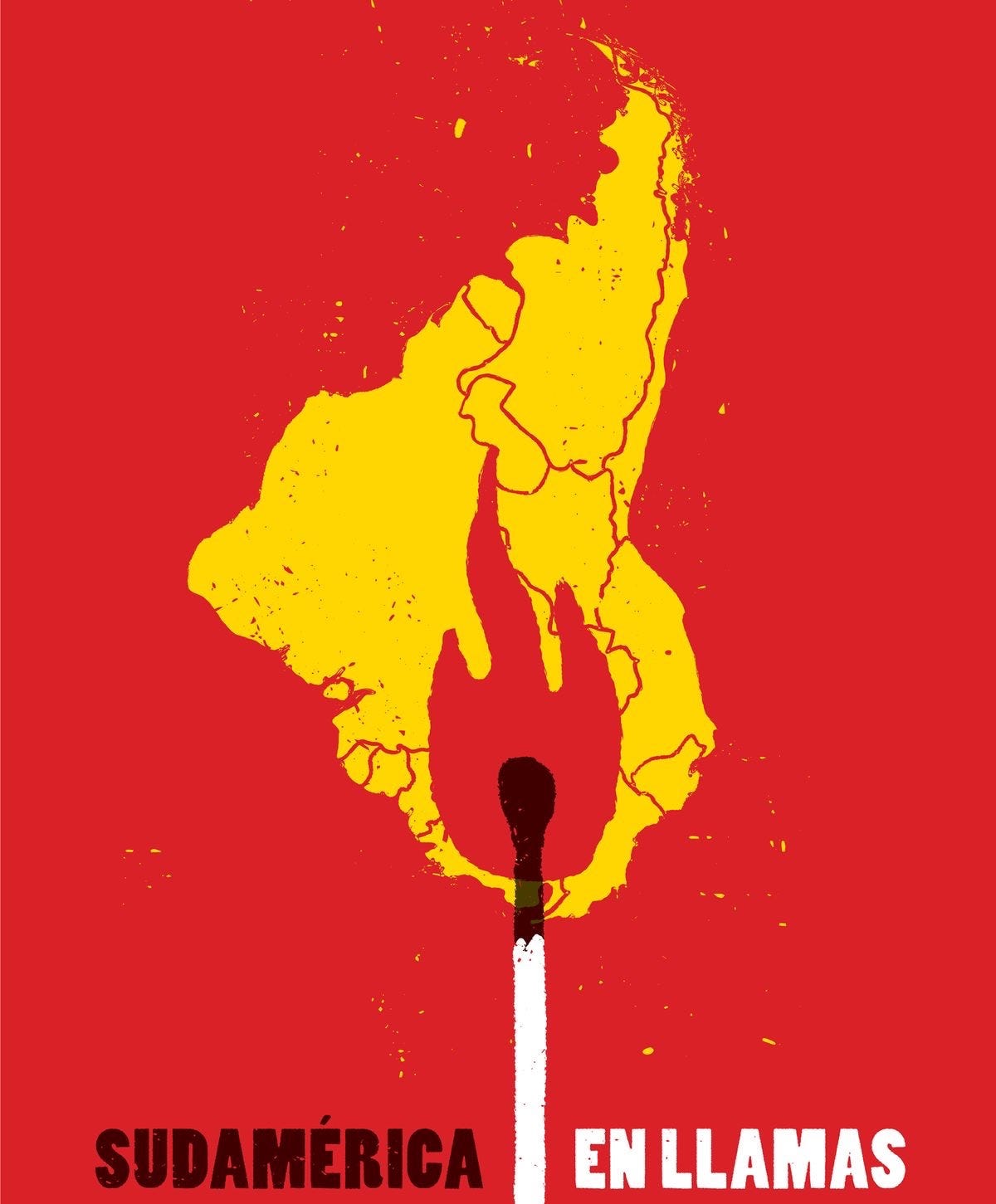
This last month, there has been a record number of fires in the region, with several million hectares burning in the rainforests of the Amazon and in various ecosystems that extend over entire countries in the Southern Cone.
It is estimated that more than 15 million hectares have been burned.
Most of the fires occur in ancestral territories of indigenous peoples, leaving thousands of families affected who have lost their homes, crops, and sources of life and work. In addition to millions of animals that have lost their homes and lives in the fire.
Although fires have intensified due to global warming and extreme water scarcity, they are neither accidental nor isolated incidents. Agribusiness and real estate speculators deliberately encourage them to boost profits at the expense of the environment. Complicit governments not only fail to allocate funds to fight fires but also ensure impunity for those responsible.
The fires are the manifestation of the dispute over territory. The capitalist model, in pursuit of 'development,' is sweeping through territories, deepening its extractive logic. In Bolivia, Peru, Paraguay, Brazil, Ecuador, and Argentina, the fire clearly demonstrates the destruction caused to benefit private interests.
The climate crisis affects the entire planet, but its impacts are not uniform; they inflict more severe damage and losses on communities already facing daily inequalities. The most vulnerable communities are those who suffer the most from extreme events and those who have the least tools to deal with it.
In Latin America, the panorame is alarming and requires analysis that prioritizes social justice alongside ecological concerns. It is crucial to explore why an environmental and political perspective on the fire situation in the region is relevant.
Why do we say that all fires are and will be political?
For you to take a dimension of the numbers, 10 hectares is equal to 24.7 football fields.
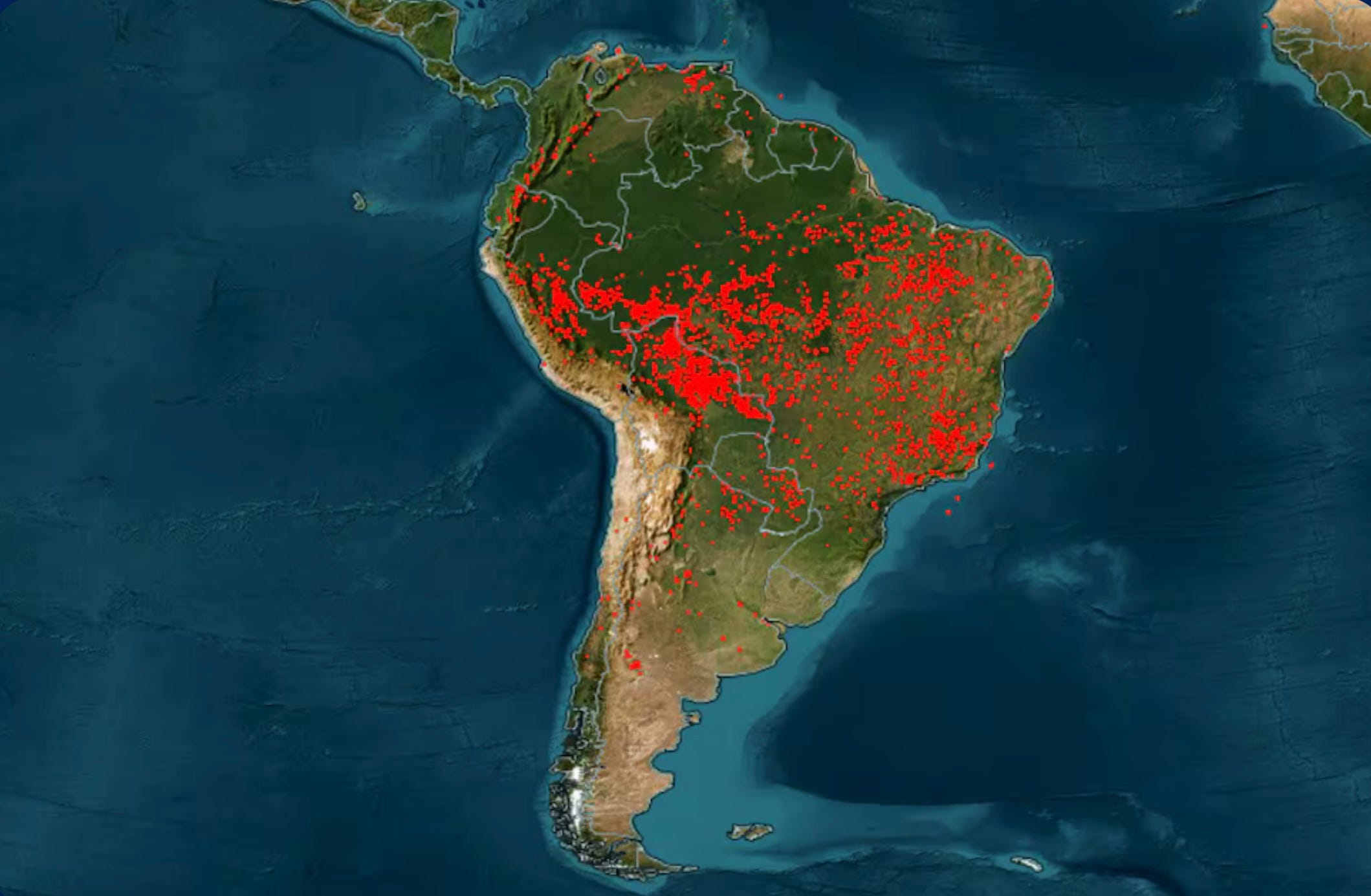
In the case of Brazil, 206,000 fires were recorded between August and September, and 11.9 million hectares were devastated by flames in the first eight months of this year, half of which were in the Amazon.
More than 4 million hectares have burned in Bolivia since the beginning of the burning season. The most severe fires are concentrated in the east, in the Chiquitania region, bordering Brazil. Firefighters ask for more international help because the means are insufficient.
The Government of Peru announced that it would declare an emergency in the regions of San Martín, Ucayali, and Amazonas to facilitate the mitigation of forest fires, which, in the case of the latter, is "difficult" for aircraft to enter to extinguish the fire from the air due to the complicated atmospheric conditions. According to the National Institute of Civil Defense, Peru has 34 active and 21 controlled fires out of a total of 234 fires registered so far this year, while the number of victims rose to 20 dead and 140 injured.
Fires are intensifying in Argentina. In the last week, the flames have devoured more than 50,000 hectares and there are still several active outbreaks.
"We know that fire is the fastest tool for demantling and then installing real estate projects, agro-industrial mining, or the highways themselves. After the fires, comes all that" Nicoles Tyler of the Chiviquin and Fuegas brigades, Córdoba, Argentina
Ecuador has been burning for three months with an increase in outbreaks of 160%. At the same time, the ravages of the drought are aggravated by power cuts of up to 14 hours and drinking water restrictions. So far this year, the fires have devoured 38,542 hectares of forest, and the authorities have declared a red alert in almost the entire territory.
In the face of so much despair we must ask ourselves, who will saves us? And I can only find answers in an old saying, "Only the people will save the people."
In times of environmental collapse, it is essential to develop strategies for cooperation between humans and the more-than-human world. Today, the priority is to develop/practice the "art of living on a damaged planet" and to develop new techniques, skills, and tools to heal and build habitable worlds on an increasingly broken planet. (Svampa)
The magnitude of the fires and the abandonment of governments have driven communities to organize themselves and resist to exist. More and more neighbors are becoming forest brigade members. They are not firefighters, nor do they belong to the civil defense service; they are community forest brigade members (with a significant presence of women) who actively fight the fires. They prepare collaboratively, building logistics, support, and accompaniment networks. For example, in Córdoba, Argentina, a group of women formed a feminist collective of forest brigade members called Fuegas. They put their bodies on the line every day to confront the fires. The brigades are structured in a chain: some prepare the necessary equipment to fight the fire, while others head to the hotspots to extinguish it, and those who remain at the base receive the brigade members upon their return
"Suddenly we arrived at a place, literally, where the people were not represented before. Where our eyes were not, nor our understanding nor our voices. We then realized that the brigades are a form that acquires resistance to that model." Victoria, Brigadier.
I don’t want to fall into romanticism, but I must remind you that there are other ways of living and resisting. Not everything revolves around the market, individualism, and the ambitious selfishness that leads us to believe in the mantra of "save yourself if you can." The continuity of life lies in those spaces of mobilization and struggle that operate outside capitalist logic, generating a collaborative agenda that gives rise to new trades, new ways of inhabiting the earth, and new hermandades (sisterhoods/brotherhoods) and social capacities. Despite the destructive power wielded by those carrying out the terricide, we cannot overlook the vital importance of solidarity and cooperation networks in the face of disaster, reinforcing the certainty that another world is possible.
No posts
Comments
Nothing yet. Say the first thing.
Sign in to join the conversation.