
At Earth Hope, we share stories of environmental progress to inspire action. The current media landscape fails to elevate stories of solutions and progress, leading to the misimpression that “nothing is being done.” In fact, millions are working for a better planet, and we can each join in these efforts. We already have the solutions to solve our most pressing problems. Here are a few stories that demonstrate our abilities to turn the tide.
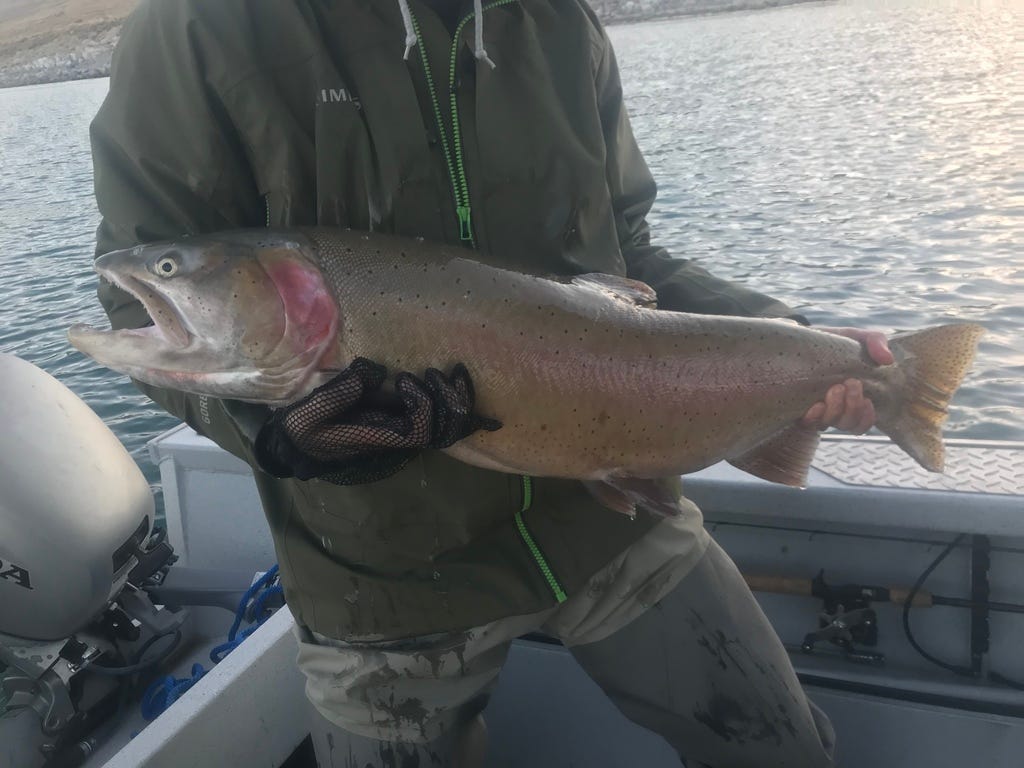
When I was a cub reporter at Lake Tahoe in the early aughts, there was a legend about an enormous trout that used to live in the lake, which could be scooped up by the thousands from the rivers, a nearly unlimited bounty that fed both Native Americans and settlers. But this 40-pound fish had vanished decades ago. There were whispers that the Lahontan cutthroat trout had been discovered again in a remote creek and would make a comeback, but at the time it seemed to be the stuff of myth, dreams, and hyperbole.
Myths and legends no more, Lahontan cutthroats live in Lake Tahoe again.
In June, the Washoe Tribe released 2,000 Lahontan cutthroat trout into Lake Tahoe — North America’s largest alpine lake — as part of ongoing reintroduction efforts that began in 2019. The tribe is restoring Meeks Meadow on Lake Tahoe’s north shore by removing trees that are starving the meadow of water, in hopes of increasing the amount of water flowing in Meeks Creek, a traditional spawning ground for the trout.
The Lahontan cutthroat is by far the largest inland trout species in the world, growing to over 40 pounds (18 kilograms). It evolved in the landlocked rivers and lakes of the northern Great Basin. By 1940, due to dams, overfishing, and its young being eaten by non-native fish, it disappeared from Lake Tahoe and Pyramid Lake, as well as the Truckee River, which connects to the two lakes, where it previously spawned by the thousands. It was considered extinct for 40 years until a remnant population was discovered in the Pilot Peak Mountain Range along the Utah-Nevada border. Four fish ladders along its migration routes above Pyramid Lake have vastly improved its survival. Learn more in the video below:
Oregon’s Fender's blue butterfly was considered extinct for 70 years. Now, there are 17,000 to 29,000 fluttering around the Willamette Valley at any point in time. The butterfly was rediscovered in 1989, when only 3 acres of its host plant, wild Kincaid’s lupine, remained. Inmates planted seedlings. Tribes lit prescribed fires. Landowners cut down fir trees to restore sunny prairie. Agencies pulled weeds. More than 3,000 acres of habitat were restored. And the butterflies multiplied.
This is how it’s done, folks! Please read this beautifully written essay in The Revelator:
So now, here they are. We see them lapping up nectar from the furry throats of wild iris. We find their eggs on the undersides of Kincaid lupine leaves. Butterflies gather to lick the mud. There are thousands, and it’s all because young acronym-agency scientists teamed up with landowners to save them. I know that this is so.
A family of six beavers welcomed three babies in the Wyre Forest, where they were released in 2024 to restore wetlands and prevent flooding, the BBC reports.
Puffins are among the 400,000 seabirds that have flocked to Lundy Island off England’s southwest coast after rats were eliminated. This year marks the highest number of birds counted since the 1930s, People Magazine reports.
Conservationists expect an “explosion of wildlife” after restoring the “wiggle” in the River Kent in Shropshire, the BBC reports. The river had been straightened in the 1800s and disconnected from its natural floodplain, which reduced biodiversity.
Dr. Peter Jones has earned the nickname “The Bogfather” for his efforts to restore peatlands in Wales to fight climate change, the BBC reports.
Dartmoor Zoo is helping restock wild populations of the back-veined white butterfly, which was considered extinct for 100 years, the BBC reports.
Storks have nested at an industrial park outside the Knepp Estate, the BBC reports. This marks the first time the birds have expanded outside of Knepp, a famed rewilding project that brought storks back to England in 2016 after a 600-year absence.
And … there’s never a bad time for a puffin photo.
The Guardian captures how a relationship “issue” turned into a tree-planting project that spans Costa Rica’s Pacific coast, has engaged schoolchildren and tourists, and seen the return of monkeys, squirrels, and other wildlife. The work is made possible by decades of the country’s pro-environment laws. Don’t miss the before/after shots!
The project has transformed deforested Pacific coastlines into thriving ecosystems through a community-driven environmental project that has planted more than 100,000 native trees across 34 beaches, reviving wildlife habitats and combating decades of deforestation from cattle farming.
The Great Cubung Swamp, home to thousands of waterfowl in eastern Australia, is recovering after decades of logging and cattle grazing. The Nature Conservancy transferred 81,500 acres (33,000 hectares) of the wetland into indigenous hands in early 2026, Oryx reports.
Burrowing bettongs have been released beyond a fenced-off, predator-free area in New South Wales to see how they fare against predators, ABC reports. These rabbit-sized marsupials were preyed upon to extinction by cats and foxes on the Australian mainland but survived on outlying islands. They dig extensive burrows that aerate soil and support many other species.
Over 20,000 seabirds can nest in peace following drone-led mouse eradication at Browse Island off Australia’s coast, reports Australian Geographic. Several species of sea turtles also nest on the island.
Australians have begun receiving three hours a day of free solar power, reports Renew Economy. Yes, that’s right, free. Got a battery, anyone?
Nine female white rhinos have been transferred from South Africa to Mozambique’s Zinave National Park, Mongabay reports. The rhinos join black rhinos, hyenas, zebras, leopards, and elephants that were reintroduced to the 1,580-square-mile (4,000-square-kilometer) park since the end of a civil war that had decimated the country’s wildlife.
African countries are building more solar and wind power projects than fossil fuel plants, reports The Associated Press.
Illegal fishing dropped in Tanzanian waters after patrols led by women and communities, reports Mongabay.
Four African marine protected areas were recognized as “durable, equitable, and effective” at the Our Ocean conference in Mombasa, Kenya, in June, reports Mongabay.
PAID SUBSCRIBERS: I’m working on something exciting. Check out a sneak peek at your paid subscriber page, Eyes on Beauty, as well as some photos from my recent adventures. I appreciate all of you! You are building Earth Hope!
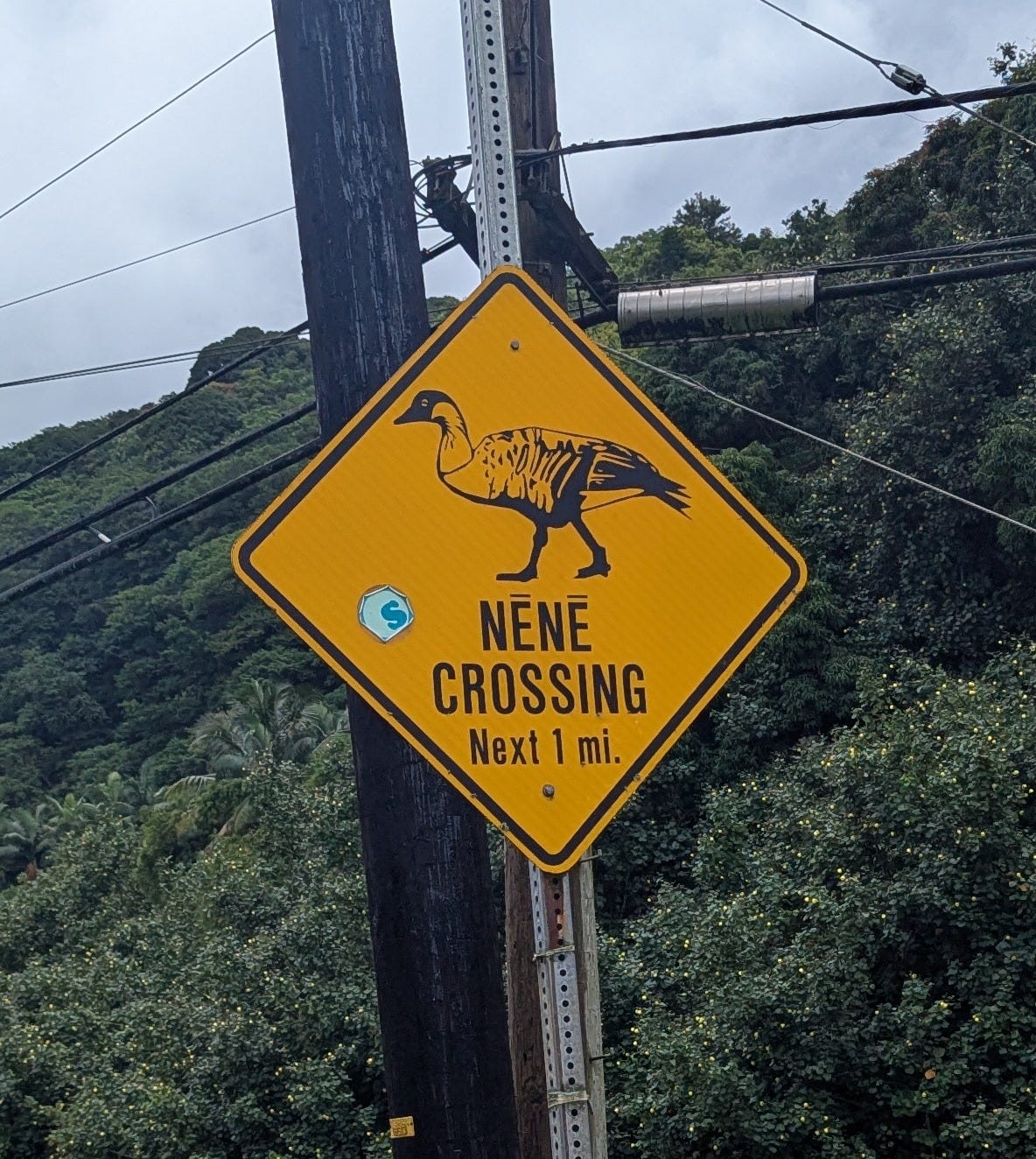
I was so thrilled to learn through the comments that fellow Substack creators Mike Shanahan and Sally Morgan have cared for nēnē in the UK. Thank you both! Another comment allowed me to discover that the nēnē is named for the gentle sound it makes, which to native Hawaiians resembled a chirping cricket or murmuring infant.
Earth Hope is a solutions-based journalism project that highlights environmental success stories to inspire action. I’m Amanda Royal, a former newspaper reporter and current eco-news junkie. Read more about this project and what inspired it. I aggregate news under my “hopeful headlines,” conduct original reporting and interviews, and share occasional personal narratives. Visit earthhope.substack.com for more stories. To understand why I write about hope, please read “As I went down in the river to pray …”
Comments
Nothing yet. Say the first thing.
Sign in to join the conversation.