
This collection of environmental success stories and solutions includes news from around the globe, from China to Australia, Los Angeles to New Zealand, and Africa to British Columbia. Turns out, when we innovate, protect, and restore, it’s only natural for cats to have kittens, fish to swim up rivers, mangroves to grow back, and whales to pop up where they haven’t been seen in decades.
A large survey of the ocean’s coral reefs shows vast swaths that could withstand climate change, reports Inside Climate News. Read the scientific paper and view the global map.
In a landmark study unveiled Tuesday, scientists have identified more than 64,000 square miles of coral reefs they believe have the potential to endure future warming. Spanning 71 countries and 100 territories, these resilient reefs make up roughly a third of the world’s reef systems.
“Coral reefs are often framed as ecosystems beyond saving,” said Emily Darling, a co-author of the study and director of coral reefs at the Wildlife Conservation Society. “Our research shows that there are three times more reefs that may be capable of surviving the climate crisis than previously thought.”
A rare *Eastern* North Pacific right whale was spotted in British Columbia waters last week, only the seventh sighting ever. What’s more, the whale was a juvenile, a sign that this population of about 30 whales is still reproducing.
These whales are usually found near the Bering Strait and Gulf of Alaska. They are so rare that very little is known about them, including where they give birth, where they migrate, and what is now impacting their population. Right whales were once the most hunted of all whale species.
In California, deer are already using a wildlife bridge over a crash-prone highway, though it will not be complete until fall, reports Accuweather. In Colorado, the first elk have been seen crossing a newly constructed wildlife overpass, reports the Denver Gazette.
Road crossings worldwide are allowing animals to migrate, saving human and animal lives, and reducing collision costs, Ben Goldfarb reports in an in-depth piece for Mongabay. Structures run the gamut from complex, multimillion-dollar highway overpasses to simple rope bridges that cost a few hundred dollars.
Decades of research have proved that wildlife crossings, in combination with roadside fences, can both protect animals from deadly collisions and reconnect shattered ecological corridors. Now, conservationists and governments around the world are planning to install them to save biodiversity from the ravages of highways.
With sufficient investment, “we could solve this problem in a generation,” says Renee Callahan, executive director of ARC Solutions, a group that studies and advocates for wildlife crossings.
SOUTH AMERICA: Amazon deforestation in Brazil falls to lowest level since 2014, reports Rhett Ayers Butler.
USA: Virginia nonprofits are restoring the state’s lost longleaf pine trees, one seed at a time. After logging to fuel industrialization, only 200 of the trees remained by the 1990s. Now, 200,000 seeds are being sown across southeastern Virginia.
AFRICA: A ‘symphony’ of wildlife suggests carbon financing is working in Sierra Leone, reports Mongabay. (Carbon financing is a controversial practice whereby polluters like oil companies pay to fund nature-based solutions to climate change like forest restoration.)
“We see that if it’s done well, carbon financing initiatives do have the capability to protect both biodiversity, beyond just habitat, and carbon markets,” [conservation biologist H.S. Sathya Chandra] Sagar says.
Scottish wildcats have been born in Cairngorms National Park for the third year in a row, according to the Royal Zoological Society of Scotland (RZSS). The wildcat, known colloquially as the “Highland Tiger,” was considered extinct in the wild by 2019 due to hybridization with domestic cats. Captive-bred cats from zoos have helped reestablish wild populations, while communities have been encouraged to keep feral domestic cats spayed and neutered.
“There is so much anticipation when you first suspect there have been kitten births,” said Louise Hughes, Saving Wildcats field operations manager. “It is a truly exciting event and seeing kittens on trail cameras really lifts the whole team and spreads a genuine buzz throughout the many communities across Scotland that support wildcat restoration.”
California has paid to return 450 acres to the Mechoobda Tribe near Chico. The privately held land was purchased and transferred to the tribe as part of a new tribal stewardship policy and as a way to further the state’s 30-by-30 goals, a global initiative to protect and restore 30 percent of land by 2030. The tribe plans to increase wildfire resilience and salmon habitat, as well as reestablish cultural and ceremonial relationships with the land.
A coalition of Maine conservation groups purchased 3,400 acres from a timber company for $1.9 million and has returned it to the Mi’kmaq Nation, reports the Portland Press Herald. The property contains forest, wetlands, and three miles of trout-filled creek.
[The land transfer] is the sixth to be completed in a series of projects spearheaded by the commission that are collectively known as the tributary land returns. The tributary returns comprise 52,000 acres in 11 discrete projects involving all five tribal governments in Maine at an estimated cost of $52 million.
Mangrove forests are healing after decades of human destruction, reports BBC. These ecosystems can sequester five times as much carbon as land-based forests. They also stabilize coastal regions and feed millions by providing nurseries for sea life.
[A] new study shows that since 2010 the world has been gaining more mangroves than it has been losing - driven by stronger legal protections and increased public awareness of their importance, sparked by disasters such as the 2004 Indian Ocean tsunami.
The researchers say the key factor … is the remarkable capacity of these forests to regenerate naturally once humans stop chopping them down.
Related story by Mongabay: In Indonesia’s Lombok, fishers find food security tied to mangrove reforestation
Related story by Guinness World Record: Tree lover takes second record in Kenya after planting over 45,000 mangroves in one day
In case you missed it, Sam Matey-Coste and I talked a lot about mangroves during our recent chat about progress in Africa. Check out his visit to the EarthLungs mangrove replanting site in Kenya at his “Voyages” page.
Forever chemicals have dropped up to 74 percent in seabird eggs on Canada’s Bonaventure Island after American regulations curtailed the use of the chemicals, according to a recent study.
A rat sighting in New Zealand can trigger an urgent response to protect the island’s iconic birds, reports The Guardian. The country aims to get rid of all invasive predators like rats, stoats, weasels, ferrets, and possums by 2050. Residents of Wellington are enjoying the calls of endangered birds in their own backyards.
The blue-fronted lorikeet has been spotted in Indonesia for the second time in one hundred years, reports Reuters.
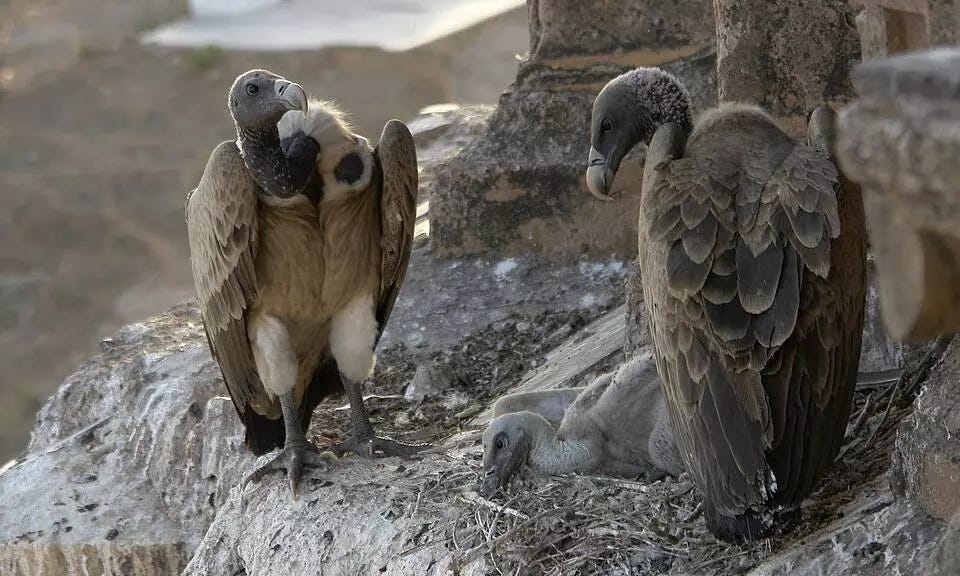
Over 700 Indian vultures will fly free over four states after captive breeding, reports The Federal. Indian vulture numbers plummeted in the 1990s due to the use of an anti-inflammatory drug in cows. Their numbers have stabilized since the drug was banned for use in animals in 2006.
Chinese scientists found over 50 endangered green sea turtles in seagrass beds of Huangyan Dao lagoon in the South China Sea, reports the Global Times. And about 100 green sea turtles are residents of the San Gabriel River in Los Angeles, reports California Curated:
“It really is shocking. It’s surprising, magical, and surreal all at the same time,” says Davis. It turns out these animals travel thousands of miles across the Pacific to find refuge in one of the last places you’d expect: the concrete waterways of Los Angeles.
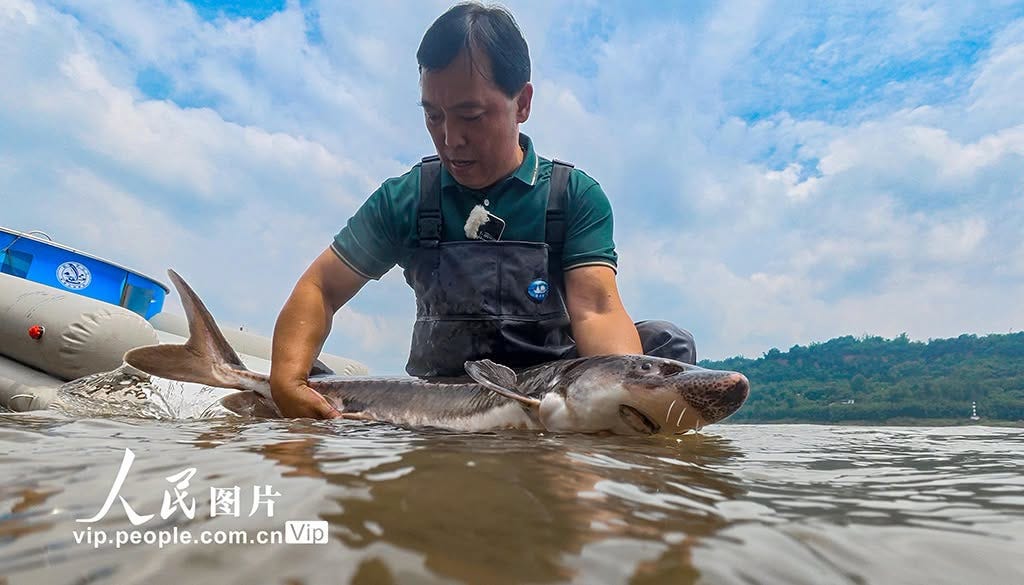
Over 25,000 captive-bred sturgeon were released into the upper reaches of the Yangtze River in China’s Sichuan province in June, reports the People’s Daily. The Yangtze River sturgeon was declared extinct in the wild in 2022, but dam removals, habitat restoration, and reintroductions have produced great results. In April, sturgeon were documented spawning in the river for the first time in 23 years.
Twenty platypuses are swimming in Australia’s oldest national park after reintroductions that began in 2023, reports Mongabay. Platypuses had been absent in the area for over 50 years. They are ecosystem engineers who dig extensive burrows used by many other species.
And last but not least, from California, High Country News has a great write-up about the curious comeback of Putah Creek’s salmon, written by Ben Goldfarb and quoting Andrew L. Rypel. Thousands of king salmon migrate up this once dried-up and dead creek each year, thanks to a couple of decades of litigation, restoration, and good old gravel and water. Read Earth Hope’s story on the same topic here: “This is how you save a river.”
Earth Hope is a solutions-based journalism project that highlights environmental success stories to inspire action. I’m Amanda Royal, a former newspaper reporter and current eco-news junkie. Read more about this project and what inspired it. I aggregate news under my “hopeful headlines,” conduct original reporting and interviews, and share occasional personal narratives. Visit earthhope.substack.com for more stories. To understand why I write about hope, please read “As I went down in the river to pray …”
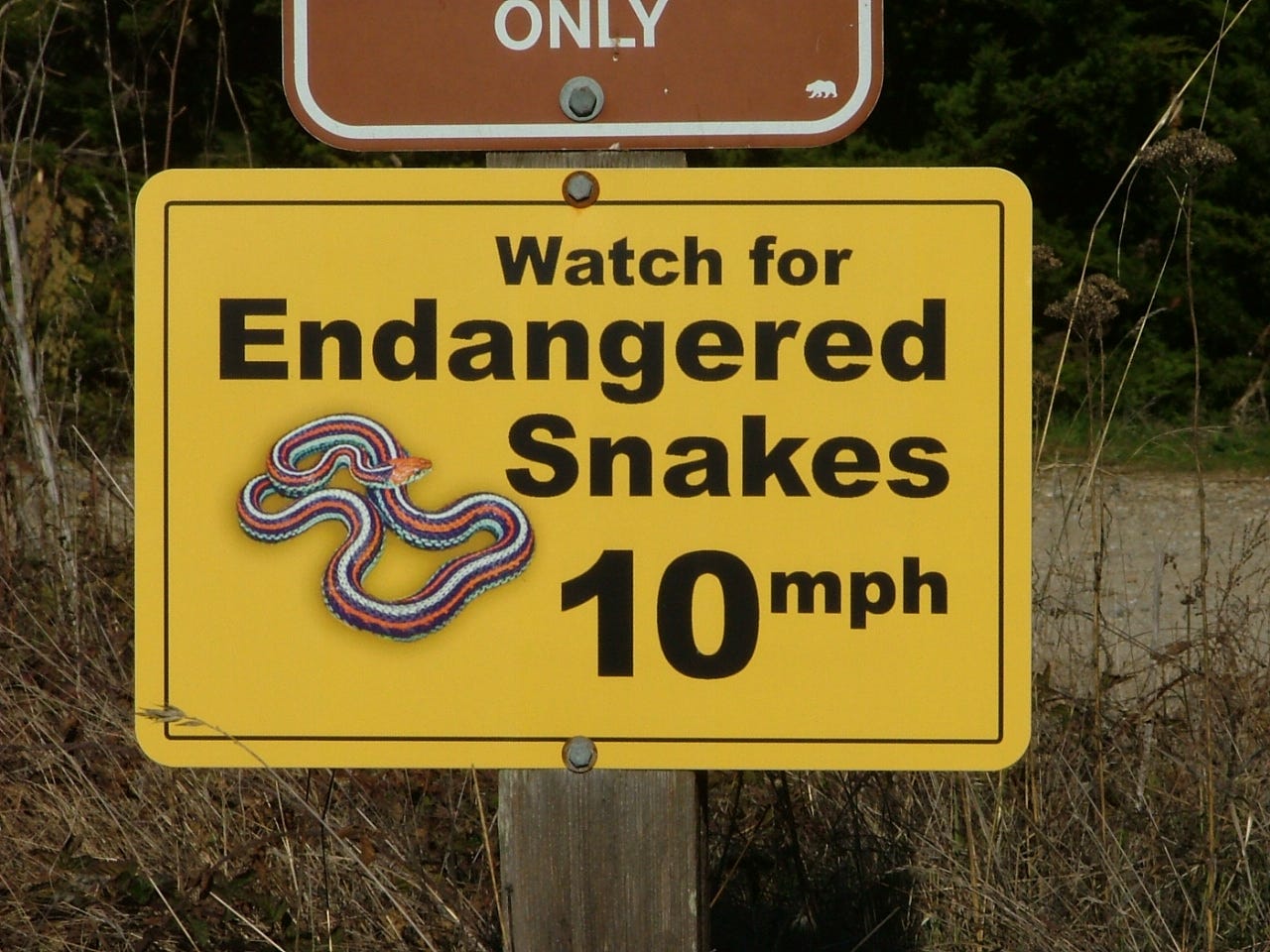
Here’s a crossing sign courtesy of Melissa Amarello. Thank you, Melissa!
Comments
Nothing yet. Say the first thing.
Sign in to join the conversation.