
The everyday future opportunity, wellbeing, and security, of people in all nations is at stake in the COP30 round of UN Climate Change negotiations, now ongoing in Belém, Brazil. Due to decades of inaction, the community of nations will need the Belém negotiations to:
deliver upgraded, economy-wide national climate-resilient development strategies,
find ways to activate local economies,
leverage climate-smart trade and vulnerability-sensitive debt relief, and
establish a new standard for international cooperation that supports better outcomes for all.
Read policy notes, COP30 dispatches, and resilient prosperity insight briefs on the Climate Value Exchange page for COP30 news and activities.
The global climate challenge is defined in the 1992 UN Climate Convention: “prevent dangerous anthropogenic interference with the climate system”. Now that we are living with intensifying climate impacts, adaptation and resilience measures are part of the project of climate rescue.

Multilevel clean economic development strategies are pointing the way to a future in which:
innovation builds value by eliminating pollution;
finance learns to value and protect nature, ecosystems, watersheds, and public health;
trade agreements will be designed to ensure more people benefit in ways that do not produce far-reaching preventable harm.
By Dr. Michael Terungwa David
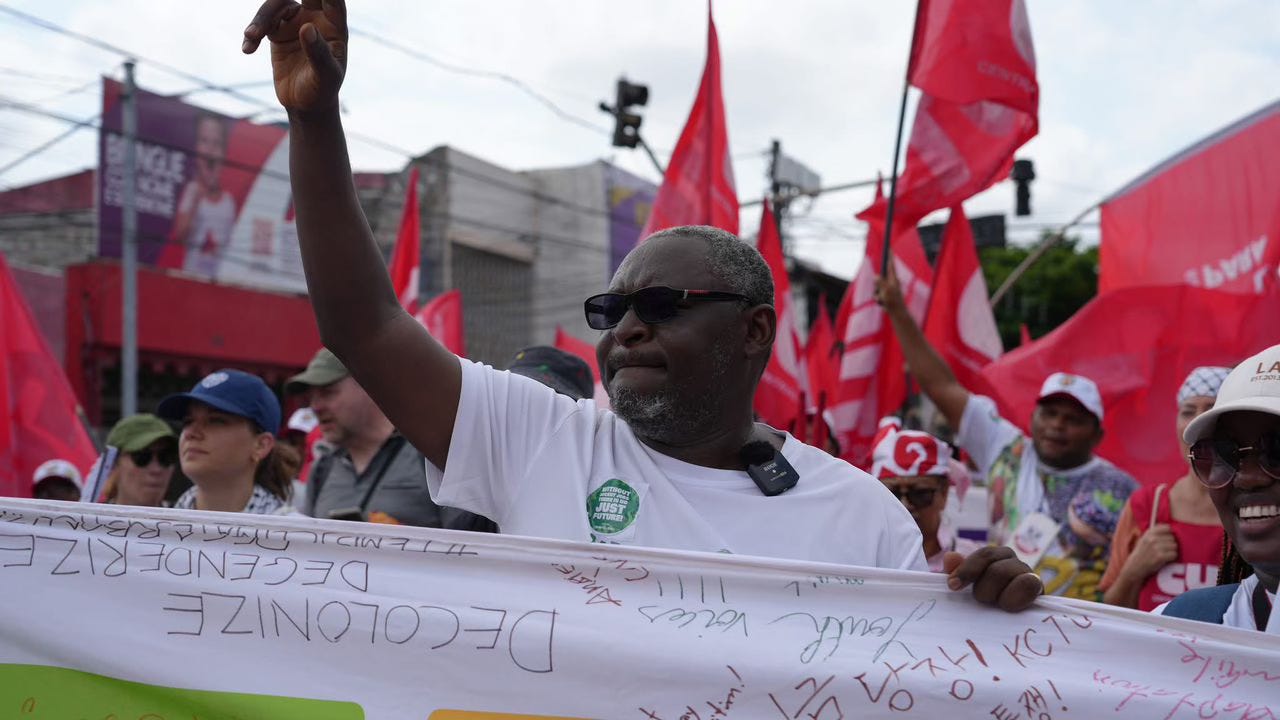
There’s a saying that you can tell how good the weekend will be from Thursday. After Week 1 at COP30, it’s clear that progress is limited and ambition is worryingly low. This has many advocates asking whether the COP30 was designed to fail. While there has been a lot of energy put into parallel programs and promising initiatives, it is unclear whether there will be global consensus in support or such efforts, or whether new NDCs will be substantially stronger.
Useful, actionable, and mutually understood adaptation indicators are needed at the global level. But indicators alone won’t be enough. Meaningful financing and support must follow—the sooner, the better. A strong COP30 outcome on adaptation finance and a decisive review of National Adaptation Plans (NAPs) will be essential to ensure developing countries can implement climate-resilient pathways at the pace and scale required.
If your highest aspiration is easy to achieve, you are less likely to make transformational change. On an individual level, such easy asks can keep things comfortable, so long as all of the necessary conditions for comfort happen to hold together. Industrial climate disruption has taken away that option. Planetary vital signs are flashing red. We need to organize around a shared mission that is something more than “solve climate change”.
To empower people across the diverse range of human experience, to adapt successfully, and to prevent danger and establish conditions for successful climate-resilient development, the zero harm standard must begin to play a constant role in the work of imagining the best possible future and working toward it, together.
We are moving into a time of persistent food cost pressure. Human health and wellbeing are severely impacted by unsustainable food systems—both by scarcity-inducing land use activities and by chemical inputs into food production and processing. Non-communicable diseases take more than 40 million lives per year, and diets are the primary cause.

Food systems are the biggest reservoir of poorly spent money, which can be reallocated to the same primary purpose (food access and availability), while generating valuable co-benefits that reduce risk, build resilience, and add value across the economy. A shift to diets that are healthy for people and for the planet could radically transform the way investment returns are measured and prevent destabilizing ripple effects.
RELATED
Comments
Nothing yet. Say the first thing.
Sign in to join the conversation.