
SLOAI is now a full member of the European AI Forum
EAIF Members Join the European Commission's AI Act Advisory Forum
EAIF Response to the European Commission’s Call for Evidence
Demand for AI Sovereignty Summit
Dystopian scenario Europe 2031
France Update: A Month Focused on AI Innovation and Digital Sovereignty
Save the Date — 12th EAIF Annual Conference · 29 September 2026 · Brussels
Updates from EAIF member countries
Editor's Picks:
The European AI Forum continues to grow as Europe's national AI ecosystems become increasingly interconnected. This week, Slovenia's AI association, SLOAI, officially joined the Forum, bringing another vibrant community of founders, engineers, researchers, and innovators into the pan-European network. With members now representing more than 3,000 companies, startups, research institutions, and AI experts across the continent, the EAIF is strengthening its role as the collective voice of Europe's AI ecosystem in Brussels. SLOAI's accession reflects a broader trend: national AI communities are recognising that the future of European AI policy—and Europe's competitiveness—will be shaped not by individual countries acting alone, but by coordinated collaboration across borders.
The European Commission has unveiled the members of the new AI Act Advisory Forum, a key body established under Article 67 of the AI Act to support the implementation and enforcement of Europe's landmark AI legislation. Selected from more than 700 applicants, the Forum brings together 174 experts and organisations from industry, academia, civil society, startups, and SMEs to advise both the Commission and the AI Board on technical, regulatory, and standardisation challenges. Among the selected organisations are several members of the European AI Forum, including the European AI Forum (EAIF) itself, the German AI Association (KI Bundesverband), the Artificial Intelligence Association of Lithuania, and the Czech Association for Artificial Intelligence. Their appointment ensures that the practical perspectives of Europe's AI ecosystem—from startups to national AI communities—will help shape how the AI Act is implemented over the coming years.
Europe's AI future may hinge less on the AI Act than on a quieter piece of legislation: the Copyright in the Digital Single Market (CDSM) Directive. In a newly submitted position paper to the European Commission, the European AI Forum argues that Europe's biggest obstacle is no longer the absence of AI rules, but the legal uncertainty surrounding how copyright law applies to AI training. Rather than calling for a wholesale rewrite, the Forum proposes targeted clarifications—from confirming that text and data mining exceptions cover the entire AI training pipeline to standardising copyright opt-out protocols and creating a clearer bridge between the CDSM Directive and the AI Act. The message is straightforward: Europe does not need more regulation—it needs regulation that is coherent, operational, and predictable enough for startups and researchers to innovate without navigating 27 different interpretations of the same law.
Europe’s AI dependency problem is no longer theoretical. The European AI Forum argues that the recent U.S. directive restricting foreign nationals’ access to Anthropic’s most advanced models demonstrates how quickly access to critical AI capabilities can be altered by decisions made outside Europe. The organization contends that AI has become strategic infrastructure, comparable to other technologies subject to export controls, and warns that governments, businesses, researchers, and operators of critical infrastructure cannot assume continued access to frontier AI systems developed abroad.
In response, the EAIF is calling for an immediate AI Sovereignty Summit bringing together European institutions, industry leaders, security authorities, and infrastructure operators to create a binding action plan for European AI development. Its proposals include significantly increasing investment in European frontier models, conducting dependency audits across public-sector systems, prioritizing sovereign AI and cloud solutions in procurement, and ensuring sensitive government AI applications remain under European control. The central message is clear: Europe must move from discussing AI sovereignty to actively building it.
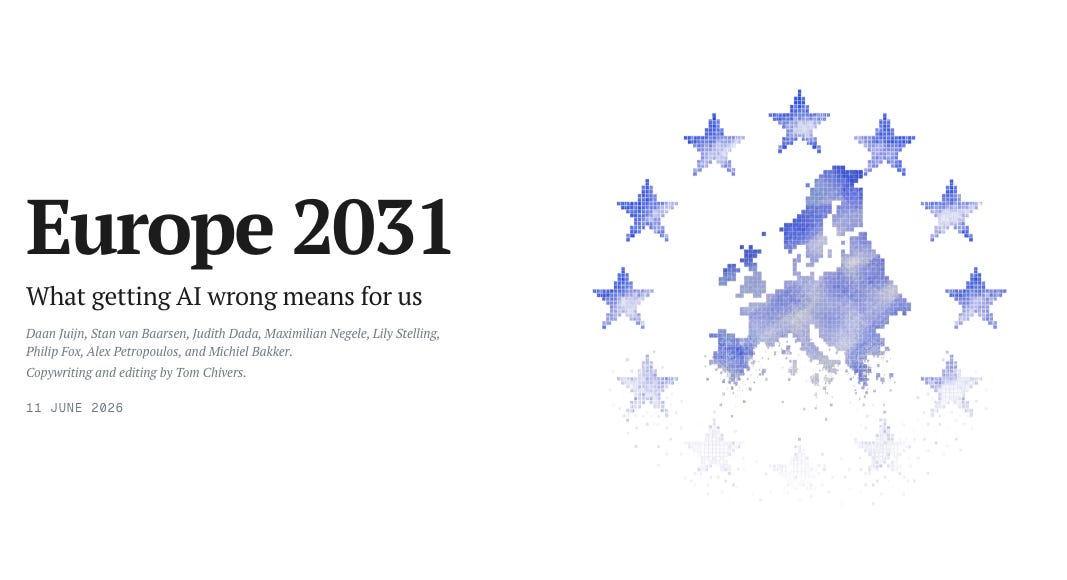
A new collaborative scenario from European AI experts Daan Juijn, Stan van Baarsen, Judith Dada, Maximilian Negele, Lily Stelling, Philip Fox, Alex Petropoulos, and Michiel Bakker (with copywriting and editing by Tom Chivers) delivers a sobering warning about the continent’s trajectory. Told through the eyes of Caroline Dubois, a French policy officer in Brussels, and Christian Vogt, a German AI founder who relocates to Silicon Valley, Europe 2031 traces how early missteps in 2025—underestimating the pace of American progress, celebrating Chinese open-source models as proof of catch-up potential, and relying on aspirational funding announcements instead of real capital and infrastructure—snowball into a decade of stagnation. By March 2031, Europe finds itself caught between superpowers, economically sidelined, and politically unable to shape its own future.
The project is not fatalistic. Published on 11 June 2026, it serves as an urgent wake-up call from practitioners deeply embedded at the intersection of frontier AI and European policy. The current trajectory of AI demands the most ambitious political agenda in post-war European history. Without massive, coordinated investment in compute, talent retention, energy, and innovation now, the Union risks losing the ability to fund its social model, defend its values, and hold together as a bloc. Europe 2031 is essential reading for anyone who wants the continent to retain real agency in the century of intelligence—before the window closes.
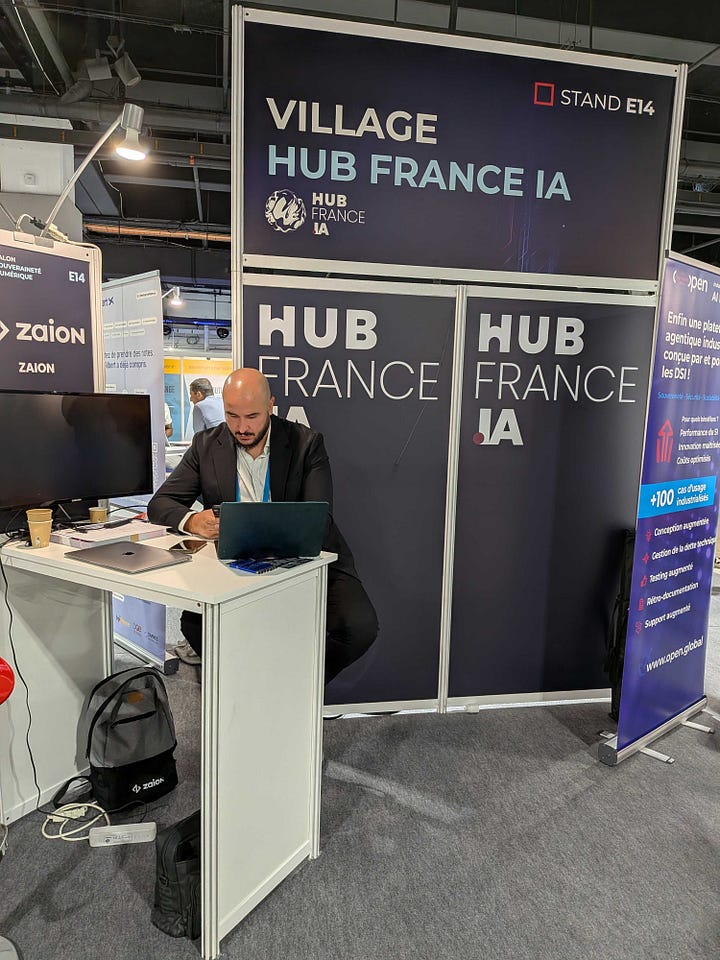
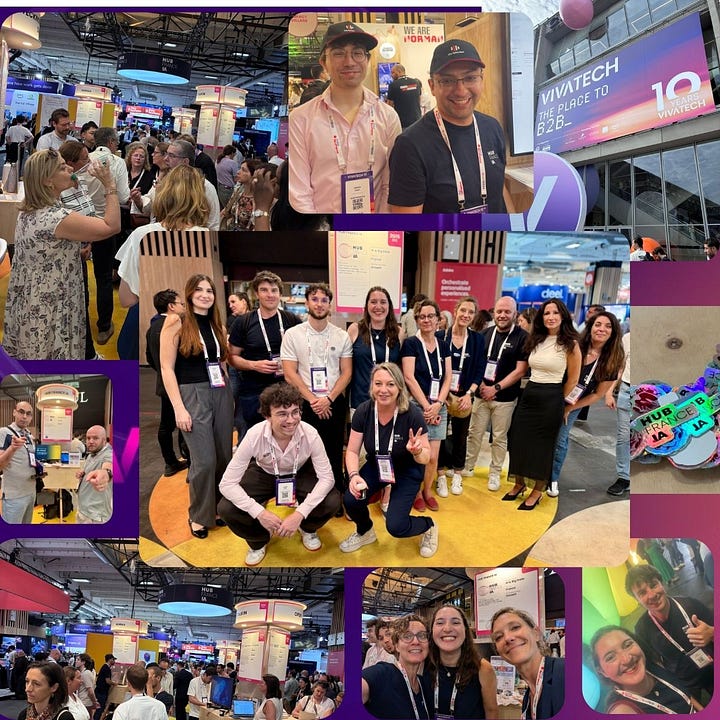
June has been a particularly exciting month for the French AI ecosystem. Viva Technology 2026 once again confirmed its position as Europe’s leading innovation event, bringing together thousands of startups, investors, corporates and policymakers from around the world. Hub France IA was proud to host its AI Village, showcasing 15 French AI startups and presenting several European initiatives, including LLM-BRIDGE, AI-on-Demand (DeployAI), CYBIAH, AI Factories to the 200000 and more visitors of the event. We were also delighted to meet several delegations and some EAIF members throughout the event, including AI Sweden, KIB (the German AI association) and the Digital Osservatori with the European Digital Tech Watch highlighting the growing strength of our European AI community.
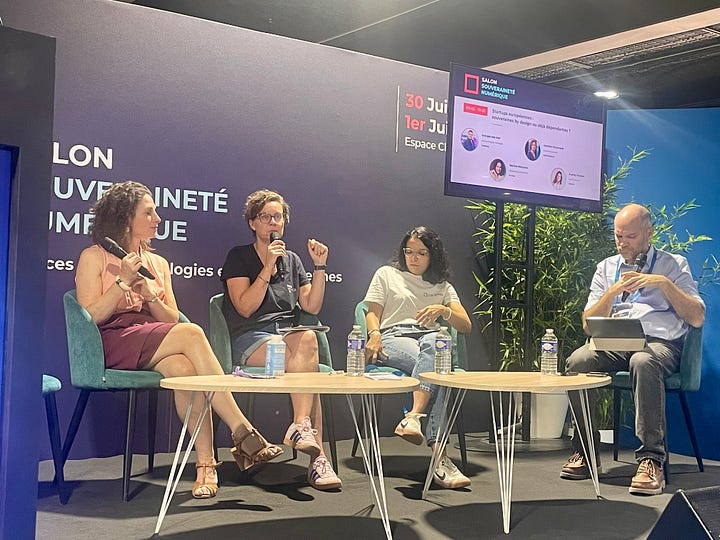
Beyond VivaTech, Hub France IA is also supporting the Digital Sovereignty Forum, taking place in Paris on 30 June – 1 July 2026, under the patronage of Anne Le Hénanff, French Minister Delegate for Artificial Intelligence and Digital Affairs. The event brings together public authorities, industry leaders, researchers and innovators to discuss Europe’s digital sovereignty, trusted AI, cloud infrastructure, cybersecurity and strategic technologies, with the ambition of strengthening Europe’s technological autonomy and competitiveness. Hub France IA is proud to contribute to this initiative and to promote a strong, collaborative European vision for trustworthy and sovereign AI by supporting and taking part to the panels organised during the event.

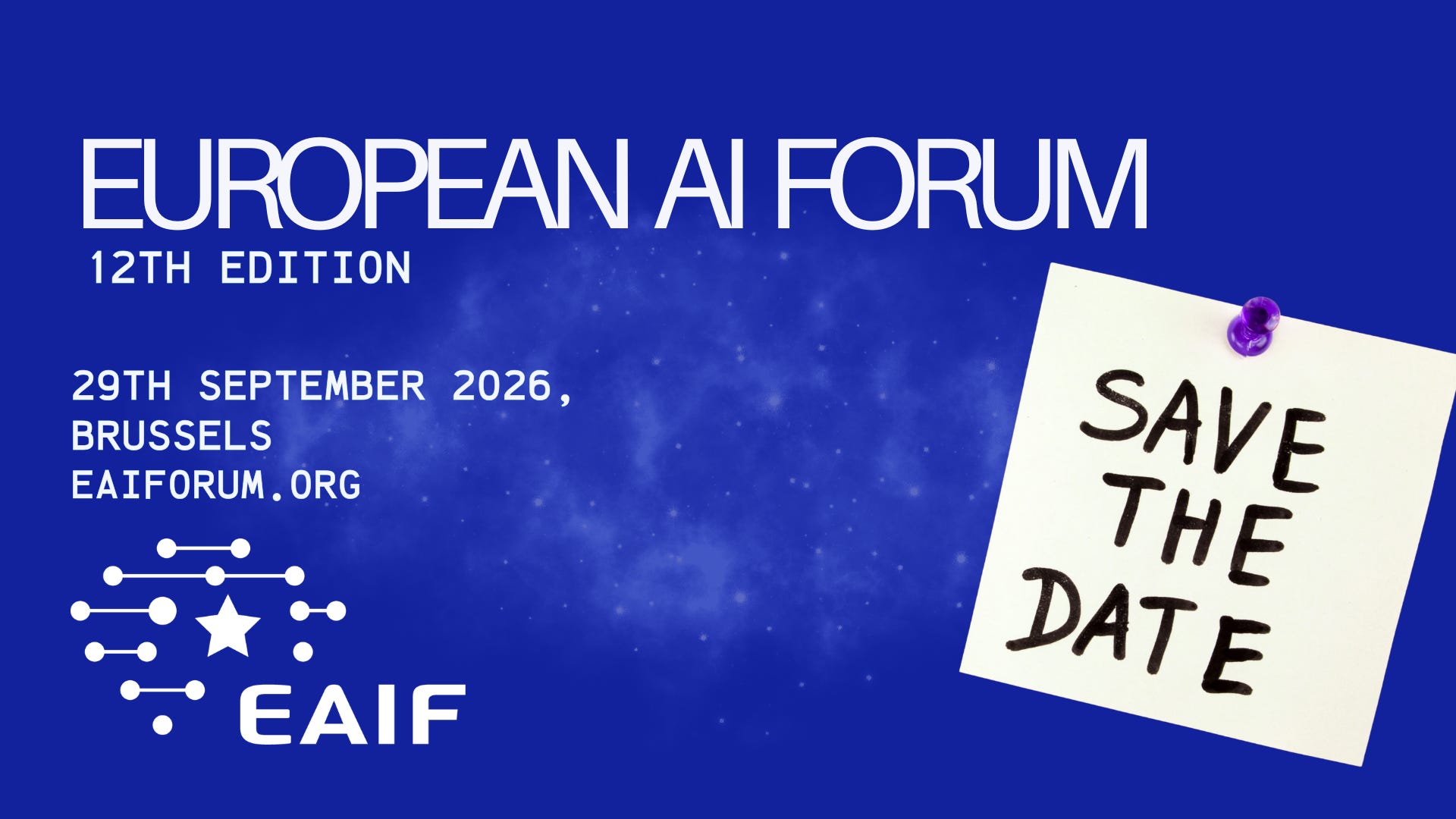
Mark your calendars: on 29 September 2026, the European AI Forum will bring its annual conference to Brussels, convening national AI associations, policymakers, researchers, and industry leaders from across Europe. More than another conference, the event has become one of the continent's key meeting points for shaping AI governance, exchanging ideas on the implementation of the AI Act, and strengthening cross-border collaboration within Europe's AI ecosystem. As debates over competitiveness, regulation, and technological sovereignty continue to intensify, this year's gathering promises to be an important forum for aligning policy with innovation—and for ensuring that Europe's AI future is built collectively, not in silos.
🇦🇱Albania:
Albania Signs the Council of Europe’s Framework Convention on Artificial Intelligence
28DIGITAL announced expansion into Albania with startup incubation and AI innovation programmes as part of its five-year strategy.
🇦🇹 Austria:
Mistral AI acquires Emmi AI (Linz; industrial/physics AI) – Valuation up to ~€330M.
AI:AT promoted an €8.4M national call for Hybrid AI and Green AI projects.
🇧🇬 Bulgaria:
🇨🇿 Czech Republic:
🇭🇷 Croatia:
🇫🇷 France:
Comand AI raises €32M; PROPHESEE €20M; Undo €31M (AI software engineering).
France designates defence AI a core national security interest
VivaTech 2026 took place in Paris on 17–20 June, with AI and startups as a major focus.
🇩🇪 Germany:
GITEX AI Europe made its debut in Berlin (30 June–1 July), bringing together AI companies, startups, investors and policymakers to discuss sovereign AI, generative AI and AI infrastructure.
Germany continued preparations for EU AI Act implementation, including national governance and compliance guidance for businesses.
German AI startups continued benefiting from EU innovation funding through EIC Accelerator and Digital Europe programmes during June.
🇬🇪 Georgia (Georgian Artificial Intelligence Association):
28DIGITAL announced AI innovation pilots and startup ecosystem development in Georgia through cooperation with UNIDO.
🇱🇹 Lithuania:
Lithuanian organizations continued participating in Digital Europe Programme AI projects supporting AI deployment, advanced digital skills and European Digital Innovation Hubs.
🇳🇱 Netherlands:
Law, AI and Regulation Conference (Rotterdam) – EU AI Act focus.
Dutch AI companies demonstrated enterprise AI solutions and AI agents during Money20/20 Europe.
🇵🇱Poland:
AI Could Boost Poland’s Economy by Up to 12% by 2035, New World Bank Group Report Finds
BGK/Vinci invests $11M in ElevenLabs + launches AI Lab Poland for ecosystem support.
🇷🇸Serbia:
Serbian SuperPlane Raises €2.28M to Put AI Agents in Charge of Production Infrastructure
AI as Political Theatre: Serbia’s Embrace of New Tech Lacks Legal Guardrails
🇸🇮Slovenia:
5th National AI Conference “From Vision to Trust” (hybrid, government-organized).
Slovenian European Digital Innovation Hubs participated in the EDIH Summit 2026 (9–10 June), focusing on AI adoption, AI Act implementation, SME support and Europe's AI innovation ecosystem.
28DIGITAL announced a five-year expansion strategy including AI and innovation pilot programmes in Slovenia in partnership with UNIDO .
🇸🇪 Sweden:
Have news to share: newsletter@eaiforum.org
Editor: Linas Petkevičius, PhD
Contact: info@eaiforum.org
Website: eaiforum.org
LinkedIn: linkedin.com/company/eaiforum
Transparency register: 144475251095-14
Comments
Nothing yet. Say the first thing.
Sign in to join the conversation.