
A quick reminder: The archive now holds 945 research studies across 28 categories and it grows every single week. If you have a question about endurance training and what research is available on a particular topic, there’s a good chance you can find something relevant in the archives.
Heat acclimation duration needed to raise athletes’ heat tolerance
Sleep deprivation shifts fuel use toward fat oxidation
Creatine timing does not matter for resistance training gains
Mental fatigue reduces volume in low-intensity strength sessions
Using simulation blocks to prepare for a multi-stage trail race
Study date: May 2025
Heat acclimation protocols are well established for improving performance in hot conditions, but how they shift the actual environmental limits an athlete can tolerate, and how quickly, has been less precisely quantified. In this study, the authors set out to “quantify the effect of heat acclimation (HA) on critical wet-bulb globe temperature (WBGTcrit) and rate of rectal temperature change (vTre)”.
STUDY INTERVENTION
28 non-acclimatised participants were assigned to a heat acclimation group (15) or a control group (13).
The heat acclimation group completed a controlled hyperthermia protocol in hot, humid conditions (35°C, 65% relative humidity) for 5 to 9 days, reaching a core temperature of approximately 38.5°C for 60 minutes each session.
Progressive heat stress tests were performed before acclimation, after 5 and 9 days of acclimation, and 4 to 8 days afterwards, with the control group completing two tests around 13 days apart without heat exposure.
KEY RESULTS
Critical wet-bulb globe temperature increased after 9 days of heat acclimation but not after 5 days.
No effect of heat acclimation on the rate of rectal temperature change was found during the acclimation period itself.
The rate of rectal temperature change was reduced once a recovery period followed the completed 9-day protocol.
AUTHORS’ CONCLUSION
More than 5 days of heat acclimation are required to meaningfully raise the critical environmental temperature limit.
A period of recovery following 9 days of heat acclimation appears necessary to reduce the rate of core temperature rise during subsequent heat exposure.
RESULT CONFIDENCE
Participants were non-acclimatised but not necessarily endurance athletes, so findings may not fully generalise to already heat-adapted competitors.
PRACTICAL TAKEAWAY
This study showed that heat acclimation needs more than 5 days, and closer to 9, to raise the critical environmental temperature limit an athlete can tolerate, and that a recovery period afterwards further reduces the rate at which core temperature rises during subsequent heat exposure.
My recommendation for athletes preparing for a hot-weather event is to plan a heat acclimation block of at least 9 days rather than a shorter protocol, and to schedule a short recovery period between the end of acclimation and competition rather than racing immediately afterwards.
This doesn’t mean a shorter block is wasted if 9 days isn’t feasible: other research shows even 4 days of heat acclimation can improve hot-weather performance through reduced perceived exertion and thermal discomfort, without any measurable change in physiological markers. A short protocol won’t shift the critical environmental limit measured here, but it can still make a hot race feel more manageable when a full block isn’t possible.
RELATED RESEARCH
Study archive: Heat - ACCLIMATION
Prolonged heat acclimation and aerobic performance in endurance trained athletes
Hematological adaptations to prolonged heat acclimation in endurance-trained males
Study date: Jun 2026
Sleep loss is known to impair athletic performance broadly, but its specific effect on which fuel the body burns preferentially during exercise has been less clear. In this study, the authors set out to “examine the effects of one night of total and partial sleep deprivation on substrate utilization during a maximal fat oxidation test”.
STUDY INTERVENTION
32 recreationally trained adults (16 female, 16 male) completed a randomised, counterbalanced crossover study across three sleep conditions.
Conditions were normal sleep (8 hours), early sleep deprivation (4 hours) and total sleep deprivation (0 hours), each followed by an incremental cycling test.
Maximal fat oxidation, maximal carbohydrate oxidation, Fatmax and energy expenditure were measured during each incremental test.
KEY RESULTS
Total sleep deprivation increased maximal fat oxidation by 9 to 16% compared with the other two conditions.
Maximal carbohydrate oxidation decreased by 14 to 15% after total sleep deprivation compared with normal sleep.
Resting heart rate and systolic blood pressure both increased by around 5 to 6% after total sleep deprivation, alongside greater subjective fatigue and perceived exertion.
AUTHORS’ CONCLUSION
One night of total sleep deprivation shifts exercise substrate use towards greater fat oxidation and lower carbohydrate use.
This shift occurred without any change in Fatmax or overall energy expenditure during exercise.
RESULT CONFIDENCE
Only a single night of sleep manipulation was tested, so effects of repeated or chronic sleep restriction, more common in athletes during heavy training blocks, remain unclear.
PRACTICAL TAKEAWAY
This study showed that a single night of total sleep deprivation shifts the body towards burning more fat and less carbohydrate during exercise, alongside higher resting heart rate, blood pressure and perceived exertion.
My recommendation for athletes is not to view this substrate shift as a useful or exploitable adaptation: it comes bundled with markers of physiological strain and increased perceived effort. Protecting sleep before key sessions and races remains the priority over any incidental change in fuel use and in general greater carbohydrate oxidation for shorter, more intense efforts should improve performance.
This finding shouldn’t be read as evidence that sleep loss is metabolically neutral, let alone beneficial. Other research pooling 69 publications shows sleep loss consistently impairs performance across all exercise categories, with evening efforts hit hardest, and a single night of total sleep deprivation has separately been shown to reduce muscle protein synthesis and disrupt the hormonal environment. The shift toward fat oxidation observed here sits alongside these costs, not instead of them.
RELATED RESEARCH
Study date: Jun 2026
Creatine monohydrate (CrM) is one of the most well-supported supplements for improving resistance training adaptations (see my article on creatine supplementation), but whether the timing of ingestion around a session matters has remained untested. In this study, the authors set out to “compare the strategic ingestion of CrM before or after resistance training sessions compared to a placebo on body composition and performance”.
STUDY INTERVENTION
27 trained young adults were assigned to one of three groups (creatine before training, creatine after training, or placebo) over a 16-week resistance training programme.
Each active group consumed 5g of creatine monohydrate at their assigned timing on training days.
Body composition, limb muscle thickness and muscle performance were assessed before and after the programme.
KEY RESULTS
No differences were found between creatine-before, creatine-after and placebo groups for body composition.
Limb muscle thickness increased similarly across all three groups.
Muscle performance measures showed no meaningful difference between groups by supplement timing.
AUTHORS’ CONCLUSION
Creatine ingestion timing relative to resistance training, whether immediately before or immediately after, made no difference to body composition, muscle thickness or performance outcomes.
The overall supplementation protocol did not enhance muscle growth or performance beyond resistance training alone in this trained population.
RESULT CONFIDENCE
The sample was small (27 participants) split across three groups, limiting power to detect modest timing effects.
PRACTICAL TAKEAWAY
This study showed that taking creatine monohydrate immediately before versus immediately after resistance training made no difference to body composition, muscle thickness or performance over 16 weeks.
My recommendation for athletes is to stop worrying about precise timing relative to a session and instead prioritise consistency. Take creatine at whatever time of day is easiest to remember and stick to daily, since timing around the workout itself does not appear to be the lever that matters.
If athletes see little benefit from creatine, timing around training is unlikely to be the reason. Other research shows around 30% of individuals respond poorly to creatine loading, with response predicted by baseline muscle creatine levels and type II muscle fibre percentage rather than by protocol timing. Athletes who feel creatine isn’t working are more likely dealing with an individual response profile than a timing mistake, and may do better with a longer, lower daily dose rather than a short loading phase.
RELATED RESEARCH
Study archive: Supplement - CREATINE
Creatine supplementation and endurance performance: surges and sprints to win the race
The effect of creatine supplementation on resistance training-based changes to body composition
Low-dose creatine combined with protein during resistance training in older men
Study date: Mar 2024
Mental fatigue has been shown to impair endurance performance, but its effect on resistance training, where sets are typically taken to failure at a range of intensities, has been less well examined. In this study, the authors set out to “test whether mental fatigue impairs resistance exercise performance across different intensity levels in trained adults”.
STUDY INTERVENTION
18 resistance-trained men completed two sessions in randomised order, separated by at least 72 hours.
One session was preceded by a 30-minute Stroop task to induce mental fatigue, the other by watching a neutral documentary as a control.
Participants then completed three sets of half back-squats to failure at 50%, 70% and 90% of one-repetition maximum, with repetitions, perceived exertion and mental fatigue markers recorded.
KEY RESULTS
Mental fatigue reduced repetitions completed at 50% of one-repetition maximum compared with the control condition.
Mental fatigue also reduced repetitions completed at 70% of one-repetition maximum, but not at 90%.
Perceived exertion was higher under mental fatigue at the lower intensities, and total training volume fell by around 11% overall.
AUTHORS’ CONCLUSION
Mental fatigue impairs the number of repetitions achieved to failure at low and moderate resistance training intensities.
This impairment disappears at high intensity (90% of one-repetition maximum), where the number of repetitions possible is already very limited.
RESULT CONFIDENCE
Only the half back-squat was tested, so it is unclear whether the same intensity-dependent pattern holds for other exercises.
PRACTICAL TAKEAWAY
This study showed that mental fatigue reduces the number of repetitions athletes can complete to failure at low and moderate resistance training intensities, but not at high intensity, where sets are already short.
My recommendation for athletes and coaches is to be mindful of scheduling high-volume, lower-intensity resistance sessions after mentally demanding periods of the day, since these are the sessions most likely to suffer. These are also most likely to be the type of sessions that endurance athletes would be focusing on.
Simply waiting a short while before training is unlikely to fully resolve this. Other research shows that motor performance continues to decline for over 20 minutes after a cognitively demanding task, even once athletes report feeling recovered. For key lower-intensity strength sessions following a mentally taxing day, building in a genuine 20 to 30 minute buffer beforehand may help more than assuming fatigue has already passed.
RELATED RESEARCH
Study archive: FATIGUE
Performance feedback mitigates the effects of mental fatigue on endurance exercise performance
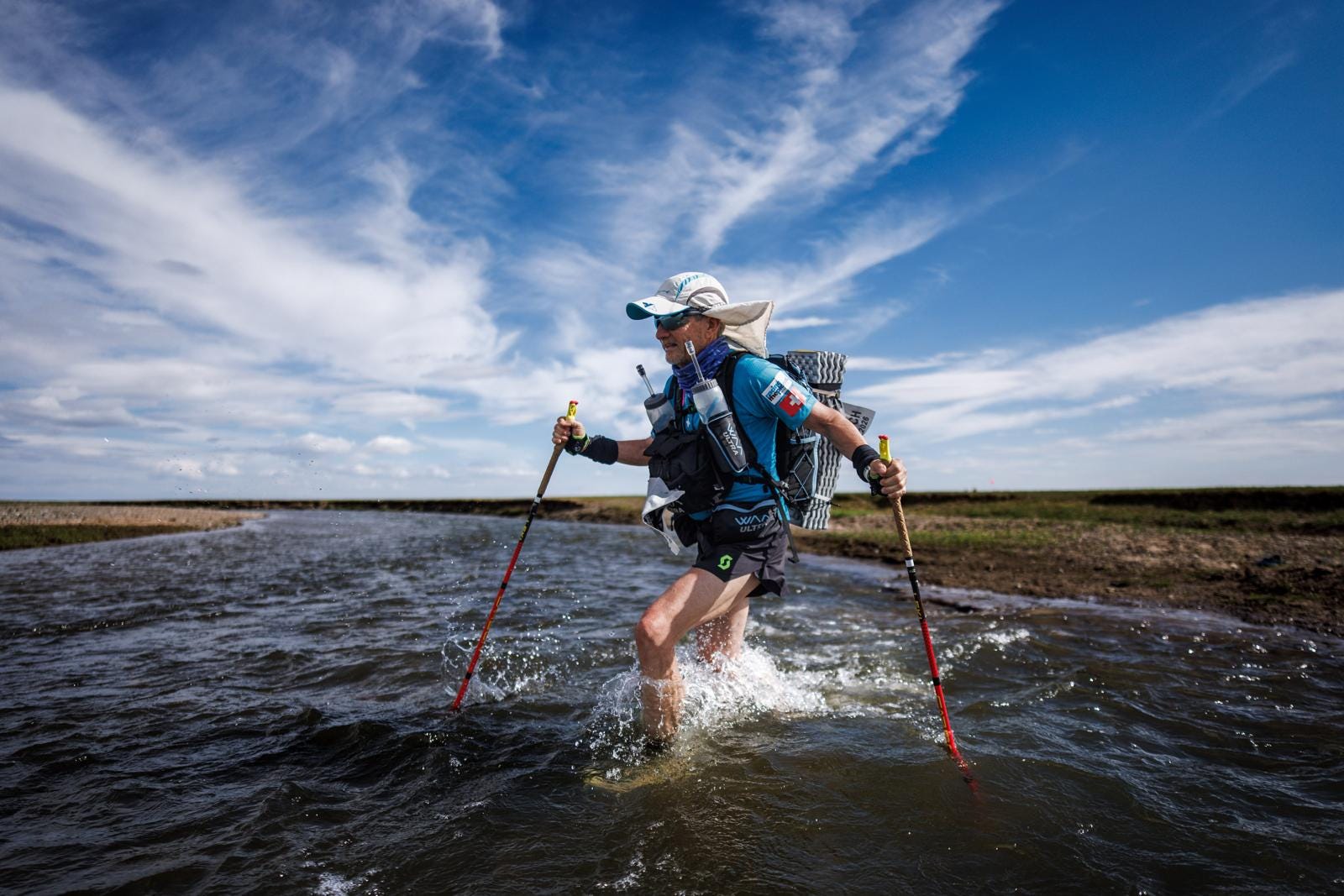
In May and June, Roberto was preparing for the Gobi March: a 6-stage, 250km race through the Gobi Desert in Mongolia. Training for this type of race requires consideration of the physical demands, such as running long stages for multiple days in a row with a heavy pack, and the environmental demands, including the heat and the type of terrain.
One of the key concepts we used for Roberto’s training was simulation blocks that replicated important demands of the race.
5 weeks before the race Roberto performed his first simulation block of 4 consecutive long days:
Day 1 = replicating stage 2 with 3.5hrs running with an 8kg pack
Day 2 = replicating stage 3 with 3hrs running with an 8kg pack
Day 3 = replicating stage 4 with 5hrs running with an 6kg pack
Day 4 = replicating stage 5 with 3hrs running with an 6kg pack
The duration of each day matched ~80% of the duration we expected for each of those stages and the pack weight was decreased over the block to simulate how it would decrease in the race as he ate his food. We focused on the middle stages of the race as the demands of running a marathon distance in stage 5 after an ultra-marathon in stage 4 was important.
3 weeks before the race Roberto completed a second simulation block of 3 consecutive days of training:
Day 1 = replicating stage 3 with 3hrs running with an 8kg pack
Day 2 = replicating stage 4 with 5hrs running with an 6kg pack
Day 3 = replicating stage 5 with 3hrs running with an 6kg pack
This block was shorter than the first block as it was closer to the race and also because we wanted to manage Roberto’s overall muscular fatigue.
The important concept here is replicating the demands of a race in training in a way that can be a useful stimulus but also in a way that can be recovered from before the race. In this case, we performed two simulations blocks of 4 stages and of 3 stages at 80% of the stage distance while using approximately the same pack weight.
This concept can be transferred to different races. For athletes preparing for a marathon, my recommendation is to do a “special block” with a session of ~20km in the morning and another 20-22km run in the afternoon. For athletes preparing for an ultra-marathon, back-to-back training days can work well.
No posts
Comments
Nothing yet. Say the first thing.
Sign in to join the conversation.