
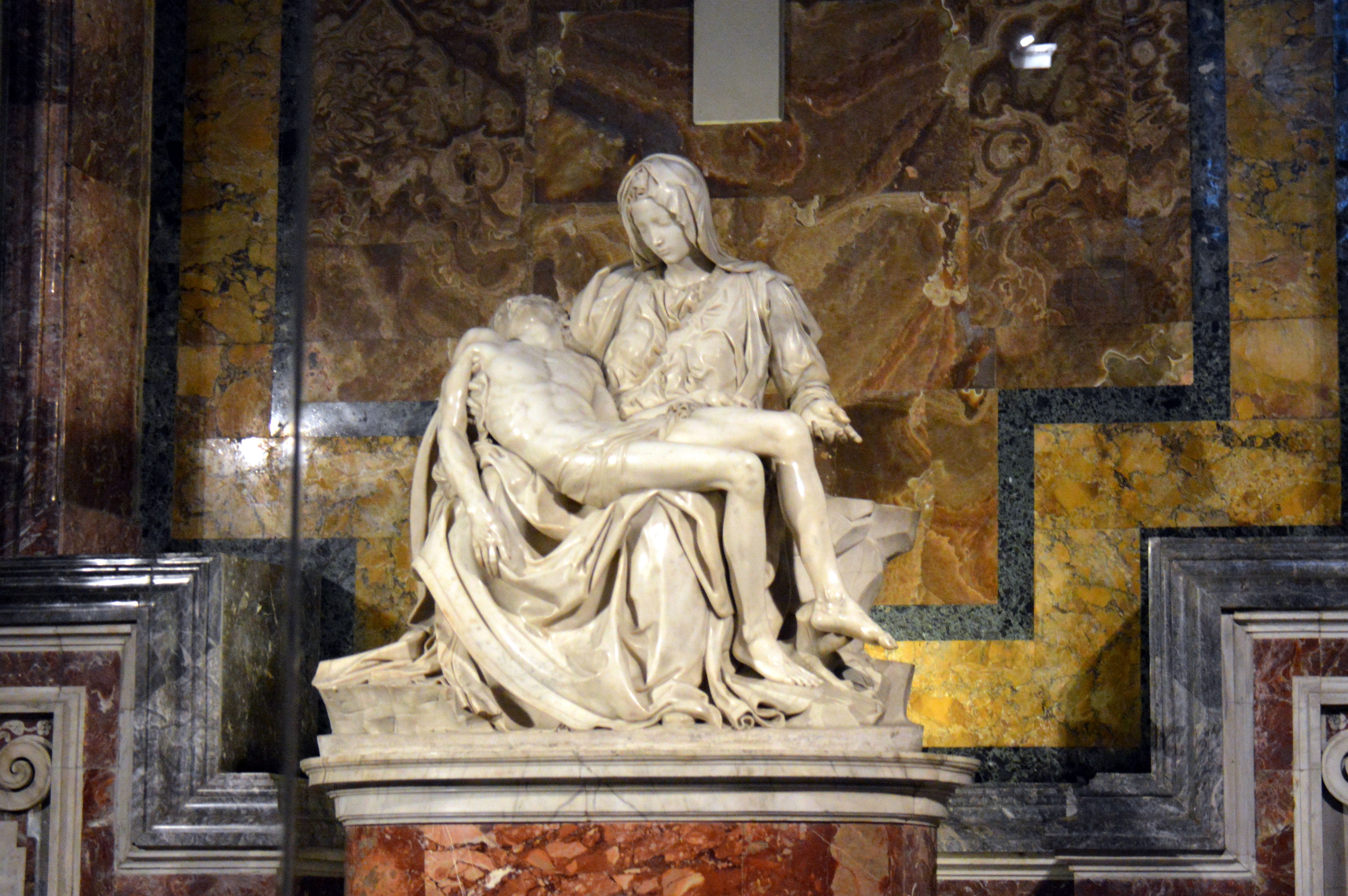
Breakfast with brother Jim— an artist— on Saturday and we were discussing the importance and role of sacred art. We had been to Italy a couple of times and were impressed (favorably) with how much art was still in place in the churches: frescoes and mosaics which can’t easily be moved, but also paintings still where they were meant to hang as altarpieces or centers of devotion. Impressed also (unfavorably) with how many sacred works of art are relegated to museums with their neat, informative labels, perfect lighting and climate controlled galleries. I wrote an article about going into museums to look out their windows here. No paywall so enjoy. Here’s an excerpt:
But later on my heart sings when we visit the Duomos, the parish and abbey churches where the frescoes can’t be moved, where the altarpieces are still in place above the altars. This is where they were designed to be. They were painted to glorify God, illustrate catechesis and illuminate the vision of glory not to the hifalutin, but to hoi polloi. In the churches, the masterpieces stand alongside the clutter of ordinary church life. The worn pews—the musty hymnbooks, the guttering candles and the lesser artworks: poor pious prints, chipped plaster statues, photographs of local and modern saints and popes.
Jim observed how so many modern Catholic Churches have decoration rather than integrated, original Catholic art. Some well meaning parishioners have scattered a few potted plants, painted the walls a soothing color and put up perhaps a framed photograph of Michelangelo’s Pieta or a poor needlework rendition of Da Vinci’s last supper. It is as if they are decorating their living room. But sacred art is not decoration. It is meant to be integral to the whole building. The architects seem to fall into the same ignorant trap. They create an economical meeting space. The toilets flush. The sound system is pleasing. The pews are padded and they’ve added the odd colonnade or a row of pointed arched windows and maybe even some stained glass in geometric designs that looks like it belongs in a county office.
The principles of ecclesiatical art and architecture are too much to lay out in a single article, but one of the first questions is “What is sacred art for? Why bother”
Because beauty is the language of worship and when the heart apprehends beauty it also apprehends truth and goodness in a way that transcends words. It’s non verbal and the worship that goes beyond words is the worship that connects with the world beyond words. In the beginning was the Word but before the beginning was the wordless world.
Sacred art should be fused with sacred architecture to take us beyond our usual expectations—beyond explanations. This is the attraction of all the great cathedrals and churches. We are drawn to them because they are liminal spaces—borderlands between this world and the next…the threshold of heaven.
Sacred art contributes to that, but only if it remains in the church, and what constitutes good sacred art?
What about church art? Can it be modern? Abstract? Here’s what I wrote in my book Letters on Liturgy:
What’s bad about sacred art that is abstract? To be perfectly frank, it is usually bad not only because modernist artists often understand nothing about the history of sacred iconography, but also because they do not accept the need for the artwork to be subordinate to the action of the Mass and they do not understand the intricate problems of Christian art. They do not understand how the Catholic artist is submissive to the great tradition. The sacred artist (as opposed to the secular) is operating within a two thousand year old stream of experience, spirituality and worship.
Part of that tradition is the understanding that the sacred image is a secondary image of Jesus Christ who is “the image of the unseen God” (Col. 1:5) The saints are reflections of Jesus in the world, and images of the saints therefore need to capture the mystery of the incarnation. Therefore, the Catholic artist has a special challenge when he portrays a sacred scene and saints. He has to make the saints realistic enough to be recognizable as ordinary people, but he also has to portray them as having been transformed by grace into divinized people. He or she has to portray the saint as both ordinary and extraordinary at the same time. That’s not easy. If you go too far towards realism you end up with a Norman Rockwell type of picture. If you go too far towards “holiness” the figure seems spooky, strange, and otherworldly. This is why it is best to stay with traditional styles: because the successful sacred artist knows how to work within the tradition and face this unique challenge. Furthermore, his audience is likely to be familiar with the language of the icon or the traditional Catholic image.
Jim summed it up by saying too often Catholic treat the sacred art like the icing on the cake when in fact it IS the cake. Same with all the beauty in the sacred liturgy.
Which brings me to cheesy music. I commented on social media that my eyes were leaking with Anglican nostalgia when we sang Dear Lord and Father or Mankind at Mass yesterday. It's a beautiful hymn—a real favorite. Here it is if you don’t know it.
The problem with much church music is that it too, is treated like decoration or entertainment. With no connection to the liturgy or the readings, it is simply laid on by entertainers and you can tell by the music style and the method of performance. They musicians have no sense of leading worship and model their musicianship on all they know which is performance. So you get some guy in a Catholic Church playing the piano like Elton John.
Today is the Feast of Holy Deacon St Laurence and I’m reminded of the beautiful Saxon church of St Laurence in Bradford on Avon in England.
The church had been hidden for centuries by additions and domestic structures then it was rediscovered by an antiquarian in Victorian times and restored.
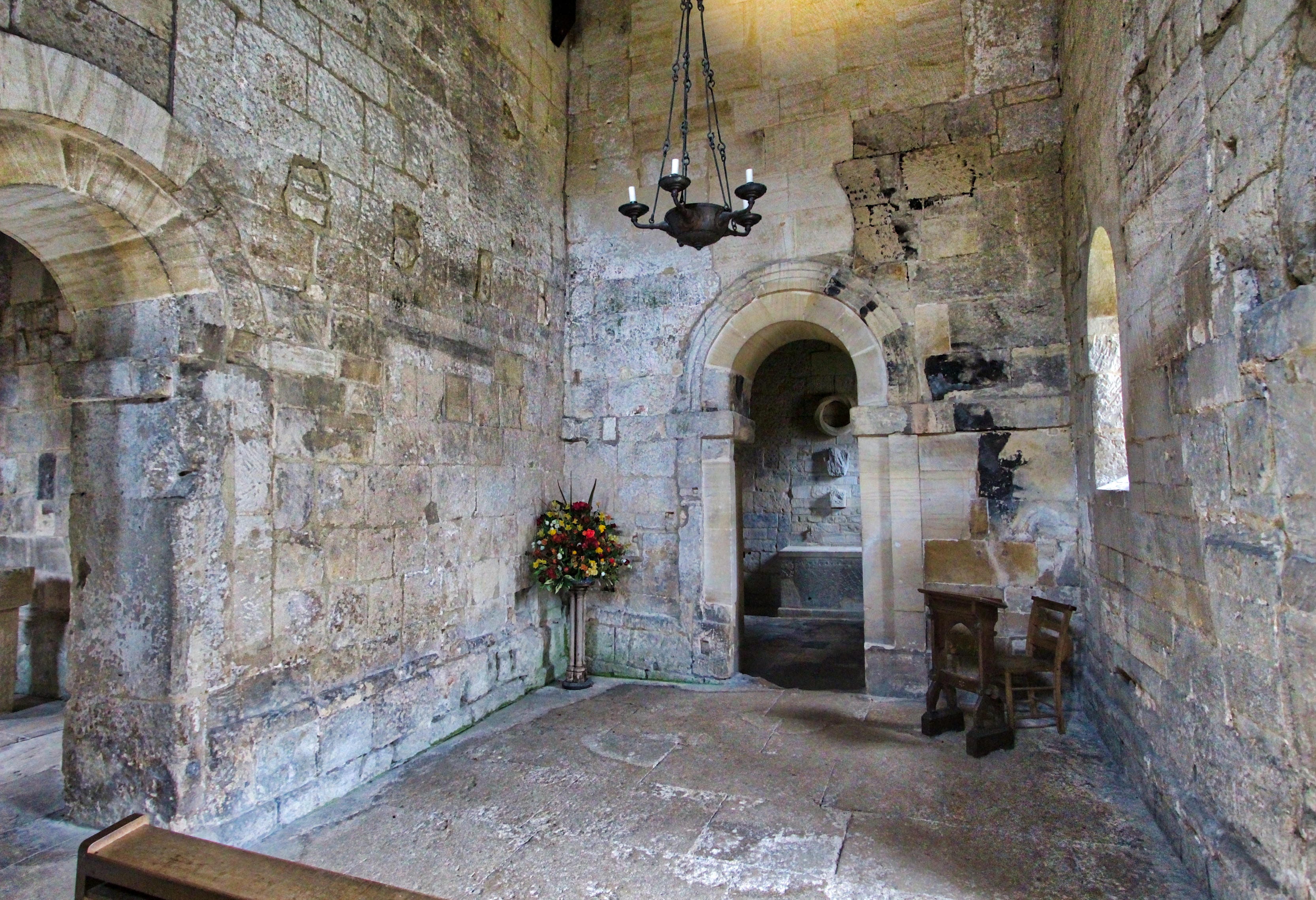
Here is a poem I wrote about the church. It comes from my collection of poems: A Sudden Certainty: Priest Poems (on sale— just $4.95 down from $10.95)
The smallest chancel in England” says the book,
And so it is, with barely room to stretch
an arm. It’s like a tomb. And as I look
the stone seems almost to close in and reach
for my tiny life. The bier like altar
beckons, and the darkness threatens my light
The walls, ominous thick and tall—rise far
and black as the universe. It is right
perhaps, for this old room to oppress me.
The sense of dread which drenches and closes
over somehow seems to cleanse and deeply
like the catharsis of a young hero’s
death. And then in turning there’s a riding peace
in seeing the arch and knowing its release.
No posts
Comments
Nothing yet. Say the first thing.
Sign in to join the conversation.