
There’s something I find so cozy and comforting about the literature of England’s Regency and Victorian eras with their strict etiquette and decorum, which also extends to most 19th century European literature—even the French with their salacious Emma Bovarys. Sometimes those rigid social structures even cross the pond to works like Edith Wharton’s The Age of Innocence (1920), though that one was published fifty years after its 1870 setting.
The worst that disrupts the surface-level harmony of the lavish parlours and ballrooms in these novels is the occasional Wickham to come and tarnish the reputation of one of the lesser sisters in an entailed family. Class is everything in these works and the conflicts typically revolve around a character falling for someone socially below them and having to reconcile their love with their pride, their prejudice, or their fear of disrupting the established aristocratic order. The works of British writers like Jane Austen, George Eliot, Oscar Wilde, and William Makepeace Thackeray tend to have a relaxed tone as they criticize and satirize the elite with their stuck-up ways and it’s like a warm blanket to me.
The period in which E.M. Forster’s A Room with a View (1908) is written and set is not the Regency or the Victorian era, but that which followed them: the short holding pattern known as the Edwardian Era, a decade-long period which clung to those aforementioned rigid social and class structures despite the drastically changing world around it and which was utterly obliterated by the onset of World War I and its accompanying trauma and disillusionment. Though the mass destruction of industrialized warfare loomed over everything, one still better not wear one’s evening coat in the afternoon, carve meat before first turning up one’s cuffs, or—god forbid—ask a lady to dance without previously making her acquaintance.
When I read Forster’s short novel, A Room with a View, I read it almost back-to-back with D.H. Lawrence’s infamous novel Lady Chatterley’s Lover (1928) and I couldn’t help but draw numerous parallels between the two as both heroines shake off their stifling, repressive constraints to pursue true love. If anything, I see them as mirror images on either side of the first Great War with Forster’s novel still mindful of social order and Lawrence’s novel just saying, “Fuck it.” After finishing both books, I had the thought that Lucy Honeychurch blushed and smiled so that Constance Chatterley could run naked in the rain and fuck and fuck and fuck to her heart’s content...
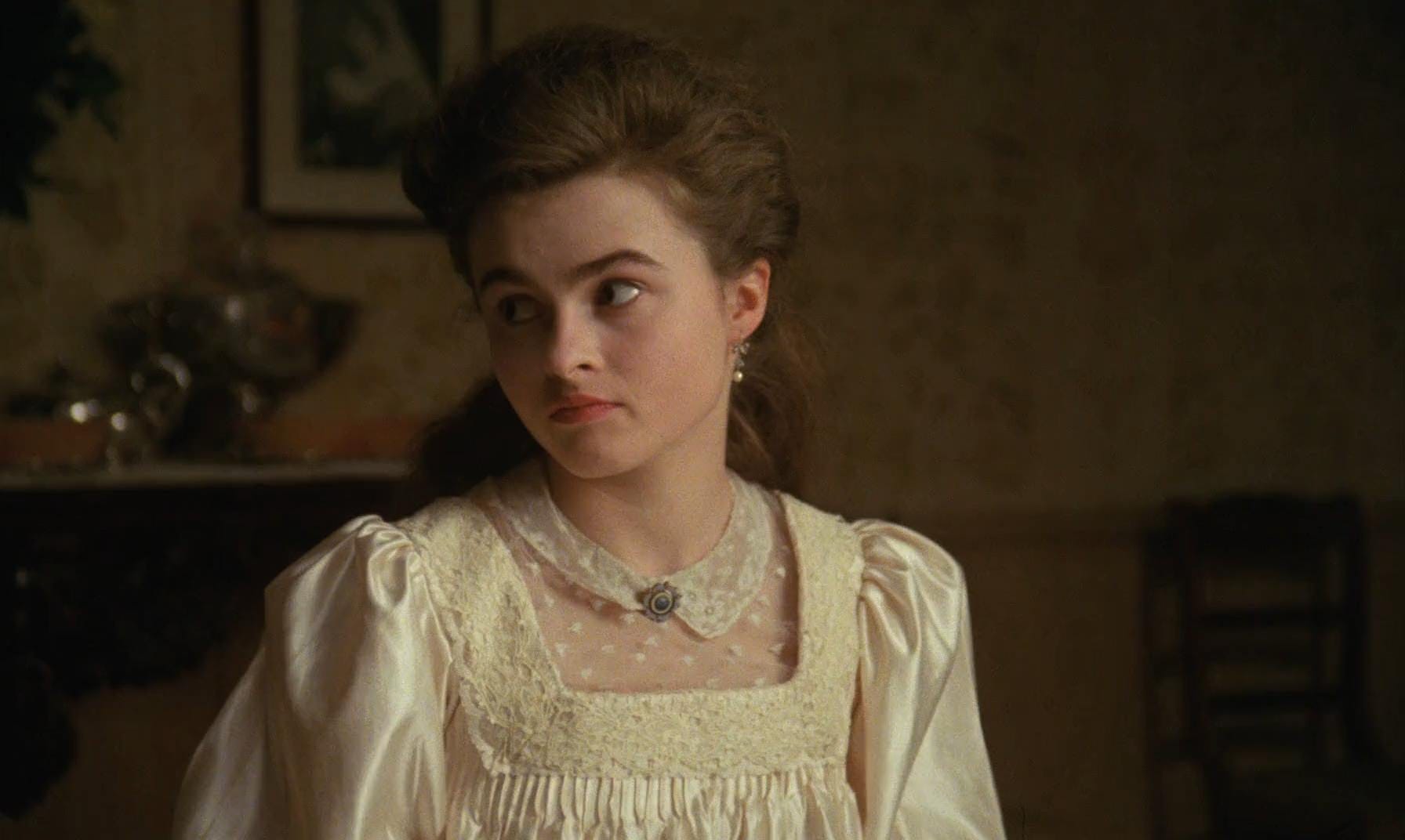
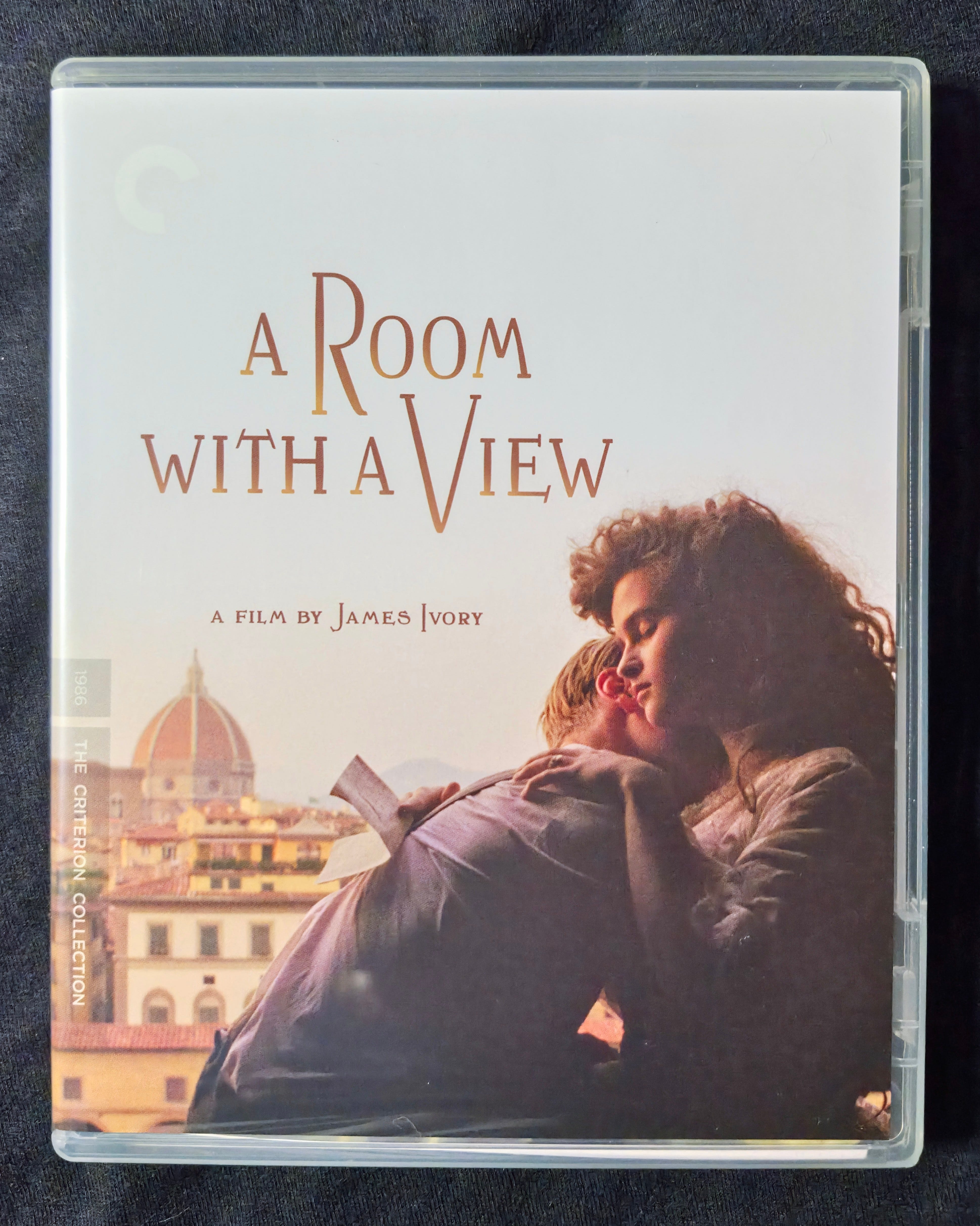
I’ve always been critical of cinema’s seeming inability to capture the exact tone and atmosphere of novels like the aforementioned works, but there are a few shining examples that seemed to nail it, such as Ang Lee’s Sense and Sensibility (1995), Martin Scorsese’s The Age of Innocence (1993), and Stanley Kubrick’s Barry Lyndon (1975). I now count James Ivory’s A Room with a View (1986) among them with its flawless re-creation of the essence of Forster’s work through its meticulously crafted Edwardian aesthetic, its performances, and its themes centered around achieving personal freedom in a rigid, repressive class structure. Also, Forster’s novel is at times hilarious in its satirical jabs and the film’s title cards—some of which are actual chapter titles from the book—do an excellent job of clueing the viewer into the fact that they’re watching satire, the unawareness of which is satire’s greatest failing in any medium.
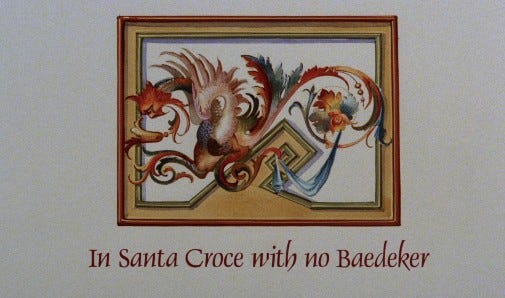
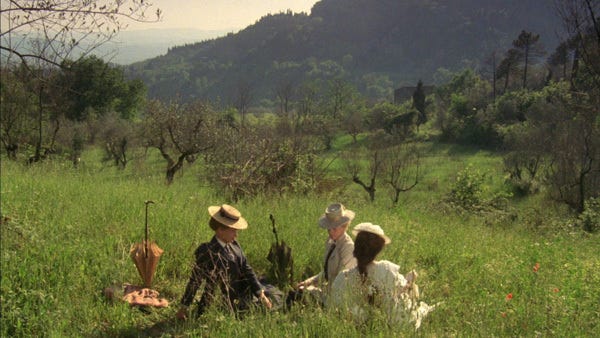
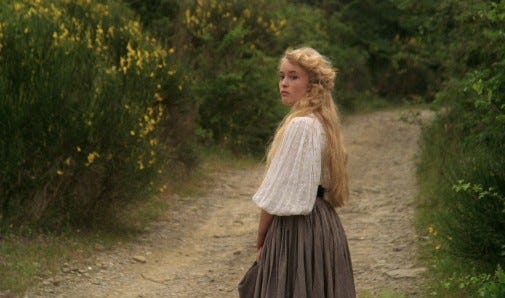
The film opens in Florence, Italy among the droves of English tourists with their Baedeker guidebooks telling them what sights to see. The beauty of Florence, both the city and the countryside, is undeniable in Ivory’s film and he emphasizes the contrast between the reserved Brits and the expressive, passionate Italian natives hosting them, serving them, driving them, and—due to their amorous nature—confounding them. The contrast between the expressive Italians and the repressed British is highlighted during the carriage ride into the mountains; the young Italian driver has a beautiful young woman up front with him and the British Reverend, Mr. Eager, is horrified by their sweet expressions of love to the point that he insists the woman get off the carriage and walk all the way back to town alone. The shot of her watching the carriage leave her behind is one of the most affecting and beautiful images of the film with its gorgeous scenery, warm natural lighting, and the forlorn expression on the woman’s face.
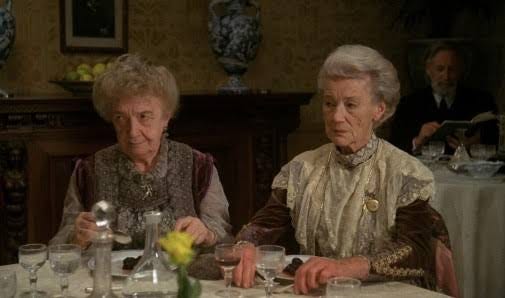
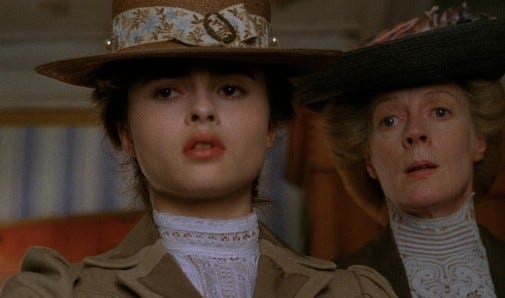
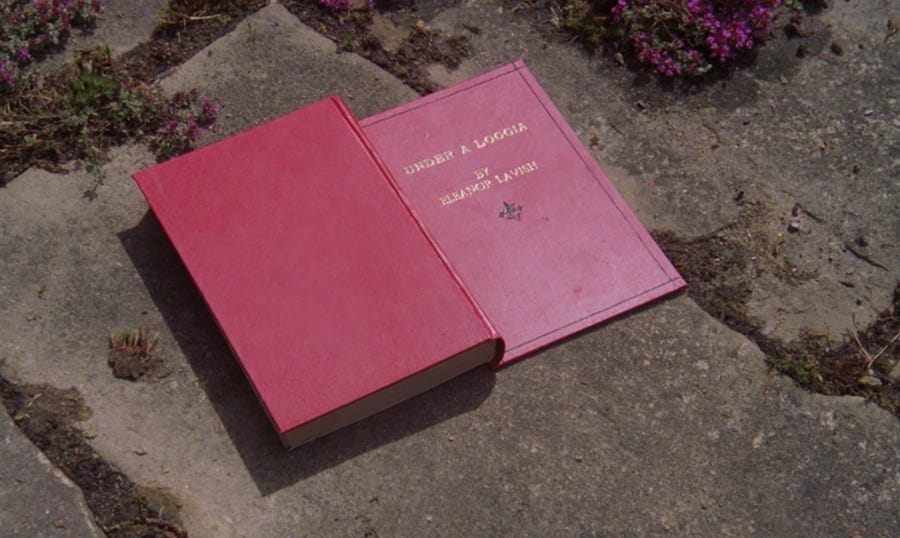
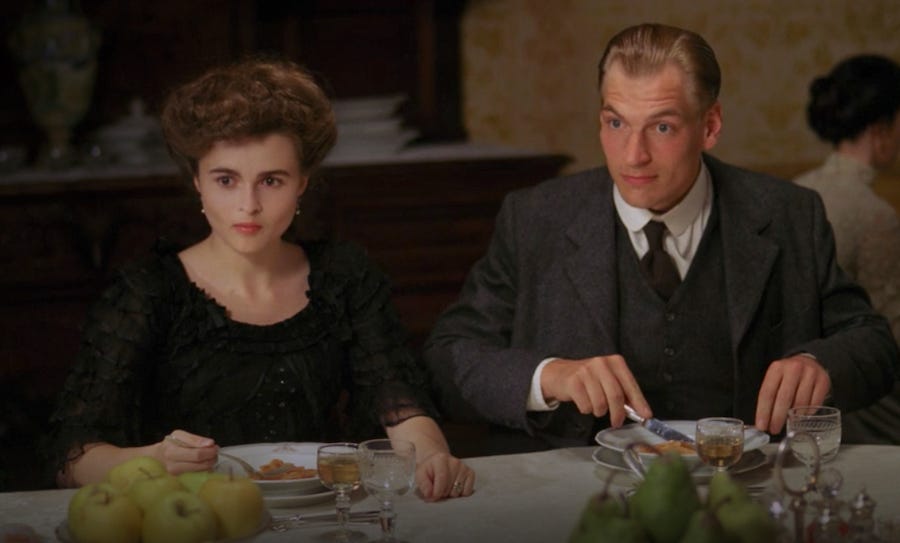
Florence is a perfect setting for the meeting of Helena Bonham Carter’s Lucy Honeychurch and Julian Sands’ George Emerson. Lucy is upper-upper-class and very much conditioned by the world in which she’s been brought up, but there are moments when she bristles at some of its more frustrating conventions. There’s a stark contrast between her and her older cousin/escort, Maggie Smith’s Charlotte Bartlett, who strictly adheres to those conventions and yet secretly revels in gossiping about those who trangress them, as is seen in the revelation of Lucy’s kiss with George in Florence—only witnessed by Charlotte—showing up in the newly released novel of one of their fellow tourists, Dame Judi Dench’s Eleanor Lavish.
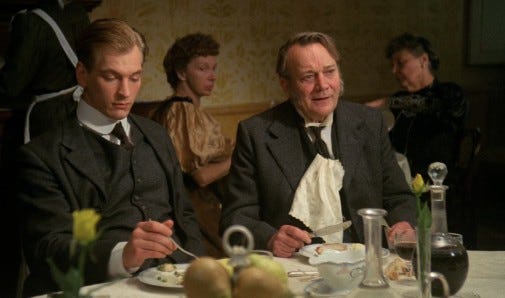
The liberal, free-spirited, lower-upper-class Emersons are such a breath of fresh air among all of the stuffy aristocrats. The always wonderful Denholm Elliott has so much fun with his performance, especially when he’s poking fun at Christianity, and Julian Sands perfectly captures the duality of an introvert in love; I couldn’t help but feel sad during Sands’ brightest moments given the tragedy that befell him three years ago.
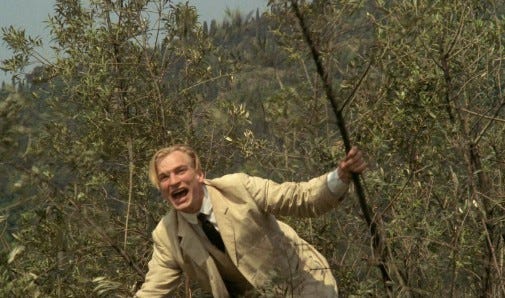
The Emersons are bohemian philosophers who see through the aristocracy’s pretense of superiority and live a life embracing freedom and love in their truest forms. While on a country excursion with the rest of the English tourists, George climbs a tree and issues a declaration of his and his father’s creed by shouting, “Beauty! Hope! Liberty! Trust! Joy! Love!” With the Emersons, there’s an exuberant blend of transcendentalism, humanism, and a touch of the Pre-Raphaelites with their free-thinking and childlike submission to love and nature. Most importantly, in a society of disingenuousness and superficiality, the father and son actually live by the creed they promote. Just as Lucy was raised to strictly adhere to the standards of her time, George was raised to defy them.
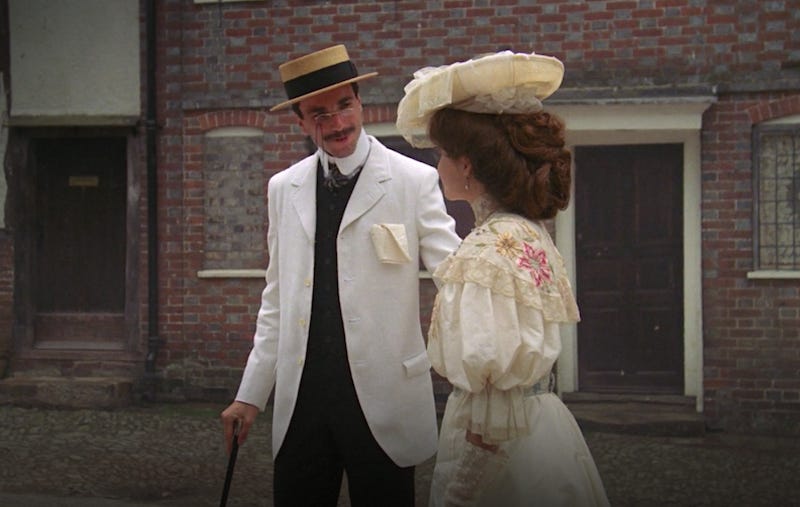
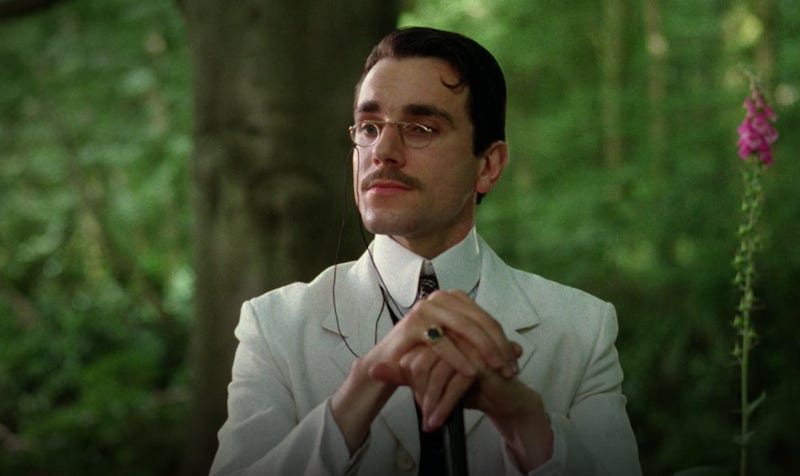
As what basically amounts to an Edwardian hangout movie, the closest thing to a conflict in A Room with a View is the pseudo love triangle of George, Lucy, and her fiance, Daniel Day Lewis’s Cecil Vyse, that develops when everyone returns to England. Lewis’s Cecil is the most overt caricature of the aristocracy in the film and strangely, while I enjoy him, his may be my least favorite performance. He’s the poster child of the snobbish, elitist Edwardian dandy who doesn’t contribute anything to society and Lewis leans into it so hard that I find it difficult to believe Lucy ever saw anything in him and his last name of Vyse is fitting given his possessive attitude towards her.
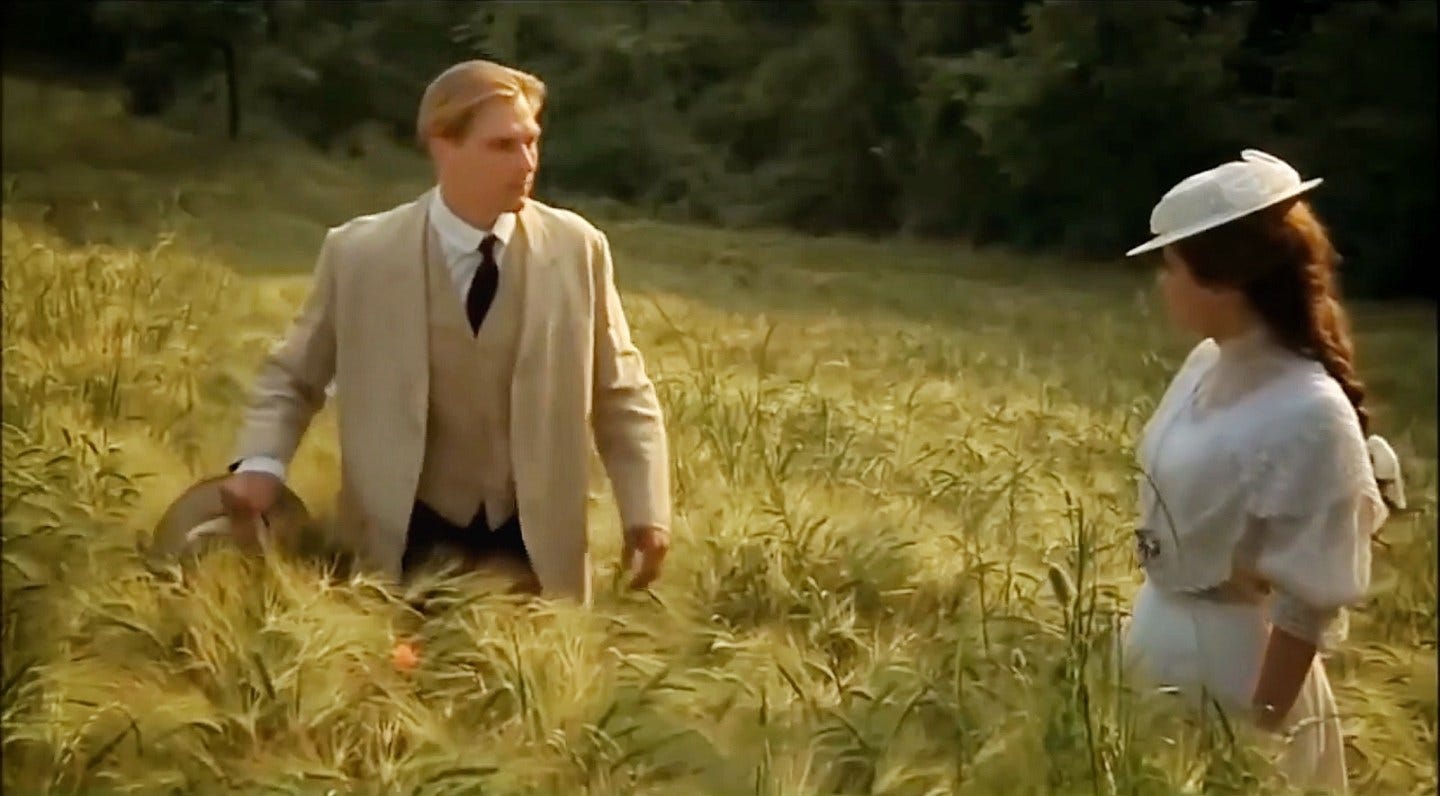
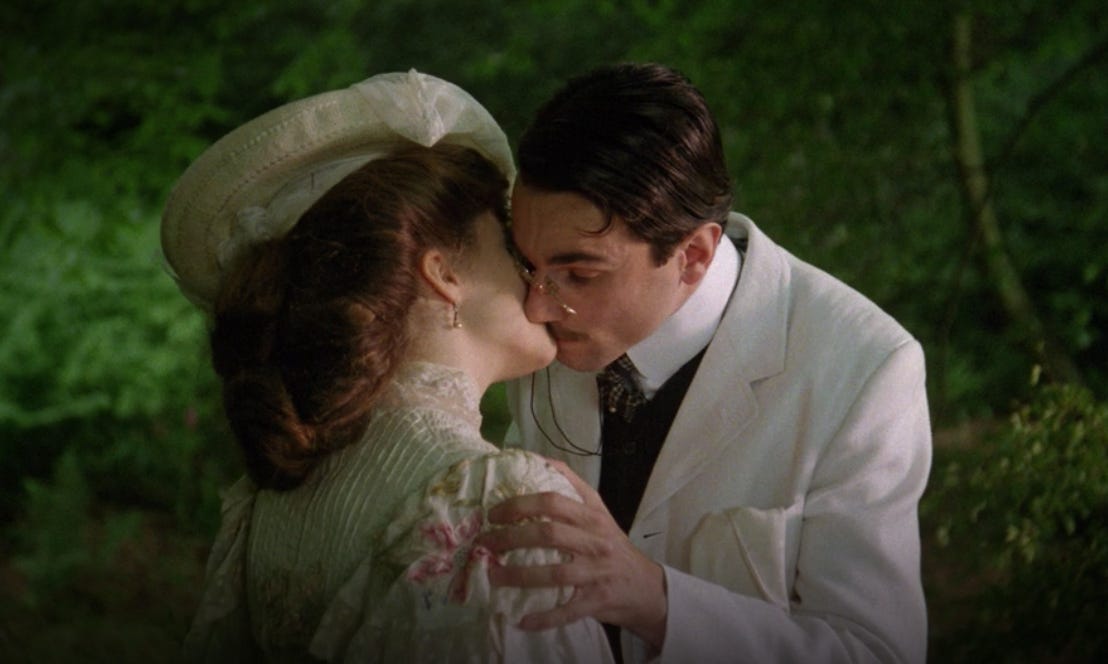
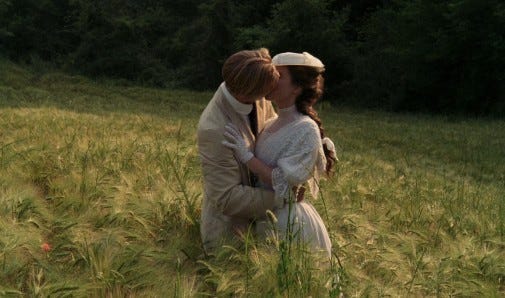
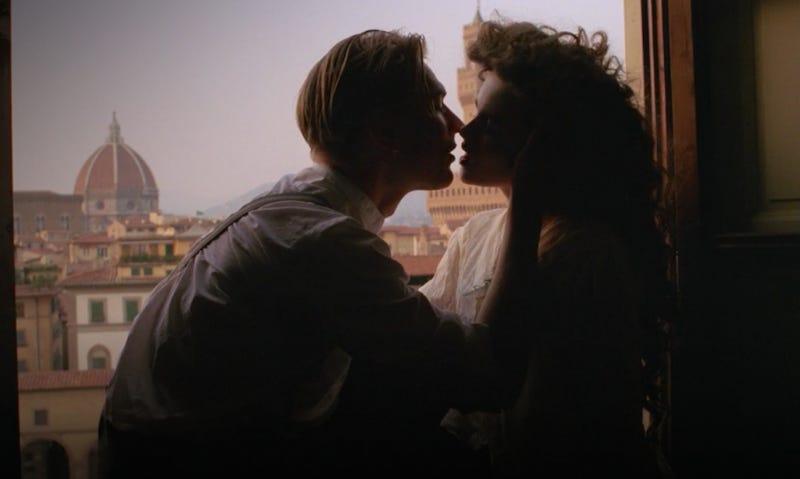
Lucy and Cecil’s first kiss, which happens after they’re already engaged—prudish even by Edwardian standards—is an embarrassing disaster and it’s of course followed by Lucy flashing back to the incredibly romantic and passionate kiss she shared with George in a Florentine poppy field—though, that kiss is entirely led by George, leaving doubt as to their mutual desire until Lucy later indirectly describes it as “rather extraordinary” and their next kiss seals it when she is undoubtedly into it.
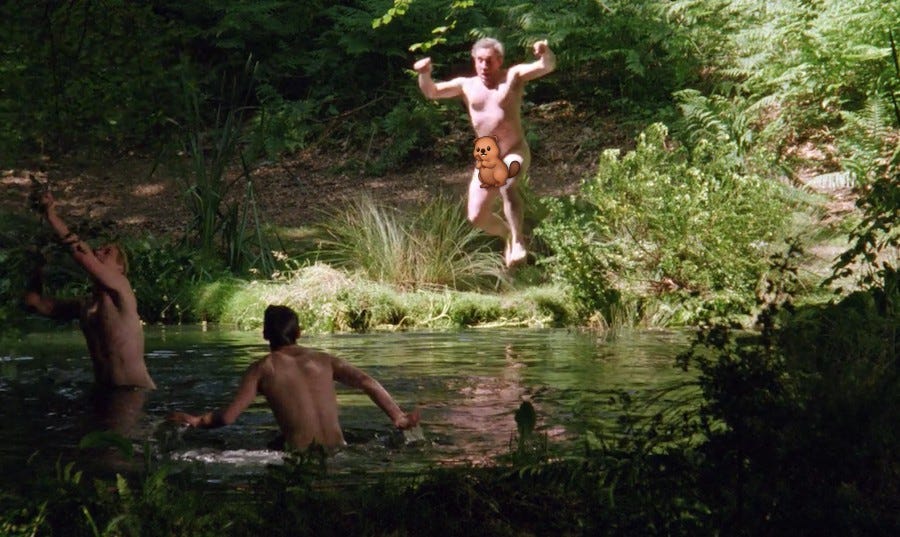
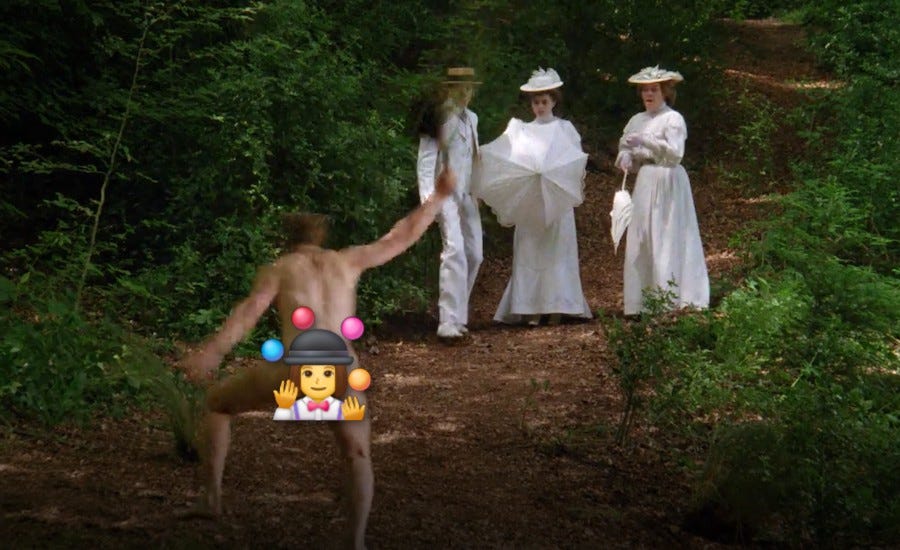
Of course, that last kiss happens after she sees George’s dong during the scene of him, Lucy’s brother Freddie, and Simon Callow’s Reverend Beebe bathing, wrestling, and chasing each other naked in and around a small pond in what is the most homoerotic thing I’ve seen since I watched the climactic naked sword fight on an erupting volcano in The Northman (2022) a few weeks ago. Seriously, I’ve never seen so much flopping genitalia in a mainstream movie before and those who were shocked at the brief glimpse of Ben Affleck’s shaft in Gone Girl (2014) should have a look at the tallywackers on display here.

In typical hangout movie fashion, Lucy’s internal conflict that really shouldn’t have been a conflict were it not for ingrained class prejudice is resolved without violence and all that’s needed is a shot of Lucy joyously crying while running to her mother and cousin in what is the crowning moment of an already amazing breakout performance from Helena Bonham Carter (who was only nineteen at the time!). I was hoping the movie would end like the book with the slight disorientation as Forster leaps forward in time to Lucy and George returning to Florence on their honeymoon and the smash cut from Lucy crying to her cousin reading Lucy’s letter sealed what is now one of my favorite literary adaptations of all time.
Thanks for reading! This post is public so feel free to share it.
No posts
Comments
Nothing yet. Say the first thing.
Sign in to join the conversation.