
bookshelves: black-horror, supernatural, mystery, fantasy
28 notes & 155 highlights (Private)
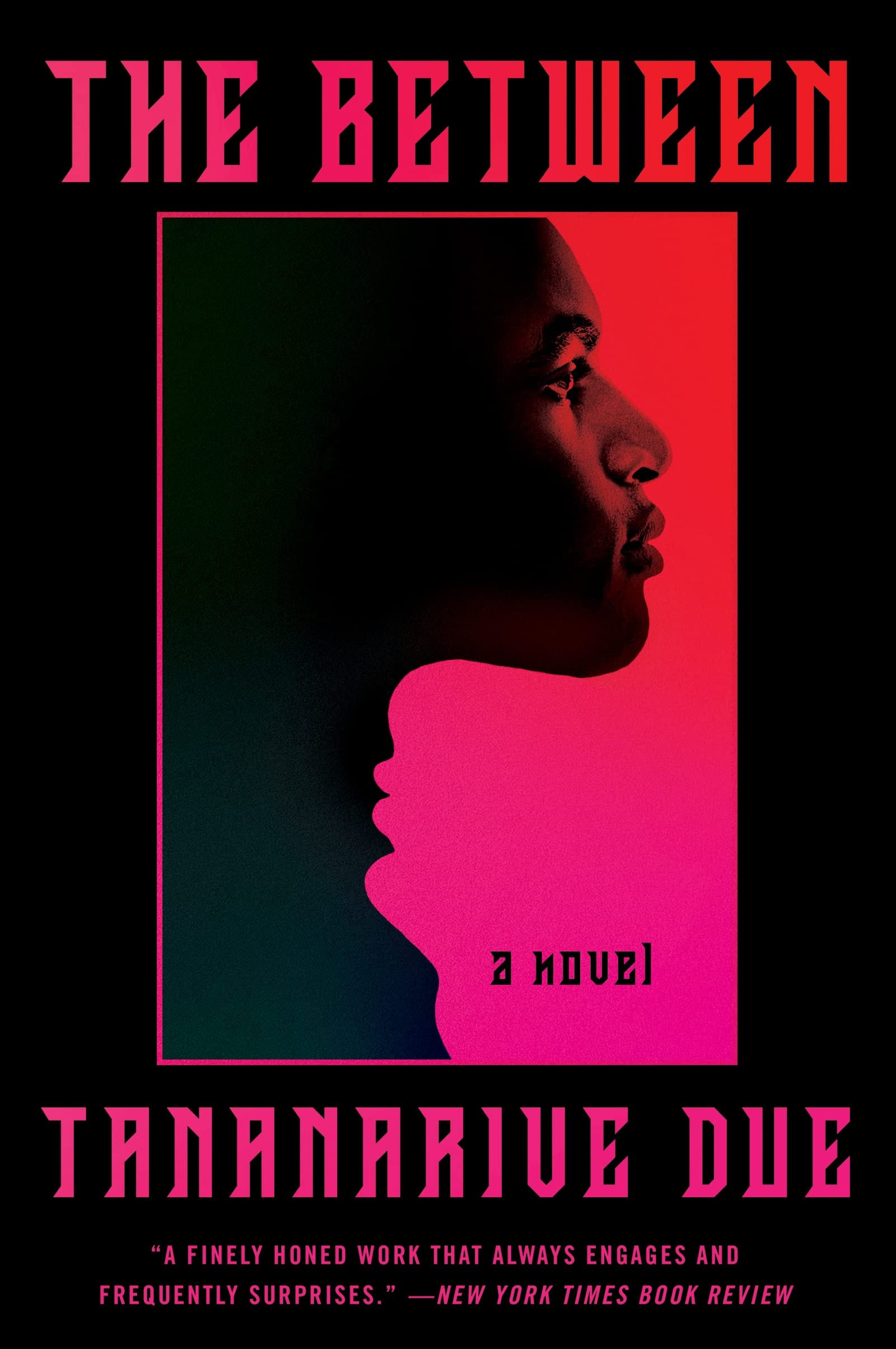
A few years ago, I stumbled on post that Edward Lorn had shared. It was either a YouTube video on his channel or a post elsewhere, I’m not sure, but he was talking about Tananarive Due’s The Between, and he immediately had my attention. Now, I had heard of her work, particularly The Reformatory, but there was almost a mystical quality to the way he talked about, amongst other qualities, her impressive storytelling abilities. Not just the story itself, but how she wrote.
For context purposes only, I had known Lorn (or E, as he’s affectionally called,) for many years at that point, and well over ten years now. During that time, I came to earnestly respect him as a person. Likewise, his opinions on books. Even if we saw the same book in completely different ways, there was, and still is, mutual respect. So to find his post, speaking so highly about Due’s magnetic prose and storytelling, I was flabbergasted, to say the least. Reading The Between was unlike anything he’d ever experienced, and I can’t adequately give meaning to how much that statement weighed on my mind. Because if you know E, you know where his passions lie and how well-read he is. The thing that resonated the most was how shocked he was that, despite the author’s many successes, Tananarive Due wasn’t known more in the reading community, especially amongst horror fans. To this day, she still isn’t a household name. Not to the extent that she should be. And I think that’s sad.
Needless to say, I was missing out on something special. I vaguely recall promptly adding the aforementioned books to my Goodreads TBR, without reading much of either synopsis. Since then, I think I’ve added a few more, but as of this writing, The Between, is the only one of hers that I’ve actually read. I hope to change that as soon as I can.
Hilton was seven when his grandmother died, and it was a bad time. But it was worse when she died again.
Based on those opening sentences, you might think it’s a zombie novel. It’s not. It’s Black Horror.
There are bursts of magic in the way Due writes. Those little bursts weren’t akin to randomly places details or even an interesting sentence here or there. Her magic was evident in every part of the novel, from the inclusion of meticulously chosen poetry in the epigraphs, to the intricate plot, excellent character development, to her literary prose reminiscent of Alice Walker
and the poeticism of Toni Morrison. Due’s style and mannerisms were distinct to her, a one-of-a-kind entity interested in telling the stories only she could, using the narrative voice bestowed down to her by God.
It feels almost impossible that this was her debut novel—yes, it’s that dang good. However, when I think about the fact that she wasn’t new to writing, it makes sense. She had, in fact, written several books prior to getting published in 1995. Those experiences helped develop her voice, gave her the confidence she needed to make it as good as she possibly could, and decided what type of stories she really wanted to write the most; the ones tugging on her heartstrings.
Her voice was very clear and unmistakable from those eye-catching opening sentences, and I heard it consistently until the last page. It was fascinating to read about young Hilton, as he learned to navigate the challenges of growing up with and without Nana, the dangers of swimming in Miami, Florida (in 1963, it was still a colored beach,) as well as the ups and downs of adolescence. There was more taking place beneath the surface, but the most impressive part about the prologue was just how much she achieved in just eight Kindle pages. One punch after another.
Due painted a vibrant picture of who seven-year-old Hilton James was, to the point that I was expecting more of the same, despite knowing this was the author’s laying the foundation of what was to come. To some degree, I was a little disappointed that the story jumped to present day .
However, as I got to know Hilton and his family throughout its nearly three hundred pages, the sense of being somewhat let down soon dissipated.
It’s 1992 (thirty years after the opening events,) and Hilton runs a successful drug-rehab center in Dade County, Florida. He also helps the homeless. He’s married to Dede, the newly elected circuit judge and the first African-American female elected in the county. They have two children together, Kaya and Jamil. Life seemed good. Yet, the past refuses to relinquish its grip on Hilton. It’s bleeding through the pages, imperceptible and seemingly random at first, but being horror, it’s not a spoiler to say that things don’t stay that way for long.
The Between wasn’t just a supernatural tale centered around the mysteries of death and its inherent anxieties. There were a lot of those elements, and I loved the execution, but the author’s strengths seemed to lie elsewhere: steeped in the African-American experience, joyfully exploring the various cultures and fascinating subcultures. She also portrayed Miami very realistically, honing in on its melting pot of diversity. Those picturesque details were sprinkled in as early as the prologue, and the author seasoned the meal judiciously, making for a far more enjoyable and satisfying experience.
The loose gravel crunching beneath his shoes on the unpaved road sounds like finely crushed bones. He walks through a wall of light until he sees the slanted roof of the wooden house, the porch wrapped in vines, two front windows adorned with red sheer curtains. No one is waiting beyond the curtains. He walks past a crippled red wagon to climb the wooden steps, which shudder slightly beneath his weight. The door hangs ajar from a twisted, rusty hinge. Inside, he sees all the things he knows…
The dread was unimaginable. Not only was it practically oozing out of every page, it was incredibly well-executed. The quality should be noted, because a lot of authors can convey dread, but in my experience, not everyone can write it as well or as consistently as Due does. Increasingly throughout, the tense style changes to present, only to revert to past tense (intentionally and purposefully,) and it’s in those present tense scenes where the sense of dread shines through the brightest…and hardest. It was overwhelming at times, in the best ways possible. The sense of dread, of feeling apprehensive and never knowing what to expect next, was a big factor in the past tense sections, too—the difference being that the present tense sections were more macabre in nature. More cerebral.
I wouldn’t be surprised if some readers found the latter to be a bit too repetitive or too much, and to an extent, I would’ve agreed. Not that it was too dark or disturbing. After awhile, though, it did feel slightly repetitive. In hindsight, I think what she achieved was remarkable and classy. She found a nice balance between the two, and that couldn’t have been easy. Horror writers tend to go all-in or nothing at all, so to excise such restraint inspired me to write better.
What really makes this horror, though? That’s a question I kept asking myself, and the answer could be said to be open-ended, left to the reader to decide. There were a lot of different elements taking place, most of it simultaneously, but mostly it was the Black Horror elements. The author identified it as such. Racism was the root of the plot against Dede, but you see it other places as well.
Those very macabre, present tense scenes were a lot of fun to read, and try to piece together how they were supposed to connect with Hilton in 1992 Miami. There were some obvious tie-ins, but for the most part, I was in the dark for the majority of it. And that was half the fun: discerning what was real and which diabolical scenarios were figments of his imagination. Due offered a couple alternate explanations (touching on mental health, religion, even spirituality,) which seemed to simultaneously intensify everything going on, and pose all the more questions. And when the explanation finally came, it felt 100% earned and made perfect sense.
From there, he simply watched and waited. He saw the glow of the television set that stayed on late in the living room, where presumably Dede was up by herself watching CNN. Occasionally, he saw the light in Kaya’s room as she finished her homework. Usually, the house was dark except for the security lights…. At daybreak, after Dede turned off the floodlights, Hilton drove his car around the corner to get his breakfast at Dunkin’ Donuts.
Heading into the ending, I had just one concern, one overwhelming fear on repeat: Please, don’t be a typical Hollywood ending. Please, anything but that. For the most part, it wasn’t. However, there were aspects of it that reminded me of a big budget film. That’s not criticism, it’s praise. That’s sheer admiration. That’s just about every positive adjective you could throw at it. To say any more would spoil it. This is definitely one of those books where you want to go in as blind as possible.
I’m so grateful for Edward Lorn’s enthusiastic post all those years ago (which feel much longer than three years,) and for the author, Tananarive Due and her brilliant debut novel, The Between. Regardless of your stance on horror, I think everyone should read it, because it’s not just Black Horror. Yes, there’s a fair amount of violent and gore, as well as moderate profanity and sex, but all those things pale in comparison to the long history of oppression, tyranny, slavery, torture, and prejudice inflicted on African-Americans. That’s racism—perhaps the worst kind of horror.
Thanks again, E.
No posts
Comments
Nothing yet. Say the first thing.
Sign in to join the conversation.