
I have used three previous articles to paint the picture of how the United States Navy and the conglomerates that now control almost all shipbuilding facilities in the United States have brought us to an unmitigated disaster.
The U.S. Navy entered this century as the preeminent naval power in the world. We had no peer competitors and a host of allies. The Russian Navy was in shambles after the collapse of the Soviet Union, and the People’s Republic of China was only beginning to emerge as a major seapower or threat. Thus the Navy opted to shoot for the stars in building its next destroyer, the 14,000 ton DDX, or DD21, which became the Zumwalt class. Never has an innovative at future seeing leader been so badly honored by people that recklessly build ships that defy the odds of being so expensive and useless.
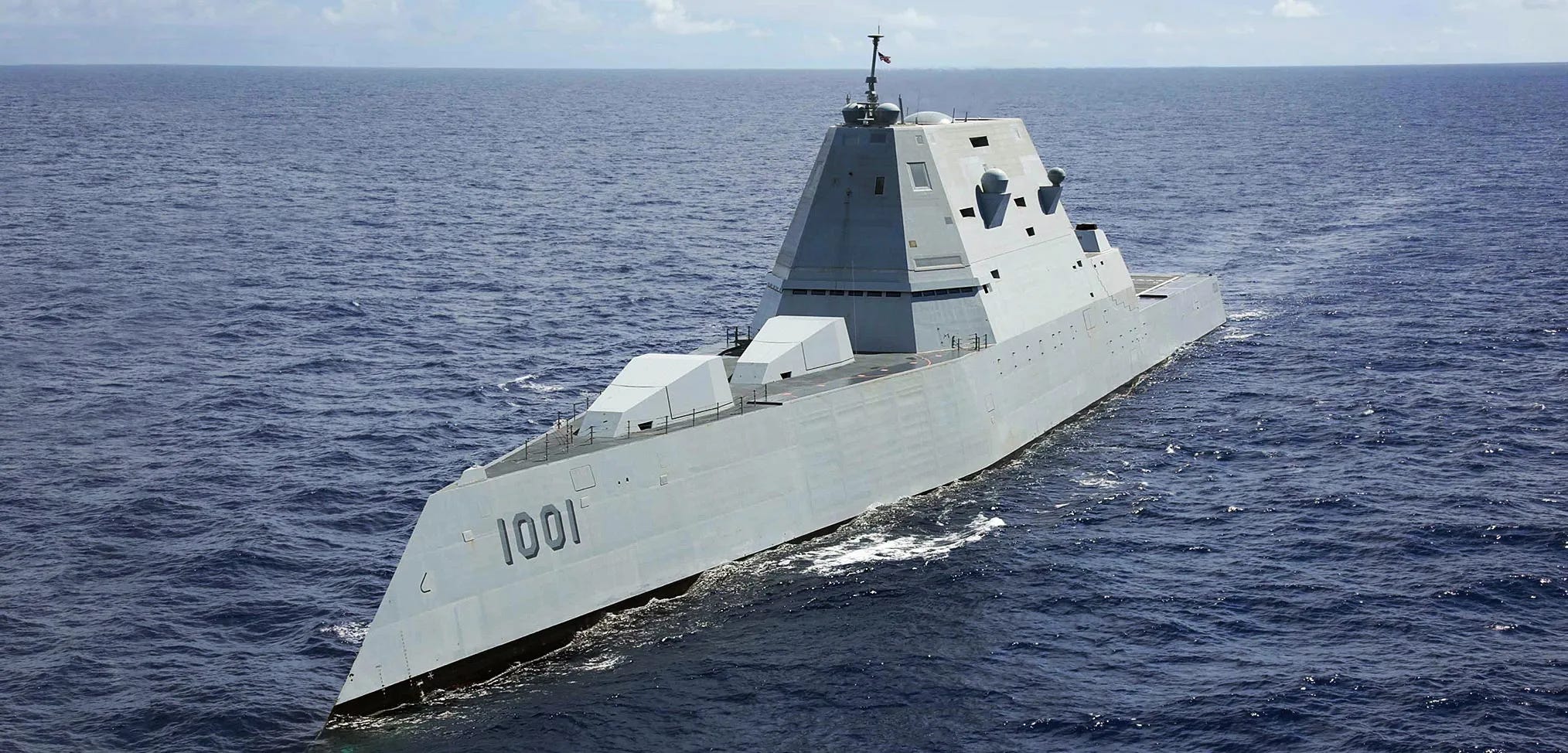
The ships were to be a stealth platform that could deliver long range naval gunfire support to Marines using two 155mm long range howitzers originally designed by the Army, which were determined to be both ineffective and expensive to use. The Army cancelled it before the Navy. The ammunition back in 2009 or 2010 would have cost almost one million dollars per round. The class was supposed to number 32 ships but was reduced to just three, the Zumwalt, Michael Mansoor, and Lyndon Johnson which is still building. Zumwalt has just come out of an overhaul to equip her with new hypersonic missiles which are still not available, though the larger vertical launch cells that are now installed. Michael Mansoor has yet to be overhauled, while Lyndon Johnson will be equipped while building. However, these three ships will end up costing over 7.5 billion dollars each without yet deploying to support a combat deployment. Their air defense systems are not suited to fleet defense which limits their role with carrier strike groups or amphibious ready groups. In fact, due to those limitations and their limited anti-submarine warfare capabilities they are exceptionally limited and expensive ships. Honestly, in all of my studies of naval ship designs, I cannot think of any class of warship of any nation since the 1880s. The basic idea is cost versus utility. Many failed designs ultimately were used for different missions, but very few have ever been so expensive and delivered so little. I can recite a litany of failed ships and designs that expended so much of their nations treasure while delivering almost nothing in return.
Thanks for reading Dedicated to the Proposition that All Men are Created Equal! This post is public with no paywall. So feel free to read it, like it, or share it by restacking on Substack or on any platform that you like.
The program was ended in 2009, in order to continue the production of the Arliegh Burke (DDG-51) ships, while construction continued on these ships and still continues on the last ship. The class has to be considered a vast waste of money and national resources.
If the Zumwalt class was not bad enough, in 2002 the Chief of Naval Operations, Admiral Vern Clark observed a Danish Navy corvette having its armament package being exchanged for another pier side. Clark had never seen anything like it and decided that the Navy needed something similar, a small, fast, lightly crewed ship that could be built quickly and affordably. Many navies, including NATO, Japan, and South Korea have such ships that pack a punch and can fight. Clark said that he wanted a “street fighter”, and thus began the tragically insufferable saga of the Littoral Combat Ship, or LCS, or as many in the Navy called them, “Little Crappy Ships”.
Of course this was in the heady days after the attacks of 11 September 2001. Vern Clark had been Chief of Naval Operations since July of 2000. He was a surface warfare officer, who in addition to destroyers and frigates included command of the USS Grand Rapids, an Asheville Class gunboat designed for close patrols of the Vietnamese coast, and drug interdiction in the Caribbean. Only 245 tons, she was far more heavily armed than any LCS, and capable of 40 knots.
After Clark saw the Danish ship he went back and began promoting his idea. Clark wanted a fast ship manned by as few sailors as possible in line with his desire that the Navy be run like a business. Congress approved evaluating the idea in 2003, despite the reservations of the House Appropriations Committee which warned that there was “no ‘road map’ of how the Navy will achieve the system required.” (Pro Publica)
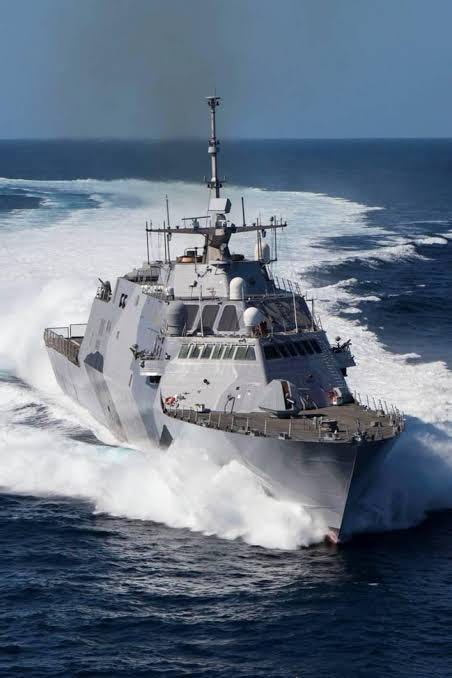
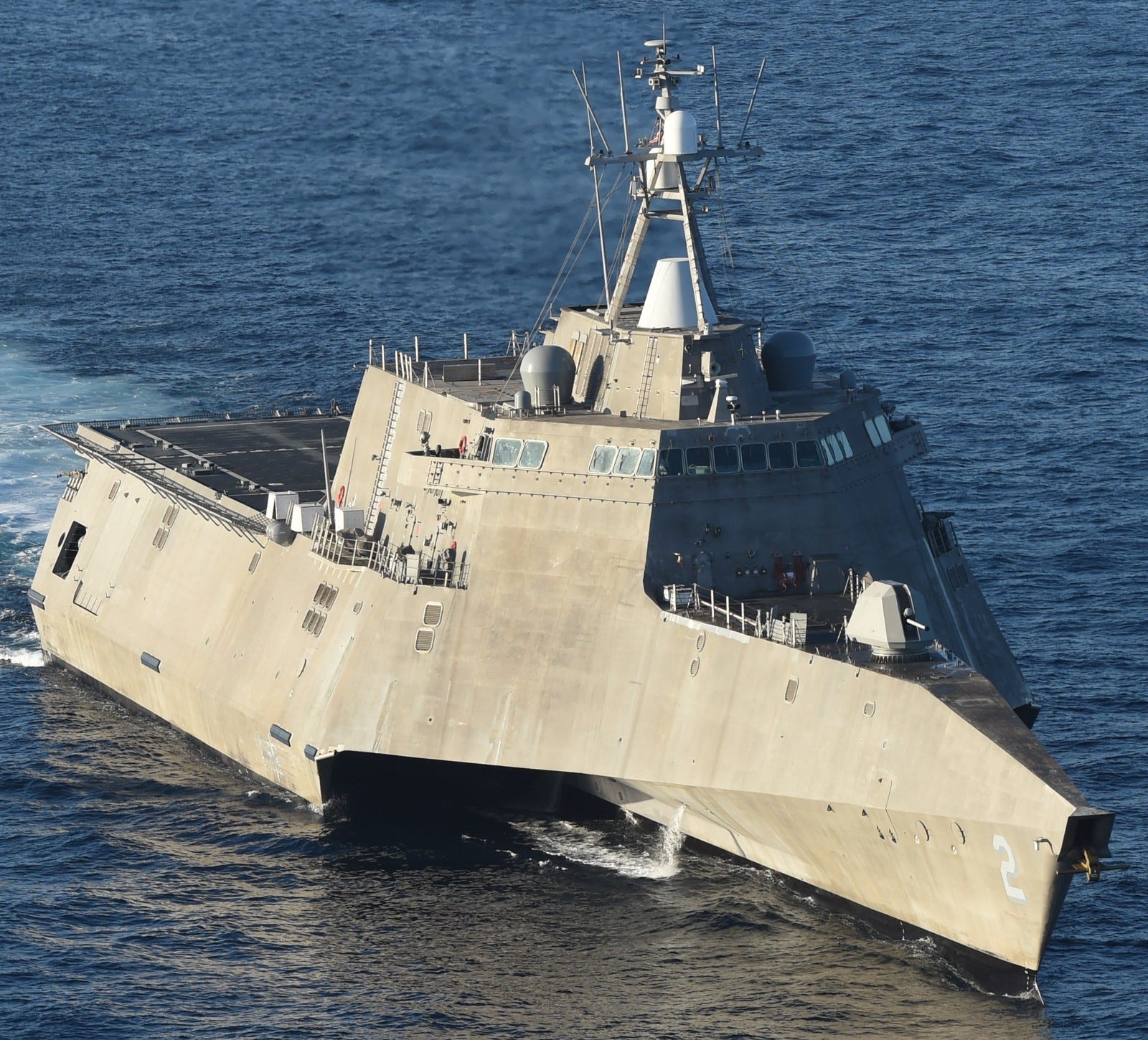
USS Freedom (above) and USS Independence (below)
A year later the Navy awarded contracts to two design teams, one from Lockheed Martin and Marietta Marine in Wisconsin, the other from General Dynamics and Austal, an Australian company planning to build a shipyard in Alabama.
One author noted “LCS started with a good idea. However, the engineering was immature and the concept of operations too foreign to the existing surface navy to succeed.” (Naval Institute)
Clark’s desire that the ships be capable of 40-50 knots, but that would become the Achilles heel of both classes. The proposals were vastly different, but both were at least in part designed on commercial civilian ferry designs, lightly built to achieve the speed. The Lockheed Martin-Marietta team proposed a more conventional monohull design, and the General Dynamics-Austal team proposed an aluminum hulled trimaran.
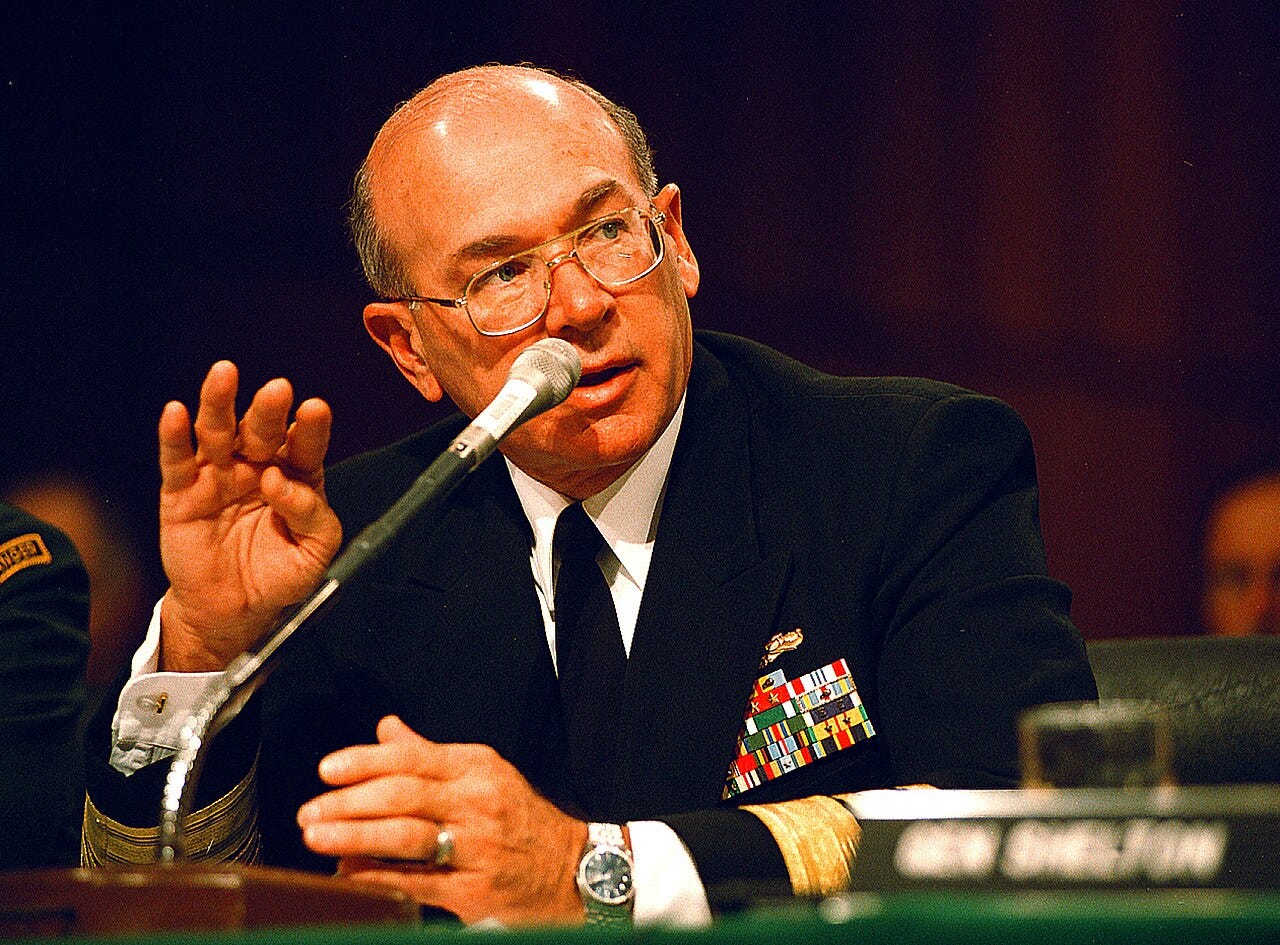
Admiral Vern Clark
However, both designs promised interchangeable modules for anti-submarine warfare, mine countermeasures, and a variety of other missions. Unfortunately when the designs were approved for construction, none of the specialized mission packages had ever worked outside of a laboratory. However speed of construction was prioritized regardless of what might be missed if more time was taken. Admiral Clark wanted ships, and he wanted them now.
As the first ships were built the prices increased, and despite efforts to rein them in continued as the Navy continued to add more missions that required more capabilities of the ships. The Freedom Class was beset by engineering problems, especially with its combining gear. That is the mechanism that connects their diesel engines and gas turbines to the propeller shafts. This gear ensures the ships have the power necessary to reach top speeds required for the design. Unfortunately, it was complex and problematic, so much so that ships broke down in mid transit. Other problems with the engineering systems made headlines as ships could not even leave port.
The Independence class suffered other problems which limited their use. All things being said, both classes have had numerous problems, and well documented survivability issues related to their construction standards. Admiral Clark admitted that survivability wasn’t a question. If damaged in combat the ships were to withdraw or be abandoned, their lack of self defense systems was to be covered by larger and more powerful ships.
Part of the problem was that Admiral Clark wanted to add more mission capabilities and increased their size so much that they didn’t match the speed of a smaller ship. “While the percentage of weight required to achieve high speed in the original did not detract from its sensors and weapon systems, getting the same high speed from a much larger ships did affect the design in multiple ways—including the number and weight of weapons, sensors, fuel, and other key mission components.” (Naval Institute). Likewise, when everything was working right steaming at high speed they were fuel hogs meaning that they couldn’t venture too far away from their support ships.
The initial plan called for 52 ships. As the questions mounted and the failures increased the number was cut to 40 and then to 32. Even so the Navy began retiring ships from service far sooner than their designed lifetimes, and had to be stopped by congressional action. Even so the ships have been a complete failure, that need not have happened. Three Independence Class ships were stationed in Bahrain where they had been assigned the mine warfare missions previously done by the Avenger class mine warfare ships. However, they were so vulnerable to Iranian attack that the Navy withdrew them to Singapore.
I could go on, but the litany is so long that a book could be written about Admiral Clark’s abortion in ship design. I quoted from articles from the Naval Institute Proceedings and Pro Publica. Both of those go into a lot more detail than I can in this article. My research into the LCS goes beyond these articles, likewise, I have friends who worked in the program who shared much with me. Since have already spent so much time on this article, I will leave you those links.
https://www.usni.org/magazines/proceedings/2023/december/confessions-former-lcs-champion
https://www.propublica.org/article/how-navy-spent-billions-littoral-combat-ship
When the Navy finally abandoned its attempts to put lipstick on the LCS pig, it decided to build a modern Guided Missile Frigate to replace the Oliver Hazard Perry class ships designed in the 1970s. They decided to adopt a proven and already successful design by the Italian FREMM (Fregata Europea Multi-Missione) design already adopted by many navies in the ASW and Air Defense packages, as well as general purpose with AAW, ASW and surface warfare capabilities.
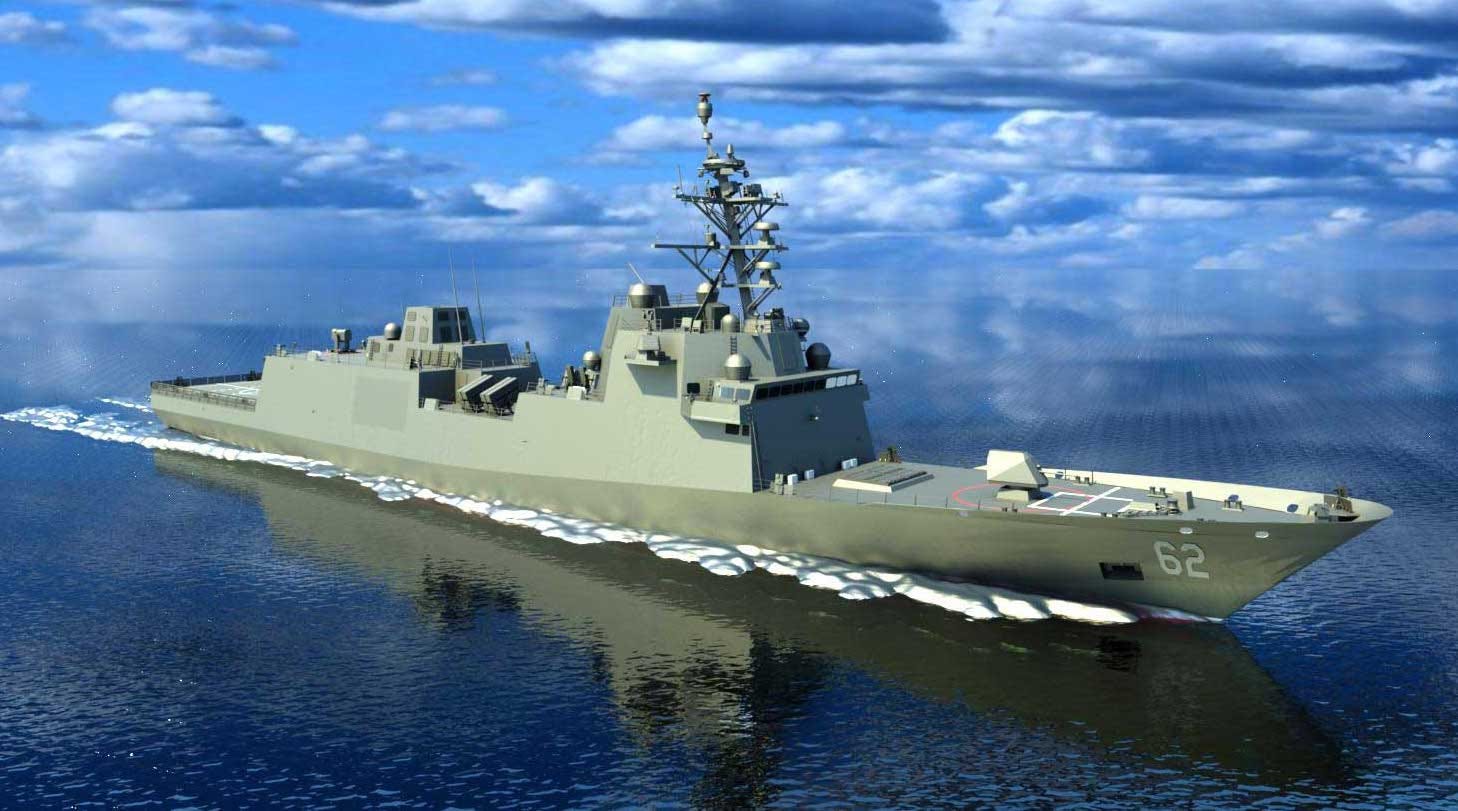
Artist depiction of Constellation
When the U.S. Navy selected the design in 2020 I was thrilled, let me even say overjoyed. I thought that the Navy had finally found its way out of its death spiral of failed surface combatant designs. But I was wrong. The Navy managed to “Iron Ball” a successful and proven design. I kind of took my eyes off of the project because I couldn’t imagine in a million years that we could fuck up a proven design already in service with other navies. But I misundestimated our incompetence. Six years later, with the lead ship already delayed by three years, the Navy canceled the project. The first two ships, the Constellation and Congress, both named for two of the first U.S. Navy frigates authorized in 1794. I wondered what could go wrong, a proven design named after historic U.S. Navy ships, I even sent an email to the Secretary of the Navy suggesting that the Navy continue naming the ships after the great frigates of our navy. Chesapeake, President, United States, Alliance, Bonhomme Richard, and more, both sail and steam.
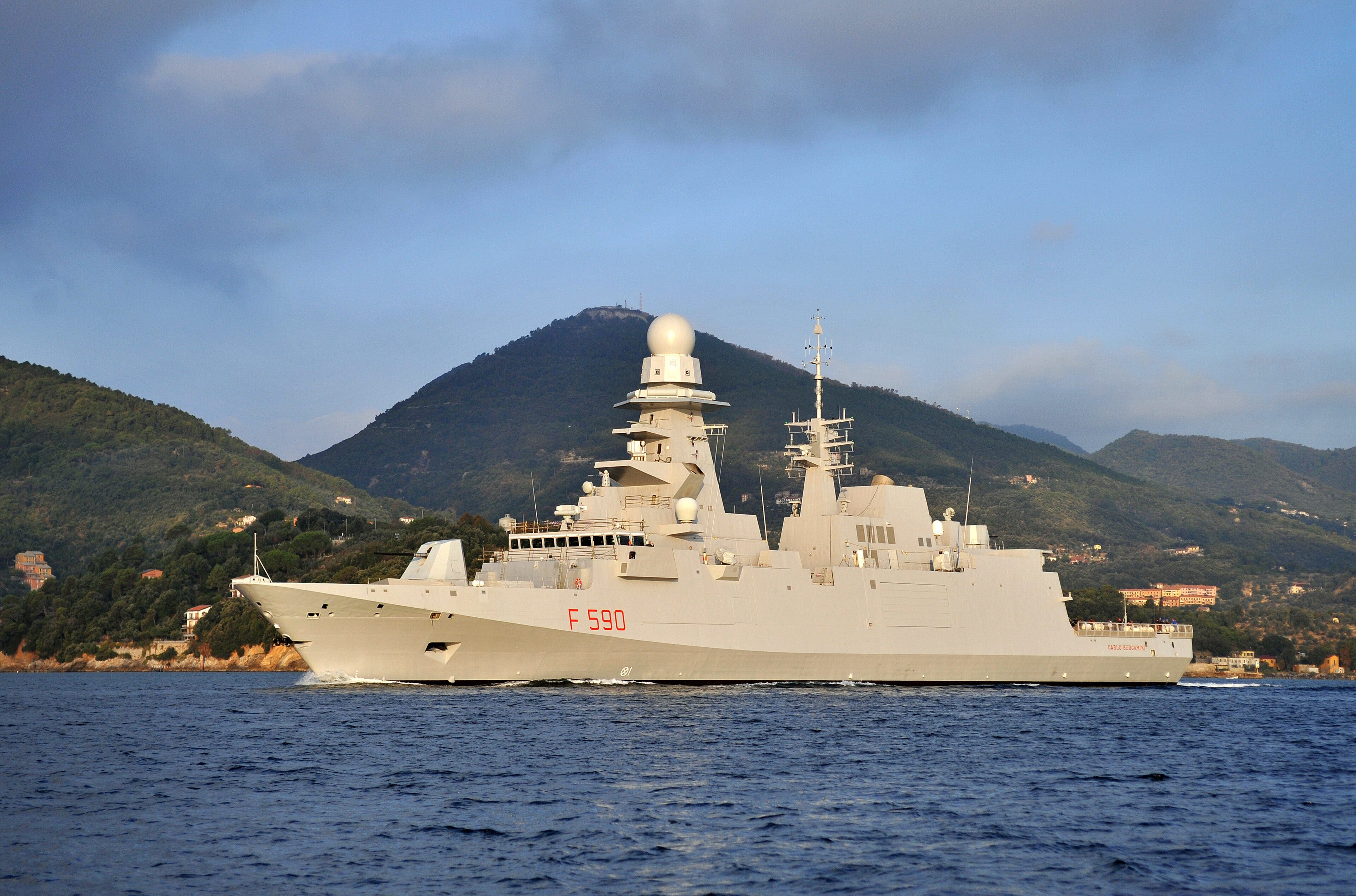
Italian FREMM type Frigate Carlo Bergamini
Assuming things were on track, I took my eyes off of the ships and the continued design and construction work. As a result I was shocked to read that the Navy had cancelled the project in November 2025. By then the first ships of the class were already three years behind schedule, due to the Navy’s continuous changes to the design which increased their displacement and cost, while lowering their top speed. Likewise, Marinette Shipbuilding, which had been acquired by Fincantieri, the original designer of the class, could not recruit enough shipyard workers to speed their work. As a result, all ships except for Constellation and Congress were cancelled.
Now the Navy is scrambling to build a replacement based upon the well tested Legend class National Security Cutter introduced in 2008. I will not comment on that now.
One author wrote:
“The theory was sound: take a proven European hull, Americanise the combat systems, and rapidly field a fleet of small surface combatants to relieve the strain on the overburdened Arleigh Burke-class destroyers. However, the US Navy’s acquisition bureaucracy proved unable to resist the temptation to drastically modify the baseline design. You don’t need to be a naval architect to know that making significant changes to an existing warship design is a complex process that would inevitably drive delays and cost rises.”
See the article:
I will end this for tonight and begin writing about the USS Gerald Ford class aircraft carriers, and yes there in so much detail about them that I dare not even try to write about that now.
All I can say to end tonight, is that it is too hard to imagine why, after so long we still cannot produce and deploy surface warships that were not designed after the 1980s and 1990s. I cannot wrap my head around that. So until the next section on the Gerald Ford class, and the following on the continuing challenge of Donald Trump’s Hitlerian meddling in ship design, I wish you the best.
As always I apologize for the delays in my articles. However, today has been a good day. We got together with my former Platoon Sergeant and sometimes First Sergeant, Cynthia and her son Nate, and after that with our buddy Sam. It was a great afternoon. Tomorrow will be busy as I get ready for the coming school year, while trying to catch up on work around the house, veterinary appointments for the pups, and maintenance on the cars.
So until next time, all the best and as always please watch your six.
No posts
Comments
Nothing yet. Say the first thing.
Sign in to join the conversation.