
Right off the bat: I am looking for new work, ideally as a Program Manager or Senior Project Manager in Design, Creative, Operations, or Strategy at a startup (SaaS, B2B, or B2C), company, or brand agency. The goal is to land full-time financial stability after 4 years of running an independent consultancy and nearly 8 years across the arts and social impact. (I will consider remote contracts in the interim!) I need your help in a few ways:
Forward this post (or this Substack) to 2-3 recruiters, C-Suites, and Directors you know at hungry tech startups, large companies, and growing brands. (Warm introductions and references increase my chances of landing interviews and opportunities by nearly 4x).
Send project-based work (writing assignments, onboarding overhauls, rebrand rollouts, design system cleanups, CRM launches, strategy decks) my way in the interim. My Substack and website are great references ;)
Buy artwork. Most is available listed on my artist website across a sliding scale price point. Email me for further inquiries.
Support this newsletter:
If something lands, DSCS will right-size to work with select clients across design operations, community strategy, and the arts. It is simply time for the next chapter and challenge, but I need your help to make it happen. Xoxo in advance. Back to regular programming!
I’ve been working with the phenomenal team at Bocoup (shoutout to Boaz and Sarah) to rebuild a project of mine, the Post-Center Art Center (PCAC). Born in 2022 from my frustration that art spaces beyond the traditional centers of art in the U.S. (NYC and LA) receive less visibility and funding from national resources, PCAC became a tongue-in-cheek-turned-actually-useful iterative map of art spaces in the Midwest, South, West, Native Territories, and five permanently inhabited U.S. Territories.
You can use it on your weekend trip to Minneapolis, reference the cultural ecosystem in Seattle, or add spaces by submitting them here or hosting a mapathon. We’re at 238 spaces so far but really want 1,000 by the end of the year.
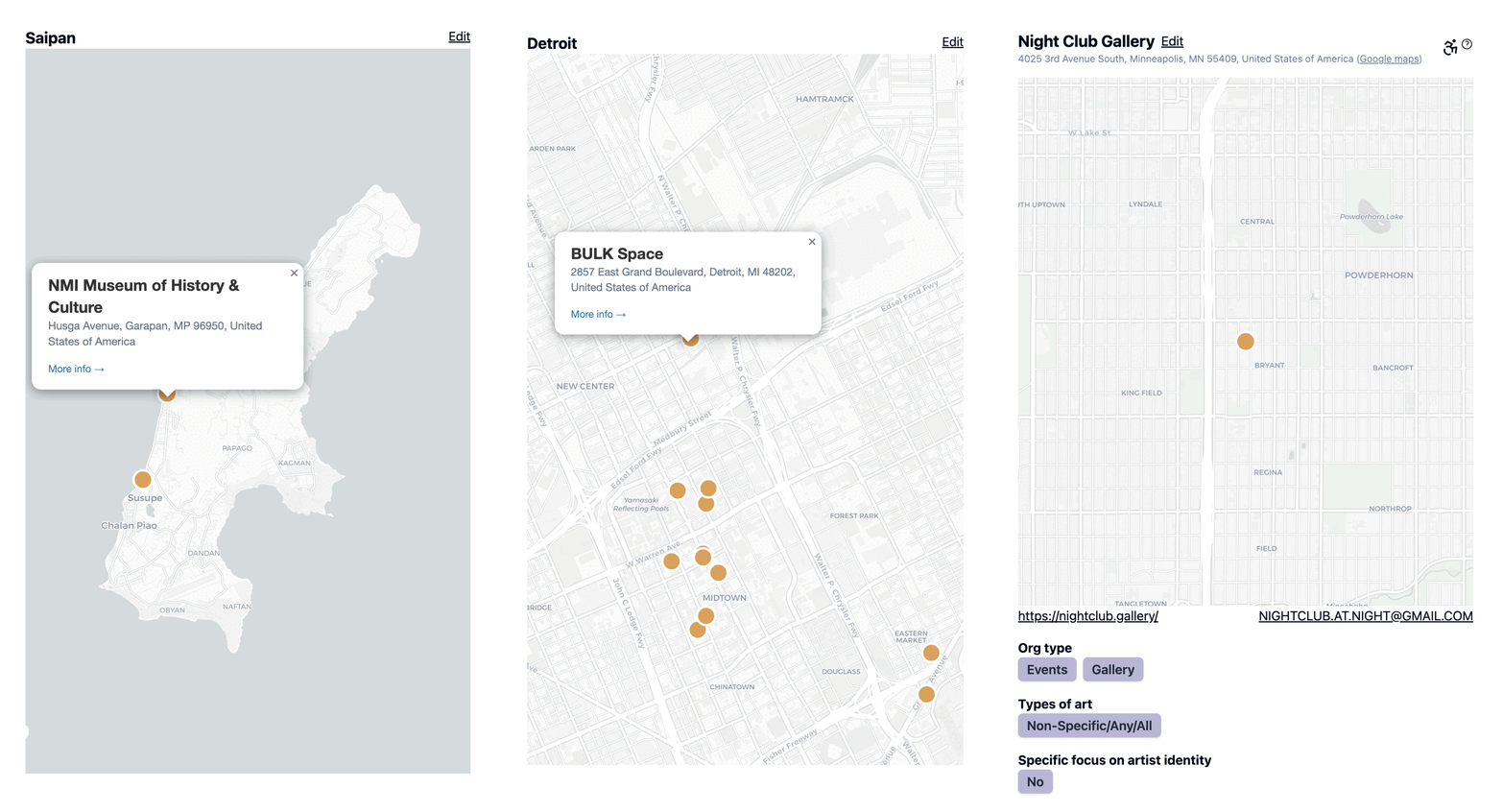
Arts and culture in the United States is a 1.10 trillion dollar industry—yet the people who make it happen beyond the traditional centers of New York City and Los Angeles have unequal access to these funds for their work. From Miami to Seattle to Detroit, creatives struggle to pay rent, seek healthcare, and compete for grants and residencies in their own backyard. And if more than half of New York Artists make less than $25k/year, I wouldn’t be surprised to see similar, if not worse, stats from outside the “art centers.” Local beef over local resources distracts us non-NYCers and LAers from the real problem: the biased belief that art and culture “doesn’t exist” where we are.
My proposal: we need more tools that connect us back together, collectively, on and offline.
Without these tools, humans (evidenced through history) are susceptible to scapegoating, polarization, and fear of the unknown or thy neighbor. Things like PCAC help us see who we are, where we are, and what we need. (Basic network infrastructure can be the wind beneath our wings, it turns out.) Visibility means strength in numbers; it means visiting a local gallery in a town you’re checking out; it means solidarity; it means a stronger argument for stronger funding.
Over the years, PCAC received support from the U.S. Department of Arts and Culture, Common Field, Tony Patrick, and MPLSART, acting as a connective tissue to regional, city, rural, tribal, remote, and territory concerns that often echo one another’s. I encourage you to take a look at PCAC, add a few spaces, or even consider hosting a mapathon. I’ve found ground in the data, adding spaces as I find them.
If you want to join PCAC in person in Detroit, come to our workshop at PLAYGROUND on August 7th! We’ll discuss microgrants, mapping, and funding funding at the city level:
Who else has the inescapable feeling that we’re on the precipice of a societal restructuring? Our usual employers and supporters shifted away to other industries and causes; we’re outbid for opportunities by people 5+ years our level; boards ignore blowback from structural reorganizations that largely support the top and squeeze the bottom; and news of job growth comes off as armchair doublespeak to the well-paying job recession so many of us face every day. Things get testy when people can’t make ends meet.
And yet—we wake up and move forward, step by step.
A term I often bring up when I talk about these moments of great reorganization is functional optimism. To me, functional optimism means knowing a more equitable, durable world will be built by the steps and actions we have the power to take. Those steps can happen every day or through generations. What matters is the determination to step and act even when our opponents look insurmountable.
Tony Horton—the influencer and founder of P90X—says he coined functional optimism in his 2014 slightly-cringe self-help book. I ground the term more in the teachings of Grace Lee Boggs, and possibly even the decolonial and world-building logics of Leanne Betasamosake Simpson, McKenzie Wark, and Andreas Malm. What matters is that functional optimism orients me toward (1) the knowledge that we have the agency to act, and (2) the actions we actually take because of that knowledge. It’s applied Paulo Freire, in a way.
I want to build a world where generations upon generations to feel proud to inherit. Maybe you do, too. Functional optimism can help us see the end of the tunnel. To me, for now, that looks like linking centers of art and culture together in a database. Click by click, step by step. We might be building the future already.
Apply to the Rural Defenders Union: $2,000 and free training to rebuild communities across differences—and fight rural authoritarianism (h/t Barn Raiser)
Movement Voters Project: path to ensure Trump does not get elected in 2024 (h/t Anya Kamenetz)
Climate Emergency Fund’s Case Statement on building a stronger, more effective climate change movement (h/t Anya Kamenetz)
Waybill: art and critique on the aesthetics of logistics (h/t The Brick)
Corey Long’s post on his one-year search for a DesignOps position
xx,
Daniel
No posts
Comments
Nothing yet. Say the first thing.
Sign in to join the conversation.