
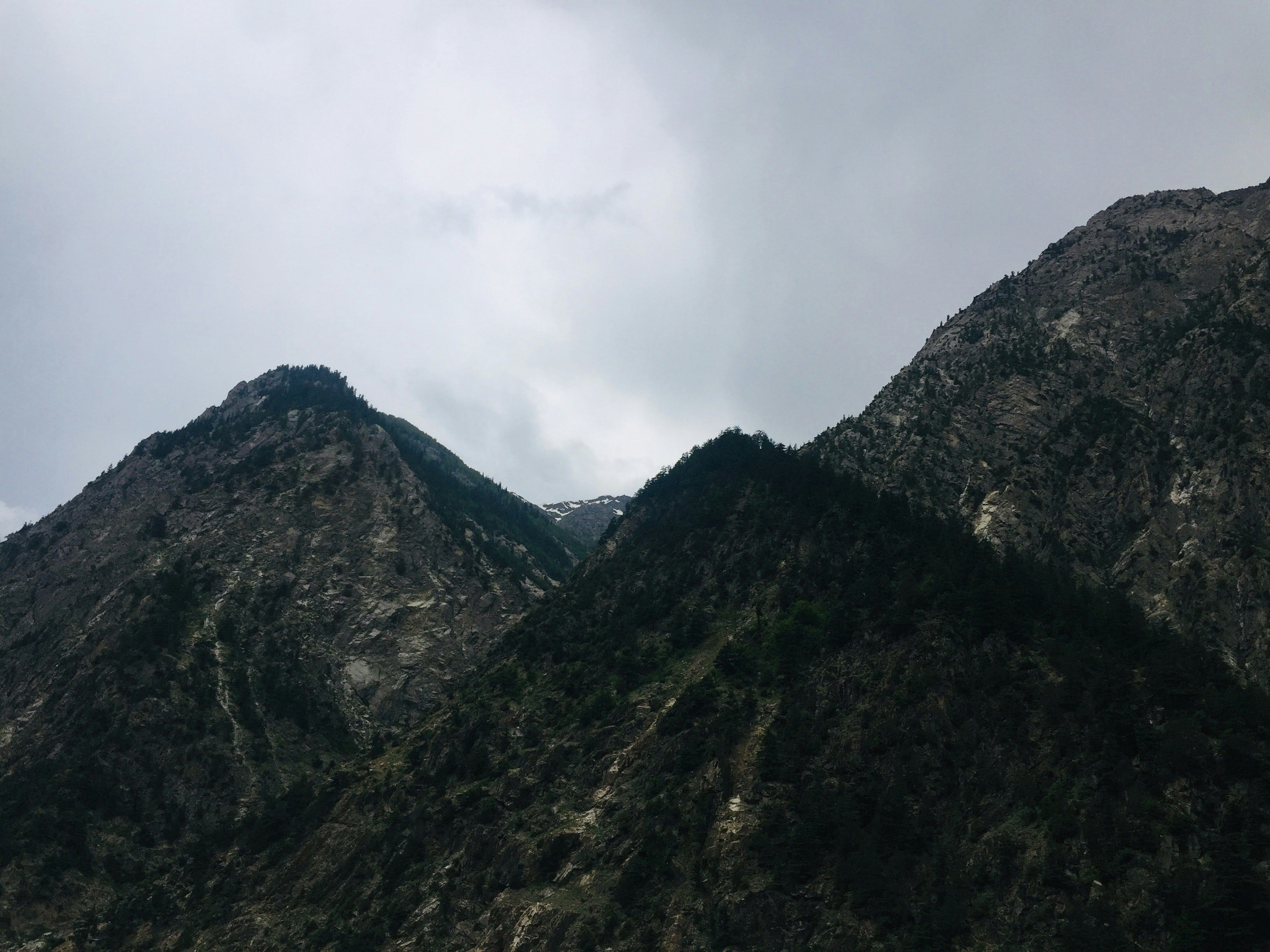
(Photo by Shah Nawaz on Unsplash)
For most of my life, I believed success was the top of the mountain. Degrees. Titles. Salary bands. Authority. The next floor up, with a door that closed and bigger windows. I was good at climbing. I collected credentials like status symbols. I learned to speak in rooms that rewarded certainty. I learned to build a life that looked stable from the outside.
And from the outside, it worked.
Strong educational achievements. Increasing levels of authority. A family that seemed solid and enviable. The story made sense. If you glanced at my résumé, you would assume I had it together.
But beneath the surface, there was turbulent weather.
I was living in quiet chaos. I was seeking validation like oxygen. Every achievement brought a few hours of relief. Every promotion felt like proof. Every nod of approval silenced the fear that I was not enough.
And then, in 2019, the illusion shattered.
My drinking, which had been the private pressure valve of a life lived for external affirmation, finally caught up with me.
I spent five weeks in jail. Five weeks.
If you want to talk about mountains and valleys, that was the valley floor. Concrete instead of carpet. Silence instead of applause. No titles. No professional identity. No performance.
Just me, confined, with some good books, a pen, and a notebook. I often point to that time as something I would never repeat but would never miss. Those five weeks were the deepest spiritual development I’ve had in my adult life.
When I got out, the world shut down. COVID spread across the globe, and with it came a collective reckoning. Offices emptied. Plans evaporated. Certainty became a rumor.
I had lost the old mountain. And the world had lost its map.
It would have been easy to rebuild the same structure. Polish the résumé. Craft a redemption narrative. Resume climbing.
Instead, I chose a different ascent.
The first mountain was about external validation.
This is the mountain most high performers climb. From an early age, our parents, teachers, and institutions reward us for achievement. They praise our intelligence, drive, and competence. We become fluent in performance.
On this mountain, the metrics are clear. Money. Titles. Influence. Visibility.
What is less visible is the internal cost.
When you construct your identity around achievement, your nervous system becomes a hostage to outcomes. You feel responsible for everything. You absorb what is not yours to own. You confuse control with safety.
From the outside, you are powerful. On the inside, you are brittle. I know this terrain intimately.
The valley is not a motivational poster. It is not a neat interlude between successes. It is disorienting and humiliating and clarifying all at once.
Jail stripped me of my illusions. Sobriety taught me that when I tend to my spiritual condition each day, I can meet whatever comes with clarity instead of chaos.
There was no one to impress. No audience. No LinkedIn profile. No curated narrative.
That left me with one abiding question: Who are you when the performance ends?
In the quiet of that confrontation, I realized something brutal and freeing.
I had been living for validation, not vocation.
My drinking was not the core problem. It was a symptom. The deeper issue was that I had never learned how to sit with myself without reaching for applause.
So, I began to rebuild. Not my résumé. My interior life.
To move forward, I needed a set of practices. Not hacks, strategies, or shortcuts. Practices.
Three, in particular, became foundational.
Stillness is not passivity. It is not laziness. It is not withdrawal.
Stillness is the capacity to sit with your own internal weather without needing to fix it, numb it, or perform over it.
For years, I avoided stillness because it threatened the identity I had built. If I stopped producing, who was I? If I stopped climbing, what was left?
Stillness taught me that beneath achievement and failure alike, there is a deeper ground.
Leaders who cannot practice stillness become reactive. They mistake urgency for importance. They outsource their sense of worth to quarterly results. They build organizations that mirror their anxiety.
Leaders who cultivate stillness become spacious. They can pause before reacting. They can tolerate ambiguity. They can distinguish between signal and noise.
Stillness is the first mountain of the second ascent.
Radical self-ownership means owning 100 percent of what is yours to own and none of what is not.
For much of my life, I owned everything. Other people’s emotions. Organizational dysfunction. Outcomes beyond my control. I carried burdens that were not mine and resented the weight.
At the same time, I avoided owning the parts that were mine. My drinking. My avoidance. My need for validation.
Radical self-ownership is clarifying.
It asks:
What is mine here?
What is not mine?
Where am I blaming?
Where am I absorbing?
Where am I abdicating?
When leaders practice radical self-ownership, something remarkable happens. They stop micromanaging what is not theirs. They stop internalizing what belongs to others. They stop outsourcing responsibility to culture or circumstance.
They become grounded. And grounded leaders build grounded teams.
Transition is the crucible of leadership.
Most leaders are comfortable when the path is clear. They are less comfortable when the map dissolves.
I rebuilt my life in a season of global uncertainty. The old scripts were gone. The future was opaque. I had to choose courage without guarantees.
Courage, I discovered, is not bravado. It is not chest-beating certainty.
It is the willingness to move forward aligned with your values when the outcome is unclear.
Leaders who cultivate courage through transition do not cling to outdated identities. They can release a role without losing themselves. They can evolve without panic. They can guide others through uncertainty because they have walked through their own.
Stillness. Radical self-ownership. Courage.
These are not abstract virtues. They are lived disciplines.
They became the foundation of my second mountain.
The first mountain is about independence. The second mountain is about interdependence.
Here is where many leaders stumble. We often confuse interdependence with co-dependence. Co-dependence is fusion. It is over-responsibility. It is rescuing. It is enmeshment disguised as care.
Interdependence is different. Interdependence requires strong individuals who can stand on their own feet and choose mutual reliance.
You cannot practice healthy interdependence if you have not practiced radical self-ownership. You cannot build mutual systems of dependence if you are internally chaotic.
When leaders do the inner work, they build organizations that reflect it.
Instead of fear-based cultures, they cultivate generosity.
Instead of scarcity, they model abundance.
Instead of competition that devours, they foster collaboration that multiplies.
Healthy leaders create healthy systems.
And healthy systems do not just produce profit. They produce possibility.
Every leader is on a journey, whether they acknowledge it or not.
There is a call to adventure. Often it looks like ambition. Sometimes it looks like dissatisfaction.
There is a crossing of the threshold. A promotion. A crisis. A public failure. A private reckoning.
There is a descent. A confrontation with shadow. A realization that the old identity is insufficient.
There is a mentor, or a practice, or a moment of truth that reframes the path.
And then there is the return.
Not a return to the old mountain, but a return to the world with a deeper orientation.
I do not position myself as the hero of this story.
The leaders I work with are the heroes.
My role is as a rucking guide.
I walk with C-level leaders, founders, and executives who appear successful on the outside but feel the tremors underneath. Leaders who sense that achievement alone is insufficient. Leaders who want to build organizations that reflect their deepest values, not just market pressures.
When they commit to this journey, three transformations unfold.
First, they learn radical self-ownership. They stop owning what is not theirs. They stop blaming. They stop rescuing. They become accountable and free.
Second, they practice healthy interdependence. They build relationships and systems based on mutual strength, not hidden fragility.
Third, they create generous and abundant organizations. They orient their companies toward a brighter future for humanity, not just quarterly gains.
This is not soft leadership.
It is rigorous.
It requires courage.
It requires humility.
It requires the willingness to descend before ascending again.
I am not interested in building a funnel.
I am interested in transmitting a beacon.
A beacon does not chase. It stands. It signals.
It says: If you are climbing and feel the hollow echo beneath your success, you are not alone.
If you have descended into a valley and are unsure how to rise differently, there is a path.
If you want to lead from stillness rather than anxiety, from ownership rather than blame, from courage rather than control, this work is for you.
My life didn’t collapse so that I could craft a redemption brand. It collapsed so that I could discover a deeper mountain. The first mountain taught me how to achieve. The valley taught me who I was without achievement.
The second mountain is teaching me how to lead in a way that is generous, grounded, and future-facing.
If you are a leader who senses that your next ascent must be internal before it is external, consider this your invitation.
Not to hire me. Not to consume content. But to begin the practices. Find stillness. Practice radical self-ownership. Choose courage through transition. Build interdependence.
And from there, build something that outlives your title.
The world does not need more leaders who can climb. It needs leaders who can descend, transform, and return with something worth sharing.
No posts
Comments
Nothing yet. Say the first thing.
Sign in to join the conversation.