
Tunnels are the best. I’d like to think that’s pretty uncontroversial. But who knows, maybe I’m forcing my thing onto other people here. When my daughter was a bit younger, we used to play a game where we pretended to be moles under the bed covers. The exact same game that I used to play with my parents.
I’m pretty sure that’s what kids are doing when they build ‘forts’ as well. It’s only done once you’re enclosed from above, right? These aren’t forts. Let’s be honest, these structures are hardly castles. But they may well bear some resemblance to the crypts or catacombs which lie under those castles. This is why tunnels are awesome. The entombment. The enwombment. But it’s also the network aspect, the branching structure. It’s networks of tunnels that we like, not single tunnels. It’s the exploration of a subterranean world where we have choices.
I’ve spent years dreaming about tunnels.
The release of Backrooms has got me thinking about all this again. You’ve seen the trailer, obvs. The dumb premise: a doorway appears where it shouldn’t. The film comes from a modern internet myth, popularised by Kane Parsons’ viral YouTube work and rooted in the older online image of an endless, yellowish, fluorescent interior. If I’m honest, I can’t really understand why half the internet lost its shit for years about something so visually - and conceptually - anaemic. I can’t imagine the film is going to be much more narratively generous than the aesthetic, but I could be wrong. It looks like it’s getting good reviews, so maybe I’ll withhold judgement. But for me, the interesting part is the doorway. A plain room gives way to a hidden network. That’s the thing.
I think the point here is that what defines a tunnel is not even necessarily the subterranean aspect of it. Perhaps the lack of natural light is important. I should have titled this Corridors, Corridors, Corridors, because corridors do perhaps capture the essential element. It’s the doors off the side that count. It’s that intimation that through every door is a new side quest. The corridor itself is, I guess, a kind of liminal holding area (is it just me or is the algorithm causing a kind of word-specific satiety? I used to love the word ‘liminal’ but I now see it everywhere, to the extent I feel kind of embarrassed using it. Maybe just another sign of the end times/civilisational mode collapse.)
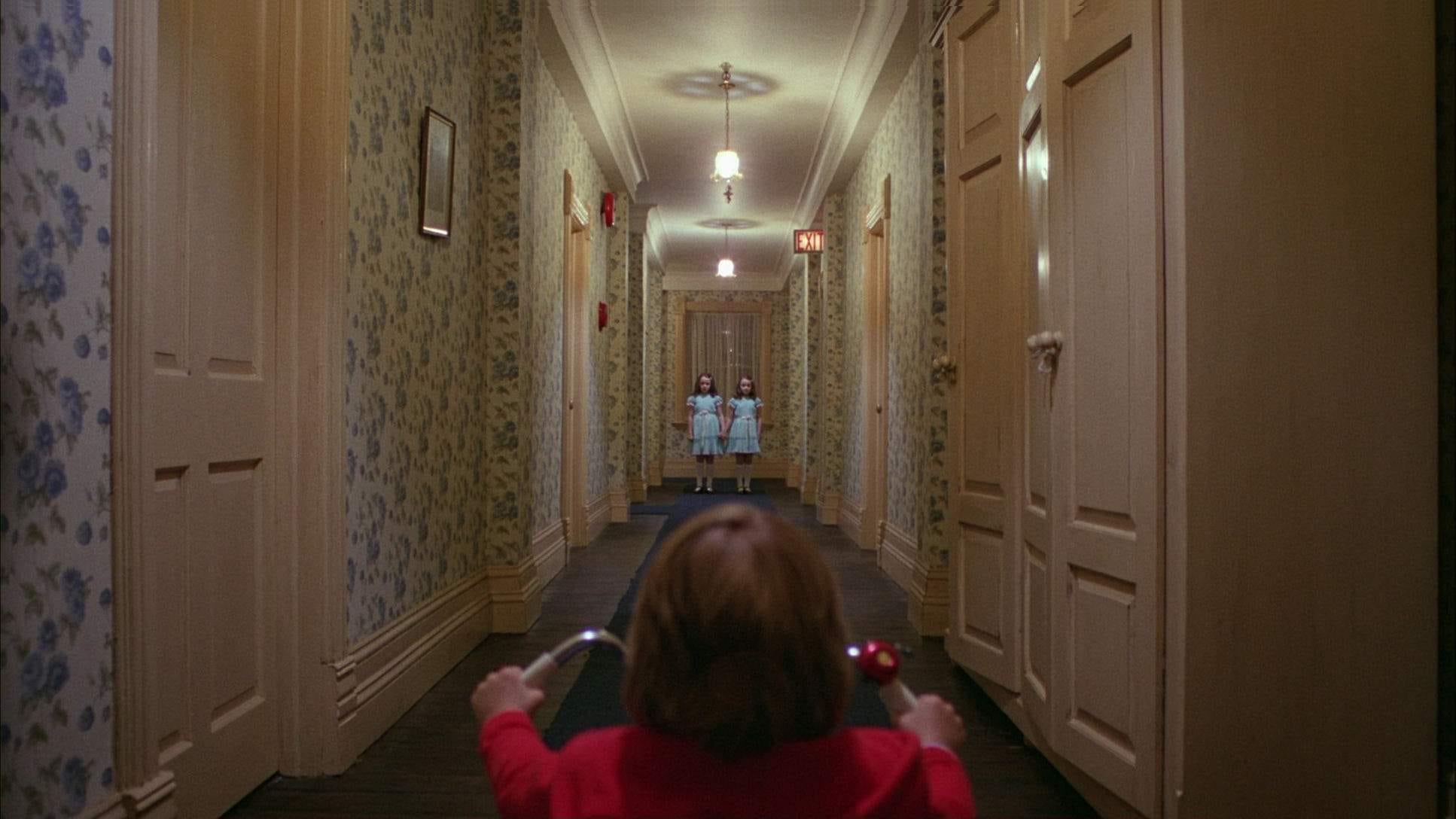
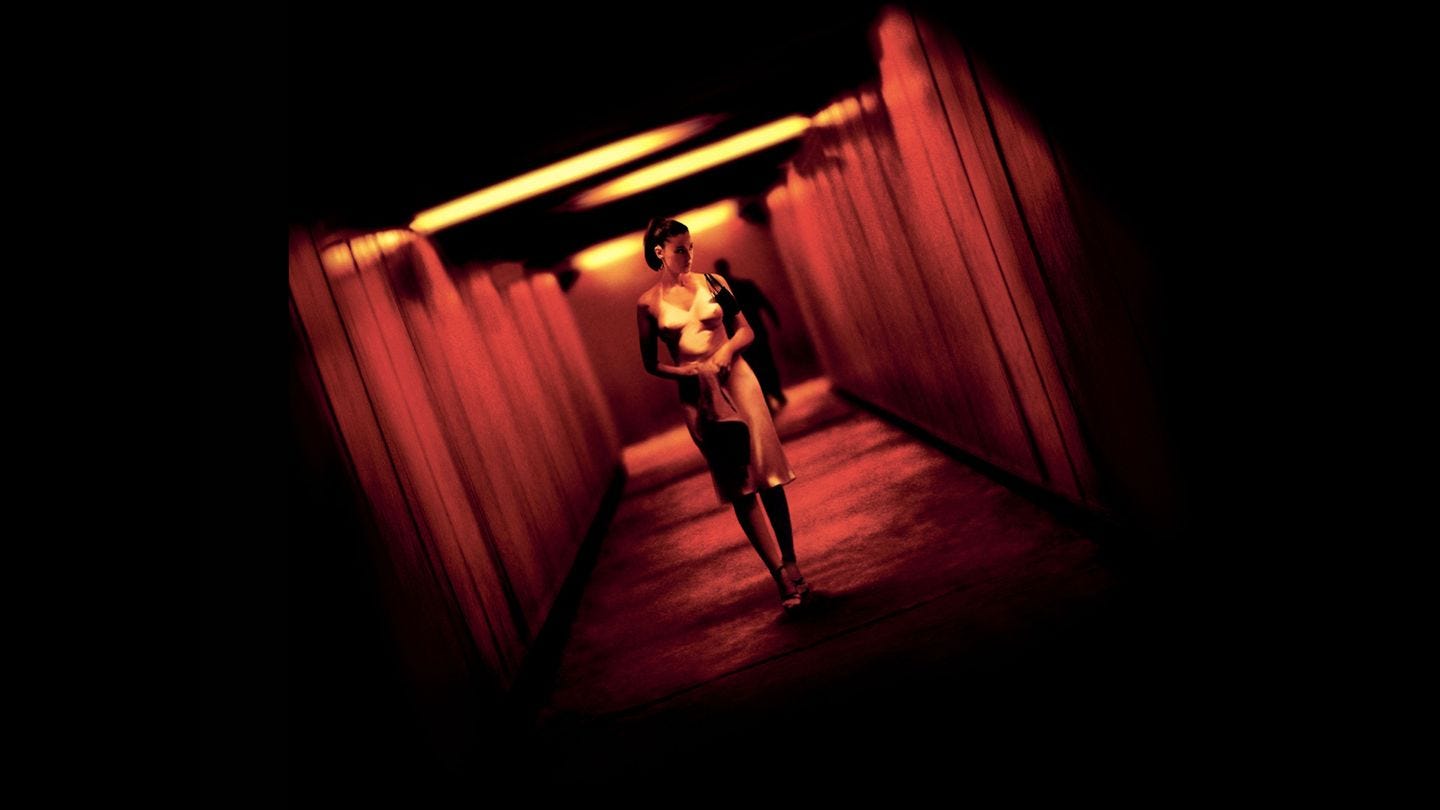
Even this month, the culture seems to have briefly admitted that corridors are good. The Guardian published a list of the twenty greatest corridors in film, pegged to the release of Backrooms. Some solid choices: the Overlook Hotel in The Shining, the hospital corridor in The Exorcist III, the fight corridor in Oldboy, the route through the Copacabana in Goodfellas, and Jean Cocteau’s La Belle et la Bête, where Belle moves through the Beast’s castle as if the building has taken over (I’d vote for the nightclub sequence at the start of Irreversible, too; although that film is too often remembered for another, unspeakably brutal tunnel sequence). Film-makers have always known what to do with corridors. If you put the camera at one end and something, or someone, at the other, the viewer will start leaning forward.
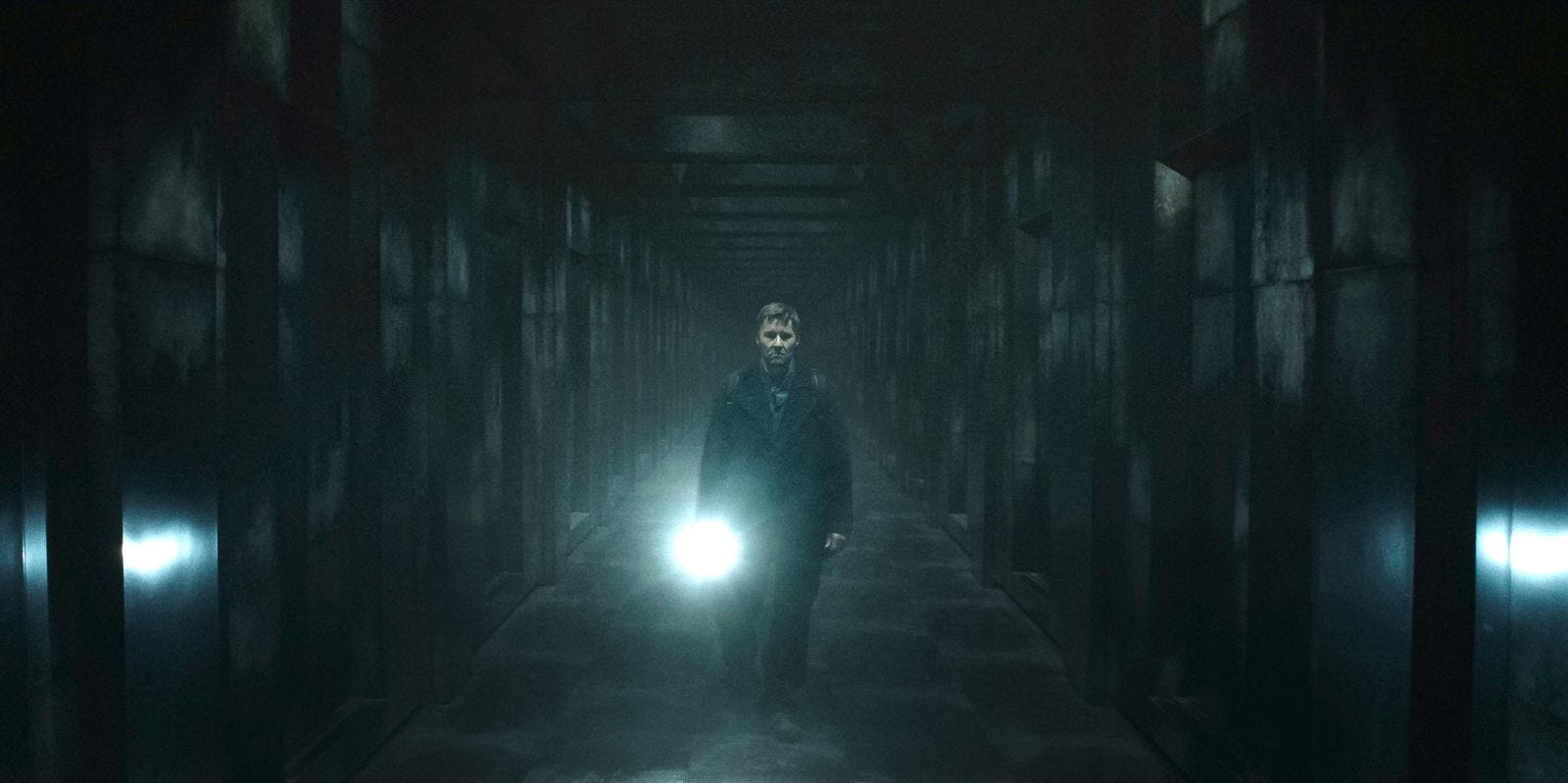
I finished watching the series Dark Matter a while ago. It’s not great. But the tunnel? A good one. The central conceit here is that the main character finds himself in an endless tunnel with doors, each of which leads to one of an infinite number of highly differentiated, or sometimes not so differentiated, alternate universes. This, I think, is very close to the perfect tunnel. The point is not that it goes on for ever. It’s that every door is an entryway to a whole new world.
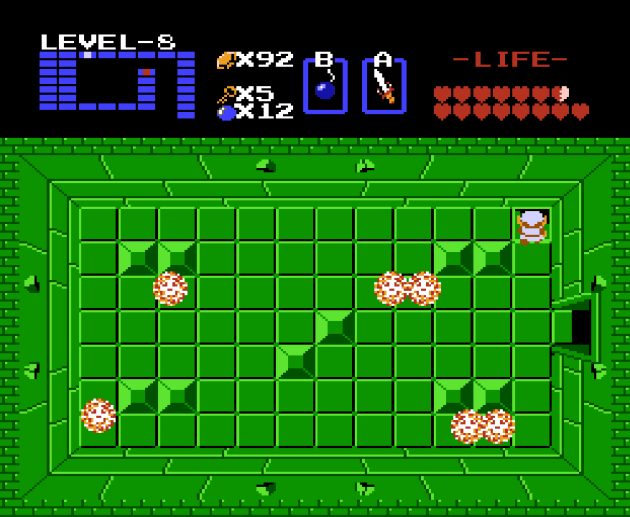
The odd thing is that, despite all this, and despite loving the original Zelda games on the NES, I never became a proper video-game person. You might have thought I would spend my life intoxicated by virtual corridors, dungeons, temples and tunnels. Somehow I didn’t: I liked games, but I didn’t get caught up by them in the way that other people did. Then VR arrived, and I let myself believe the hype. Despite being repeatedly let down by it, I bought one iteration of the Quest after another, partly because VR finally made the corridor feel embodied again. I didn’t just move a little figure through a tunnel. I turned my head, I looked behind me, walked into a space that was being made around me.
One of the coolest examples of this is Tea For God. The game uses what are often called impossible spaces: it lets you keep walking within the confines of your actual living room by continuously generating new turns, rooms and corridors. It even works in tiny London flats/apartments, I can vouch. You think you are progressing through a much larger world, but the game keeps folding the route back through the space you physically have. The result is mind-bending and uncanny in the way that VR promised it might be when I was a kid. I’m walking - getting my steps in for real - in my living room, but I’m also somewhere else, moving through a maze that seems to have achieved some impossibly high-dimensional geometrical magic. I suppose why VR got to me when ordinary games mostly didn’t is that a screen shows you a corridor but VR gives your body the problem of being inside one. But the absolute best place for tunnels and corridors? Dreams.
It was through dreams that I realised I had a tunnel problem.
I think the point finally came around two years ago when, after decades of wandering alone in my obsessions, I stumbled on a community of like-minded corridor and tunnel enthusiasts. For years, I’d been experiencing engrossing, beautiful recurring dreams, increasing in their frequency to the extent that I sometimes wondered if I’d ever dream about anything else. Actually, the dreams themselves weren’t recurring, but the architecture was. I would find myself in something a little like a souk. Like, perhaps, the medina in Marrakesh, labyrinthine and full of frenetic activity. And I was always looking for something. Something… awesome. Illicit. Not like sexy illicit, but illicit the way things behind doors used to be when you’re a kid. Like so many dreams, they would often finish just as I was about to find that thing.
Sometimes, the vibe was less ancient Arabia and more Art Deco, or even Art Nouveau hotel. Other times, I would note the characteristic mud-brick patterning of the ancient skyscrapers in Sana’a, Yemen, all tiny tea shops recessed in dark corners (I have no idea whether underground tunnels connect these fascinating and beautiful buildings, but I like to think they do.) The point is that I would return to this same geography night after night. Some details changed a little over the weeks and months, but on a night-to-night basis, I was essentially coming back to the same place. I’m scared to think of the number of tunnel-related dreams my wife has heard me recount.
One day, I happened across a community on Reddit called r/themallworld. I assumed that this was one of those freaky derelict architecture subreddits celebrating dead shopping malls, but it in fact turned out to be something way more up my (subterranean) street. It’s filled with people describing recurring dreams of a surreal and endless mall architecture. This is a shared dream architecture with familiar hallways that stretch on, escalators and ramps that sometimes defy physics, stores, food courts, cinemas, toilets, empty service areas and transport hubs. What’s remarkable is that most of these dreamers experience the mall world somewhat differently, but there are ‘shared’ locations. The cinema, for example, or the gold-patterned staircases. Occasionally the ancient metal elevators. Have a look, it’s worth it.
I’ve never contributed to this subreddit. I’m more of a lurker. But it’s wild. Every so often, something weird happens: someone posts about something that he or she saw in their own dream, and then other people respond saying that the very same night they had had a similar experience in the mall world. Some even report lucid mall world lives, in which they hold down dream jobs or relationships in this alternate architectural realm. It feels as if hundreds of strangers have accessed the same liminal geography in their sleep. (I can hear people snorting with derision as they read this… I don’t care.)
I think to understand the enormity of what I felt when I came across this world, you have to understand that it’s about more than malls. Malls are ultimately fairly banal (although I admit to finding them thrilling in a way that most of my friends find surprising). In this community, though, they represent an archetypal labyrinth. The posts have a kind of awe about them. Almost invariably, people’s first posts are full of disbelief that they have discovered a kind of new continent in the collective unconscious. Perhaps it does relate to other online realms. I think both the mall world and the Backrooms allude to a shared modern folklore: the suspicion that behind the ordinary architecture of life, there lies an endless hidden world of corridors.
 - IMDb")
The comparison with the Backrooms is obvious, but the psychological flavour feels different to me. I wrote briefly in a Substack post called Ghosts, haunted by houses, about how the Backrooms are a nightmare of pure allocentric geography. What I meant is that they feel like place stripped of personal anchoring: a world of corridors, rooms and distances with no home position, no biography, no reason why this should be happening to you.
Mall World, by contrast, often feels inhabited. By ghosts, perhaps, but by the fat dream-ghosts of real humans, not the hungry vengeful ghosts of creepypasta online lore.
I’m sure this relates to other online communities that I would love to know more about. There are Backrooms communities, liminal-space communities, reality-shifting communities (I’m getting obsessed with these), lucid-dreaming communities, tulpamancy communities, and no doubt many others I’m too offline or middle-aged to have encountered properly. The reality-shifting world is particularly interesting here, because it is full of people describing techniques for entering new realms. I don’t want to collapse all these phenomena into one thing but they seem to share a fascination with the possibility that consciousness might find, build, or visit a second architecture behind the ordinary one. (I have an unfinished post on the notion of realms, and the associated religious history and also how this relates to the neurological disorders of place… I’m now feeling energised to finish that. It speaks volumes to me that Pure Land Buddhism is probably the least adopted form of Buddhism in the West - perhaps because of its explicit insistence on the ontological and soteriological centrality of realms).
The details differ, but that sensation of endless passage is exactly what the Mall World dreamers describe. I always loved that opening sequence in Time Bandits, where a bedroom wall suddenly becomes a breach in the world, by pushing further and further backwards, turning a boxy bedroom into a tunnel pointing towards the unknown - and a beautiful adventure begins. As I turn corner after corner in my dreams, I know I’m searching for something just out of reach, down one more corridor. Maybe because I’m writing this, I actually had one of the most vivid dreams in this genre that I’ve had for months, maybe years, a few nights ago. It was wonderful, and mysterious, and felt almost like a homecoming after a long absence.
Now I’m a boring adult, I’ve realised my obsession with tunnels and corridors was about these psychic spaces as much as physical ones: the dreams and myths of passageways that run under the surface of waking life.
Not long after this realisation, I had the chance to experience a real dream-like corridor in Osaka. In Sennichimae, close to Namba, stood the Misono Building: a mid-century leisure complex whose glory days had apparently included cabaret, hotel rooms, banquet halls, saunas and, later, a strange second life as a subcultural warren of tiny bars. By the time I visited, parts of it felt already on the way out: faded doors, old signs, half-lit corridors, and the sense that the building had been used for too many different kinds of night-time pleasure to belong entirely to the present.
The second-floor drinking area was lined with small bars and snack-bar rooms, each one a little world behind a door. We actually went into a few of them. One was Nintendo-themed, or at least saturated with old Nintendo: consoles, bright plastic, pixel nostalgia, the whole 8-bit altar. One was pure 1980s super-kawaii excess: pastel toys, soft colours, childish objects arranged with a kind of manic tenderness, playing only Madonna. Some looked very BDSM, and I sheepishly shut the door as quickly as I’d opened it. The corridor itself was strange enough, but every door seemed to open onto a self-contained aesthetic world. They were tiny rooms, really, each one with barely enough space for a few customers and a bartender. Stepping into them felt like entering a pocket universe. I took a few (not very good) videos.
I have dreamed about it a lot since leaving. It closed last year and is due for demolition.
I once visited New York and stayed for two nights at the Chelsea Hotel. This was 2004, before the old Chelsea became much harder to access. I’d long been fascinated by its reputation as a warren of artists, writers, rock stars, addicts, geniuses and people who were probably several of those things at once, all living on top of each other in a Victorian Gothic pile in Manhattan.
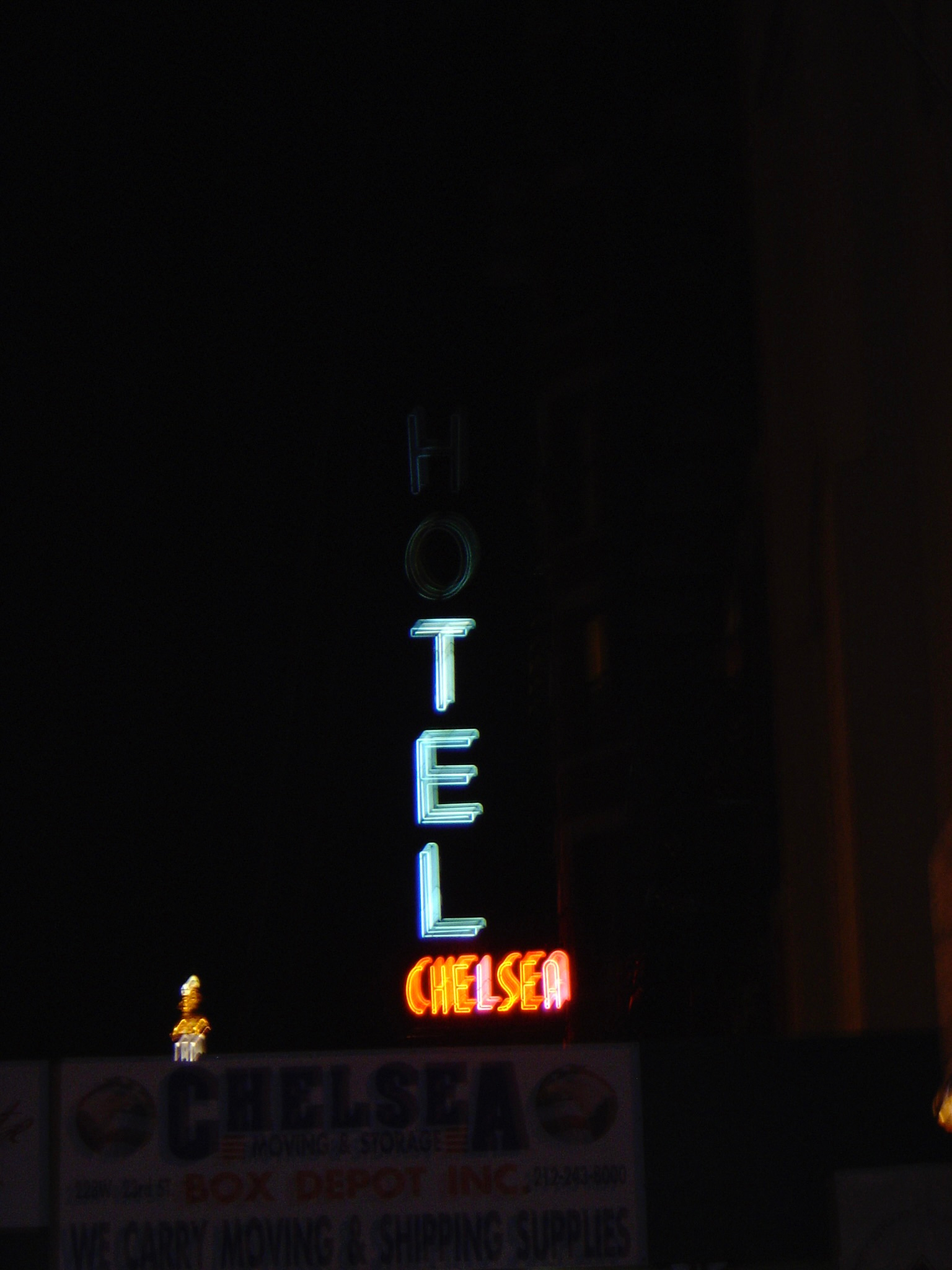
It has to be the most romanticised hotel in the world. Leonard Cohen, Janis Joplin, Patti Smith, Robert Mapplethorpe, Edie Sedgwick, Arthur Miller, Bob Dylan and even Dylan Thomas and many others are part of its mythology. Art was hung on the walls, sometimes because residents had paid their rent with it. It was beautiful and ridiculous and damaged and probably irritating for many New Yorkers. I thought it was the most wonderful place in the world.
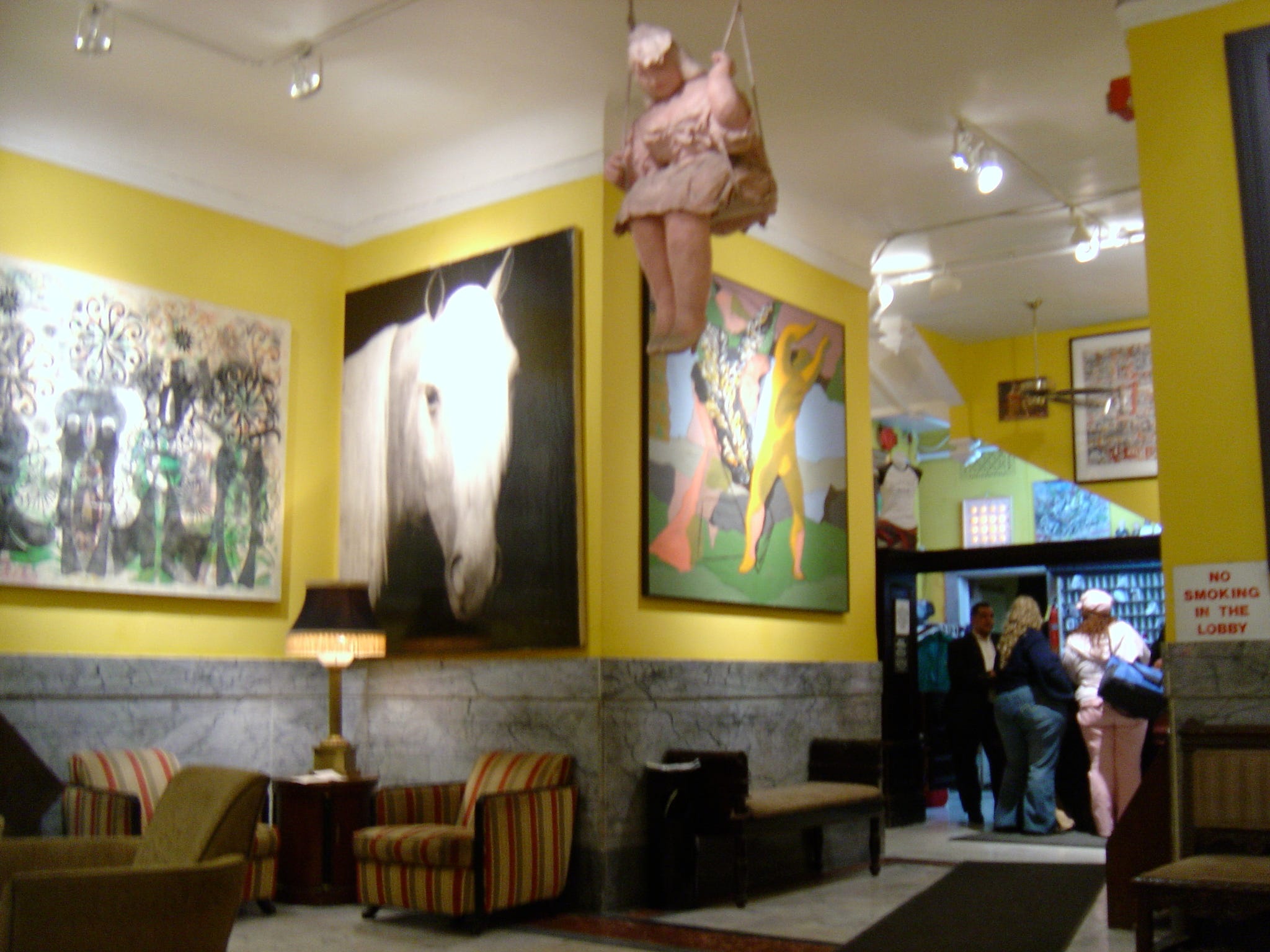
Also there was the horror. I was an obsessive 1970s British punk fan when I was younger, and famously Nancy Spungen was found dead, stabbed in the bathroom of the room she shared with Sid Vicious in 1978. Sid was charged with her murder and died of an overdose before the case came to trial. Sid and Nancy was one of my favourite films (Gary Oldman is incredible, and it even has Courtney Love - who apparently auditioned for Nancy but didn’t get it). That story feels baked in to the walls. It’s a place where the glamour and the damage cannot really be separated.
I remember arriving and feeling that the building had quite clearly not been tidied up for my benefit. This was not a hotel in any normal sense of the word. The corridors were lined with art, lamps, chairs and the detritus of people who had stayed too long. Worn carpets. The walls seemed overfull. The peeling plaster, the smell of paint and old wood, the general feeling of things having been dragged through decades: the place was humming.
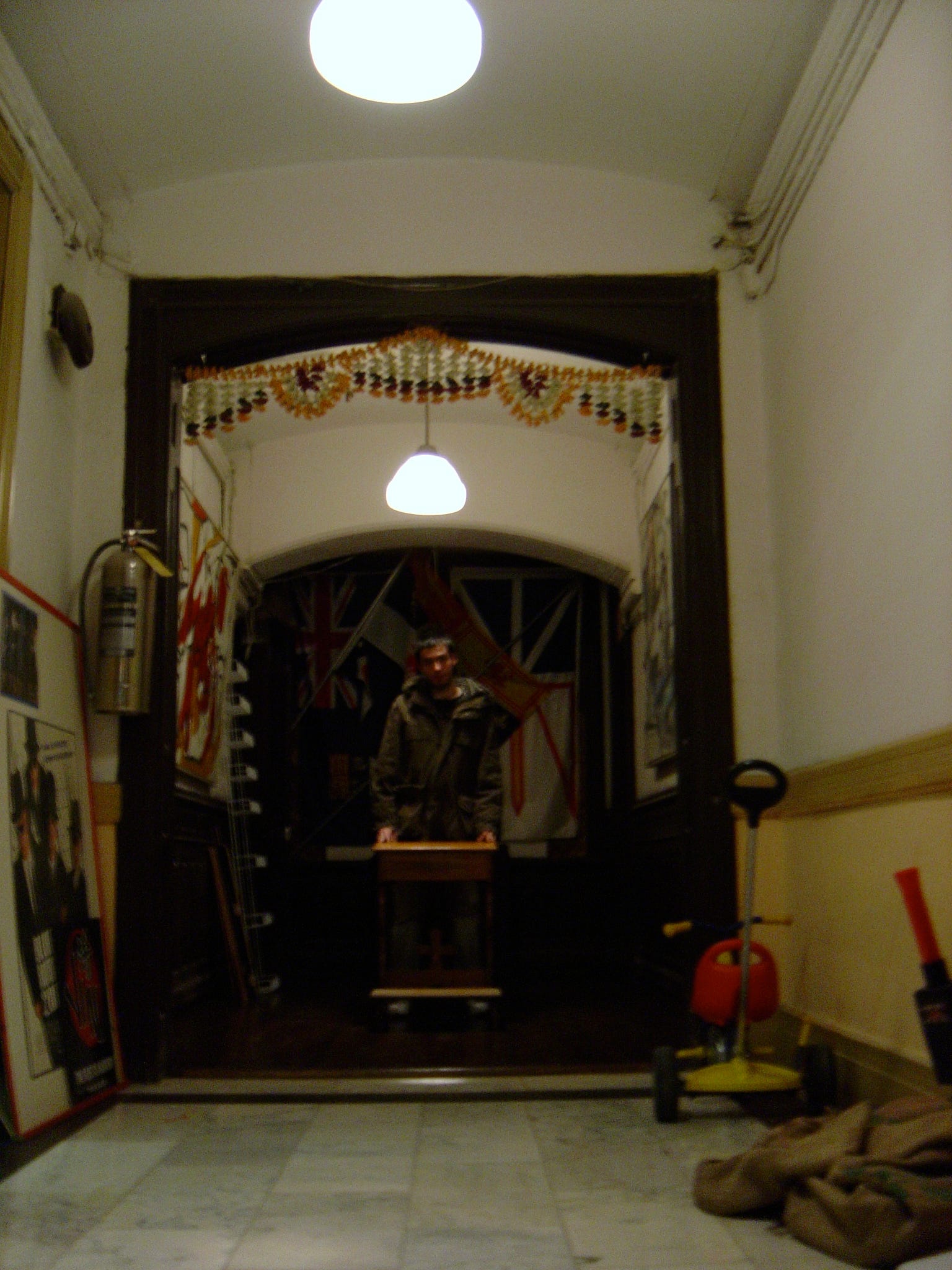
I also have a memory, although I now can’t fully convince myself it wasn’t a dream, of seeing a woman in the lobby with a small animal around her neck. Maybe it was a mink on a lead. Maybe it was an ermine (what IS an ermine?). Maybe I have invented the whole thing out of the hotel’s own reputation, but I can still picture a woman in the Chelsea lobby, carrying or wearing or accompanying some small impossible creature. Everyone behaved as if this was perfectly normal.
At some point in the night I drunkenly left my room and wandered onto floors we had been told we weren’t meant to go to; the ones not reserved for excitable English tourists in their early twenties who spent too much time listening to Leonard Cohen and the Velvet Underground. The corridor stretched away with that fat hotel silence, full of doors behind which people - I allowed myself to imagine - were sleeping, arguing, writing, detoxing, dying, or doing nothing at all. And then I saw an abandoned child’s tricycle on one of the floors.
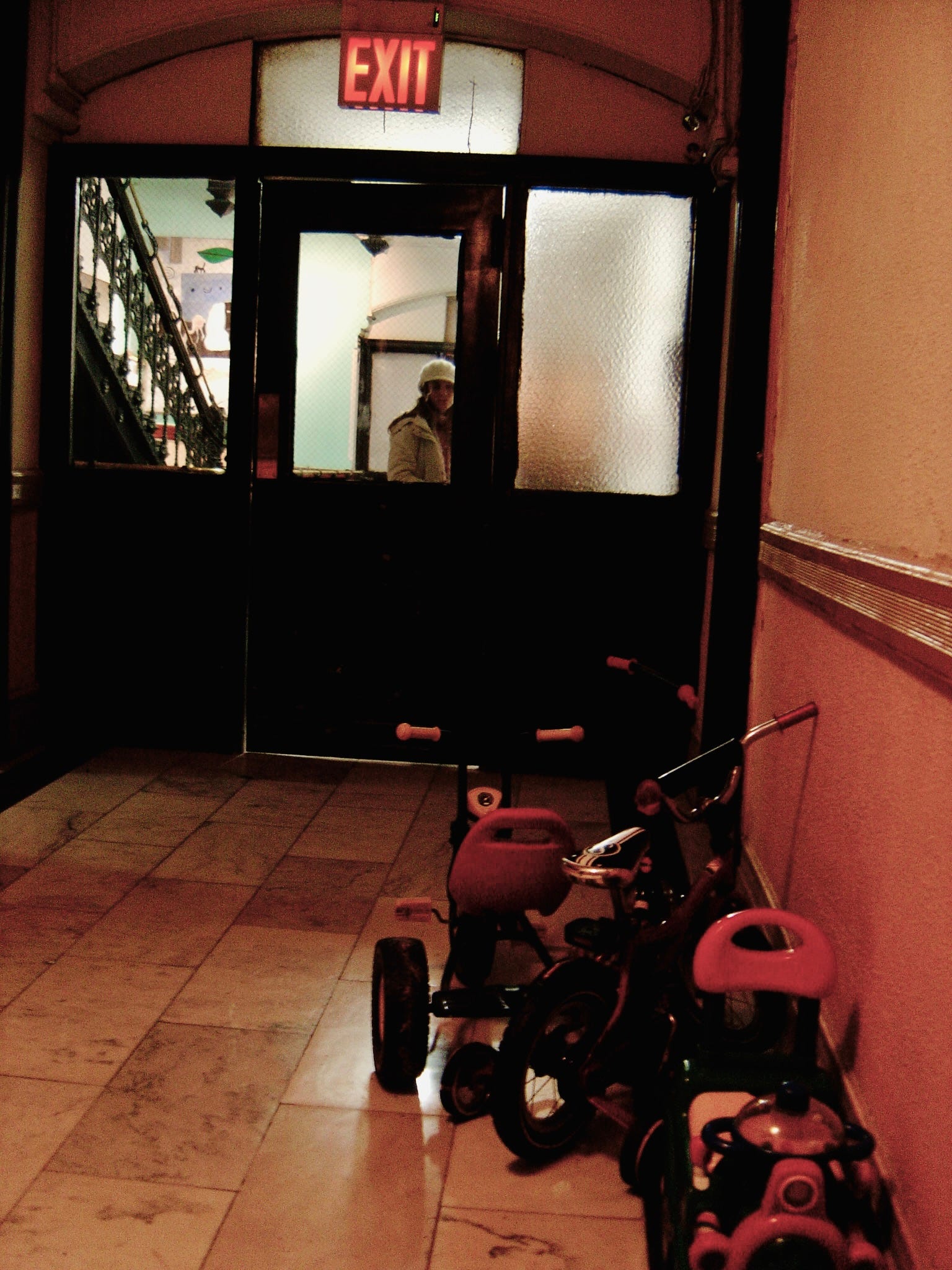
Obviously I thought of The Shining. There are only so many things a lone tricycle can do in a hotel corridor at night, and nearly all of them are bad.
It is self-evidently a cliché to say that as I wandered those halls, I had the uncanny sense that the Chelsea was alive. But that’s how it felt. .
Although both in varying states of dereliction, Misono’s corridors and Chelsea’s felt crowded by rowdy ghosts. I suppose the Chelsea’s hallways taught me that tunnels don’t have to be underground to lead us inward. Walking those corridors was a psychological journey. Each turn, each stairwell, each forbidden floor felt like another layer of the building’s memory. In the Chelsea, I felt I was walking through other people’s unfinished lives; there was always the faint suggestion that someone had just left the corridor.
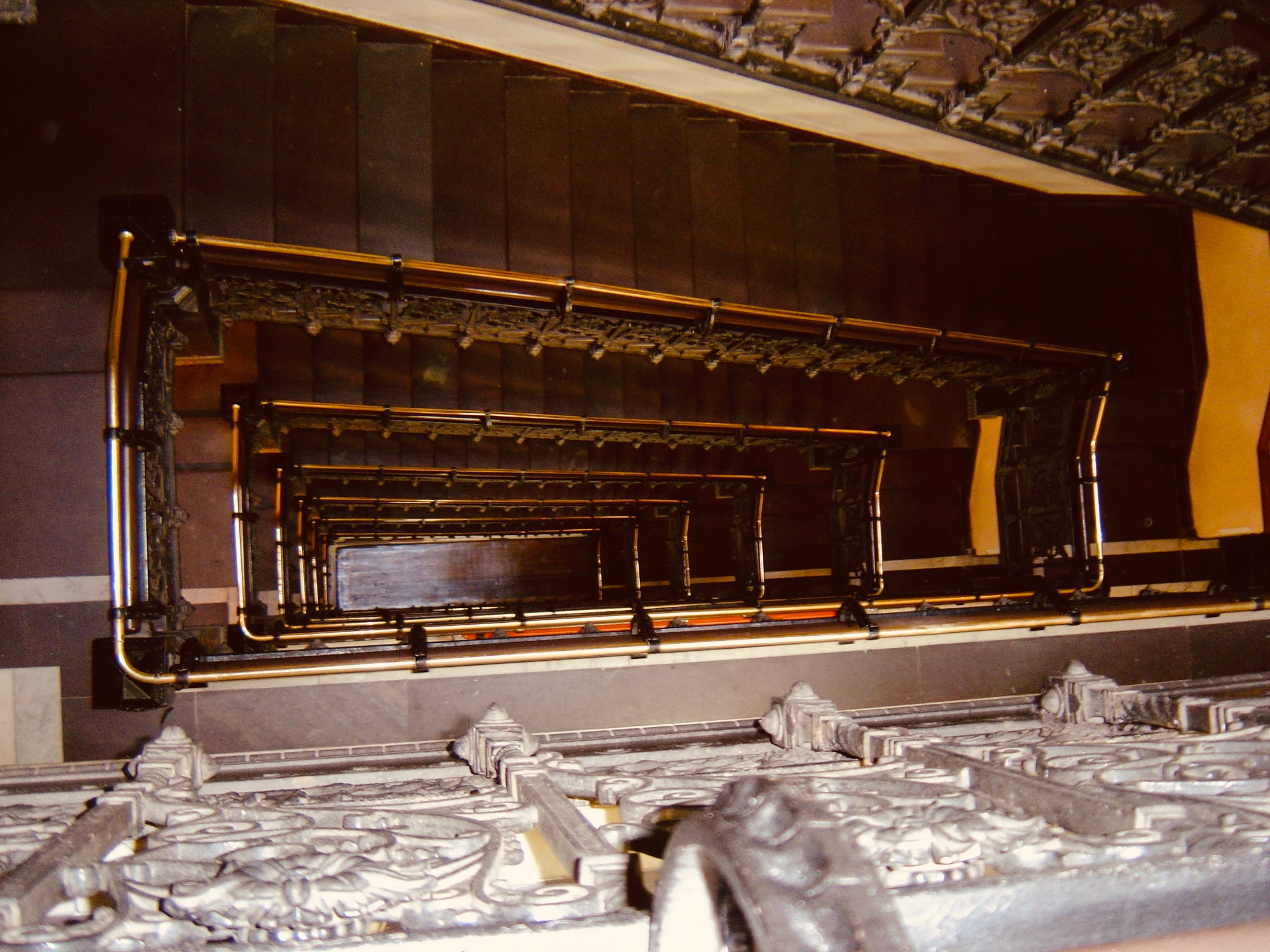
The strangest corridors are sometimes the ones you already know. I can remember at age 3 or 4 seeing my Mum walk through the walls of the corridor outside her bedroom. No doubt I hallucinated/imagined it, as kids do, but she never denied it and I never felt comfortable hanging out there.
One night, when I was on call at the Maudsley Hospital (I think one of the oldest functioning psychiatric hospital buildings in London, improbably home to my university department, the most cutting-edge psychiatric research institution), I was walking down that very long central corridor at about 2am. Anyone who has worked in a hospital at that hour will recognise the atmosphere. It’s ALWAYS scary. And for all y’all non-psychiatrists, believe me it’s scarier in a hospital where almost nobody leaves the wards at night. A fluorescent light hums. A distant door closes. Things creak.
At the far end I saw two young East Asian women. They were standing very still. Then they lifted their cameras in unison and took a photograph. The flash went off. For a moment, inevitably, I thought again of The Shining. Two figures at the end of a hospital corridor, moving together, then the flash. Not ideal at two in the morning.
Rather than scream and run in the opposite direction, I somehow got over the fear and approached them. As I did so, more people began to emerge around the corner. Then more. Soon there was a whole group of them, walking calmly through the hospital in the middle of the night. They eventually made their way to the hospital chapel. I barged in demanding to know what all these people were doing in my hospital at two in the morning. They were very polite about it. They told me they were part of a night-time walking tour of “mad London”, which had started somewhere central and taken hours to reach the Maudsley. They even showed me the advert in Time Out, which did make the whole thing slightly harder to object to. It was still deeply strange.
I have never met anyone else who encountered this tour, which is one reason the memory has retained such a strange texture, and so for years, it sat in my mind with the slightly suspect glow of a dream. I’m confident enough in my own memory to know I didn’t hallucinate the whole thing, but it was hard to get my head around. Then I later found the likely culprit: CoolTan Arts’ Largactyl Shuffle, a series of guided, ‘stigma-busting’ mental health walks through South London. Time Out advertised versions that began at Tate Modern and ended at the Maudsley Hospital in Denmark Hill. A participant’s account of the 2014 midnight walk describes a ‘route from 11.45pm to 5am, with stops on “mad” buildings, night work, surrealism and anxiety, followed by final refreshments at the Maudsley chapel’.
As with any old hospital, there were also rumours about tunnels underneath the Maudsley. Service tunnels, abandoned routes, perhaps even passages connecting it to King’s College Hospital, over the road. I have no idea whether any of this was true, and I suspect most of it wasn’t. Hospitals generate these stories. They already have so much hidden movement: night staff, porters, pipes, laundry, food trolleys, records, bodies, old wards repurposed and renamed. It doesn’t take much for the imagination to add another layer underneath.
Lars von Trier’s The Kingdom has always haunted me. It gets that a hospital is a building with something old and strange moving through it. The visible institution keeps going while another version of the building seems to stir underneath. Anyway, despite feeling like I was going mad, it really happened. These people had walked for hours through London and ended up in a corridor I knew mainly as part of being on call. To me it was a place of bleeps, tiredness and worry. To them it was the endpoint of a night walk about madness and the city. Oddly moving.
I had biscuits and tea with them and made my way back to work. It made me remember that London contains several Londons.
Did anyone go to Alien War, at the Trocadero? If you did please tell me, I want to hear from you. Before Shunt, before Punchdrunk became the default reference for immersive theatre, and long before Backrooms turned weird office space into internet folklore, in London we had Alien War. I used to have a membership, which now seems ridiculous.
It was the greatest thing that ever happened to our fine city. Hands down. Alien War opened in Glasgow in 1992 and then at the London Trocadero in 1993. It closed in 1996 after a flood. A recent short documentary, Beneath London: The Story of Alien War, tells the London version of the story with interviews from co-creators Gary Gillies and John Gorman, along with actors who played Colonial Marines. The documentary is only about twenty minutes long, but it does an AMAZING job of capturing the vibe. Watch it. Please.
Alien War was a live walk-through attraction based on the Alien films. The setup was that you were visitors on a tour of a facility where xenomorphs were being kept in containment. At first, you were being shown around, then there was a power cut, or some kind of containment failure, and the xenomorphs escaped. Actors playing Colonial Marines had to get your group out.
So you were not just walking through a haunted house with alien costumes in it. You were inside a staged emergency, stuck in smoke-filled tunnels with Marines shouting instructions, alarms going off, lights failing and the aliens appearing in the dark. The whole thing depended on movement: you were briefed, led into the facility, told something had gone wrong, and then hurried through the attraction as if you were being evacuated. The next space was always worse.
I remember the feeling more than any specific sequence: the darkness, the shouting, the hurry. There was never quite enough time to look around. You were pushed onwards by the Marines, by the alarms, by the suspicion that something was about to appear behind you. The Trocadero, with all its arcades and escalators and teenage electricity, briefly disappeared. At the end you were chased out of an elevator by a xenomorph (after - famously and terrifyingly - it grabs one of the audience participants), bundled through one of those dark industrial corridors, and then suddenly expelled into a brightly lit public part of the Trocadero. The shock of it was brilliant: one second you were in the colony, panicking in the dark, the next you were back among people queuing to get in, teenagers milling around, random electronics shops, toy shops, the ordinary commercial clutter of central London. It was the suddenness. The fiction tore open and burst you out through the building’s chest, straight back into the shopping centre, normal London pretending nothing had happened.
The Trocadero itself was already a kind of corridor-world. Anyone who remembers it in the 1990s will remember the sensation of moving between levels, games, rides, screens and crowds. It had the optimism of that late 90s period, when entertainment complexes felt as if they might become cities. Alien War used that existing feeling of multi-tiered confusion and mixed in genuine fear. You are in a passage. You cannot see very far. A door closes behind you. The wall shakes. Someone ahead of you screams.
Beautiful.
In my 20s, London offered me another kind of tunnel experience. In the late 2000s, I often went to a place called Shunt Vaults, a venue hidden in the disused vaults under London Bridge Station, basically a network of brick railway arches that had once served very different purposes. A collective of artists transformed it into a night-time art club and performance space from 2006 to 2010, hosting theatre, dance, installations, film screenings, bands and DJs.
You entered through a fairly anonymous entrance by the station and went down into darkness. I still recall the first time finding myself in a maze of vaults lit by flickering neon and candlelight. The air was cool and damp and it didn’t smell great. Water dripped from the arched ceilings. The sound of distant music reverberated off the walls. Officially it was a private members’ club, but really it was an ever-changing immersive playground. One night you’d wander in and there’d be a surreal cabaret happening in one chamber (this was in that weird early 00s obsessively cabaret-themed, burlesque, steampunk-y electro-swing era, a brief historical period I am already finding hard to explain to younger people), Down another tunnel, a DJ. Around a corner, a pop-up bar. Elsewhere, something you couldn’t quite categorise, which was usually the best bit.
Shunt worked because the vaults were the whole experience. The winding passages, sudden open spaces, hidden alcoves, damp brick and old railway geometry were what you had come for, whether you realised it or not. You never quite knew whether you had found the main event or wandered into something incidental.
The Shunt Vaults chapter of London ended around 2010, but it left a trace in the city’s imagination. For me, it was one of the first places where I felt that my private love of corridors had been turned into a public experience.
Then came Punchdrunk. Their work has become the most famous version of this kind of environmental theatre, particularly through Sleep No More, their noir-inflected Macbeth staged in New York until January 2025, and The Burnt City, their large-scale production in Woolwich in 2022 and 2023. The Burnt City took over a vast former industrial space, in an ‘experience’ that encompassed the fall of Troy, gods, mortals and a sprawling labyrinth of neon backstreets.
It’s a bit hard to describe The Burnt City, or any Punchdrunk show, to someone who hasn’t experienced it. As an audience member, you put on a masquerade mask and are let loose into a dark, twisting environment. There are streets, rooms, staircases, bars, palaces. And many, many corridors.
In some places nothing much seems to be happening until a performer moves past you and suddenly the whole geography changes. At the start, you choose where to go. You might follow a sign towards Troy, entering a buzzing neon district of narrow streets and taverns. Your friend, inevitable separated from you in the first few minutes, might move into Mycenae, with its ornate, semi-fascistic military atmosphere. You can cross between them, and of course you do.
Inside, The Burnt City is full of passages within passages. I found myself alone at times in a back corridor behind what looked like a palace, following a distant sound of weeping down a stairwell. Other times I was swept into a crowd chasing after performers as they sprinted through winding alleyways. The design constantly shifts the sense of scale, such that a tight passage opens into a cavernous chamber or a small door leads into a room that seems too detailed for the few seconds you spend inside it (and the detail is truly incredible, right down to the handwritten pages of the countless books and diaries strewn around). It is very close to the feeling of many dreams.
I subsequently discovered that there are people who take Punchdrunk very seriously indeed. There are online communities of connoisseurs who return to the same show again and again, tens of times, sometimes apparently hundreds, comparing routes, following different characters, reconstructing timelines, sharing theories and trying to account for every room. They treat the building almost like a real-world video game. There are rumours that if you find the right actor in the right place at the right time, you get a private one-on-one performance. That’s the Holy Grail. Apparently it’s super rare.
I understand this community’s imperative completely. In fact, I returned recently to Punchdrunk’s Woolwich site with my wife and two friends to play LANDER 23, their live-action video game. It was a strange experience because it was played in the set of The Burnt City. I could tell you confidently whether we were moving through something that had once been Troy or Mycenae, but now we were on some kind of strange new planet. The old theatrical city had been terraformed into an alien landscape.
The game split the four of us into two pairs, then two people acted as controllers, guiding the other two around the map by voice. The other pair went into the physical space, moving through corridors, hiding, running, trying to complete tasks while being chased. It turned the old Punchdrunk pleasure inside out because in The Burnt City, you wandered and chose your own route. In LANDER 23, you were still wandering, but now your choices were partly distributed across the team. I think because of this it left me a little frustrated… I wanted to explore, not be guided by the anxious, disembodied voice of my wife.
Even so I loved how openly it admitted the thing that had been there in Punchdrunk all along, the simple fact that the shows were always a bit like games. The set became a level and the corridor became gameplay. The old mythic city became a map on somebody else’s screen. I was seven, playing Zelda on the NES, then moments later I was discovering Alien War again, except slightly more tipsy than the first time around.
Real or imagined, tunnels captivate us. We dig into the earth and find meaning (as well as soil and rock). In the ancient underground cities of Cappadocia, Turkey there entire multi-level labyrinths where people lived for long periods in times of danger. Derinkuyu, one of the most famous, reaches about 85 metres deep and contains all the expected features of an underground city: stables, cellars, kitchens, churches and communal spaces carved into the rock.
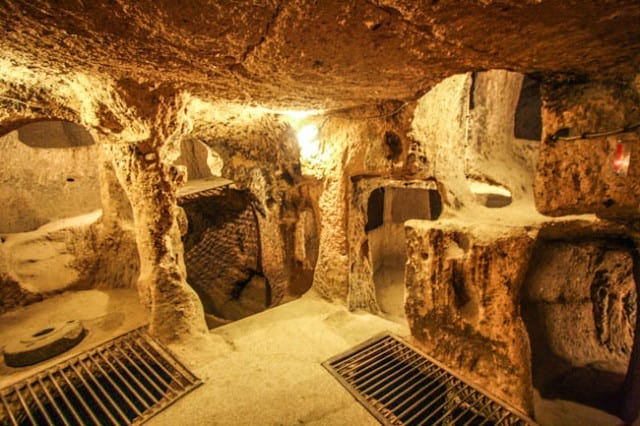
Apparently, in 1963, a Turkish man was doing some home improvement in his basement. Taking a sledgehammer to his wall, he found a tunnel behind it, which in turn led to more tunnels, eventually connecting to a multitude of halls and chambers. He had found a vast subterranean city up to 18 stories and 280 feet deep, large enough to house 20,000 people.
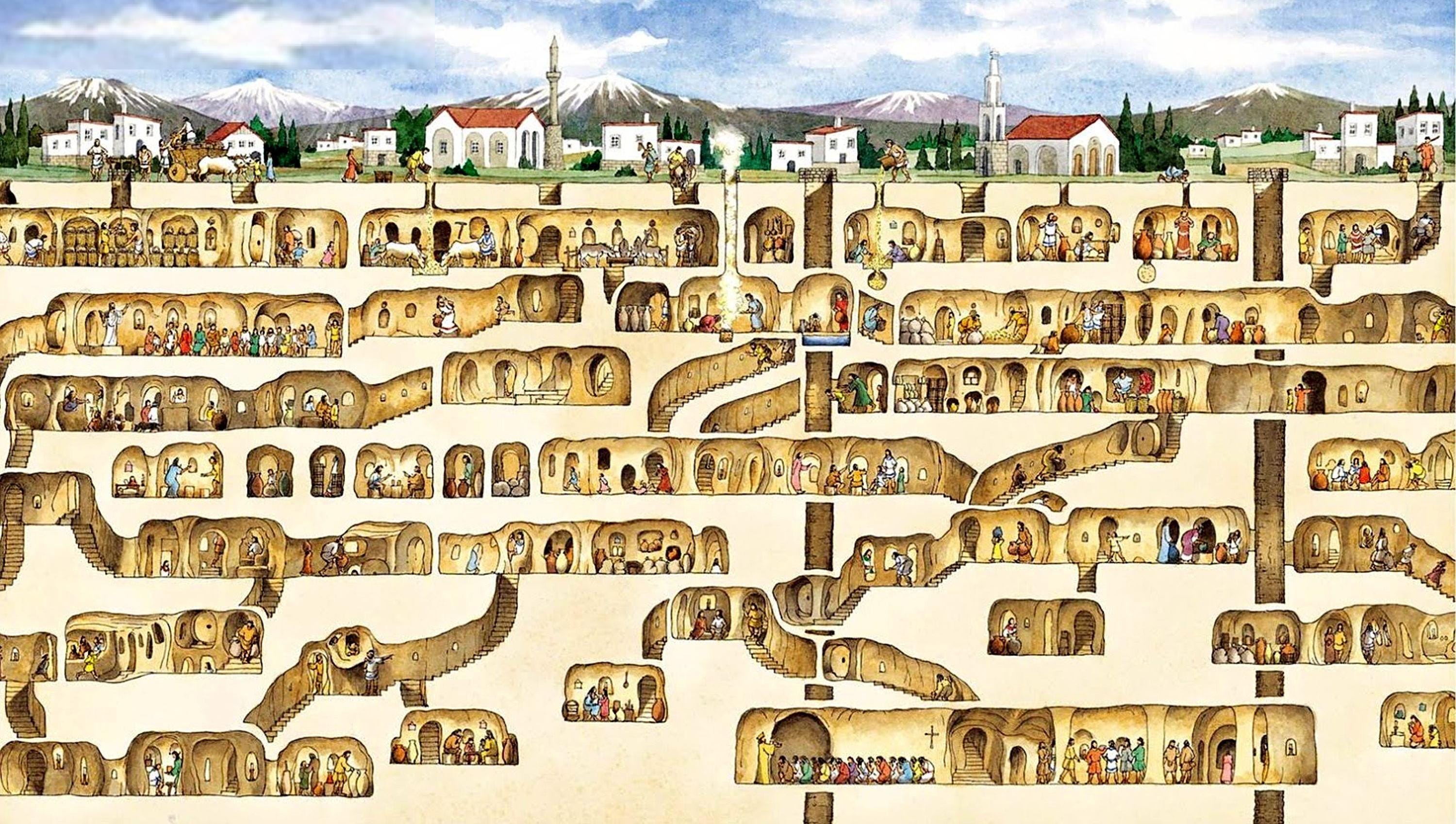
Part of me wonders if dreams of endless corridors are some sort of ancestral echoes of the times when survival meant going deep and narrow.
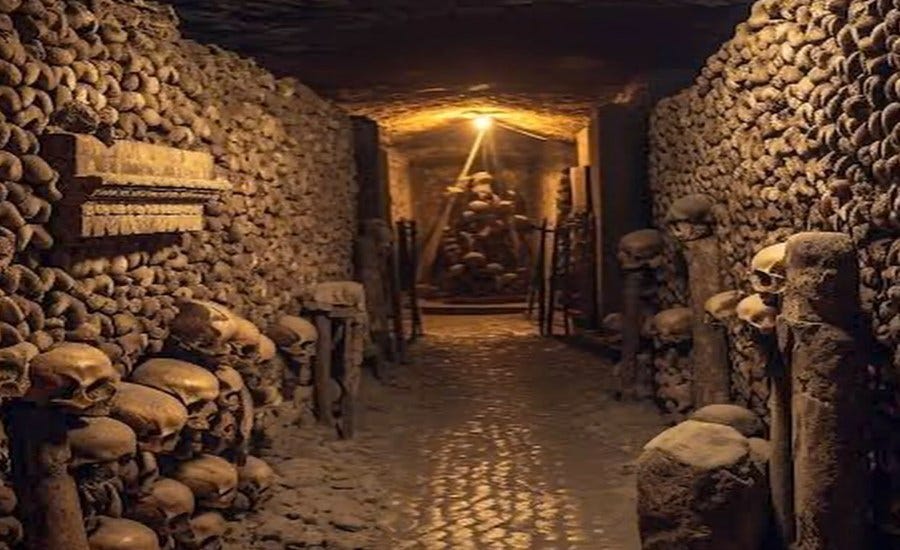
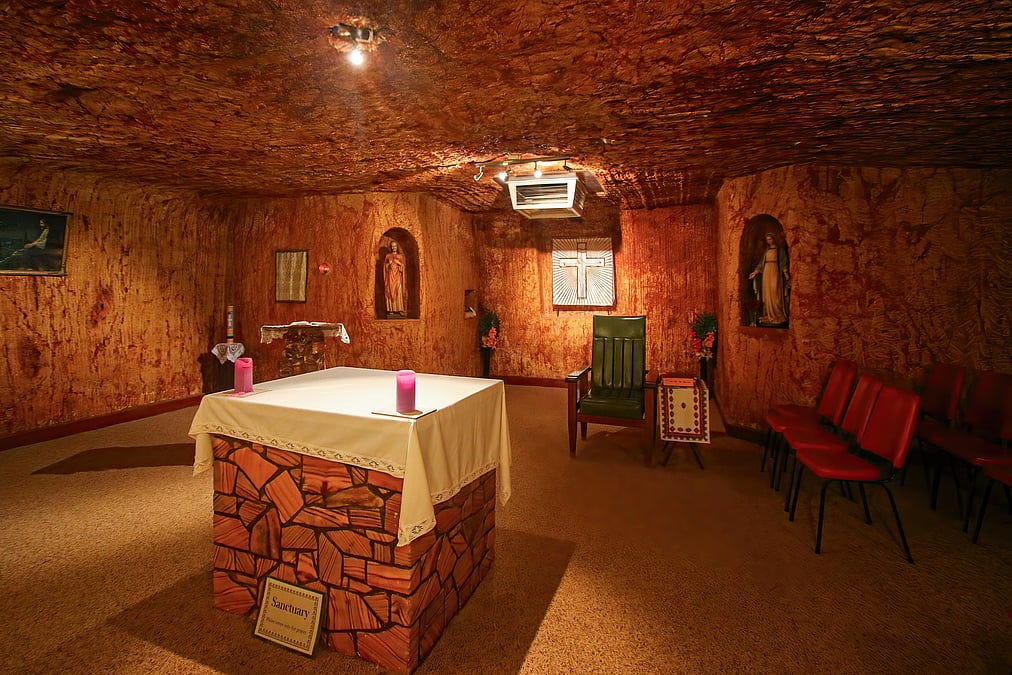
I’m half Australian, and I’ve been obsessed with the underground opal mining city of Coober Pedy all my life. Actually the photos don’t look as exciting as I want it to be. My Aussie mates say it’s a bit disappointing. But still.
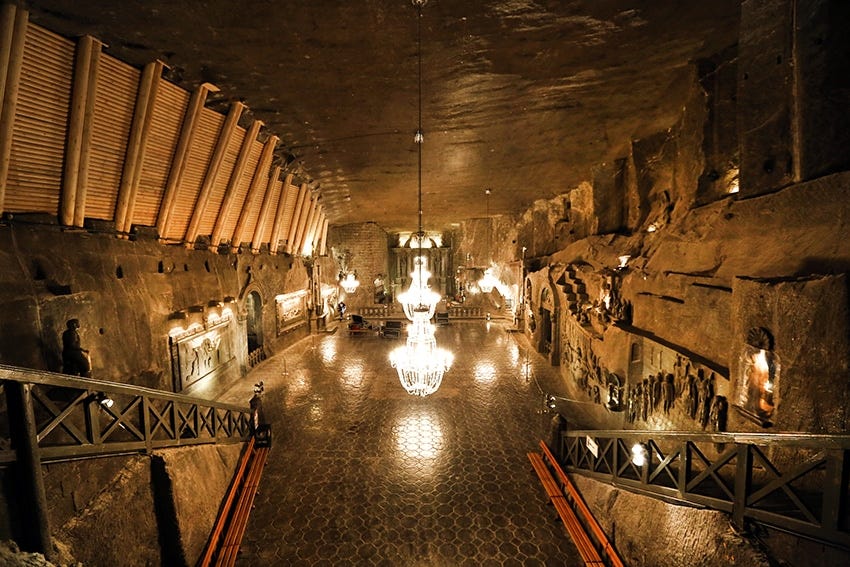
There are many places where the underground becomes sacred. The Wieliczka Salt Mine near Kraków contains St Kinga’s Chapel, an underground chapel carved from rock salt, with reliefs, chandeliers and sculptures created from the salt and rock by miners over generations. It is literally a cathedral hidden in the earth. How moving, men who spent their working lives underground making beauty out of what was left once they extracted the thing that paid their (presumably paltry) wages.
Or maybe we just go underground when the surface doesn’t suffice. Up top it’s too dangerous. Too cold. Too ugly. Maybe it’s the old religious instinct to put the sacred somewhere difficult to reach.
Subterranean cities, secret bunkers, survival tunnels, abandoned stations, railway arches, missile silos in mountains repurposed for the anxious rich (I suspect we’ll be hearing a lot about these): all these fascinate us because they suggest a second world running beneath the official one.
We also construct symbolic ones in myth and fiction. Think of the underworld in Greek myth or Dante’s descent through hell. Or more recently H.G. Wells’s Morlocks living beneath the surface, the bunkers of post-apocalyptic cinema, or the weird structures of the series Silo. Even the internet itself, imagined as “cyberspace”, is a place you enter rather than a system you use. Maybe the Backrooms works because it updates the underworld for people raised among office carpet, fluorescent hum and corporate beige.
Tunnels and corridors are spaces of transition, they are process itself. A tunnel is always taking you somewhere (or perhaps somewhen, as I felt in the Chelsea). In psychological terms, they often seem to represent the journey into something hidden. People who have nearly died sometimes report the archetypal tunnel towards a light, as if the mind, in a moment of extreme transition, generates the ultimate corridor to lead it onward. But what happens if you find a door heading off to the side? Maybe marked ‘Bardo’? Many people - like me - have dreams of discovering hidden rooms, secret basements or new corridors in a house they somehow already know (the first childhood dream I can recall, and, pleasingly, that of Carl Jung, both had this form). Perhaps my lifelong tunnel visions have been a way of seeking out unexplored chambers of my own psyche.
Our brains are profoundly spatial organs. The hippocampus and neighbouring entorhinal cortex are central to how we map the world. The Nobel Prize awarded in 2014 to John O’Keefe, May-Britt Moser and Edvard Moser recognised the discovery of place cells and grid cells, neurons involved in representing where we are and how we navigate. These systems are usually discussed in relation to physical navigation, but they are also implicated in memory, imagination and the felt sense of being located somewhere. Even dreaming about navigation is associated with improvement in real-world navigation. That does not explain Mall World, or my weird obsession, but it does suggest that sleeping brains can - and even want to, need to - keep working on places, routes and spatial problems after waking life has finished with them for the day, and may be part of why recurring dream architecture feels so powerful. A dream corridor is a place your mind has built and re-entered. We’ve been doing this long before VR headsets have been around. When people on r/themallworld describe their familiar dream cinemas, food courts and elevators (even escalators), they often sound less like they are describing isolated dreams than revisiting a city. I recognise that feeling completely. My dream souk-hotel-corridor has the force of a real place in memory. I can’t draw it accurately, but I know when I’m there.
And what do tunnels offer that open streets do not? There is the simple fact of enclosure. Of course in some situations, like in caves, mines and badly lit pedestrian underpasses, that can be frightening. But under bed covers, in childhood forts, in booths at restaurants, in small bookshops, it can be comforting. A tunnel gives you a direction but you cannot see the horizon, only ever the next part of the route. (Incidentally, this was one of the great tricks that the film Inception pulled in 2010. It managed to turn outdoor spaces in on themselves and imbued them with the logic of corridors. I rewatched it the other day and it didn’t look great, but I remember at the time thinking it was the coolest thing I’d ever seen, even if it owed a huge debt to a far less-watched film that tried to do the same thing called Dark City.)
Maybe that simplicity is part of the appeal. In a tunnel, you move forward. The side doors complicate things, of course, but even there the choices are satisfyingly concrete. Open this door or keep walking; enter the room or remain in the corridor. There is something irreducibly ludic, game-like, about it, which is why tunnel structures appear so often in computer games and immersive theatre. You wonder what is next, and then you go and look because you can.
Before I end, I want to invite you to reflect on your own relationship with these spaces. Do you ever dream of tunnels, corridors or secret passages? When you find yourself in a long hallway or an underground walkway, how do you feel? I’ve spoken to friends who hate long corridors because they trigger a sense of being trapped. I’ve spoken to others who adore them because they spark the old question of what lies at the end.
(Btw - tunnels can also be vertical, like this incredible lift shaft for a bamboo elevator, drilled into the mud and clay of a mountainside near Ubud in Bali; even better, it deposits you inside the mountain, to explore a network of hand-dug, candle-lit tunnels. I’ve removed the sound, but if it helps I was yelping with excitement. Reminds me of scenes from both Alice in Wonderland and Labyrinth - you know the ones.)
Next time you’re in a tunnel, whether it’s a literal one, a subway passage or a drive through a mountain, or one of those amazing stretches of road where the trees on either side meet in the middle to create some spectral sylvan corridor, take a moment to notice what it does to your mind. Tunnels connect places, obviously, but they also change the way we feel while we are moving through them.
So: open the secret door. Go down that hallway you’ve never noticed, whether in the external world or in your interior world. See where the tunnel leads. There may be light at the end, or there may be just more tunnel. Sometimes the tunnels are an end in themselves.
Tunnels are awesome.
No posts
Comments
Nothing yet. Say the first thing.
Sign in to join the conversation.