
Magnesium is good for just about everything. Studies indicate a link between magnesium deficiency and chronic joint pain, as magnesium deficiency causes muscle tension and spasm (Freeman, 1999). One study asserts that magnesium sufficiency can reduce depression, irritability, anxiety, and tension (Community Pharmacy, 2003). Thus, the magnesium case is loud and clear. This intentionally forgotten but crucial mineral plays an important role in helping the body convert food into energy and function properly (Raloff, 1997). The problem is that mainstream doctors are deaf, dumb, and blind to the importance of magnesium and how it can be and should be used as a principal medicine, not just as a supplement.
Many studies show that magnesium is not only an important component of healthy, strong bone construction; it also helps the nervous system and heart rhythm function smoothly. Research further indicates that those with low magnesium levels need more oxygen and energy and therefore get tired more quickly (Bliss, 2004). Evidence suggests that magnesium plays an important role in many biochemical and physiological processes, directly affecting lung function, asthma management, joint pain, smooth muscle function, neuromuscular excitability, immune function, inflammation, and oxidative stress (Kazaks, 2006).
Evidence further indicates that magnesium balances calcium and helps regulate blood pressure. Magnesium also supports energy metabolism and helps with muscle contraction and bone mineralization (Miller, 2005). Another study indicates that magnesium activates more than 300 enzymes in the body. Most of these enzymes are involved in energy metabolism (Schrader, 1999).
Can you think of one pharmaceutical that even comes close to what magnesium can do? Magnesium is crucial for a healthy and lasting life, yet doctors cannot seem to remember it. Do they all have memory problems, dementia, or even Alzheimer’s? What can explain such a gross absence of mind in such an important medical and health matter?
People will pay almost any price when the
alternative is death, disability, or severe suffering.
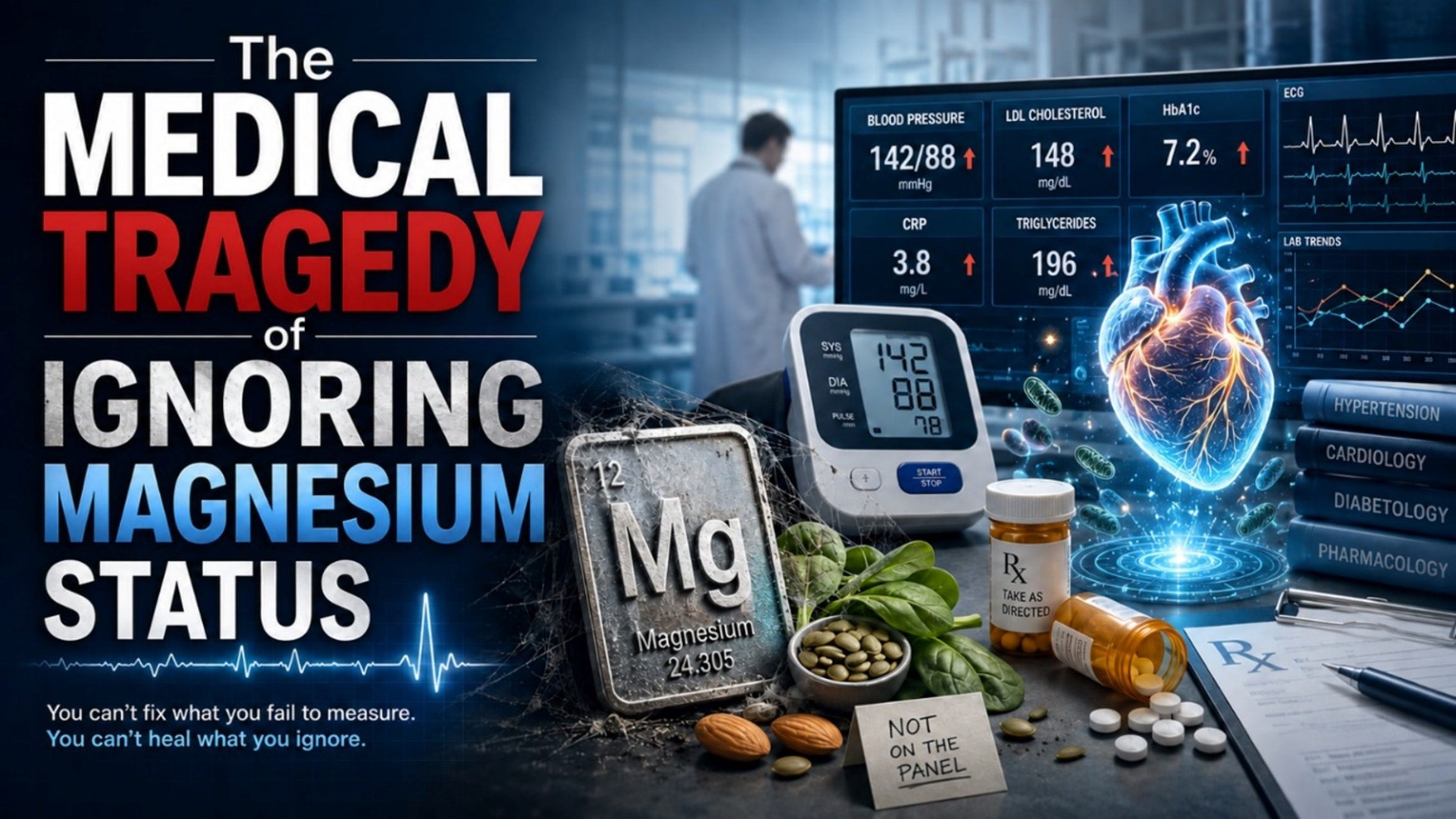
Modern cardiology can measure blood pressure to the millimeter, cholesterol to the decimal point, coronary calcium by CT, glucose continuously, and heart rhythm beat by beat, yet somehow neglects one of the most fundamental minerals required for the cardiovascular system to function normally: magnesium.
That is not a small oversight. It is a failure of physiological thinking. Magnesium stabilizes and enables ATP, regulates calcium movement, influences vascular tone, electrical conduction, insulin sensitivity, endothelial function, inflammation, and mitochondrial energy production. To investigate hypertension, arrhythmias, metabolic dysfunction, vascular disease, and heart failure while barely considering magnesium status is like studying a failing electrical grid while refusing to examine the wiring.
If one does not use magnesium to treat
diabetes, one is not treating diabetes.
The absurdity becomes especially obvious when hypertension is presented as though it were a primary cause rather than a physiological consequence. Blood pressure rises for reasons. Arteries constrict for reasons. Vascular smooth muscle loses normal relaxation for reasons. Magnesium is one of the minerals that helps oppose excessive calcium entry into cells and supports normal vasodilation.
When magnesium availability falls, calcium can become relatively dominant. In reality, calcium becomes toxic in the face of magnesium deficiencies. Vascular tone can increase, endothelial function can deteriorate, and blood pressure may rise. Yet the conventional response is often to diagnose hypertension, prescribe one or more antihypertensive drugs, and congratulate ourselves for treating the disease.
High blood pressure is a measurement, not an explanation of why the pressure became
high. High LDL is a measurement, not a complete explanation for why an artery
became diseased. Obesity and elevated glucose are metabolic manifestations.
Doctors have treated the number but not the physiology that produced it. But we still call them doctors. The same blindness appears in metabolic disease. Magnesium is deeply involved in glucose metabolism and insulin signaling. Low magnesium status frequently accompanies insulin resistance, diabetes, obesity, and metabolic syndrome—the very conditions increasingly associated with cardiovascular mortality.
No posts
Comments
Nothing yet. Say the first thing.
Sign in to join the conversation.