
My son came to the table with a bottle of Champagne, presented across his forearm, label out, and opened it with the shimmery quietness those in the know aim for. Then he told me and my two guests that Dennis had said “you buy your mom Champagne when she visits.” The glassware changed as fast as the bottle arrived, all of it while he kept up conversation with my colleague and her husband.
Dennis was a name in our house by then. My son had been working for him for months, and I had been hearing about the Tuesday tasting sessions. Dennis Kelly is a Master Sommelier and the co-owner of the restaurant, Protégé. Before Palo Alto he spent eleven years at The French Laundry, first as a captain and then as wine director.
My son said mom. Out loud, to the table. I had not heard him say it in years. I sat there wondering whether he meant it, or was repeating Dennis, or was somewhere in between.
We were a handful of visits into a repair, and neither of us had any idea yet whether it would hold. We bridged those visits in restaurants.
My colleague and her husband knew nothing about my personal story. To them it was dinner at a great restaurant where my son happened to work. Same for Dennis. My server’s mom is in from Boston.
I found the restaurant by accident, the night before the most important morning of that year.
I remember that night in more detail than I remember most years. That happens with the hours right before something large. You do not know yet, so you notice everything.
I was in Palo Alto in 2018, traveling with my daughter Alexis. We had spent the day at Berkeley presenting together on eating disorders in high performance families. Our subject was achievement by proxy, what happens when a parent’s need gets folded into a child’s performance and the child pays for it without being told there was a bill. We stood at adjacent podiums and explained the transfer of expectation between generations to a room of clinicians. We exchanged smiles. Her skating years were in that equation too.
We ran an exercise. Write to a parent or a coach and say the thing you never told them, the thing you would have wanted to be able to say at the time. What people read out loud in that room was more than I expected. There is a great deal sitting in people that never found a place to go.
Alexis was beside me at a podium. My son was an hour south, and I had a coffee planned with him the next morning. That is the only reason we drove down to Palo Alto that night.
My son and I had not been in a room together in a long time.
That evening we booked a place calling itself a wine bar, and after one glass and one appetizer I said, let’s get out of here. We were going to walk. I went back to the car for a sweater, that Palo Alto breeze, and on the way back to her I looked over my shoulder and said, what’s that place?
It was called Protégé. We sat at the bar.
I was tickled. I had spent the afternoon at a podium on what parents do through their children, and here was a room named for the person somebody else is bringing along.
The bartender had come out from Colorado with his girlfriend and wanted to talk about fat washing liquors and how you get ice to freeze clear. To my left was a woman alone at eight o’clock on a Saturday. She said she was visiting family, which struck me as odd until a few more questions revealed the family was in the kitchen. Her cousin was the chef and owner. She had come to sit in his room and eat his food by herself.
That was my first hint of what I was in. She told me the place had come out of The French Laundry. Standards. Precision. Somebody counting. I am susceptible to those things.
The general manager came around to the bar at some point, which is what people do in a restaurant open only a few months. His name was Kent.
I had the soup. Alexis had something heartier. We were both enamored by the details of the cocktails.
And I talked her into one she would not have ordered. Hours after standing at a podium explaining what parents fold into their children, at a bar, with the smallest possible stakes.
The next morning I sat across from him for the first time in years. He had four roommates. He was writing a book that threaded physics and theology into psychology. He was waiting tables at the kind of chain where the menu has photographs on it.
He was modest and quiet and asked me for nothing.
I did the arithmetic while he talked. More than a year of shifts at that place before he would have the seniority to cover his rent.
So, I took it upon myself to write to Kent. The place had been open a few months and I had met him the night before. It did not feel outlandish. I told him what my night at his bar had been like and asked whether they would consider hiring someone who had waited tables and graduated from Santa Clara that May. And with absolutely no experience at a restaurant at this level. He wrote back the same day. Yes. Send a resume.
My son never sent it. Not defiance. He did not understand this was a job that would pay his rent. So, I wrote again with both of them on the email this time, and he walked in with the resume, and he was hired inside of a week.
It was a wing and a prayer. I assumed the tips at a place like that would be the thing that changed his life. Instead, the restaurant paid salaries. Nobody on that floor was working a table for the tip, which is part of why the attention never wavered. And my son had something steadier than good nights and bad nights. Rent covered, and the rest of himself free for his writing.
He stayed three years.
Kent ran a floor that made grown men cry. My son was unbothered by the intensity and struck by the precision. Every person on that staff could tell you where every ingredient on the plate came from. He was offered captain and turned it down, because the job existed to fund the writing and he did not want the job to become the thing. He was on the team when Protégé was awarded its first Michelin star, inside a year of opening.
The night my son brought the Champagne to the table was before the star. A tasting menu to die for in a warm room in Palo Alto. All ambition, no pretension.
And somewhere in there, a man he worked for told him what a son does when his mother comes to town.
Over a handful of visits, Dennis chose wine for me three times, though the first one arrived by way of my son. He named the Champagne. He told my son which bottle to buy. I have come to recognize that each time, he chose the same way.
Years later I sat in a five week Comité de Champagne course in Boston, in the first US cohort, and somewhere in the middle of it I thought: why the Gaston Chiquet? Why 2008?
So I looked. Gaston Chiquet is a grower producer in Dizy, one of the twelve founding families of the Club Trésors de Champagne, the Special Club, established in 1971. Membership is open only to growers. The Special Club bottling has to be grown, produced, bottled and aged on the estate, a minimum of three years on lees, and it is meant to be the best wine that grower makes. The group formed to argue that estate grown Champagne was worth taking seriously at a time when almost nobody outside the region thought so.
I had never heard of them. A dozen growers who found a way to put their best wine forward when nobody was looking for it there.
The Club bottles only vintage. So the bottle was the 2008, and it had been lying down for close to ten years before my son opened it.
It is not a name that flatters the person carrying it. Nobody at my table recognized it.
The first was the Champagne. A small family, part of a group that had to organize itself to be taken seriously.
The second was Napa. My third visit with my son, a rented Mustang convertible, a day planned in the valley. I asked him to ask Dennis a question. If we had one day and one stop, and my son had almost no interest in wine, where should we go?
Dennis said Corison. Cathy Corison has made Cabernet in that valley for decades at a lower ripeness and a lower alcohol than Napa rewards. She built a career on declining to make the wine that wins. He did not send us to a name. He sent us to a person.
That bottle is now the one my son and I open over a grilled steak. No occasion at all.
The third was 2021. Late Covid, Dennis in a mask. My son had left the restaurant by then to help his father through a medical problem. I was headed to Napa and he was headed north, so we met for dinner outside at Protégé. He brought the woman who is now his wife and I brought my friend from Boston.
Dennis is present at that restaurant in a way owners often are not, so by then I had three years of warm greetings and a hand shaken on the way out. We had never once had a conversation.
He asked the budget before he suggested anything, which is its own small act of respect. I said a hundred, hundred and fifty. Then he asked whether we were going to be adventurous or stay closer to home.
I said, “if you’re in charge, I go with adventure.”
I want to be honest about that sentence. It was not expertise. The WSET Level 3 was still years off and the Champagne coursework further still. I could not have evaluated his recommendation against any standard I possessed. I was reading the man and on three years of small evidence, I was elated to hand over that decision to him.
What he brought was a Rioja. Viña Ardanza Reserva, La Rioja Alta, a house founded in 1890.
Given the word adventure, the obvious move is something obscure, and you get credit for range. Traditional Rioja is not obscure. It is one of the most classical things on any list. The adventure was inside the bottle, savory and dried herb and long American oak, a shape a palate raised on fruit forward reds has to travel some distance to meet. None of it was on the label.
By then he had a Michelin star and his name on the door, and he handed me a Rioja from a house nobody was writing about and said nothing at all about why. The credential did not change what he reaches for. He is the same man who told me he cannot bluff, who studied the way he did because he could not survive being caught out. In his hands, power looks like a man setting it down.
The name over the door was never decoration. It is the word Dennis and his partner chose for the people who taught them.
I sat under that sign the night before any of this started, tickled by my own joke about it. I had it backwards. I thought the name was about my son, the one being brought along. It was about Dennis, and what he owed, and what he was still paying forward on a floor in Palo Alto to a twenty five year old who needed to be told something.
He does not know. He did not know then and he does not know now. I have interviewed him. I have emailed him about a small Sonoma producer that no longer exists. He does not know that a rule he passed along without thinking twice about it is the reason I can name the exact night I got to be somebody’s mother again.
Dennis has been sitting in my heart since 2018 and he has no idea. Think about how often that is true. Somebody turns out to be pivotal and you never get to tell them.
Years later I asked him to come on the show and he said yes, and then he did something I was not expecting. He did not talk about blind tasting or Michelin stars or the pressure of a kitchen. He told me about the stretch when he nearly gave up. A second gift, from a man who does not know he gave me the first one.
Three times we have opened a Gaston Chiquet. The table. My son’s wedding. The birth of his son.
All three times my son opened it. All three times we smile while uttering the name Dennis.
What we have now goes well past those three bottles. Wine. Food. Years of it. Many other shared grapes that we love.
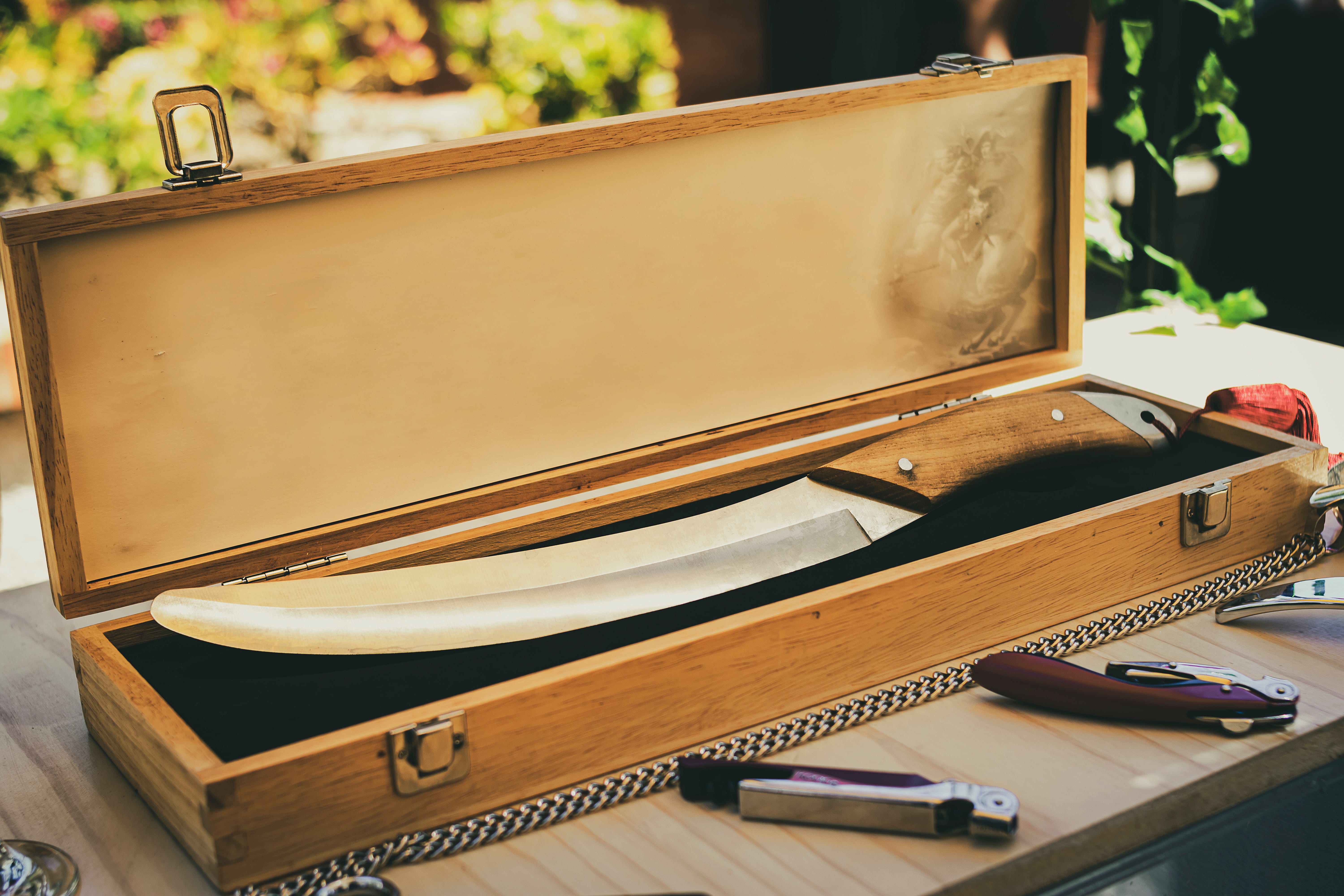
My son gave me a saber for my birthday. We are saving it for the next Gaston Chiquet.
For more Dennis Kelly, watch the episode here.
An invitation, not an assignment.
Think of something you carry that somebody handed you without meaning to.
Who gave it to you, and do they know they did?
What were they aiming at when they handed it over?
Is there something you are handing over right now, to someone who will keep it far longer than you expect?
Get the next essay delivered to your inbox →
Sharon Chirban, PhD is a clinical psychologist and executive coach with thirty years of experience, including former roles at Harvard Medical School and Boston Children’s Hospital. She works with high performers of every kind — founders, executives, athletes, and individuals navigating eating disorders — helping them understand not just how to perform, but what their performance is costing them, protecting them from, and trying to say. She sees clients at Amplify Wellness + Performance
No posts
Comments
Nothing yet. Say the first thing.
Sign in to join the conversation.