
This morning, I came across an article (“Scientists Gave Mice Cocaine. This Is What It Did to Their Brains”). One of the things they learned was that even one exposure to the drug causes slight changes to the genomes of the experimental mice, changes that made a second exposure much more likely to lead to addiction.
I am not prone to addictive behavior (except, perhaps, to reading, writing—and caffeine, their catalyst)—but I have always carefully avoided things that might lead to addiction. I have never smoked a single cigarette. When I’ve been given a prescription for painkillers, I stopped taking them, long before the vials were empty (I usually dispose of them at the police station, so they don’t fall into the wrong hands).
In the fabulously drug-friendly nineteen-sixties, I was one of the last of my friends to indulge. Even then, I was hardly a “head” (not of pot, acid, meth, or whatever horse tranquillizers were on the street at the time). That was, in part, because of my aversion to addictive behavior—which, in turn, was part of my greater reluctance to being out of control.
I don’t enjoy being out of control. No one has ever called me a “free spirit.”
Still—just one time, almost fifty years ago, in NYC—I tried cocaine. Of course, I knew—or thought I knew—all about the drug. It was the nineteen-seventies, by then, and everyone in the world knew all about cocaine.
I was pretty sure that I knew what to expect from the experience.
What I learned was that my experience was nothing like what everyone had told me it would be. Yes, the drug did act like speed, but nothing else. I’d heard that cocaine was an aphrodisiac, and that it made one lose interest in food. Both wrong, in my case. In the middle of the night, wide awake, all I could think of was a favorite place, downtown, where I knew I could get sushi—even at two in the morning.
In a flash, I was dressed and on the 96th-street subway platform.
I think, in retrospect, that the folks who described their experiences with cocaine had not been mistaken. They had merely misdiagnosed the cause of the sensations they had experienced. What the drug had done was encourage them to pursue whatever they most wanted to pursue.
If they were lechers, cocaine provoked lechery. In me, it provoked an irresistible longing for sushi.
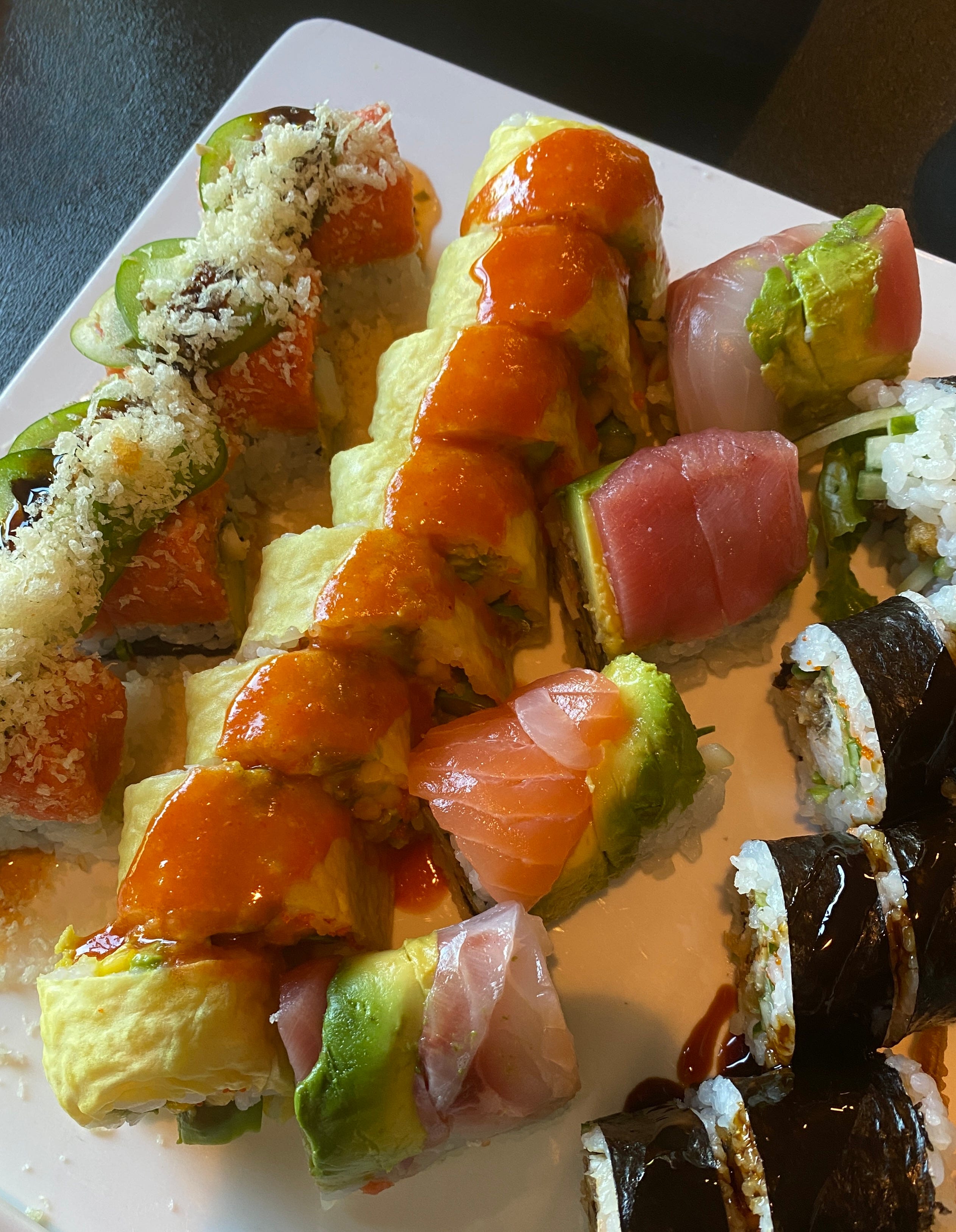
Again, viewed via the advantage of hindsight, all that cocaine did was make me more like myself. Since I am far too much like myself—already—I have never felt the need to take a second (potentially more addictive) hit of cocaine.
Paid subscribers to these Substack pages get access to complete editions of two of my novellas. Noirvella is a modern story of revenge, told in the style of film noir. Unbelievable is a kind of rom-com that forms around a pompous guy who is conceited, misinformed, and undeservedly successful. Both books are sold by Amazon, but paid subscribers can read them for free. Also, Substack pages (older than eight months) automatically slip behind a paywall—where only paid subscribers can read them. If you’re interested in reading any of them, you can subscribe (giving you free access to them) or buy them in book form, should you prefer the feel of a physical book. Meanwhile, it is easy to become a paying subscriber (just like supporting your favorite NPR station). It’s entirely optional, and—even if you choose not to do so—you’ll still get my regular Substack posts—and I’ll still be happy to have you as a reader.
No posts
Comments
Nothing yet. Say the first thing.
Sign in to join the conversation.