
There’s a particular kind of exhaustion that doesn’t show up on any lab panel. There’s no diagnosis for it nor does it have a billing code for reimbursement by any insurance carrier.
For years, the entire architecture of my professional life was organized around billing codes therefore what I was going through was new territory.
The specific kind of tired I was feeling back then was something the system I worked inside had no language around. Without a language for it there was no adequate means for treatment. It was as if it didn’t exist to the outer world. Although, I sure felt it. Deep in my bones.
I was a chiropractor for decades. I loved the work, or at least the heart of it. I lived for the moment a person reconnected with their own body. When they feel something shift. That moment when they understood for the first time that they have more agency in their own healing than anyone ever told them before.
That part never got old.
What got old was everything surrounding it. The insurance labyrinth. The disease-first model that had no code for “this person needs to learn how to sleep, eat real food, and stop abandoning herself at every turn.” The grinding realization that the system I was practicing inside wasn’t built for the kind of help I actually wanted to give. Or the help I needed at the time.
You cannot bill for wisdom. Turns out I had a lot of wisdom and nowhere to put it.
So I left.
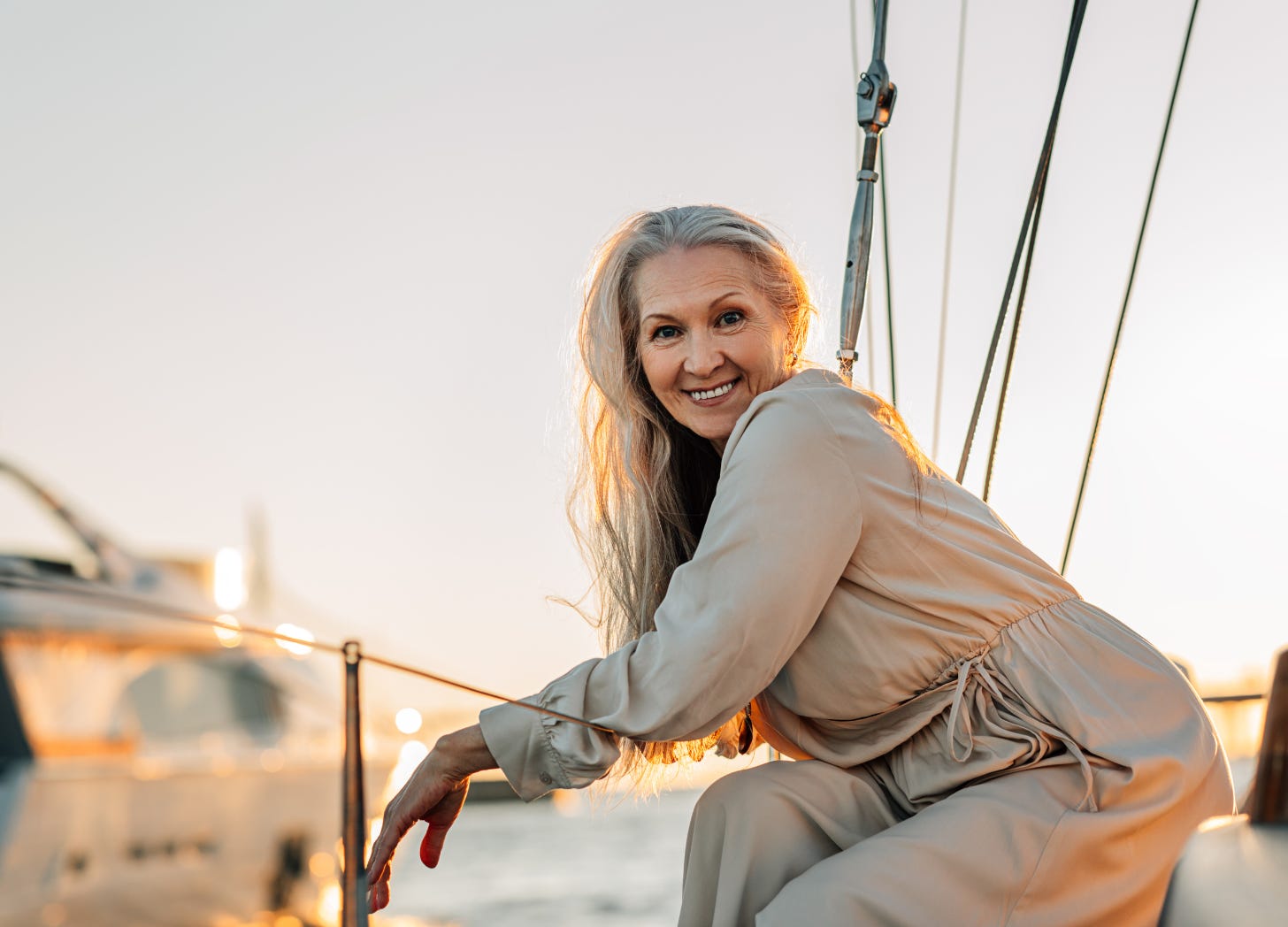
It wasn’t a graceful well-buttoned-up exit either. I had no strategic exit plan, no mentor in my corner. I hadn’t even realized I needed one. Looking back I was terribly disconnected from my own needs at that point in my life. They could have danced naked in front of me and I’d have looked right through them.
As a result, I closed my practice and leapt. Which is a romantic way of saying I fell forward into a lot of confusion and made most of my early mistakes at full speed. I mean, how hard could it be? Famous last words. (The naivete was strong with this one.)
What I didn’t know at the time, and only understood later with the benefit of distance and a little hard-won humility, is that I was also moving through perimenopause.
We weren’t talking about perimenopause at that point in time. At least not anywhere near as much as we’re talking about it now. I certainly didn’t recognize it in myself. I just knew I was depleted in ways I couldn’t explain, making decisions under an internal pressure I couldn’t name, and walking away from a career I’d spent decades building because something in me had decided it was simply time. I chalked it up to burnout and kept moving.
I was right about the burnout. I just didn’t have the full picture yet.
Turns out those two things, the professional rupture and the hormonal transition, weren’t separate events running on parallel tracks. They were the same event. My body had been sending up flares and I, lifelong achiever that I am, had been too busy achieving to read them.
“The burnout wasn’t a malfunction. The perimenopause wasn’t a crisis. They were both my body saying the same thing: the current arrangement is no longer sustainable. I just didn’t have the language for it yet.”
— Dr. Sam Graber, Strong Over Skinny
This is what I’ve come to understand about midlife women who suddenly find themselves reconsidering everything: the reconsideration is almost never just about their profession, though that seems to be easiest to face.
It runs deeper than that.
The body is involved. The hormones are involved. The sleep and the metabolism and the identity and the decades of putting everyone else’s oxygen mask on first. All of it arrives at roughly the same moment, which can feel like a very inconvenient pile-on but is actually something more like a biological summons. Now I assure you, your body isn’t hellbent on betraying you. It is, finally, insisting on being heard. And, sorry to say, it won’t take “No” for an answer.
The question it’s really asking is this…
“Are you going to keep running on cortisol and willpower, or are you going to build something that works with your biology instead of grinding against it?”
I didn’t have anyone to ask me that question when I needed it most. So I slogged through the first few years of my new business on sheer stubbornness. So very Irish of me isn’t it? And a highly stressed Enneagram Type 9 way to survive something of this magnitude.
I undercharged everyone, worked harder than I’d ever worked in practice, and told myself it would get easier once I figured it out.
What I was actually doing was reconstructing the same exhausting framework in a new zip code, trading insurance bureaucracy for the chaos of early entrepreneurship, and calling it freedom.
Live and learn from one of my costliest mistakes. I ran into a few coaches who were more interested in my credit card than my situation and it seems to be commonplace for those of us venturing into the coaching waters. I won’t linger on the topic, nor will I share names. I will however offer you this little nugget: if someone is pushing for a five-figure commitment before they’ve asked you a single real question about who you are and what you actually need, pay attention to that and pause.
A good fit takes some looking into each other first.
Anyone in a hurry to skip that part is in a hurry for reasons that have nothing to do with your success. And you may be looking at them as a savior. Something they most definitely are not, nor can they be. (So much more to be said there, but I am committed to staying on topic. Ask me anything about it. I’m an open book aside from naming names. I am as responsible for the damage done as they are. More in fact. It is my life and I needed to do more due diligence.)
“I left one box and nearly built myself another. The walls were different but the dimensions were the same. I was the one who’d designed them.”
— Dr. Sam Graber, Strong Over Skinny
The thing about the midlife reinvention that doesn’t get said nearly often enough is that you can recreate your old constraints in a completely new context if you skip the inner work.
The industry changes. The title changes. The business card changes. But if you haven’t gotten brutally honest with yourself about what actually depletes you versus what replenishes you, what lights you up versus what quietly extinguishes you, you will rebuild the same problem you left. You’ll just have better branding this time.
Know thyself isn’t a self-help slogan. It is load-bearing structural advice. You cannot build anything durable on a foundation you’ve never examined.
That examination is what eventually gave shape to the work I do now. The methodology I use with clients, which I call roXo, is a regenerative health framework built around the whole person: metabolism, hormones, movement, sleep, food relationship, self-relationship. Strong Over Skinny is where most women find me first, partly because the name says what needs to be said.
The skinny mentality is stealing capacity from women who have more to offer than they’ve ever been encouraged to believe. I watch it happen constantly.
We are so committed to making ourselves smaller when the actual goal, the one that serves us and everyone around us, is to get stronger. In my corner of this conversation, we focus on musclespan not just lifespan. The ability to carry your own groceries, your own grandchildren, your own ambitions, well into the decades when most people have quietly given those things up.
The women I’ve seen do that, the ones in their eighties and nineties who move through the world with capability and clear eyes, didn’t get there by shrinking. They built something. Muscle, yes, and bone density and metabolic resilience, but also a relationship with their own body that was grounded in respect rather than punishment.
Which brings me back to perimenopause, because it is the place where all of this converges and where I wish the conversation were sharper. We are talking about it more openly now, and I am genuinely thrilled by that. But the conversation has also attracted a certain kind of opportunism. Slap “menopause” on a product, double the price, tell women their hormones are the whole problem and here is the patch, pill, jab, or proprietary product that fixes it.
I’d like to respectfully push back on that.
A lot of what we chalk up to midlife’s hormonal transition is metabolic: the accumulated weight of years of disrupted sleep, chronic stress, undernourishment, and a fundamental disconnection from what our bodies are actually asking for.
The sex hormones are part of the story. They are not the whole story. And the whole story requires a kind of listening that most of us were never taught and that hustle culture actively discourages.
Here’s what I want to leave you with if you’re open to receiving it: you cannot out-supplement a lifestyle that is working against you. I should probably put that on a Tshirt.
For many of the women I work with, the lifestyle working against them is one they constructed themselves, carefully and with good intentions. Their building materials are the very things they’ve spent a lifetime absorbing about what a capable woman looks like. Which is, mostly, someone who handles everything for everyone else and tends to herself with whatever is left over.
The hoodwink lies in the fact that there is never anything left over. That’s not an accident. It’s a design flaw, constructed by a society that values women by how much of themselves they give away. Though it sounds bleak, I am happy to report that it is fixable.
“Your body is your business infrastructure. How you eat, move, sleep, and tend to your hormones isn’t self-care. It’s the engine. Everything else runs on it.”
— Dr. Sam Graber, Strong Over Skinny
Ten years into this work, here is what I know with some confidence: the transition itself isn’t the hard part. The hard part is making it without losing yourself to the urgency of it, without letting the pressure of building income override the intelligence of building a life. The women who come through it well are not necessarily the ones with the sharpest business strategy. They’re the ones who slowed down long enough to get honest about what they’re building toward and why, before the noise of early entrepreneurship started answering those questions for them.
I didn’t do that. Not at first. I learned it the expensive, circuitous, occasionally humbling way. But I learned it. And I reserved the right to keep evolving, which I exercise regularly.
The work I was trying to do back in that chiropractic office, the thing I kept running up against the edges of the billing system trying to deliver, turns out to have a home after all. It just took me a decade and a full hormonal transition to find it. There’s no billing code for that kind of clarity. There doesn’t need to be.
Before I sign off, I have one question, one plea if you will…
Can we please stop medicalizing every natural change our bodies move through while we’re at it? Please, and thank you.
If something in here landed, I’d genuinely love to hear what it was. Hit reply and tell me. Or send this to someone who’s in the middle of their own slow recognition and could use the company. Strong Over Skinny is where I write about all of it: the body, the business of being a woman in midlife, and what building real strength actually looks like from the inside out. You’re already here on Substack. If you’re not already subscribed, please do so and I’ll save you a seat.
Subscribe to Strong Over Skinny
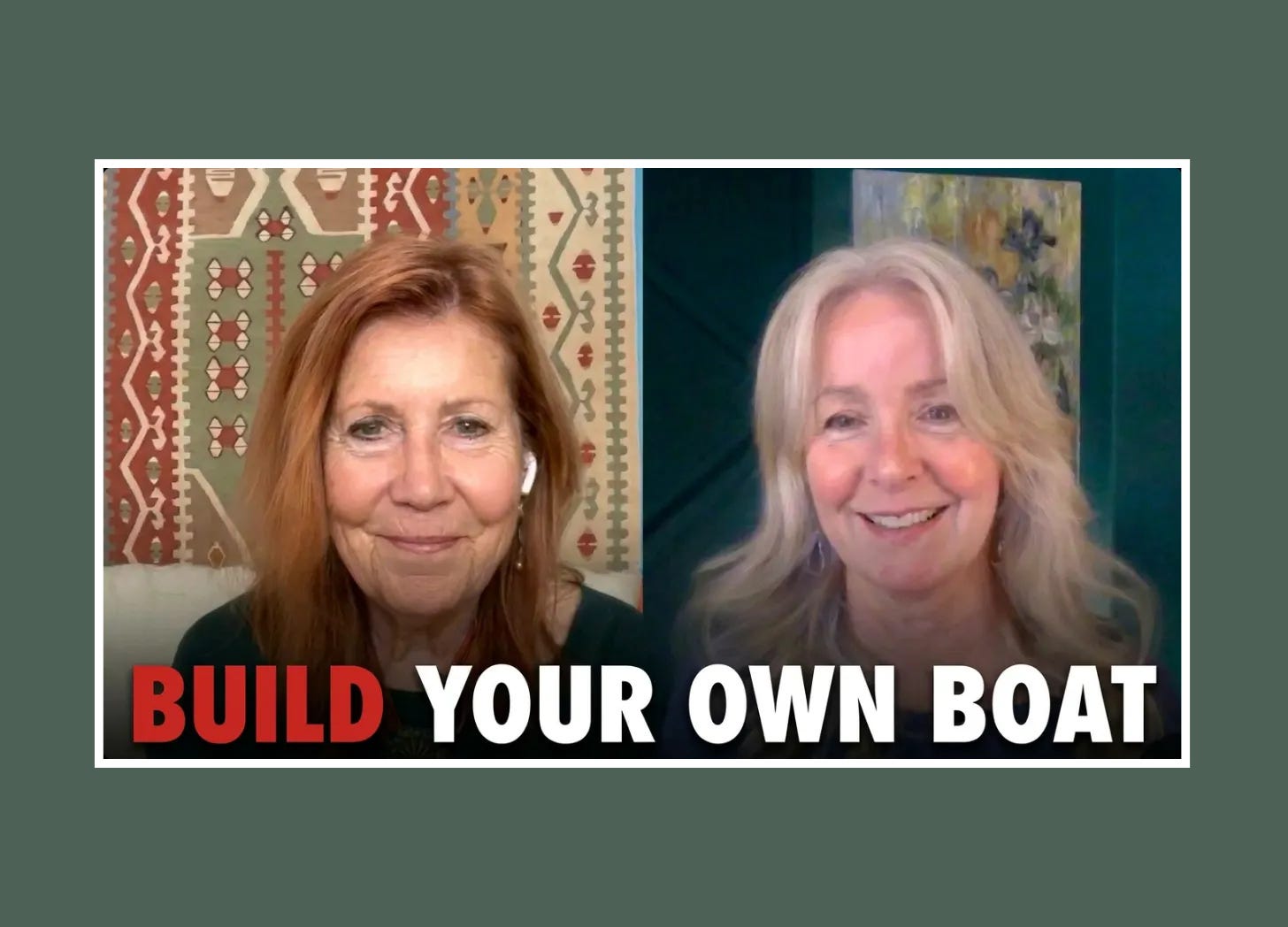
This essay grew out of a conversation I had with Janine Vanderburg on her Build Your Own Boat podcast, where we went deep on career transition, identity, and what it really takes to build something new in midlife. It was one of my favorite business-focused podcast conversations to date. If you want the full conversation, including the parts that didn’t make it onto the page, you can listen here.
No posts
Comments
Nothing yet. Say the first thing.
Sign in to join the conversation.