

A few months ago I was in Mexico City for the World Psychiatric Association’s annual meeting and my fellow panelist, Dr. Hamid Peseschkian, made the observation above. His words stuck with me. Of course humor is not helpful if used to make light of something painful or to deny the seriousness of a situation. If used improperly, it could alienate a patient who is sharing something traumatic. That said, there are occasions when a little humor can go a long way.

Allowing for and encouraging positive emotions can help us navigate difficult times. Even after a loss, it can be healthy to laugh. Patients who have lost a loved one often laugh through tears as they recount fond memories and reminisce about good times. Plenty of evidence shows that positive emotions like laughter can help reduce levels of distress by both quieting and undoing negative emotions. They can also help keep things in perspective and serve as a reminder not to take ourselves too seriously.
Not long ago, a single patient who has become increasingly exasperated by the lackluster dating landscape was furious when a friend set her up with a guy who invited her to a Monster Jam event. “I mean what is she thinking? How could she set me—a girl whose idea of a fun night is dinner and a movie—up with a guy who thinks that big wheel trucks doing donuts in a dirt-filled arena is a good idea?”
As she aired her frustration, her irritation gave way to laughter. There was something comical and absurd about imagining herself at a Monster Jam event. She came to recognize that it was out of generosity not carelessness that her friend had thought of this guy for her. Finding humor in the situation helped her see it a little differently. “Maybe I should go?” she pondered. And she did. Alas, it was not love at first sight but she said it was a fun experience and the guy was very nice and not what she thought he would be. They have gone on a few more dates and yes one included dinner and a movie.
Therapy might be “serious business” but that should not mean that we should not make space for humor. In addition to providing perspective, it can strengthen the bond between therapist and patient. According to extensive research, the therapeutic alliance—the trusting and collaborative relationship between a therapist and patient—is widely considered to be the most important factor contributing to a successful outcome. Sharing a laugh likely promotes bonding and fosters connection. Being professional does not mean that one has to be humorless.
I worry that in general people are laughing less these days. Perhaps this is not surprising given the state of the world. That said, allowing for humor does not mean we are indifferent or don’t care. It’s possible that being grievance focused is blinding us from recognizing what’s possible. Anyone with a smile on their face runs the risk of being labeled insensitive or privileged. This shouldn’t be the case. It’s possible to care deeply and also laugh deeply. Perhaps another reason we are laughing less is because one has to be fully present to find something funny. If you are checking your phone when someone says something funny, maybe you will smile but a full belly laugh is less likely. No doubt, distraction dilutes delight.
Learning to find humor in our everyday lives is good for our mental health and no, it doesn’t mean you are callous or careless nor does it mean that you are not a serious person.
We are 30 times more likely to laugh if we are with someone else than if we are on our own. Plus, we laugh most when we can see and hear someone in person compared to voice or text interactions. Put simply, face-to-face interactions are more likely to evoke laughter than sending a message. Laughter is also highly behaviorally contagious, and can occur when primed solely by another’s laughter.
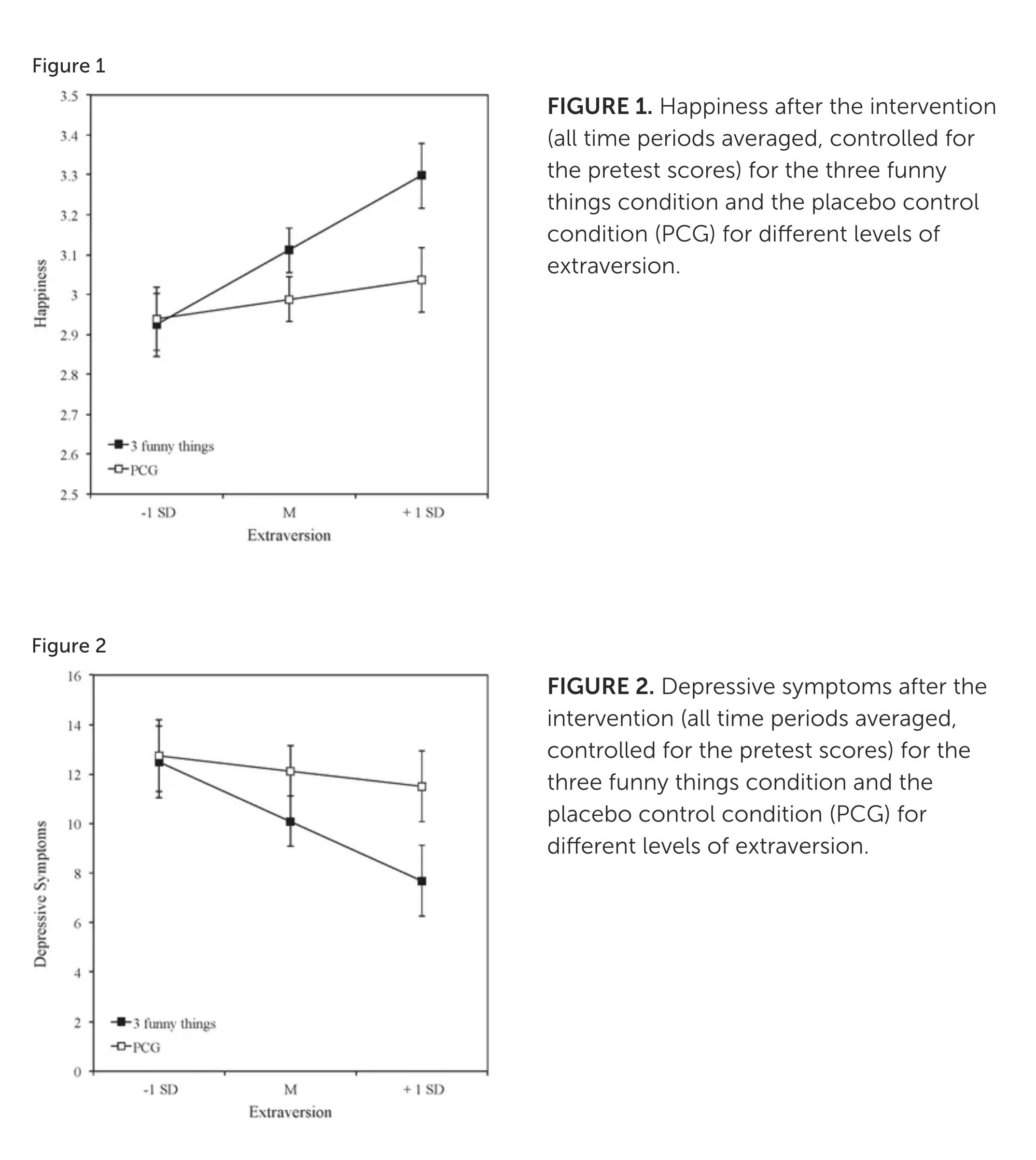
You are familiar with the practice of writing down three good things that happen each day. Along these lines, consider keeping track of what was funny. One study found that people who at the end of the day reflected on three amusing things that happened that day for one week reported increased overall happiness and decreased symptoms of depression for up to 6 months.
A friend whose father escaped the jaws of an alligator told me that he and his dad couldn’t stop laughing when he realized that he had brought his dad a Lacoste shirt with a crocodile on it to wear home from the hospital. “Too soon?” his father joked. This is not minimizing, it’s healthy coping. The key is to find laughter in the little things, in the absurd, and in the irony that is abundant in our daily lives.
Laughter, it turns out, may be one of the most underrated parenting tools we have. New research by psychologist Audrey Deneault found that unpredictable, silly play — the kind that makes children dissolve into giggles — builds mental flexibility, teaches children to read others' intentions, and creates a deep sense of trust. Children learn they can rely on their parents not only in hard times, but in happy ones too. In an era of performative parenting, obsessed with enrichment activities and structured learning, this is a quietly radical finding: chasing each other around the living room and making silly faces counts. Sometimes the basics are exactly what we need.
In his speech to Duke University graduates, Jerry Seinfeld said, "what I need to tell you as a comedian, do not lose your sense of humor. You can have no idea at this point in your life how much you are going to need it to get through....You’ve got to laugh. That is the one thing at the end of your life you will not wish you did less of. Humor is the most powerful, most survival, essential quality you will ever have or need to navigate through the human experience....It’s your Stanley Cup water bottle on the brutal long hike of life."
Earlier this week I had the privilege of appearing on The Today Show to share some actionable and science-backed ways to give your mental health a spring reset, including why laughter can be such a powerful tool. As Al Roker observed, laughter is something we’re in short supply of these days. And perhaps that’s why it’s worth remembering that laughter is often the shortest distance between two people.
You can watch the full segment here.
Comments
Nothing yet. Say the first thing.
Sign in to join the conversation.