
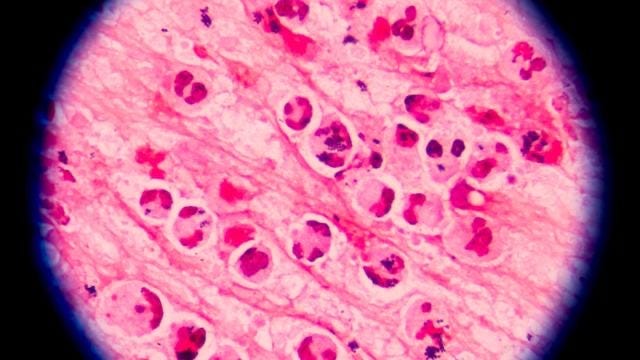
Just a week ago, the biggest question was whether shredded iceberg lettuce supplied by Taylor Farms was responsible for a large Cyclospora outbreak.
Today, the picture is even more complicated.
The FDA has now announced a second, unrelated Cyclospora outbreak involving at least 72 people, for which investigators have not yet identified a food source.
Meanwhile, the CDC reports that 4,173 laboratory-confirmed Cyclospora infections have been identified across 41 states since May 1, with more than 7,400 additional reported illnesses still under investigation. Combined, that means public health officials are evaluating well over 11,000 confirmed and suspected cases this season. More than 300 people have been hospitalized, although no deaths have been reported.
Those numbers are understandably alarming, but they’re also a reminder that this is exactly the kind of situation where careful thinking matters. Multiple outbreaks can occur at the same time. Early laboratory findings can change. Investigators may identify one contaminated food while another outbreak remains unsolved. That isn’t evidence that science has failed. It’s evidence that science is following the evidence.
First, what is Cyclospora?
Cyclospora cayetanensis is a microscopic parasite that causes an intestinal infection called cyclosporiasis.
Unlike many foodborne illnesses that strike within hours, Cyclospora usually causes symptoms about 2-14 days after exposure.
Symptoms commonly include:
Profuse watery diarrhea
Severe fatigue
Loss of appetite
Weight loss
Stomach cramps
Bloating
Nausea
Without treatment, symptoms can last for weeks and sometimes come and go for a month or longer. The good news is that most healthy adults recover completely. The illness is rarely life-threatening, but it can be extremely unpleasant.
Why does this happen every summer?
Cyclospora has an unusual life cycle.
When an infected person sheds the parasite, it cannot immediately infect someone else. Instead, it must spend days to weeks in the environment before becoming infectious.
That means outbreaks almost always involve food or water that became contaminated before reaching your kitchen, not someone who prepared your meal while sick.
Fresh produce is particularly vulnerable because it’s often eaten raw. Historically, outbreaks have been linked to foods including:
Lettuce
Cilantro
Basil
Raspberries
Snow peas
Bagged salads
The Taylor Farms investigation
One of this summer’s major outbreaks was linked through epidemiologic and traceback evidence to shredded iceberg lettuce supplied by Taylor Farms.
Initially, investigators announced that a laboratory sample appeared to test positive for Cyclospora. Later, the FDA determined that finding was a false positive after additional confirmatory testing.
That understandably confused many people. Some concluded investigators didn’t know what they were doing. Others assumed the entire investigation had fallen apart. Neither conclusion is supported by the evidence.
Foodborne outbreak investigations rely on multiple independent lines of evidence:
Patient interviews
Purchase histories
Restaurant investigations
Distribution and traceback records
Laboratory testing
A false-positive environmental sample does not automatically invalidate all of the epidemiologic evidence connecting illnesses to a food source. Likewise, one positive laboratory test alone is rarely enough to prove a product caused an outbreak. Good investigations weigh all of the evidence together.
There’s now a second outbreak
The current situation actually involves more than one investigation.
The Taylor Farms-associated outbreak continues to be investigated based on epidemiologic evidence.
Separately, the FDA has now announced another Cyclospora outbreak involving at least 72 illnesses, but investigators have not yet identified a common food source.
This distinction matters. Not every Cyclospora infection occurring this summer is part of the same outbreak. Just as multiple influenza strains can circulate during one winter, multiple contaminated foods can trigger separate Cyclospora outbreaks during the same growing season.
Investigators are now working to determine whether these newer cases share a common source, or represent something entirely different.
Why hasn’t every outbreak been solved?
This is one of the most frustrating realities of foodborne disease investigations. People naturally expect investigators to identify “the contaminated lettuce” within a few days.
Reality is much harder. By the time patients become sick:
The food has often been thrown away.
Grocery receipts may be gone.
Restaurants have reordered ingredients.
Farms have harvested new crops.
The contaminated lot may no longer exist.
Unlike television crime shows, investigators rarely have perfect evidence. Sometimes they solve outbreaks. Sometimes they narrow the possibilities. Sometimes the trail simply goes cold.
That isn’t necessarily because someone is hiding information. It’s often because the evidence no longer exists.
Could recent public health cuts make investigations harder?
This is an important question.
Programs that monitor foodborne illnesses help investigators recognize unusual disease patterns, compare cases across states, interview patients quickly, and identify outbreaks earlier than would otherwise be possible. When surveillance capacity is reduced, investigations can become slower or less complete.
That doesn’t mean every unsolved outbreak is the result of staffing changes. Foodborne investigations have always been difficult, but maintaining strong surveillance systems gives investigators the best chance of identifying contaminated foods before more people become ill.
Should you avoid fresh produce?
No. This is where perspective matters.
Even during outbreaks, the overwhelming majority of fresh fruits and vegetables are completely safe to eat.
Fresh produce remains one of the healthiest parts of most people’s diets. Avoiding fruits and vegetables because of a relatively rare outbreak would likely cause more harm than good over time.
Instead:
Wash produce under running water.
Refrigerate perishable foods appropriately.
Follow recalls when they’re announced.
Pay attention to public health alerts.
If a specific recalled product is in your home, don’t eat it.
Simple precautions are usually the right response. Some may consider avoiding salad greens and lettuce, especially if you have an underlying health issue.
One of the hardest parts of science
As physicians, we’re trained to become comfortable saying:
“Here’s what we know.”
“Here’s what we don’t know.”
“Here’s what we’re doing to find out.”
Many people find uncertainty uncomfortable. Our brains crave certainty. That’s one reason conspiracy theories can feel so satisfying because they provide a simple explanation for a complicated situation. Real science often looks different.
It updates.
It corrects itself.
Sometimes early laboratory findings change. Sometimes investigators uncover new evidence. That’s exactly how science is supposed to work.
The bigger lesson
Cyclospora isn’t just a story about food safety. It’s a story about how we think.
Do we assume uncertainty means incompetence?
Do we leap to conclusions before enough evidence exists?
Or do we allow evidence to accumulate, even when that process is slower than we’d like?
One lesson from this outbreak is that food safety isn’t a single investigation, it’s an ongoing surveillance system. Detecting unusual clusters, interviewing patients before memories fade, tracing food through a complex supply chain, and confirming hypotheses with laboratory science all require expertise, coordination, and sustained investment.
The headlines will continue to change over the coming days. More cases will likely be reported, and investigators may or may not identify the source of this newly announced outbreak. That’s not unusual. That’s how outbreak investigations work. Good science doesn’t promise certainty overnight. It promises that conclusions will be updated as the evidence improves.
And that’s exactly what it means to think like a doctor.
Although not required, any support is greatly appreciated, including preordering my new book Think Like a Doctor.
No posts
Comments
Nothing yet. Say the first thing.
Sign in to join the conversation.