
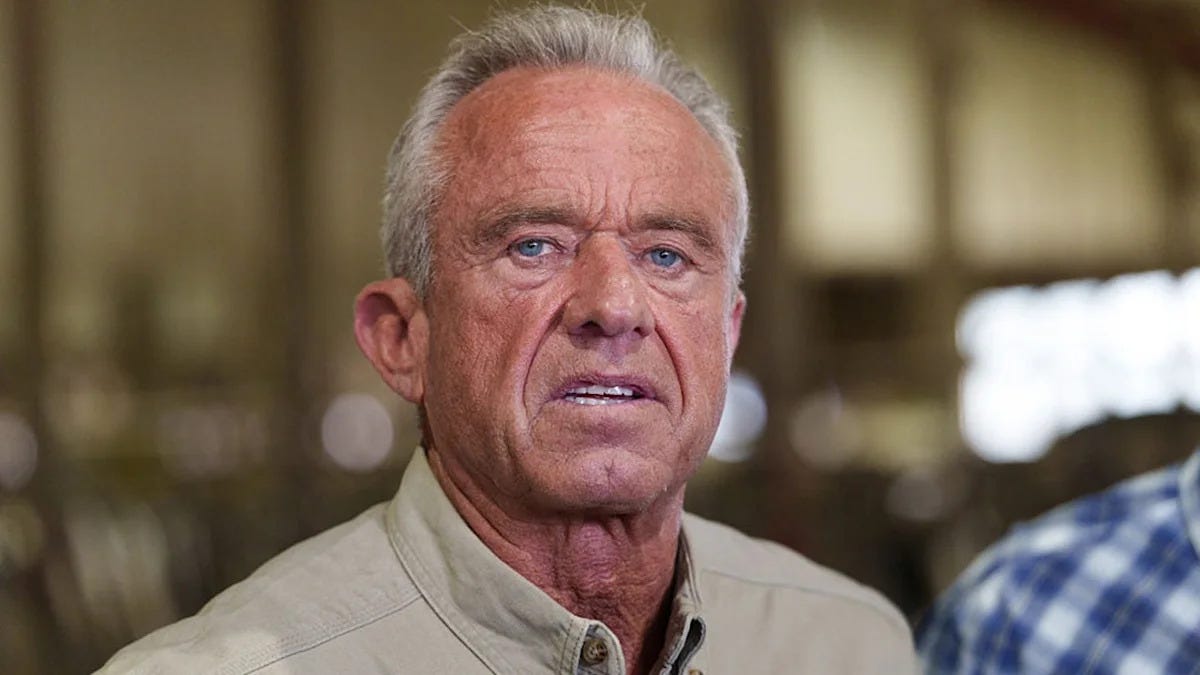
For months, one of the most common criticisms leveled against Robert F. Kennedy Jr. has been that he is skeptical of government public health authority.
During the COVID-19 pandemic, Kennedy repeatedly criticized lockdowns, vaccine mandates, and government restrictions on personal liberty. Many of his supporters viewed him as a defender of individual rights against government overreach.
Which is why this week’s news is so remarkable.
According to multiple reports, HHS Secretary Robert F. Kennedy Jr. personally overruled federal medical reviewers and signed an order requiring a Florida woman exposed to Andes hantavirus aboard the MV Hondius cruise ship to remain in federal quarantine in Nebraska against her wishes.
The woman, Angela Perryman, has remained symptom-free for more than five weeks. A CDC-led medical review reportedly concluded that she could safely complete monitoring from her home in Florida. Nevertheless, Kennedy issued an order requiring her continued confinement until the end of the 42-day monitoring period.
This is not merely a story about one passenger.
It is a story about public health powers, political consistency, and what happens when theoretical debates become real-world decisions.
The outbreak aboard the expedition cruise ship MV Hondius has been unlike anything we’ve seen in recent years.
The outbreak involved the Andes virus, a strain of hantavirus that is unusual because it is one of the few hantaviruses known to spread from person to person under certain circumstances. Three deaths were linked to the outbreak, and multiple passengers became infected. As a result, exposed passengers were placed under a 42-day monitoring period after returning to their home countries.
Most public health experts have emphasized that Andes virus is not remotely comparable to COVID-19. Transmission generally requires prolonged close contact, and the overall risk to the public remains low.
Still, because the incubation period can be exceptionally long, exposed travelers were placed under quarantine or active monitoring.
As a physician, I think it is important to separate two different questions.
The first is scientific:
Can governments ever justify quarantining someone exposed to a dangerous infectious disease?
The answer is yes.
Quarantine authority has existed for centuries because there are situations in which temporary restrictions on movement may be necessary to protect the public.
The second question is much harder:
When is that authority justified, and who gets to decide?
That is where this case becomes fascinating.
Reports indicate that CDC experts believed Perryman could safely complete monitoring at home. Kennedy disagreed and exercised his authority as HHS Secretary to keep her in a federal facility.
Whether one agrees with the decision or not, it represents a striking example of political leadership overriding the recommendations of career public health officials.
There is an irony here that should not be ignored. Many Americans who opposed COVID-era restrictions argued that public health authorities were too willing to limit individual liberties.
Now, some of those same voices are defending a quarantine order that federal medical reviewers reportedly did not believe was necessary. Meanwhile, some former defenders of aggressive COVID interventions are criticizing the government’s decision.
This does not automatically mean the quarantine order is wrong. It does mean that our views on public health powers should be consistent regardless of who occupies the office.
If we believe experts should guide policy, that principle should apply when we agree with the experts and when we do not.
If we believe elected officials should have broad authority to override experts, that principle should also apply consistently.
Personally? I do not believe that RFK Jr. is qualified to make these decisions, which makes this situation even more complicated.
The 42-day monitoring period is scheduled to end on June 21. Federal officials have indicated that remaining quarantined passengers are expected to leave shortly thereafter.
From a medical standpoint, the likelihood that an asymptomatic passenger suddenly develops disease decreases with each passing day. From a policy standpoint, however, this case may have a longer shelf life.
Future debates about quarantine authority, infectious disease response, and the balance between individual liberty and public safety will likely point back to this decision.
Because regardless of your political views, this week provided a reminder of something important:
Public health powers are neither inherently good nor inherently bad.
What matters is how they are used, whether they are evidence-based, and whether we apply the same standards no matter who is in charge. That’s a lesson worth remembering long after this quarantine ends.
Although not required, any support is greatly appreciated, including purchasing my new book.
No posts
Comments
Nothing yet. Say the first thing.
Sign in to join the conversation.