

In North America, we often call our opinions and impressions “feelings.” We say, “I feel you are being mean to me” or “My feeling is that you are hurtful,” and when the other person experiences this as criticism, we defend ourselves by insisting we are only sharing feelings. “Don’t you want to hear my feelings?”
But what we are actually sharing are our own interpretations or perceptions of another person — shaped by memory, bias, or self-protection. We understand from physics that any single observer cannot claim the truth, yet in our relationships, we forget this entirely. It’s as though our feelings make us believe that truth is on our side because we feel them so strongly.
When we speak this way, we are not speaking truth—we are speaking from the defensive patterns we learned in our own strategies for survival. Our emotions are always shaping or coloring our perceptions in ways designed to protect us from what has already happened, often long ago. Without realizing it, we cast new people into old roles, repeating familiar dramas in which the outcome is already known. The feelings are real, but they are deeply rehearsed and they are part of our own script or movie that convinces us that we are right. And so the patterns repeat, and we wonder why we remain caught in the same emotional and interpersonal scenarios with new partners or other people in our lives.
It is wise to become aware of what you feel because you will learn about your own biases, self-protection and anxieties. It is not wise to assume your feelings should guide you. Notice them, name them, allow them—but do not assume they are correct.

If we were to speak more precisely about our feelings, we would call them our emotions: motivating systems that organize our perceptions and expressions, especially in human relationships, most especially when we feel threatened. These include the primary emotions (primary, because they are present at birth) we share with other mammals—such as joy, curiosity, sadness, irritation, fear, disgust—but also the uniquely human, self-conscious emotions that arise in our second year of life: shame, guilt, envy, jealousy, self-pity, embarrassment. These secondary emotions give us the remarkable capacity to reflect on ourselves, imagine the future, and create meaning—but they also intensify our sense of separateness and our need to defend this “self.”
Our human sense of a separate self is necessary and important, but it is biased and often heavily (sometimes problematically) defended. Our self is the experience of living as an individual unique human being, rooted in human nature and early attachment bonds. When we make our individual identity the center of our attention, our emotions organize our perceptions in ways they were trained to do, in childhood when we were powerless, to keep us able to survive the attacks or abandonments of others.
This means that we then promote and protect ourselves too much, without interest in what others are experiencing; we do the fight-flight routine in ways that are too often harmful and distorting. This is what Jung called our “complexes” and Freud called “repetition compulsions.” Our past lives on in the present, not as memory, but as emotional patterns seeking reenactment.
If you follow your feelings, you will find yourself returning to the same emotional terrain again and again. The same injuries, the same misunderstandings, the same sense of not being seen or heard. There will always be evidence to support your interpretation, because you are directing the movie. And no one else can occupy your role in it.
This is why, long ago, the Buddha advised: do not follow your feelings. Instead, set your intentions and follow those. Feelings arise from conditioning; intentions arise from awareness.
If you’re interested in how psychology, contemplative practices, and dialogue can help heal polarization and transform repetitive conflicts, consider subscribing. I appreciate the support that comes from paid subscriptions, but I make most of my essays free to all. I write here as a Jungian analyst and dialogue teacher who is exploring the authentic and difficult meanings of being human.

Love, as I have said here repeatedly, is not a feeling. Love is a commitment, a vow, a discipline of engagement. We often imagine love as something that should be confirmed by pleasure or desire, but that is a misunderstanding. Love is what remains when pleasure fades, when irritation arises, when disappointment appears. Love is the decision to remain engaged without dehumanizing the other, even when we believe we are dehumanized ourselves.
We do this naturally with children and with beloved pets. We stay connected through frustration, through inconvenience, through moments of humiliation even. We intentionally try not abandon or retaliate when our adult child harshly criticizes us or our old dog embarrasses us. We hold steady, and in doing so, we learn something essential: that love is not about protecting the self, but about participating in a relationship that transforms the self.
This is the path of love. It is not sentimental. It is not driven by how we feel in the moment. It is a path of intention, of learning how to remain present and engaged when our self-conscious emotions motivate us to defend, withdraw, or attack. It is a path that gradually loosens the grip of our self-protection and opens us to something wiser.
If you want to walk this path, you cannot rely on insight alone. You need practice. You need to learn how to recognize your emotional patterns without acting them out, to learn how to speak from your own experience without turning it into accusation, how to listen without preparing your defense, and how to remain curious when you feel certain the other is wrong.
I am beginning to teach a course in September called “Being Human” at the Center for Real Dialogue on remain engaged and hopeful about yourself and your life, no matter what happens. Being Human is a six-week course for seekers, lovers, and leaders. Through the principles and practices of Real Dialogue, you will learn how to remain curious when you disagree, listen without becoming defensive, speak authentically without attacking others, and learn from the very experiences you would rather avoid.
If I could, I would give you a bumper sticker that says “Don’t follow your feelings.” Instead, I hope to meet you among fellow travelers whose intentions are to love, to stay engaged, and to remain human in the face of our own emotional reactivity and grief. That is where wisdom begins.

Learn to Live Wisely, Love Well, and Lead Confidently
Six Weeks of Courses, Interactive Small Groups, and Much More
Begins September 8, 2026 1PM ET US

Modern relationships demand equality and real understanding—but most people either avoid conflict or handle it poorly. Dialogue Therapy offers a structured way to navigate conflict with awareness, turning emotional tension into trust, clarity, and deeper connection.
Next Session: October 30 - November 1
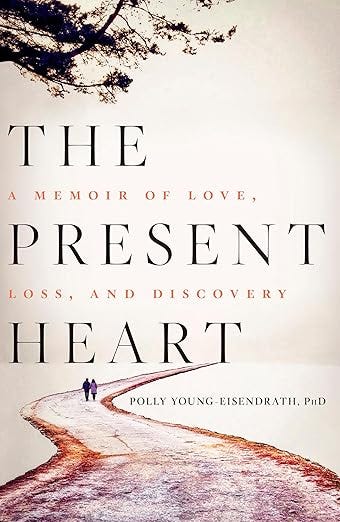
After a chance encounter with a handsome, idealistic stranger on a plane in 1969, Polly Young-Eisendrath rediscovered Ed Epstein a decade later when she least expected it. After untangling themselves from their existing relationships, they married in 1985 and spent the next 25 years together. They were soul mates, but in 2001, Ed (at the vital age of 53) began to show signs of Alzheimer's disease. Over the next 10 years, as her husband gradually reversed his mental maturity, Young-Eisendrath was faced with the question, what is love?
No posts
Comments
Nothing yet. Say the first thing.
Sign in to join the conversation.