
Welcome back to The Incredible Machine. I'm Dr Paul Manhas, MD, Dad x3, husband, and Co-founder of Manhas Health Co., here to help you understand the remarkable machine you live in.
In Part 1, we covered what dementia is and how to tell if a memory worry is real. This is the hopeful half: how to actually protect the brain you have — the lifestyle levers, an honest take on supplements — and, if disease has already begun, the treatments that now exist.
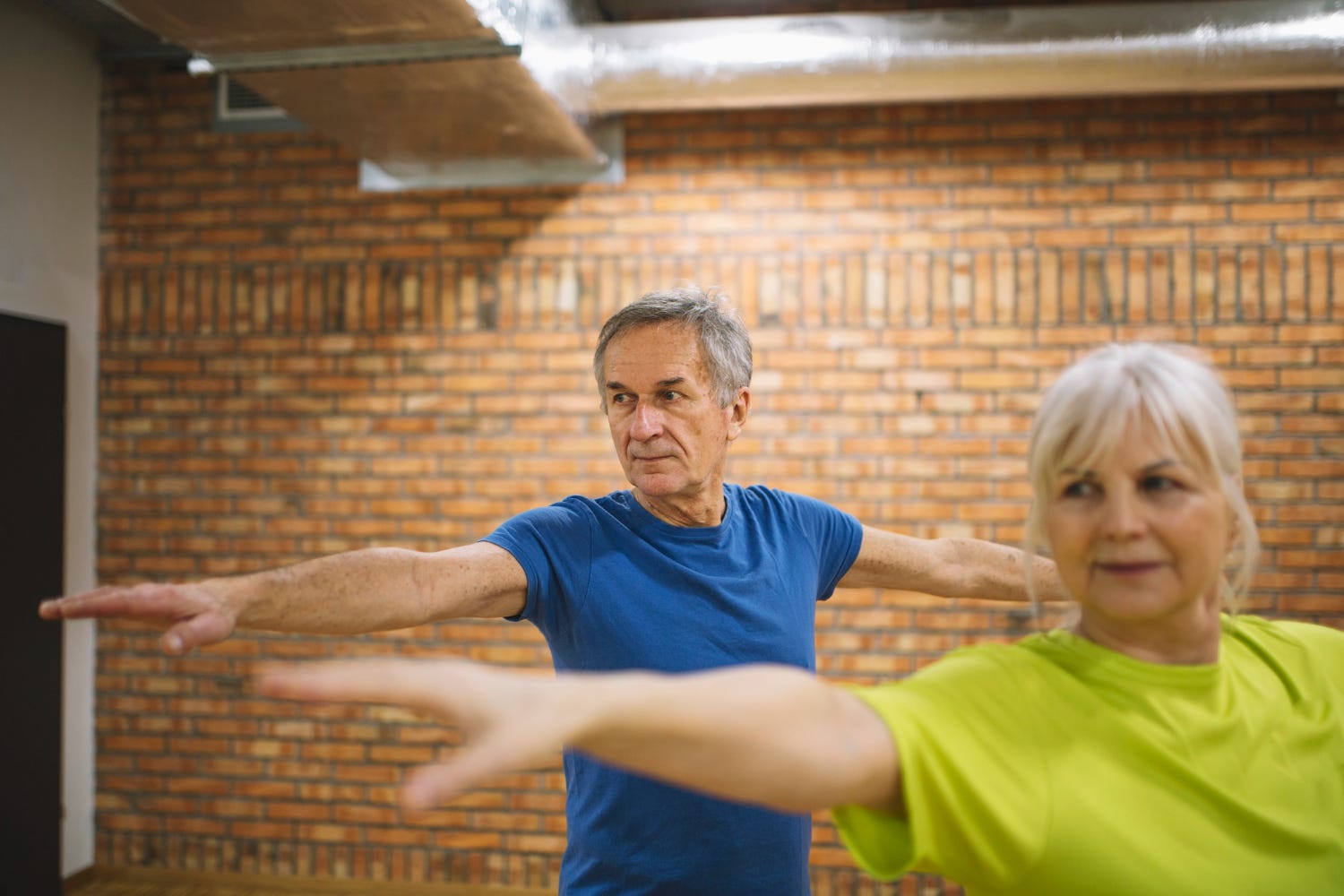
In 2024, the Lancet Commission on dementia concluded that around 45% of dementia cases worldwide could, in theory, be prevented or delayed by addressing 14 modifiable risk factors across life. Physical inactivity is on that list — alongside blood pressure, diabetes, smoking, hearing loss, and (newly added in 2024) high LDL cholesterol in midlife and untreated vision loss.
Zoom in on movement. A meta-analysis of 58 studies and over a quarter-million people found the most physically active had roughly a 20% lower risk of all-cause dementia than the least active — and the link held even when people were tracked 20 years or more. In the FINGER trial, a structured program built around exercise, diet, and managing blood pressure and blood sugar measurably protected cognition over two years — the first large randomized trial to show it.
My clinical view: If a company could bottle the effects of regular movement — a fifth less dementia, lower blood pressure, a steadier mood, a stronger heart — it would be the most valuable medicine on earth, and every doctor alive would prescribe it. It already exists. It just doesn’t come in a bottle, and no one profits when you take it. That’s exactly why I raise it in almost every visit.
How does moving your legs protect the tissue between your ears? Every pathway comes back to the river that feeds the machine:
• Better plumbing. Activity keeps blood vessels supple and improves blood flow — more fuel and oxygen for that thirsty, reserve-less organ.
• Better cleanup. Exercise is associated with better clearance of amyloid — helping the river carry debris downstream instead of letting it silt up.
• Less inflammation. Movement is anti-inflammatory over time, and chronic inflammation quietly damages brain tissue.
• A growth signal for neurons. Aerobic exercise raises a protein called BDNF — think of it as fertilizer for brain cells, supporting their survival and connections, especially in the memory centre. Tellingly, BDNF tends to fall in Alzheimer’s. (Honest caveat: much of the most dramatic ‘grow new neurons’ evidence is from animal studies — but the direction is consistent and encouraging.)
A mindset that helps: Right before a challenging effort — or the moment you’re ready to quit — picture BDNF, and remember the real, physiologic reason you set out to move. Exercise has a whole cascade of these payoffs, and growing your brain is one of them. When the resistance hits, lean into that physiology — you’re fertilizing your brain and protecting your memory for decades — rather than fixating on the pounds you want to lose. A ‘why’ rooted in your biology carries you through the hard moment far better than the scale ever will.
The widely used target is about 150 minutes a week of moderate activity — brisk walking where you can talk but not sing — roughly 20–30 minutes most days. But the most important finding in all the research is the jump from zero to something: the steepest gains come when a sedentary person simply starts moving. You don’t need to become an athlete.
• Aerobic base (the foundation). Brisk walking, cycling, swimming — ‘Zone 2,’ the conversational pace — most days. This is where the bulk of the brain and heart benefit lives.
• A little intensity. If you’re able, occasionally pushing harder adds extra punch — but layer it on once the base habit is solid, within your limits.
• Strength, twice a week. We’ll devote a whole issue to why muscle matters so much — two short resistance sessions round out the prescription.
And if that feels like a lot: something always beats nothing, and the door is never closed. Benefits show up at any age. The best exercise is the one you’ll actually do tomorrow.
Movement protects the flow; now the water. Researchers sometimes nickname Alzheimer’s “type 3 diabetes” — not an official diagnosis, but it captures something real. Across one review of 144 studies, type 2 diabetes is associated with roughly 1.5 times to nearly double the risk of dementia, and even prediabetes and higher long-term blood sugar (HbA1c) track with higher risk. The culprit is insulin resistance: the key that lets sugar into cells gets sticky, sugar piles up outside, and the mismatch drives inflammation and damage — in the brain as much as the body.
Blood pressure is the other one. In the randomized SPRINT MIND trial (over 9,000 adults), treating blood pressure more intensively reduced mild cognitive impairment by about 19% — the first time a randomized trial showed an intervention lowering the risk of the condition that so often precedes dementia. Too much pressure for too long, and the smallest, most delicate vessels feeding deep brain tissue fray first.
You’ve almost certainly heard of the Mediterranean diet. Fewer people have heard of the ‘MIND diet’ — honestly, I hadn’t either until I dug into this. It’s a hybrid: the Mediterranean pattern crossed with the DASH pattern (the eating plan designed to lower blood pressure), then tuned specifically for the brain — heavy on leafy greens, berries, nuts, olive oil, fish, and whole grains. On paper, in the observational data, it looked very promising.
But the honest update is a lesson in why we wait for trials. In 2023, a rigorous trial in the New England Journal of Medicine tested the MIND diet against a control diet over three years and found no significant difference in cognition. The twist: both groups also trimmed calories and lost a little weight, and both improved — suggesting the benefit came from overall improvement and weight management, not magic in any specific food. So eat Mediterranean-style for your heart, vessels, and blood sugar — the exact pathways that protect the brain — and let your brain reap the downstream reward. Just don’t expect a particular berry to be a shield on its own.
Here’s the part I love. You don’t need a separate program for your blood sugar, your blood pressure, and your brain. The same three levers move all of them at once: movement lowers blood pressure and improves insulin sensitivity; a plant-rich diet lowers both blood sugar and pressure; and sleep — the underrated one — governs both, while untreated sleep apnea sabotages everything by starving the brain of oxygen. Pull one lever and three dials move — that’s the machine working as one connected system, not a collection of separate parts. (Sleep matters so much it’s getting its own issue.)
Keeping your mind active is worthwhile — but not quite for the reasons most people think. The idea of ‘cognitive reserve’ (a richly wired brain rerouting around damage) is real but mostly observational, tangled up with the fact that early disease itself makes people withdraw from challenge.
The best hard evidence, from the ACTIVE trial, is oddly specific: one computerized ‘speed-of-processing’ task was linked to ~29% lower dementia risk ten years on, while memory and reasoning training were not — and the result was borderline. So ‘brain games’ in general aren’t a proven shield. But your brain does physically remodel with use: famously, London taxi drivers who memorize the city’s streets grow a larger memory-and-navigation hub. The lesson: favour new, effortful, social learning over the 500th identical sudoku — tissue you tax tends to grow.
I get more questions about supplements than almost anything else, so let’s sort the signal from the very loud noise. The honest headline: no pill comes close to the levers above, and the brain-supplement aisle is one of the most over-promised corners of the whole health market. But a few are worth knowing about — here’s my honest tier list.
From the Exam Room: Patients bring me bags of these. I ask the same question of each one — what does the actual trial evidence show? It’s a brutal filter, and most don’t survive it. Only one really does, and even it, only barely. Here’s what makes the cut.
A daily multivitamin — the one with the best evidence. This surprised me too. In the large COSMOS randomized trials, a simple daily multivitamin modestly improved memory and slowed cognitive aging in older adults (by the equivalent of roughly 1.8 years over three years in one analysis), while cocoa extract did nothing. The effect is modest and still needs confirmation — it may simply be topping up small nutrient gaps — but it’s cheap, low-risk, and the best-supported option here.
B vitamins (B12, folate, B6) — if you’re low. Worth checking your B12 and homocysteine; if they’re off, correcting them matters, and in one trial B vitamins slowed brain shrinkage specifically in people with high homocysteine. For everyone else, blanket megadoses haven’t shown benefit.
Omega-3 — eat the fish. Diets rich in oily fish are linked to lower dementia risk, but fish-oil supplements have mostly come up empty in randomized prevention trials. Food first; a supplement is a reasonable backup mainly if you don’t eat fish.
Vitamin D — fix a true deficiency. Worth correcting for overall health (and common in our Canadian winters), though brain-specific trial evidence is weak. Test, don’t guess.
Ginkgo and ‘memory’ pills — save your money. A large multi-year trial (GEM) found ginkgo did not prevent dementia. And the heavily-advertised jellyfish-protein product Prevagen has no credible evidence it works — its own sole trial failed to beat placebo, the protein is digested in the stomach and never reaches the brain, and U.S. regulators took the company to court over its claims.
The pattern across all of it: get your nutrients from food, correct real deficiencies you can measure, consider a cheap daily multivitamin, and be deeply skeptical of anything marketed as a memory miracle. Your money is better spent on good food, walking shoes, and a blood-pressure cuff.
What if dementia is already diagnosed? It helps to understand that the medications fall into two camps, and what each actually does. The longer-standing drugs don’t touch the underlying disease — they ease symptoms for a time by tuning the brain’s chemistry.
Donepezil — with its cousins rivastigmine and galantamine — is a cholinesterase inhibitor. In Alzheimer’s, the brain loses neurons that talk to each other using a messenger chemical called acetylcholine; donepezil blocks the enzyme that breaks that messenger down, leaving more of it available to carry signals. The catch is that it lifts that chemical everywhere, not just in the brain — so it can slow the heart (we’re cautious in anyone with a slow pulse or certain heart-rhythm problems, and it has caused fainting), irritate the stomach (caution with ulcers or bleeding risk), and tighten the airways (caution in asthma or COPD). Prescribing it is never automatic.
Memantine works on a completely different signal — glutamate, the brain’s main accelerator. In Alzheimer’s that accelerator gets stuck partly down, and the constant over-excitation slowly damages neurons. Memantine turns down only the excessive signalling while leaving normal traffic untouched — like a noise gate that mutes a screech without muting the music. It’s used mainly in moderate-to-severe disease and is usually well tolerated, though the dose must be lowered when the kidneys are impaired, since that’s how it leaves the body.
How I explain it to my patients: Here’s something I was taught in residency and now say to everyone starting these drugs: they slow decline, they do not reverse it. Picture a parachute. It can’t lift you back up — but the instant you pull it, your descent slows sharply, and that sudden slowing can even look and feel like a brief improvement in memory or daily function. The direction of travel is still downward; it’s just gentler and slower now. Expect a cure and you’ll be disappointed. Understand it as a parachute and you’ll have exactly the right expectation — and you’ll value the time it buys.
The genuinely new development targets the biology itself. For the first time, there are drugs that clear amyloid from the brain rather than just easing symptoms — and this is new, so I’m flagging that details are changing fast as I write in 2026. Health Canada approved the first, lecanemab (Leqembi), in October 2025, and a second, donanemab, in May 2026. They’re antibody infusions for people in the earliest stages with confirmed amyloid — not for prevention in healthy people.
The honest framing matters: they do not cure Alzheimer’s and do not restore lost memory. They modestly slow decline — in the main trials, by roughly a quarter relative to placebo, which in absolute terms is small but real. They also carry a risk that ties this series together: ARIA — brain swelling or small bleeds on MRI, usually mild but occasionally serious, and more likely in APOE4 carriers. That’s why genes now have practical stakes: Canada’s lecanemab approval is restricted to people with no copies or one copy of E4 — two-copy carriers aren’t eligible, because the risk is judged too high. I share this not to oversell these drugs — their benefit is modest and genuinely debated — but because it’s the clearest sign yet that the field is moving.
Much of the strongest prevention evidence is observational — powerful and consistent, but not absolute proof of cause. The cleanest randomized results come from multi-part programs, not any single magic input, and the new drugs are real but modest and evolving. Yet notice the asymmetry: even if these habits did less for your brain than we hope, you’d still gain a healthier heart, steadier blood sugar, lower blood pressure, better mood, and a longer healthspan. Large possible upside, almost no downside. That’s exactly when a physician says: do it, and don’t wait for perfect proof.
• Build the aerobic base. Zone 2 walking, most days. Protect this above all.
• Add strength, twice a week. More on exactly why in a coming issue.
• Know your numbers — and act. Blood pressure, HbA1c, LDL. This is where movement, diet, and sleep do double duty.
• Eat for your vessels; guard your sleep; stay curious. Mediterranean-style food, consistent sleep (treat snoring/apnea), and new, social learning.
• Keep supplements simple. Food first; correct measured deficiencies; a cheap daily multivitamin is reasonable; skip the memory miracles.
Prevention isn’t only about the distant future — it’s also about staying on your feet next year. Falls are one of the biggest threats to independence as we age, and here’s the empowering part: you can screen your own risk at home in about ninety seconds, using the very same validated tests we use in clinic. None of these is a diagnosis — think of each as a dashboard warning light. If one comes on, it’s a signal to act, not a verdict.
• The ‘get up and go.’ Sit in a firm chair. On ‘go,’ stand up, walk three metres (about ten feet) at your normal pace, turn, walk back, and sit — and time it. Taking 12 seconds or longer is the recognised flag for increased fall risk.
• Chair stands (leg strength). Sit in a firm chair without armrests, arms crossed over your chest, and stand fully, then sit back down as many times as you can in 30 seconds. If you can’t do it without pushing off with your hands — or your count is low for your age and sex — that’s your signal. (The exact cut-off varies by age and sex; I’ll share the full chart in a handout.)
• Balance. Standing beside a counter you can grab, try to hold your feet heel-to-toe in a straight line for 10 seconds; if that’s easy, try standing on one leg for 10 seconds. Struggling to hold these points to reduced balance — one of the strongest predictors of a future fall.
One caveat, stated plainly: these tests are validated mainly in older adults, and they estimate risk rather than diagnose anything — a fit 45-year-old shouldn’t lose sleep over a single wobble. But if you’re older, or any of these felt harder than it should, here’s the genuinely good news: this is one of the most fixable risks in all of medicine. In a high-quality Cochrane review of 59 randomized trials, exercise cut the rate of falls by about 23% — high-certainty evidence — and, tellingly, the balance-and-strength training that drives that benefit works best when it’s guided by a professional, usually a physiotherapist.
This is exactly the work our rehab and kinesiology team at Manhas Health Co. does every day — and it’s why I think of rehab as more than fixing injuries. When we help someone rebuild the habit of moving well, we aren’t just getting them back to where they were; we’re funding an account that pays out for decades, in the organ they’d least expect.
Lately I’ve been leaning on our physiotherapists far more than I used to — referring patients for formal balance assessments, strength assessments, and tailored recommendations. The benefit has been, frankly, tremendous: steadier patients, fewer falls, more confidence, more capability. If any of this speaks to you, bring it up with your own doctor — or reach out to our clinic directly at manhashealthco@gmail.com, and we’ll help you find a starting point.
And one more thing I’m genuinely excited about: I’m in the middle of building a full health app where you’ll be able to exercise with me — live. More on that very soon. Stay tuned.
Keep moving,
Dr. Paul Manhas, MD, CCFP
Co-founder & Director of Performance Services, Manhas Health Co.
Clinical Instructor, UBC Faculty of Medicine
Follow me on Instagram for more insights and Q&A: @drpaulmanhas
Sources
Lancet Commission on dementia (2024) — https://www.thelancet.com/commissions-do/dementia-prevention-intervention-and-care — 14 modifiable risk factors; ~45% potentially preventable.
Physical activity and dementia: meta-analysis (58 studies) — https://pmc.ncbi.nlm.nih.gov/articles/PMC9163715/ — ~20% lower all-cause dementia risk in the most active.
FINGER trial / World-Wide FINGERS — https://www.alz.org/wwfingers — first large RCT of a multidomain lifestyle program.
Exercise, BDNF and neuroplasticity (review) — https://www.sciencedirect.com/science/article/abs/pii/S001370062500171X — aerobic exercise raises BDNF in the hippocampus.
Diabetes and cognitive disorders (144 studies) — https://www.sciencedirect.com/science/article/abs/pii/S1568163719300157 — diabetes ~1.5x to nearly 2x dementia risk.
SPRINT MIND (National Institute on Aging) — https://www.nia.nih.gov/news/does-intensive-blood-pressure-control-reduce-dementia — intensive BP control reduced mild cognitive impairment.
MIND diet randomized trial (NEJM 2023) — https://www.nejm.org/doi/full/10.1056/NEJMoa2302368 — no significant cognitive benefit vs control; both groups lost weight and improved.
ACTIVE trial — speed-of-processing training — https://pmc.ncbi.nlm.nih.gov/articles/PMC5700828/ — ~29% lower dementia risk at 10 years; memory/reasoning training did not.
London taxi drivers (Maguire, PNAS 2000) — https://www.pnas.org/doi/10.1073/pnas.070039597 — the brain remodels structurally with sustained use.
COSMOS trial — daily multivitamin and cognition — https://cosmostrial.org/results/ — multivitamin modestly improved memory/slowed cognitive aging; cocoa did not.
GEM trial — Ginkgo biloba for dementia prevention (NCCIH) — https://www.nccih.nih.gov/health/the-ginkgo-evaluation-of-memory-gem-study — ginkgo did not prevent dementia or Alzheimer’s.
FTC charges marketers of Prevagen — https://www.ftc.gov/news-events/news/press-releases/2017/01/ftc-new-york-state-charge-marketers-prevagen-making-deceptive-memory-cognitive-improvement-claims — deceptive memory claims; sole study failed to beat placebo.
Health Canada approves lecanemab (Alzheimer Society of Canada) — https://alzheimer.ca/en/about-dementia/dementia-treatment-options-developments/health-canada-approves-lecanemab — approved Oct 2025 for E4 non-carriers/heterozygotes with confirmed amyloid.
CDC STEADI — fall-risk screening tests — https://www.cdc.gov/steadi/hcp/clinical-resources/index.html — validated functional tests (TUG, 30-second chair stand, 4-stage balance); TUG ≥12 seconds flags increased fall risk.
Exercise for preventing falls — Cochrane review (Sherrington 2019) — https://www.cochranelibrary.com/cdsr/doi/10.1002/14651858.CD012424.pub2/full — exercise reduced the rate of falls ~23% (high-certainty); balance/functional training most effective.
Comments
Nothing yet. Say the first thing.
Sign in to join the conversation.