
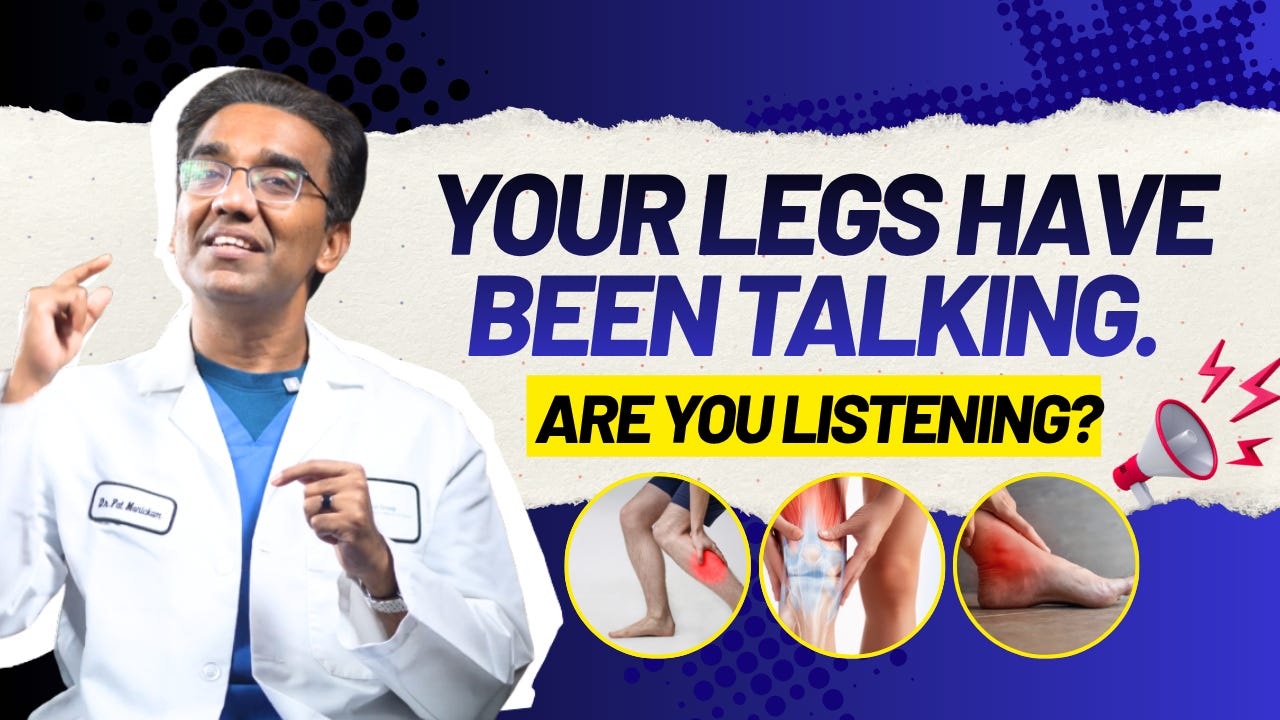
Let’s be honest. If your legs had a WhatsApp number, they’d have sent you at least twenty messages by now. All left to “read.”
“Hey, it’s me, your left calf. I’ve been cramping at 2 AM for no reason.”
“This is your ankles. We’re a little... puffier than usual today. No urgency, just an FYI.”
Sound familiar? Most of us have gotten remarkably good at ignoring these messages.
We blame the heat.
We blame standing too long at work.
We blame “just getting older.”
Here’s the thing, though: your legs aren’t being dramatic. They’re being informative.
Instead of a lecture, let me just tell you what your legs have already been trying to tell you.
Five messages. See how many you recognize.
This is usually the first one to arrive, that dragging, tired, “I just want to put my feet up” feeling by the end of the day. We tend to blame it on a long day at work or a long day on our feet. Sometimes that’s all it is. But when this becomes your legs’ daily check-in rather than an occasional one, it’s often the earliest sign that blood isn’t flowing back up toward your heart as efficiently as it should.
Swelling around the ankles, especially by evening, is your circulatory system quietly telling you it’s working overtime. Veins rely on a series of one-way valves to push blood upward against gravity all day long. When those valves weaken, blood pools instead of moving on, and that pooling shows up as swelling.
Night cramps feel random, but they’re rarely random. They’re often connected to the same pooling and pressure that causes the heaviness and swelling, your muscles reacting to blood that isn’t circulating the way it should be.
This one gets dismissed the most, blamed on dry weather, a new soap, a new detergent. But persistent itching around the lower legs and ankles can be a sign of changes in circulation beneath the skin’s surface, well before anything is visible from the outside.
By the time veins become visibly enlarged or twisted, they’ve usually been sending the first four messages for a while already. This is simply the one you can finally see with your own eyes.
Individually, each of these feels small enough to shrug off. But together, as a pattern, they’re the earliest signs of a very common and very treatable condition: varicose veins.
And no, this isn’t just a “cosmetic” issue that shows up in people. Genetics, prolonged standing or sitting, pregnancy, weight changes, and even simple aging all play a role. If it runs in your family, your odds go up too, so if your mother or grandmother had “spidery” leg veins, consider that an early warning label.
Here’s the good news
The earlier this is caught, the simpler the treatment.
Left alone, varicose veins don’t stay quietly cosmetic. Over years, they can progress to skin discoloration, persistent swelling, and in some cases, painful ulcers that are far harder to treat than the original issue ever was.
But caught early, treatment today is nothing like the surgeries of decades past. Modern options are minimally invasive, often done in a single visit, with little to no downtime, think gentle laser or radiofrequency techniques rather than long recovery periods on the couch.
Not every puffy ankle after a long flight needs a doctor’s visit. But if these signs are becoming a pattern rather than a one-off, consult your doctor
Heaviness or aching that shows up most evenings, not just occasionally
Swelling that doesn’t fully go down overnight
Cramps that are becoming frequent rather than rare
Veins that are becoming more visible or prominent over a few months
Any skin discoloration, dryness, or itching around the lower leg
None of these mean panic. They mean it’s time for a simple, painless consultation, often just a quick ultrasound, so we know exactly what’s happening under the surface, rather than guessing.
Your legs carry you through every single day of your life without complaint. When they finally do speak up, through these symptoms, it’s worth listening to them. Catching varicose veins early doesn’t just mean simpler treatment. It means avoiding the complications that come from waiting too long, and getting back to feeling light on your feet literally.
If your legs have been sending you messages, consider this newsletter their way of finally getting through to you. Give your legs the response they’ve been waiting for.
Until Next,
Dr Pal.
No posts
Comments
Nothing yet. Say the first thing.
Sign in to join the conversation.