
Friends of mine who have one child sometimes ask me what it was like growing up without siblings. Usually, they’re trying to decide whether to have another.
I always tell them I loved being an only child.
Whether they should make a major reproductive decision based on how I turned out is a separate issue.
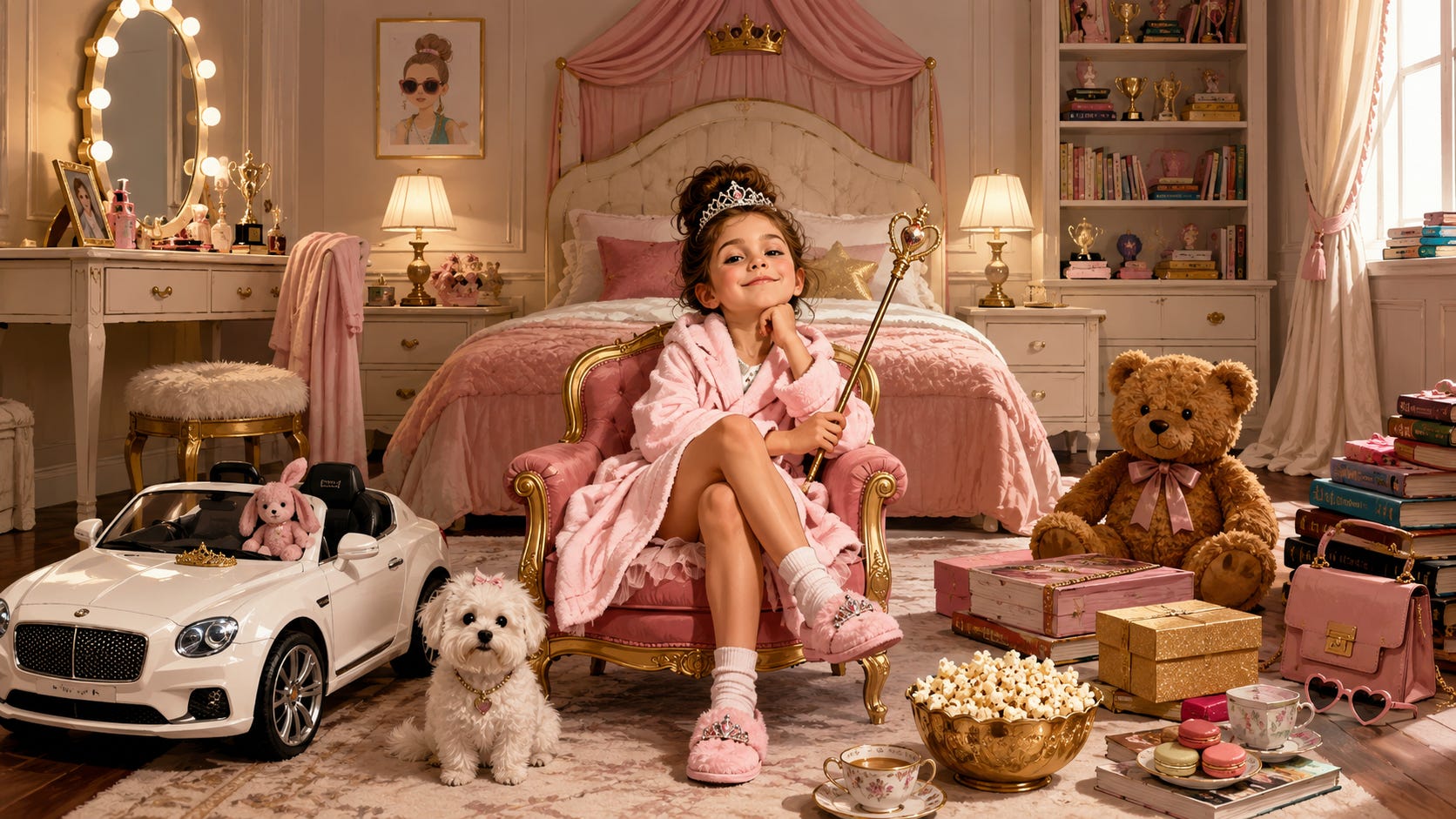
People love to joke about “only child syndrome,” which is basically shorthand for spoiled, self-centered, selfish, and convinced the world revolves around you.
I would love to defend us, but some of the stereotypes have merit.
Technically, I have siblings. I just didn’t grow up with them: two half-sisters about twenty-five years older, and a stepsister seven years younger who came into my life when I was in college.
My sisters were smart, responsible, good students who followed the rules and thought before they acted. Then there was me.
I was more social, impulsive, materialistic, vain, and considerably more work. By the time my dad got to me, his luck had run out.
My mom had no comparison, so she blamed the divorce until I was diagnosed with ADHD at five. ADHD plus only-child entitlement was not exactly a gift to my parents.
My mom always said she couldn’t have handled more than one of me. I had equally strict requirements for the kind of sibling I would’ve tolerated.
It would have had to be an identical twin who could take tests I didn’t study for, cover for me when I was somewhere I wasn’t supposed to be, or step in as the more responsible version of me. An older brother would also suffice, assuming he came with hot friends.
Beyond that, I wasn’t interested.
Once I came home and found adoption pamphlets on the table. My mother had discovered the ultimate punishment: another child. Those went straight in the trash.
Growing up, I never had to share my toys, clothes, snacks, bedroom, or anything else I classified as mine, which was basically everything. I never had to share my parents either. There was no taking turns, fighting over the front seat, or getting stuck with hand-me-downs.
Was this excellent for my development as a person? Probably not.
Was I concerned about that at eight? Absolutely not.
I never lost an entire Saturday to somebody else’s childhood. No 7 a.m. baseball games. No soccer tournaments three counties away. No sitting on freezing bleachers pretending to care about a sport I wasn’t playing. No canceling my plans because I had to babysit.
There was one child. One schedule. Conveniently, it was mine.
Which sounds great. And a lot of the time, it was. You’re the favorite by default. There’s no competition, no comparison, one person to spoil, and no one cutting into your share of attention or allowance.
But when you’re the only kid getting all the attention, you’re the only kid getting all the attention.
There is no sibling around to distract your parents with their own shit.
You get all the praise and affection, but you also get all the scrutiny. There’s nowhere else for their attention to go.
I loved having someone’s undivided attention. I wasn’t raised for a world in which I had to compete for it. Discovering that other people had lives and priorities that didn’t revolve around me was a bewildering wake-up call.
Would I have turned out differently with siblings? Probably. But I guess we’ll never know.
Kids with siblings spend childhood learning to share, compromise, wait their turn, and tolerate another person existing in their space. I spent mine protected from those inconveniences.
I had to learn all of that later, mostly through friends who had no interest in accommodating the monarchy I’d been raised in.
Sleepaway camp was my first real slap in the face. There were girls everywhere. In my room. In the bathroom. Touching my stuff. Borrowing things without asking. Snoring.
I didn’t last a week.
Then I went to college and got a roommate, which was one too many.
I may have been late to sharing and caring, but being an only child had other advantages. We’re extremely portable. There was one of me, so I got brought everywhere: restaurants, dinners, parties, even bars.
Which meant I spent a lot of time around adults and developed the flattering impression that I was basically one of them.
And plenty of those adults had siblings. They weren’t exactly models of patience, compromise, or generosity. They were just better at disguising selfishness as strategy.
People say only children mature faster. I think we just get very good at adult conversation before we actually get good at being adults.
You learn how to talk to adults, how to be the youngest person at the table, and when to stay silent while everyone forgets there’s a kid listening.
I sat through conversations people assumed I wasn’t following.
I wasn’t just following. I was taking notes.
Kids hear everything. Whether they understand it is another question. I usually did.
I learned to read a room, manipulate when necessary, and that less is more, including clothing, which earned me plenty of dress code violations.
But being an only child had its perks. You become very self-sufficient. You learn how to entertain yourself and be alone without feeling lonely. I’ve never needed people around just for the sake of it or so I don’t feel left out or bored. I actually like being by myself. My alone time is how I stay sane. Frankly, I’ve never understood people who can’t be alone.
So when friends ask whether they should have another child, I still tell them I loved growing up as an only child.
Whether that is a recommendation or a warning depends entirely on how you feel about me.
Comments
Nothing yet. Say the first thing.
Sign in to join the conversation.