
Excuse me while I briefly depart from my usual “women and wellbeing” posts.
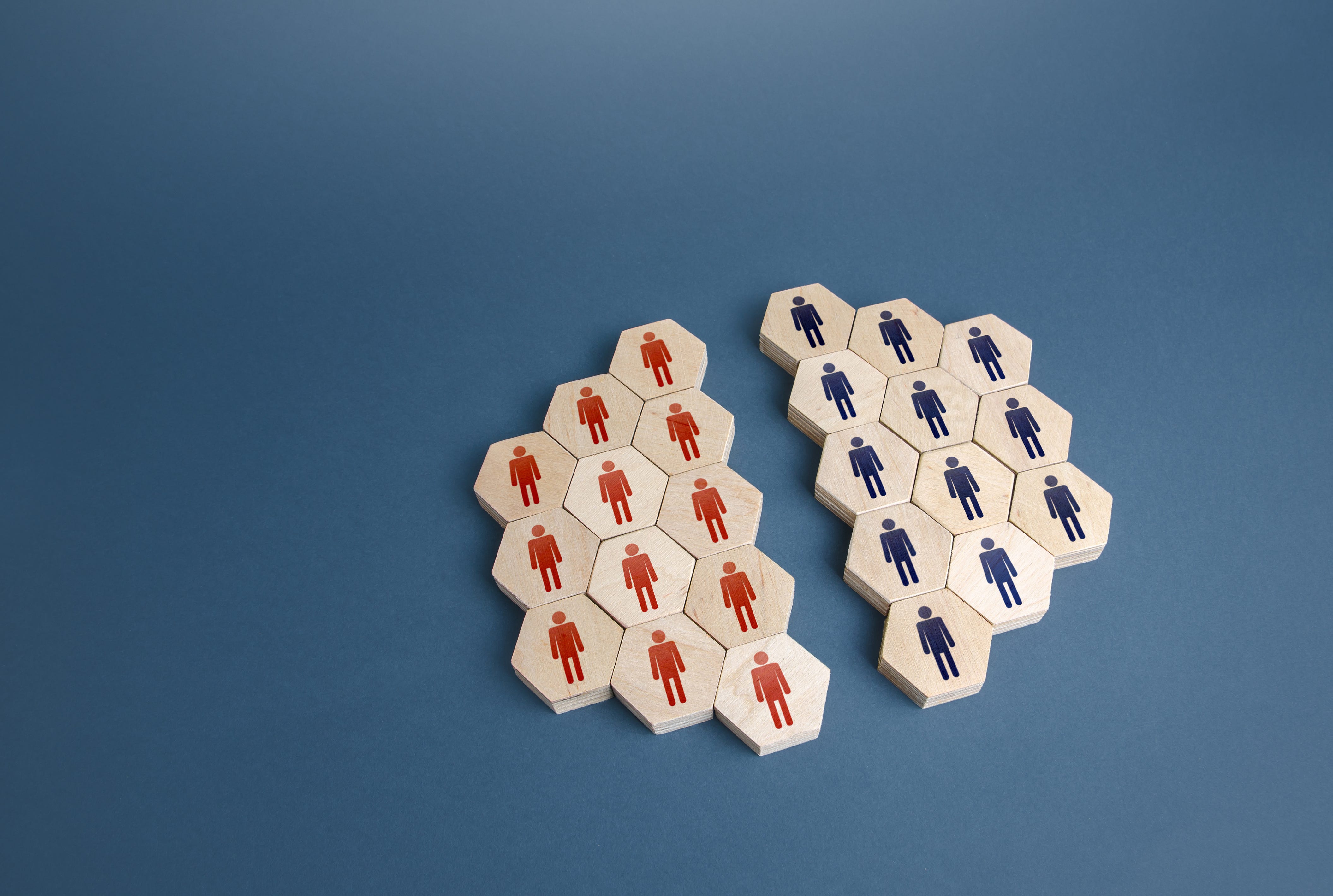
I have felt a sense of dread and heaviness this week. I have watched some people express an outpouring of grief and empathy for a member of “their” group, while overtly ignoring or trivializing similar tragedies that impacted the “other” group.
I have watched some members of the “other” group claim they feel no sadness at all about a tragic murder that left a wife a widow and children without a father, because they found his political rhetoric despicable.
I have watched overt hypocrisy in how people and politicians have responded to one of their own—with an outpouring of grief, despair and memorialization, while ignoring similar tragedies in the “other” group.
When I’ve confronted people about their hypocrisy, I’ve been met with complete ambivalence. I believe they know they’re expressing far more empathy for “their” person, but they don’t necessarily see that as hypocrisy, and I’ll explain why this may be the case in a minute.
I’ve also seen many members of the “other” group work very hard to express empathy and grief for someone who is not in “their” group, not on “their” side. I have found this both admirable and irritating.
These dynamics are things I’ve studied extensively, and yet I still struggle to lead with logic rather than emotion. But I believe that understanding the underlying dynamics at play can help us all better manage the extreme political polarization we’re experiencing right now.
The Nature of Identity-Based Group Conflict
My dissertation focused on ethnic conflict. I explored dynamics contributing to peace and dynamics that were most likely to foment conflict. I used Rwanda as my case study. A country that had an ethnic civil conflict from 1990 to 1994, culminating in a genocide where everyday Hutus killed their Tutsi neighbors because the extremist Hutu government convinced them that Tutsi were “the enemy.”
For months leading up to the genocide the government-controlled radio, the only means of mass communication in the country, pumped out nonstop anti-Tutsi propaganda, as well as “Hutu power” rhetoric that conflated nationalism with exterminating the enemy.
Within my dissertation and in a few post-dissertation studies, I explored nationalism, ethnonationalism and patriotism (similar concepts but slightly different), communities of identity, in-group/out-group dynamics, and what happens when personal, political, ethnic and religious identities merge.
The Positives and Negatives of Communities of Identity
Humans are by nature “tribal,” in that belonging to a social group is central to our functioning and mental health. But there’s a dark side to tribalism.
Communities of identity can be positive and healthy or unhealthy and dangerous. Being a member of a mom group, or a book club, or a bowling league are examples of positive communities of identities.
Positive because they provide opportunities for socialization among friends who have something in common.
In communities such as these, identities are loosely defined and the “borders” of these types of communities (who’s in and who’s out) are porous. People can come and go.
Communities of identity that are based on intangible identifiers with non-porous borders often become unhealthy and at times, dangerous.
These types of communities can include groups based on ethnic, regional and religious identity, particularly high control religions where members must adhere to strict rules and meet a long list of criteria to be considered an insider.
In these types of communities of identity, the borders of the group are closed because the identity is fixed. People are either “in” or their “out.” There’s no middle ground.
A big part of rigid groups like these is making members of the out-group the enemy. In fact, villainizing the outgroup is often central to the group’s cohesion.
This kind of dynamic creates solidarity.
A strong ingroup/outgroup dynamic where the outgroup is consistently scapegoated is what makes ingroup members feel like they truly belong.
Now, this doesn’t mean that any group based on ethnic or religious identity is inherently dangerous. Far from it. Most of the time, these types of identity groups can provide a healthy level of cohesion and help people feel like they belong, but never at the expense of outsiders.
When Communities of Identity Become Dangerous
Communities of identity can become dangerous if they possess most or all of the following characteristics:
1. The group has a collective proper name that identifies them as a group (they’re “MAGA,” they’re “Groypers,” they’re “Antifa”)
2. They have a myth of common ancestry (they’re the “true” Americans)
3. They have shared historical memories (“I remember the good ol’ days when…”),
4. They have one or more differentiating elements of common culture that is difficult to change, meaning it’s “fixed” (they’re members of a specific religious tradition, their ancestors arrived in the country during Colonial times, they share traditional values, they fear the same people).
5. They identify a geographical region as their historic homeland (this is “their” country and everyone else is an interloper who can be forced out at any time).
6. And (this is important), their sense of solidarity and group cohesion is based as much on who is NOT in the group, as who is.
When Critical Discourse Slips into Dehumanization of “the Other”
When communities of identity possess the above characteristics, they almost always attribute more refined human emotions to ingroup members, such as having warmth, high moral character, feeling grief, and possessing a range of other higher-level emotions. This dynamic is called “suprahumanization.”
But they attribute more base, animal-like emotions to members of the outgroup. They may describe them as being angry, hedonistic, having a propensity for violence, being sneaky. So, the identity of the outgroup is animal-like. Animals have basic emotions, but we presume they don’t have higher level emotions like humans. This is called “infrahumanization.”
It’s this tendency to rob outgroup members of their humanity that is at the root of dehumanization—what is often called “animalistic dehumanization.”
Why Rigid Communities of Identity are More Prone to Violence
Ingroup members of rigid communities of identity often perceive outgroup members as actual animals, not deserving of respect or empathy.
Tutsis were consistently called cockroaches, snakes, and parasites.
During the Holocaust, Jews were referred to as non-human pests—rats, tapeworms, parasites. They were often referred to as subhuman, an alien species.
What do we think about rats, insects, snakes and parasites? How are aliens most often portrayed in sci-fi movies and books?
Every one of these terms imply that a particular group of people are guilty of infestation, and thus must be exterminated. If not physically, then at least through marginalization, in order to preserve a way of life.
Refer to humans as animals or insects enough, and people will begin to believe it. And soon, they can justify cruel behavior because “they’re not human, and probably deserve the cruelty anyway.”
To justify the family separations at the border a few years ago, I heard many Trump supporters claim that “these immigrants don’t love their children like we do.” This sentiment was also used to justify separating slaves from their children. “Black slaves don’t love their children like we do.” And to justify removing 97% of Native American children from reservations and force them into Indian Boarding Schools. “These ‘Indians’ don’t live their children like we do.”
Because ingroup members in communities of identity with intangible characteristics often do not believe that outgroup members are deserving of empathy, they may see nothing wrong with offering them none, even in times of tragedy.
This belief also justifies the privileging of their group members, and excluding outsiders. The outsiders deserve it. They did this to themselves.
This is the dynamic I think we’re seeing right now.
Both extremes of the political spectrum can behave in an ingroup/outgroup or an “us versus them” manner, but groups with more intangible identities: being Caucasian, perceiving themselves as the only true patriots, being a certain brand of Christianity (the correct brand), believing they have the moral high ground, believing they have the only common ancestry that matters, and believing that this nation is “theirs” because of this common ancestry and then wrapping it all up in God talk that allows them to bypass personal accountability for their actions because “God told them to…” will almost always lead to protracted conflict and fringe violence.
Fighting to Preserve a “Way of Life”
Conflicts over intangible issues are almost always zero-sum games, particularly when they involve identity, beliefs, values, cultural norms and/or a way of life. And when politicians know this and purposely fan the flames of “us versus them” dynamics, they’re stoking rage to cull votes.
Why? Because most people will never stop fighting if they can be convinced that the outgroup members are threatening their “way of life”—destroying their families, harming their children, taking away their rights, taking away their God, ruining their economy, destroying their country.
Conflate a value with religion and most people will fight to their death. And they’ll also vote for the person who promises to punish the other side.
There was a recent study that found that the people who were the most anti-immigrant were from states with the lowest number of immigrants living there. Why were they so negative and fearful? Because politicians convinced them that immigrants were threatening their way of life—taking their jobs, making their communities unsafe, replacing them, etc.
Replace immigrant with any identity and if people can be convinced that a group of people who are different in some way—people who live nowhere near them, who they’ll likely never meet— will threaten their way of life, they will likely become inflamed and incensed and engage in perpetual conflict.
And the politicians who convince them of this will keep getting elected.
Conflict resolution requires increased empathy toward, and understanding of, opposing sides. And when communities of social identity based on intangible characteristics that include framing members of the outgroup as inhuman and animalistic are asked to be more empathetic toward those outsiders, they’ll often adamantly refuse.
They’ll also be more likely to perceive attempts at compromise as outright betrayal to their stated cause.
A Path Forward
Here are my recommendations if you don’t want to live the rest of your life with debilitating and dangerous political polarization:
Try to avoid ascribing a collective identity onto a large group of people who you perceive as being members of “the other side.” The media would have us believe that everyone on “the other side” is the same. They’re not.
Try to avoid saying (and believing) that you do not have empathy for someone who was murdered because you disagree with their politics. I don’t care who it is. If you can’t muster up some empathy for their surviving family members, you’re a hop, skip and a jump away from dehumanizing them.
Stop watching partisan news. Just stop. If you find yourself angry all the time and demonizing “the other” then you’re on the path toward radicalization. And radicalization is seductive. Once you’re in its crosshairs, it’s like a black hole that will pull you in and you’ll become unreachable in time.
Don’t read this and say “Ah ha!" So that’s what they’re doing!” Yes, that may be true, but the only path forward is if each of us beings by examining our own behavior first, before examining the behavior of “the other.” I’m clearing intimating that right-wing populists operate in more rigid groups of identity, but take some time to examine your own groups. Is dissent allowed? Are the borders porous? Are members threatened with shunning if they disagree? This describes some groups on the Left as well.
Stop disregarding information as false simply because you don’t agree with it. I had someone recently tell me that the “crazy left liberals” committed most ideologically motivated violence. That is false, by a longshot. Every study ever done on this issue, in the United States and globally, have consistently found that right-wing extremists engage in a far higher number of violent attacks, including homicides compared to left-wing extremists. He immediately disregarded it. “I don’t believe that research. It’s false.” I offered to send him the research from the National Institute of Justice, FBI Crime Statistics, the International Center for Counterterrorism, but he had no interest in digging deeper.
Be intellectually curious, even if it makes you uncomfortable.
I would also caution people to not go above and beyond in expressing empathy for the “other side” if the goal is to demonstrate (and model) high emotional intelligence and a lack of hypocrisy.
If the “other side” has not done the same, a high level of demonstrated empathy for them will most likely be perceived as weakness and will not result in them saying “oh gosh, you’re right. We didn’t show an ounce of empathy when one of ‘your’ people was murdered by a right-wing Christian nationalist. In fact, we immediately politicized it and blamed you! We’re so sorry about that. We’ll do better in the future!”
Nope, that’s not going to happen if their identity and group cohesion is based, at least in part, on hating or at least fearing the other side. If they didn’t have a group to scapegoat, to compare themselves to, to demonize and hate, then they would cease to exist as a community of identity.
In order to be at the top of a social hierarchy, there must be people at the bottom. Not having outsiders to scapegoat or people beneath them will take their “specialness” away and leave them without a target for their grievances.
Both extremes are capable of this dynamic, so if you lean left and if any of this sounds a bit like what you’re doing, stop it.
Possible Solutions
Once a politician seizes on an opportunity to privilege one group (their group) over others to gain political power, and once they hand members of “their group” a ready scapegoat for all their problems, they’ve lit a tinderbox. And tinderboxes that burn brightly, are often impossible to extinguish.
But conflicts tend to run in cycles, and one stage of a conflict cycle is called “hurting stalemate” which involves everyone becoming exhausted. Completely worn out. And it’s during this time when peace is more likely to be achieved, because when we’re exhausted, we’re more likely to calm down and listen to the other side.
Getting out of this dangerous cycle requires people to be willing to strive for higher emotional intelligence more than they want to remain immersed in their grievances. To be open, to earnestly consider facts they may not agree with, to increase their empathy for people on the other side (even if you hate their belief systems), and to have a willingness to at least try to see issues from another person’s perspective (you don’t have to agree, you just need to understand).
Those who aren’t willing are usually getting fed in some way by the conflict and they’re also probably afraid of losing their group membership.
I believe most people aren’t like this. Maybe I’m naïve, but I think that the majority of people living in this country just want to be happy, to be able to take care of their families and live in peace. And if that means they can recognize dangerous dynamics and refuse to contribute to them, even a little bit, then we have hope of coming out of this ugly time.
If I could possibly advise people on the Right who are deeply grieving Charlie Kirk’s murder, it would be to hold off on scapegoating the “violent crazy left lunatics,” even if that scratches an itch. And hold the President accountable for his immediate scapegoating before the killer was even identified.
And if I could give everyone advice (including myself), stop arguing with people on social media. That solves nothing. It’s the “fast food” of emotional regulation. You’ll feel good for five seconds and then feel awful.
Rant over.
No posts
Comments
Nothing yet. Say the first thing.
Sign in to join the conversation.