
Your message matters, but many speakers believe their audience has come only to hear their ideas. Yes, people do not give their time, attention, and resources to sit beneath empty charisma. They are looking for substance, insight, clarity, and practical value. A speaker who underestimates the importance of content will eventually forfeit credibility. Personality may capture attention, but substance is what earns trust.
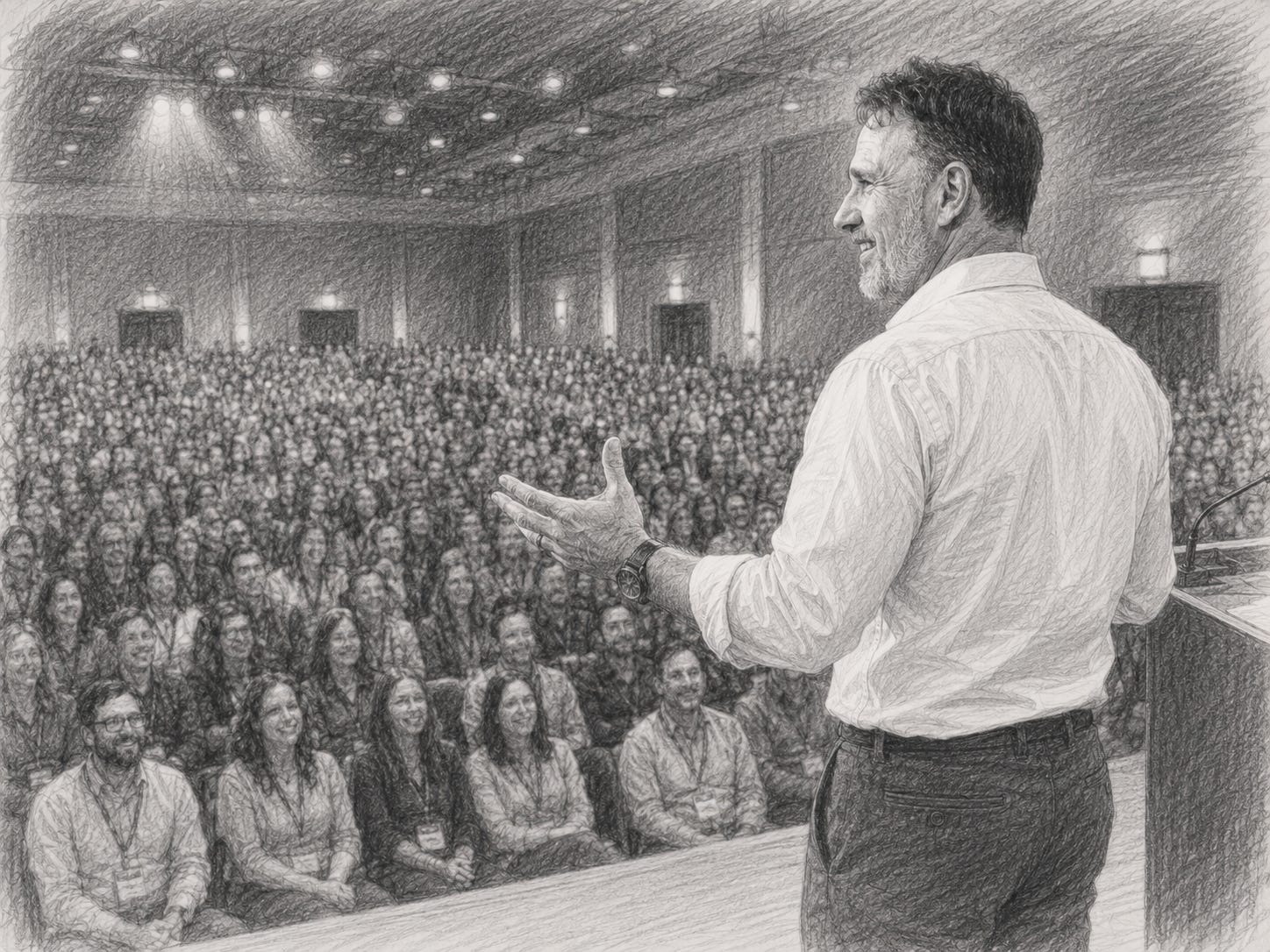
Still, content alone is never the whole experience. This is especially true for speakers, authors, pastors, coaches, and other thought leaders who already have established content. Many people in the room have already read the book, listened to the podcast, watched the interviews, followed the social posts, or attended previous events. In many cases, they already know the general shape of what the speaker is going to say before the speaker ever steps onto the stage.
So why do they come? They come because a live event offers something that a book, podcast, article, or video can never fully provide. They come to experience the person behind the message. They want the presence, energy, humor, conviction, and humanity of the speaker in real time. They want to know you’re not a fraud. Once they are convinced of that—they will embrace your content and ideas even more.
That means a live event is not merely a vehicle for delivering information. It is an encounter. It is a shared moment between the speaker and the audience. It is a space where ideas become personal, concepts become embodied, and principles come alive because they are being carried by a real person standing before real people.
Content Deserves Excellence
This does not diminish content in the least. In fact, it raises the standard for content because the message must be strong enough to deserve the moment. The audience should never feel as though the speaker used personality to compensate for a lack of preparation. The best speakers bring both substance and presence, both insight and connection, both clarity and humanity.
One of the mistakes I made as a speaker was believing the talk began when I started speaking. In reality, the audience had already begun experiencing me long before I delivered the first sentence. They noticed how I entered the room, how I treated the host, how I interacted with the event staff, how I handled small disruptions, and whether I seemed genuinely present. My message was already being interpreted through me as the messenger before the formal presentation ever began.
This is why speakers must think beyond the question, “What am I going to say?” That question is necessary, but it is incomplete. A better question is, “How will the audience experience this message through me?” An even better question is, “Will they feel talked at, or will they feel personally engaged, respected, challenged, and invited into something meaningful?”
The speaker is not separate from the message. The speaker’s presence becomes part of the message, whether intentionally or unintentionally. Warmth communicates something. Humility communicates something. Distance, arrogance, impatience, and excessive polish communicate something too. The audience is not only listening to your words; they are interpreting your posture and energy.
Thanks for reading Becoming EPIC Journal! This post is public so feel free to share it.
The Speaker Is a Steward of the Room
That is why great speakers do not merely deliver talks. They steward experiences. They understand that the room is filled with people carrying pressures, questions, ambitions, disappointments, fears, hopes, and responsibilities that will still be waiting for them after the event ends. They know the audience is silently asking whether this message can actually help them tomorrow morning. They also know the audience is asking whether the person speaking understands people like them.
To give more of yourself as a speaker does not mean making the talk all about you. That is self-indulgence, not service. Giving more of yourself means allowing your humanity to serve the message and the audience. It means letting people see enough of your real experience, conviction, struggle, humor, and care that the content feels tested, lived, and trustworthy.
This is where storytelling becomes essential. Stories are not decorative pauses between the “real” teaching points. Stories are bridges between the speaker’s world and the audience’s world. A good story says, “This idea has been lived somewhere, not merely studied.” It gives the audience a place to locate themselves inside the message.
Yet storytelling requires wisdom. The goal is not to overshare, manipulate emotions, or turn every presentation into a personal confession. The goal is to reveal enough humanity to make the truth more accessible. When done well, a story does not distract from the content; it deepens it, clarifies it, and gives it emotional weight.
The Meaningful Moments After the Talk
Speakers also need to remember that some of the most meaningful moments happen outside the formal talk itself. A brief exchange after the keynote may matter more to someone than the most polished line in the presentation. A thoughtful answer during Q&A may unlock something that the prepared content only introduced. A moment of eye contact, a remembered name, a patient conversation, or a sincere word of encouragement may become the part of the event someone carries home.
Those moments are not interruptions to the work. In many cases, they are the work. The platform may create the opportunity, but presence often creates the impact. If a speaker rushes in, performs, and disappears, they may have technically completed the assignment while missing one of the greatest opportunities the assignment provided.
This does not mean every speaker must become extroverted, endlessly available, or emotionally depleted after every event. It does mean speakers should be intentional about the experience they create. There is a difference between protecting healthy boundaries and using professionalism as a wall. The audience does not need unlimited access to the speaker, but they do need to sense that the speaker is truly present with them.
The best speakers prepare the content and prepare themselves. They rehearse the message, but they also prepare their heart, posture, and attention. They think about the flow of the room, the emotional journey of the audience, and the human need beneath the stated topic. They do not simply ask, “Did I get through all my material?” They ask, “Did I serve the room?”
Applause Is Not the Only Measure of Impact
That question changes the way a speaker evaluates success. Applause is wonderful, but applause is not the only measure of impact. A standing ovation may signal appreciation, but it does not always reveal transformation. The deeper evidence is whether people leave with greater courage, clarity, conviction, hope, skill, or willingness to act.
Content gives people something to think about. Connection gives them a reason to care. Content provides structure, language, insight, and practical tools. Connection creates trust, identification, emotional resonance, and human credibility.
The best speakers refuse to choose between content and connection. They understand that strong content without connection may inform people without moving them. They also understand that connection without content may briefly inspire people while leaving them unequipped. The goal is not to replace content with personality; the goal is to let personality, presence, and authenticity carry the content with greater power.
For speakers with established platforms, this becomes even more important. If the audience has already read your book, then the live event must offer something the page cannot. If they have already heard your podcast, then the room must offer something the earbuds cannot. If they already know your framework, then your presence must help them feel why the framework matters now.
Thanks for reading Becoming EPIC Journal! This post is public so feel free to share it.
The Gift of the Room
That is the gift of live speaking. It offers immediacy. It offers interaction. It offers shared attention in a distracted world. It offers the possibility that a familiar idea can land in a new way because it is spoken in a particular room, to particular people, at a particular moment.
Speakers should therefore approach every event as more than a presentation. It is a full audience experience. The introduction, the opening, the stories, the pacing, the humor, the silence, the questions, the close, and the moments afterward all matter. Together, they determine whether the audience merely heard a message or experienced something meaningful.
Prepare the content with excellence. Honor the craft, sharpen the ideas, build the evidence, refine the structure, and make the message useful. Respect the audience enough to give them something substantial. Never assume that connection can compensate for weak ideas or shallow preparation.
But once the content is prepared, do not hide behind it. Step fully into the room. Let the audience encounter not only what you know, but why it matters to you. Give them the content, but also give them the conviction, compassion, humor, wisdom, and humanity that make the content come alive.
Give Them the Message, and Give Them Yourself
Because in the end, people may come because of what you know. They may register because of the topic, the book, the reputation, or the promise of useful ideas. But they are often changed because of how fully and sincerely you show up. They came for the message, but they also came for the living embodiment of that message—you.
Give them the content. Give them the clarity. Give them the tools, the framework, the stories, and the next steps. But do not forget to give them yourself.
Comments
Nothing yet. Say the first thing.
Sign in to join the conversation.