

On this special day, when we honor the role of fathers in human life, take a moment to reflect on the fathers you’ve known and, for many of you men out there, the father you’ve been.
When we see adult children honoring their fathers in meaningful ways, our hearts are warmed—and our eyes often moistened. And there is no better tribute than “Leader of the Band,” Dan Fogelberg’s 1981 song about his father, Lawrence Fogelberg, a musician and leader of a number of high school and college marching bands. It’s an amazing song, and it begins beautifully:
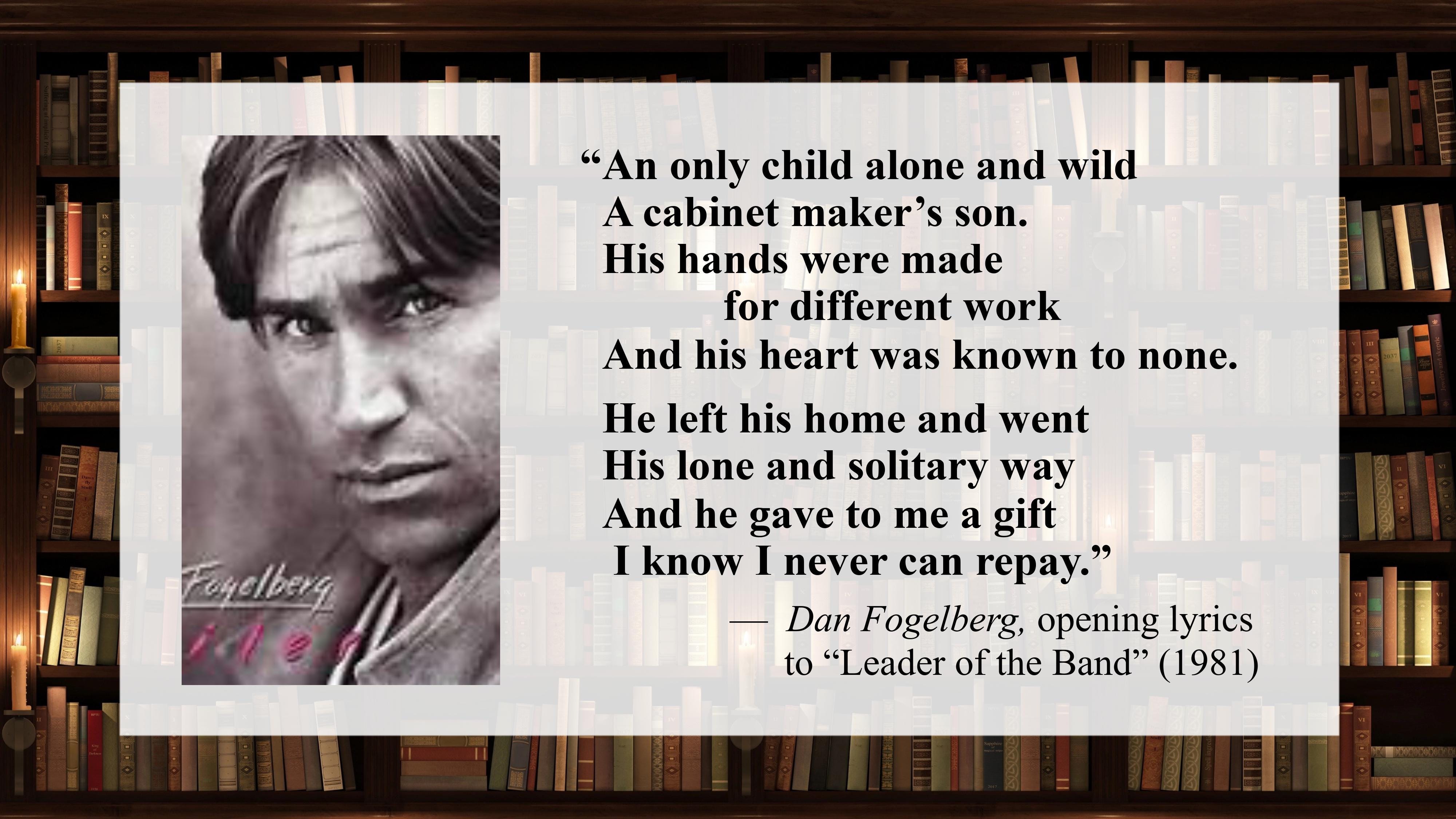
Mr. Fogelberg died a year after the song was released, and I’ve often thought about what it must have been like when his son said, “Dad, I’ve written a song for you, and I hope you’ll like it.” Fogelberg believed it was the best song he’d ever written. To hear him express that thought and to see him perform the song, click the video link below—and don’t forget to have a tissue handy:

This is a spectacular opening line because it instantly creates two mysteries. First, why is the narrator sitting next to Michael Jackson? And second, why is she admiring such an unexpected and oddly intimate detail as his feet? Readers are only two seconds into the book, and they’re already hooked.
In this sequel to Manic, Cheney’s 2008 bestselling memoir detailing her lifelong struggle with bipolar disorder, the rest of the first paragraph is unspectacular, offering only a few unremarkable details about Jackson’s physical appearance. It is in the second paragraph where the book takes off like a rocket:
“Looking back, there was indeed something extraordinary in that room, only it had nothing to do with Michael Jackson’s feet. It was the mere fact that I was sitting there as one of his attorneys, representing him in a big, messy lawsuit involving one of the most successful albums of all time. That was me, all right—counselor to the stars. The voice of reason and restraint, in a gray Armani suit and a gorgeous white silk shirt I’d bought especially for the deposition, because it had these long, elegant French cuffs that would just about hide the virulent red slashes across my wrists I’d acquired from a recent suicide attempt.”
For more than 2,000 memorable opening lines from every genre of world literature, go to www.GreatOpeningLines.com.
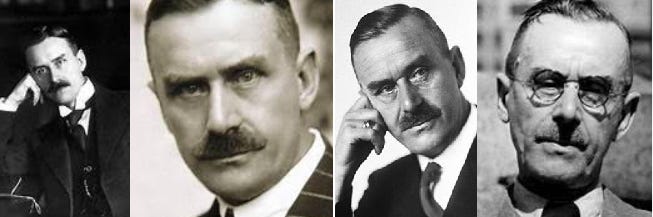
On June 23, 1944, this German writer became a U. S. citizen, six years after he emigrated to America. One of the century’s most famous writers, his reputation was based on novels like Buddenbrooks (1901), Death in Venice (1912), and The Magic Mountain (1924). He was awarded the Nobel Prize for Literature in 1929.
Born in Lübeck, Germany in 1875, he had an early flirtation with authoritarianism, but soon revised his outlook and became a staunch defender of democratic ideals. He was an early opponent of National Socialism (Nazism), formally moving to Switzerland after Hitler came to power in 1933. In 1936, Nazi authorities stripped him of his German citizenship and the University of Bonn revoked the honorary degree it had granted him in 1919 (the degree was restored after WWII).
After arriving in the United States in 1938, he joined the faculty at Princeton University. An avid proponent of walking, he took one-hour strolls through the
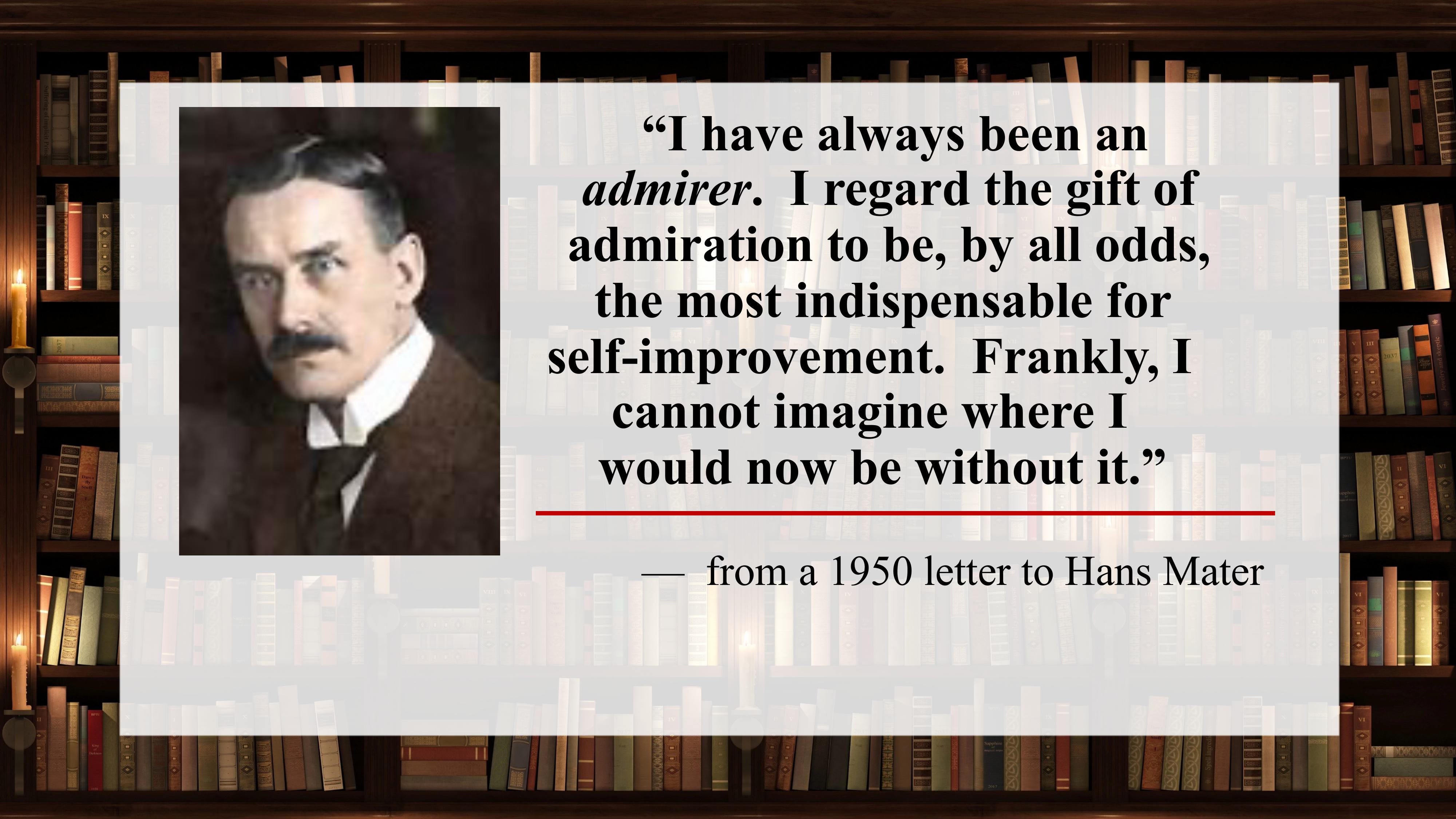
campus almost every day, often accompanied by his old friend—and a man he greatly admired—Albert Einstein. In a 1950 letter to a friend, he wrote:
Who is this person? (Answer below)
I was thirteen years old when Rosa Parks suddenly came into my life.
It was the winter of 1955, and I was a seventh-grader at St. Nicholas Elementary School in the small town of Garrison, North Dakota. One of the developing news stories at the time surrounded Rosa Parks, a 42-year-old African-American housekeeper and seamstress whose arrest for refusing to give up her bus seat to a white passenger sparked a historic bus boycott in Montgomery, Alabama—and ignited the American Civil Rights Movement.
Part of my initial interest, speaking honestly, was that my mother was also a housekeeper and seamstress at the time. To my young mind, the coincidence seemed almost providential. When I mentioned it to my favorite teacher, Sister Angela, she agreed it was a remarkable coincidence, but thought I was missing the bigger picture. “Mardell,” I recall her saying in a patient but correcting way, “We are watching history in the making.”
What I didn’t know back then was that my admiration for Rosa Parks would last a lifetime. Click the video link below for a two-minute summary:
Beginning in college and continuing well into adulthood, I occasionally put together lists of my Most Admired People. A few years ago, I unexpectedly came across a Top Twenty list I had assembled more than sixty years ago, when I was a senior at the University of North Dakota. Not surprisingly, Rosa Parks firmly occupied a place on my list—along with:
Albert Camus, Winston Churchill, Frederick Douglass, Amelia Earhart, Albert Einstein, Ben Franklin, Mahatma Gandhi, Helen Keller, John F. Kennedy, Martin Luther King, Jr., Abraham Lincoln, Dorothy Parker, Jackie Robinson, Teddy Roosevelt, Wilma Rudolph, Albert Schweitzer, Annie Sullivan, Henry David Thoreau, and Jim Thorpe.
Over time, a list of twenty people seemed too restrictive, so I expanded my efforts to a Top Fifty and eventually even a Top One Hundred list. Looking back, however, what strikes me most is that I never connected the idea of admiration for these special people with the concept of self-improvement for me. Had you asked me then why I was creating these lists, I probably would’ve said I was simply identifying people whose lives and accomplishments were especially significant to me. In short, I regarded my Most Admired People exercise as one of appreciation, not aspiration.
Then I encountered the remarkable observation in this week’s Puzzler:
I regard the gift of admiration to be, by all odds, the most indispensable for self-improvement.
At first, I wasn’t quite sure what to make of this provocative claim, and I completely failed to see how admiration could be indispensable to self-improvement? Yes, I could easily think of other indispensable ingredients—like hard work, determination, perseverance, and discipline—but admiration? It just didn’t compute.
The more I reflected on the idea, though, the more our Mystery Man’s insight began to resonate with me. Looking back over my lists, I realized that every person possessed at least one quality that mattered deeply to me—like courage in the face of great danger, unflinching integrity in the middle of cheating and corruption, generosity of spirit, grace under pressure, a common-sense wisdom that cut through fog or confusion, perseverance after extraordinary setbacks, the ability to employ wit under duress, and humility—even modesty—in the middle of triumph.
For decades, I thought I was simply memorializing people I admired. Only recently, thanks to this week’s Mystery Man, did I come to understand that the people I admired also embodied qualities I hoped to cultivate in myself. Without realizing it, I had been creating a personal blueprint—a map pointing toward the kind of person I wanted to become.
Definition & Etymology
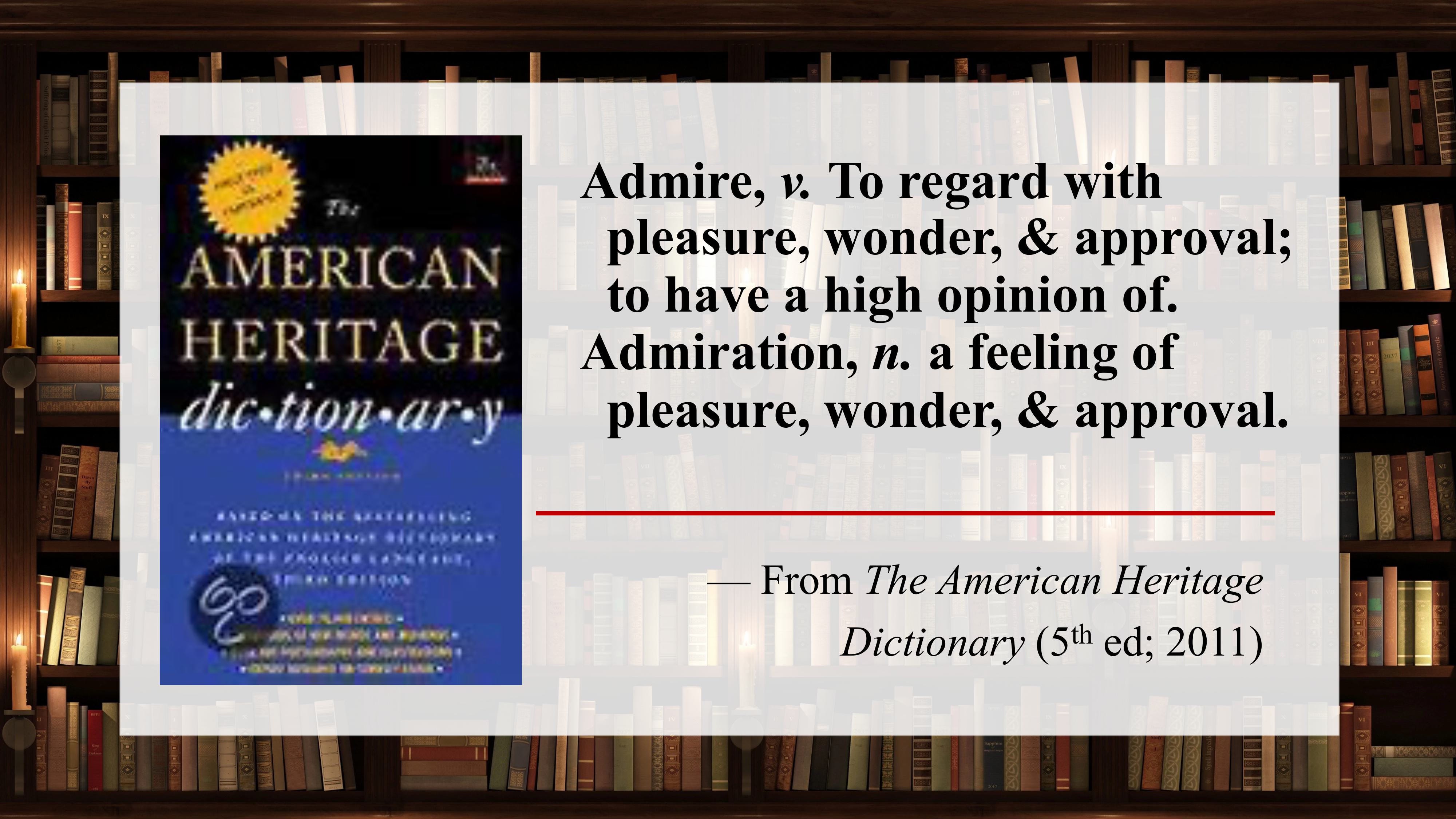
In a usage note, the AHD editors reminded readers that, in addition to admiring people, we can admire things—like a magnificent sunset, a majestic animal in the wild, or a superb work of art. Here, though, we’ll be restricting our attention to the qualities, traits, or actions of people.
According to the American Etymological Dictionary, the word came to English in the early 15th century from the Old French admiration, meaning “astonishment, surprise.” The Old French word, in turn, can be traced to the Latin admirari, meaning “to wonder at,” “to regard with astonishment,” or “to marvel.”
I was particularly struck by the words wonder, astonishment, and marvel. Today, when we speak of admiration, we usually mean respect, esteem, or approval. Yet the older meaning points to something more personally significant. Long before admiration became a favorable opinion of someone, it was powerful emotional response to something extraordinary.
The distinction may seem subtle, but it turns out to be important. While modern discussions of admiration focus on the idea of holding someone in high regard, the original conception of admiration begins when we discover something about a person that leaves us momentarily astonished or even stops us in our tracks.
That certainly describes my own reaction to Rosa Parks. As a thirteen-year-old boy in rural North Dakota, I could scarcely imagine the courage it took for an African American woman of modest means to risk everything by defying both the customs and the laws of her time and place. I admired her courage, of course, but I also found myself wondering: Would I have been able to do what she did? The honest answer was that I didn't know.
This helps to explain why this week’s Mystery Man regarded admiration as “the most indispensable” ingredient in self-improvement. The seeds are planted when we encounter someone whose character or accomplishments leave us genuinely impressed. We marvel first. We admire second. And then, sometimes, that original sense of wonder awakens a desire to cultivate similar qualities within ourselves. What began as admiration gradually transforms into aspiration.
From Admired Person to Role Model
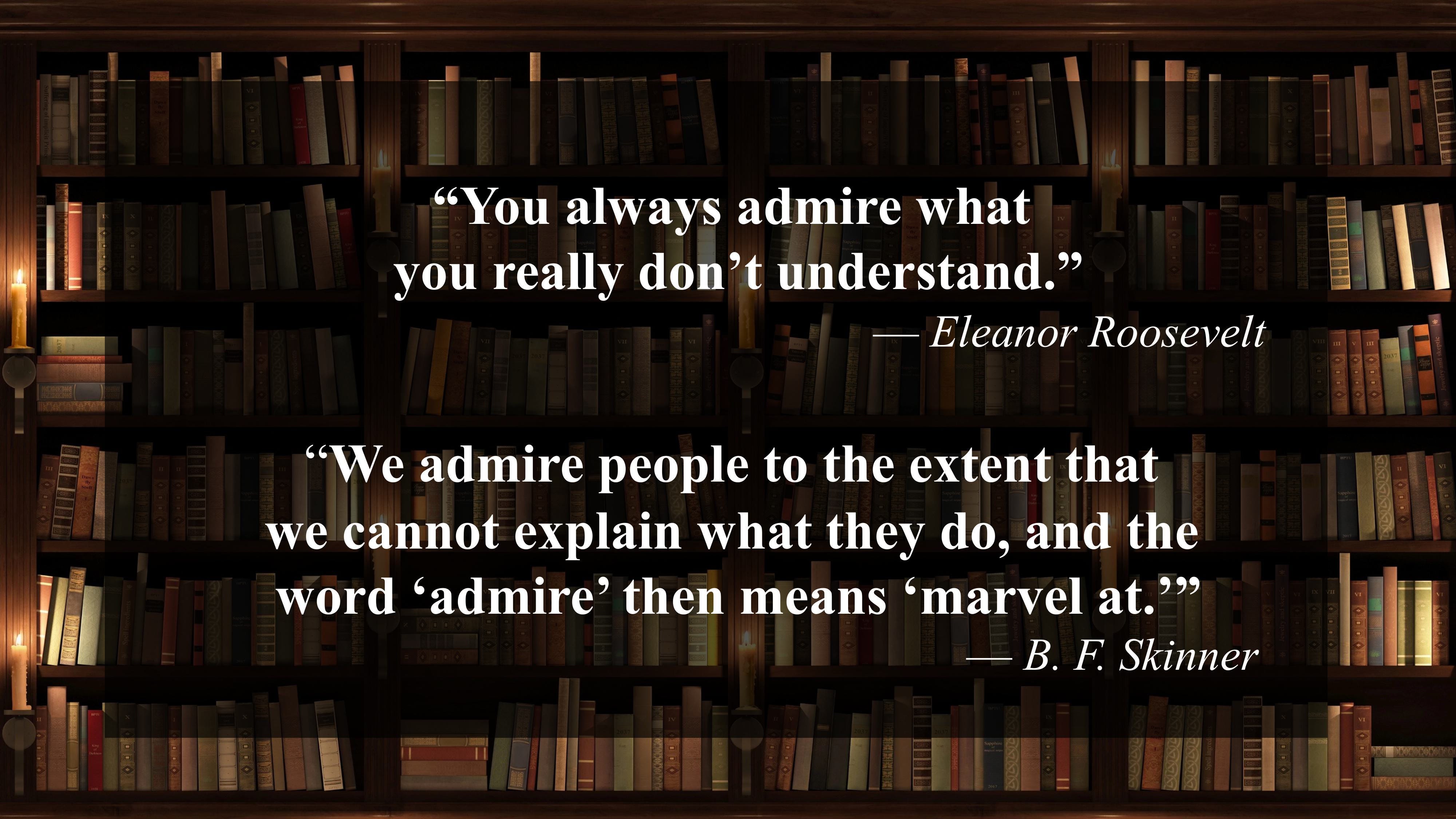
Both of these observations point back to the older meaning of the word. Before admiration becomes respect, it often begins as amazement or wonder. We marvel at a virtuoso pianist, a brilliant scientist, a courageous reformer, or a championship athlete because they seem to possess abilities or qualities far beyond the ordinary.
While many people think of admiration as a fairly passive act, it’s often the first step in a much more active and engaged process. For example, it’s almost impossible not to be dazzled by the great wit of Dorothy Parker without thinking, “How did she do that?” From there, it’s only natural to become curious about the sequence of mental steps she took in formulating a brilliant piece of repartee. Once we begin asking question about the people and things we greatly admire, we become less like simple admirers and more like attentive students—and even apprentices.
While people have always been interested in the power of example and learning by imitation, in the 20th century, social scientists became increasingly interested in how people learn from their teachers and mentors. One of the most influential contributions came from the sociologist Robert K. Merton, who introduced the concept of role models in the 1950s.
While studying how medical students become doctors, Merton and his colleagues discovered that certain professors and practicing physicians exerted an influence far beyond their formal teaching responsibilities. Students carefully observed how these physicians interacted with patients, exercised authority, handled uncertainty, responded to ethical dilemmas, and even how they carried themselves. In effect, the students seemed to be saying, “That’s the kind of doctor I’d like to become.”
Putting it all together, I now believe that admiration is best understood as part of a three-stage process. First comes wonder. We’re dazzled by an act of courage, a display of wisdom, or an extraordinary achievement.
Next comes admiration. We move beyond surprise and begin to appreciate the qualities that made the achievement possible. We begin to more fully recognize and appreciate the role of integrity, perseverance, generosity, or resilience in human life.
Finally comes emulation. We begin thinking about what it would take to develop those same qualities in ourselves. This third stage is where admiration becomes transformative. We’re no longer content to applaud excellence; we want to understand it, learn from it, and incorporate it into our own lives. The admired person has become a role model.
Looking back, I can now see that many of my Most Admired People were functioning as role models long before I understood the term. Rosa Parks exemplified courage, yes. But over time, as the significance of bravery became part of the historical record, she exemplified so many other great qualities as well—wisdom, humility, grace, and so much more. You can see some of it for yourself in the BBC clip below:
In summary, for a good part of my life, I believed I was simply honoring people I admired. Now I realize that many of them were also serving as informal teachers, guides, mentors, and role models. Their lives were answering a question I hadn’t yet consciously formulated: “What kind of person do I want to become?”
I now fully agree with this week’s Mystery Man that admiration is indispensable to self-improvement—primarily because it supplies the living examples that make improvement imaginable. In order to become the best versions of ourselves, it is extremely helpful to see how that has played out in the lives of others.
This week, think about the role that admiration has played in your life. As you do, give special thought to how the people you’ve admired have shaped your aspirations and helped you become the person you are today. If you’d like to make things more interesting, invite a friend or two to join the conversation. If you do, you will almost certainly learn something new about someone you think you already know quite well. Before doing anything, though, take a few moments to peruse this week’s selection of quotations on the subject:
A fool can always find a greater fool to admire him. — Nicolas Boileau-Despréaux
We unconsciously imitate what pleases us, and insensibly approximate to the characters we most admire. — Christian Nestell Bovee
No nobler feeling than this, of admiration for one higher than himself, dwells in the breast of man. — Thomas Carlyle
To cease to admire is a proof of deterioration. — Charles Horton Cooley
To love is to admire with the heart; to admire is to love with the mind. — Theophile Gautier
You can’t ever be really free if you admire somebody too much. — Tove Jansson
We always like those who admire us, we do not always like those whom we admire. — François de La Rochefoucauld
I always wish to find great virtues where there are great talents, and to love what I admire. — Elizabeth Montagu
I admire the person freed from his religion and inspired by the gods inside of himself. — Antoine de Saint-Exupéry
Admiration is one of the chief delights of living. — Florida Scott-Maxwell
For more quotations on the theme of ADMIRATION, go here.

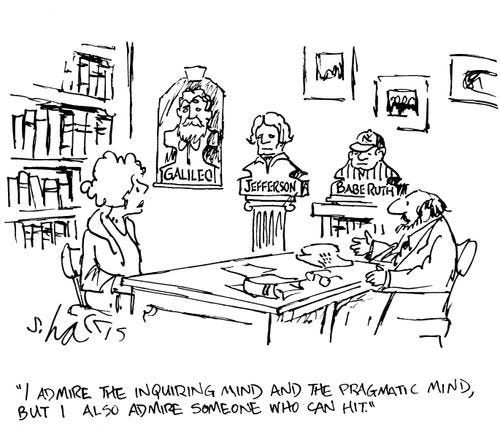
Thomas Mann (1875-1955)
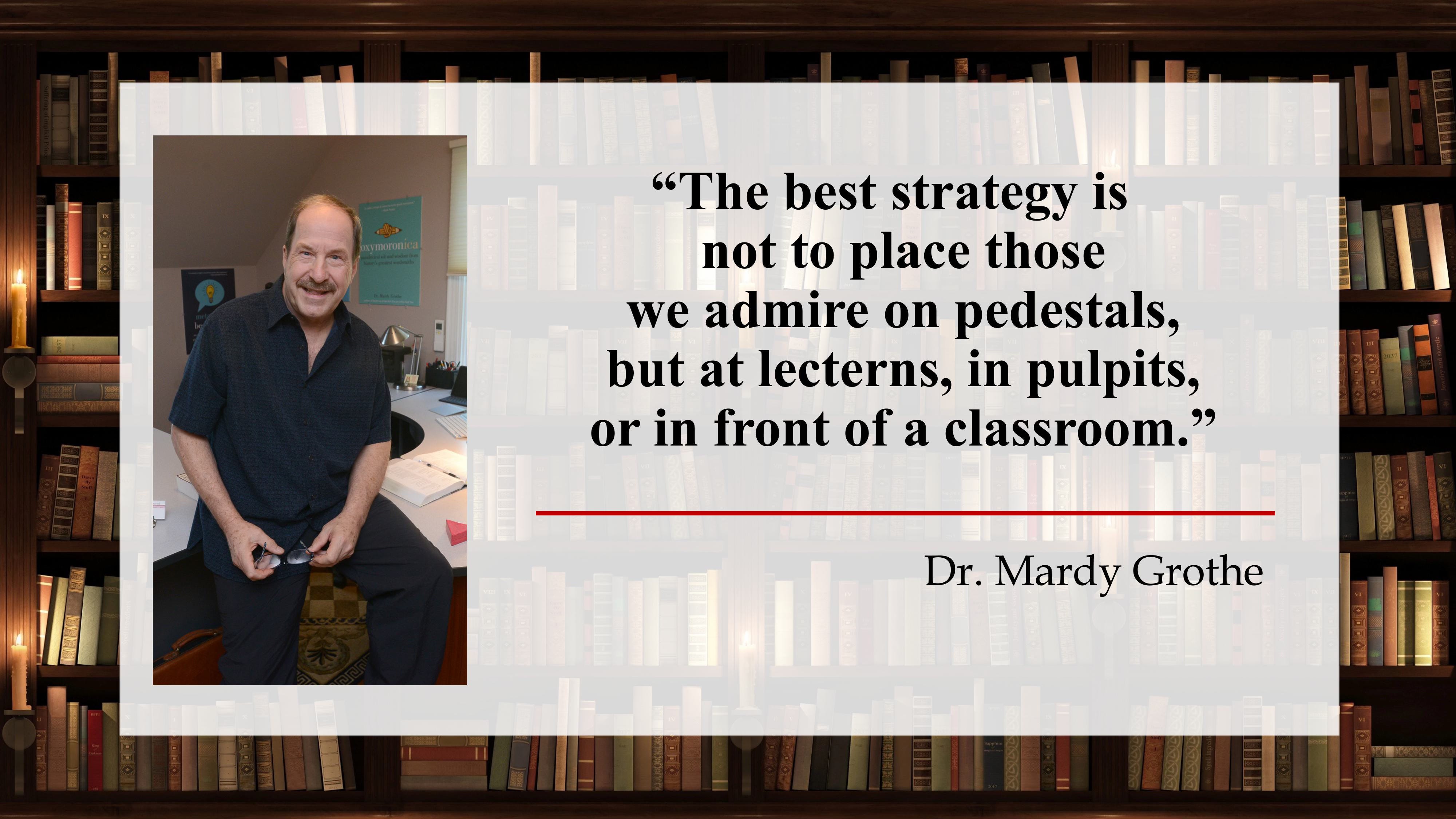
Thanks for joining me again this week. See you next Sunday morning, when the theme will be “Responsibility.”
Mardy Grothe
Websites: www.drmardy.com and www.GreatOpeningLines.com
Regarding My Lifelong Love of Quotations: A Personal Note
No posts
Comments
Nothing yet. Say the first thing.
Sign in to join the conversation.