
Every July, hospitals fill with new doctors. This month marks thirty years since I began my own training, in a specialty younger than most people realize. Lately I have been paying attention to what we call the work we do, and why it matters.
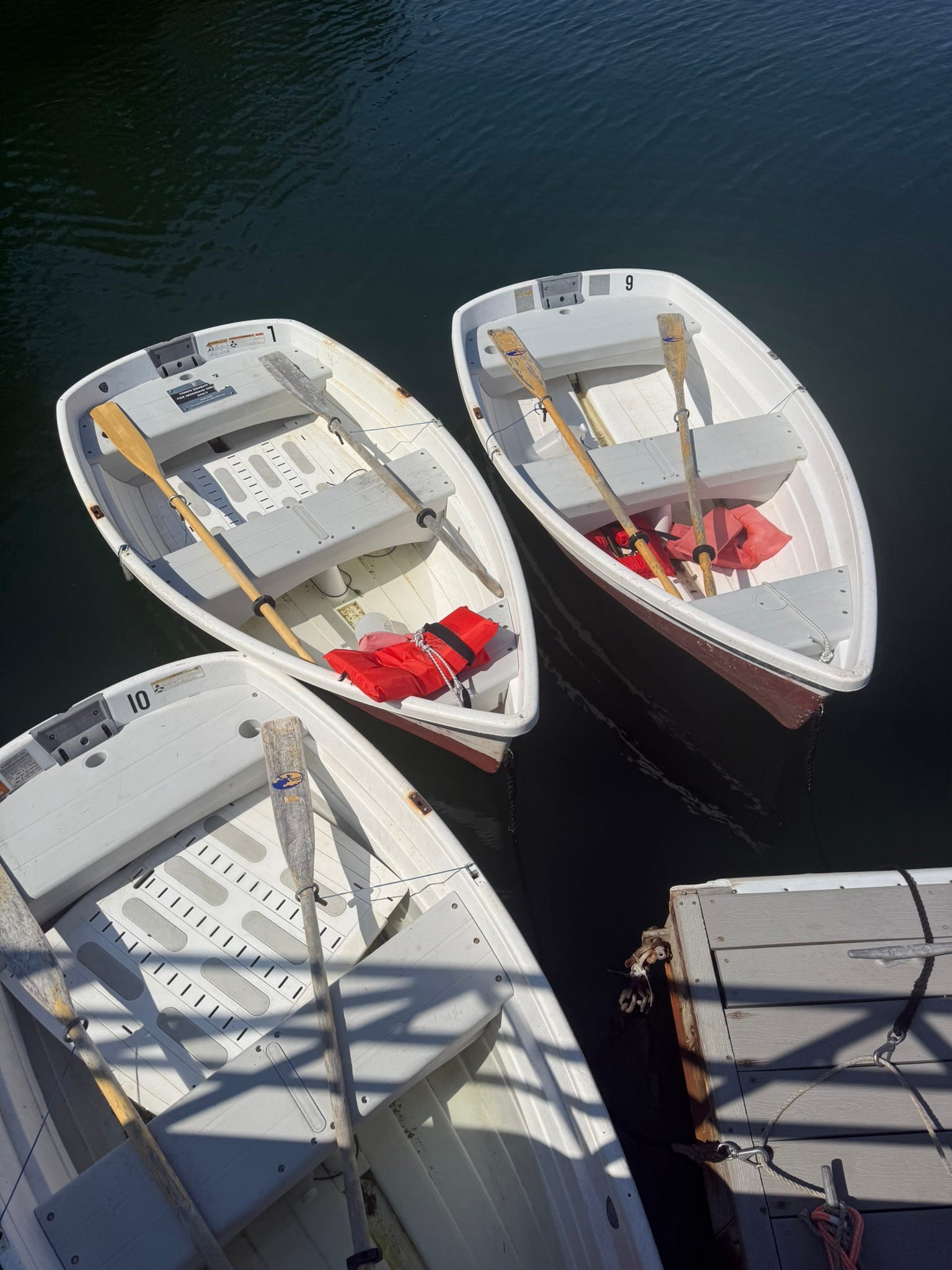
July on Littlejohn Island. I get up early to do Qigong, just as the dawn is cresting, and the working boats are heading out. The fishing vessels run for the outer reaches of Casco Bay, their wakes fanning out behind them. The lobster boats stay nearby, pulling traps just offshore. Their engines burble like trucks idling at a light, and the sound carries across the water as the sun comes up.
I have watched these boats for years. Each crew works its own way, by its own conventions. The people I have interviewed for Radio Maine (and in other conversations before them) are similar. Each one of them has settled into a way of working, and so have I: in how I care for a patient, how I read and research, how I teach and present, and how I write, most recently here and for Off the Wall.
My own mind runs deep and wide at once. I like to group seemingly unrelated ideas and see what happens. I do the same with the symptoms offered by my patients. I usually learn more from the whole than from the parts.
That suits my original profession of family medicine. It also keeps me gathering ideas from fields that look nothing like it. This past year I have been writing a memoir, and lately working back through our family history, which informs both the writing and the medicine.
Today it has been thirty years since my paternal grandfather died of cancer, in a home not far from where he was born. This month it has been thirty years since I began family medicine training. Without my grandfather’s encouragement, my father and his siblings may not have gone to college, and my father would not have become a family doctor. Without my father, I would not be a family doctor.
My Pepere died at seventy-three. He attended the backyard party for my medical school graduation, and held my infant daughter on his lap, weeks before he passed away. A generation later, my son sat at his own grandfather’s bedside, having just returned from completing medical residency across the country, weeks before my father passed away in 2024.
Part of being a medical student is choosing a specialty. It is at least as true that the specialties choose us.
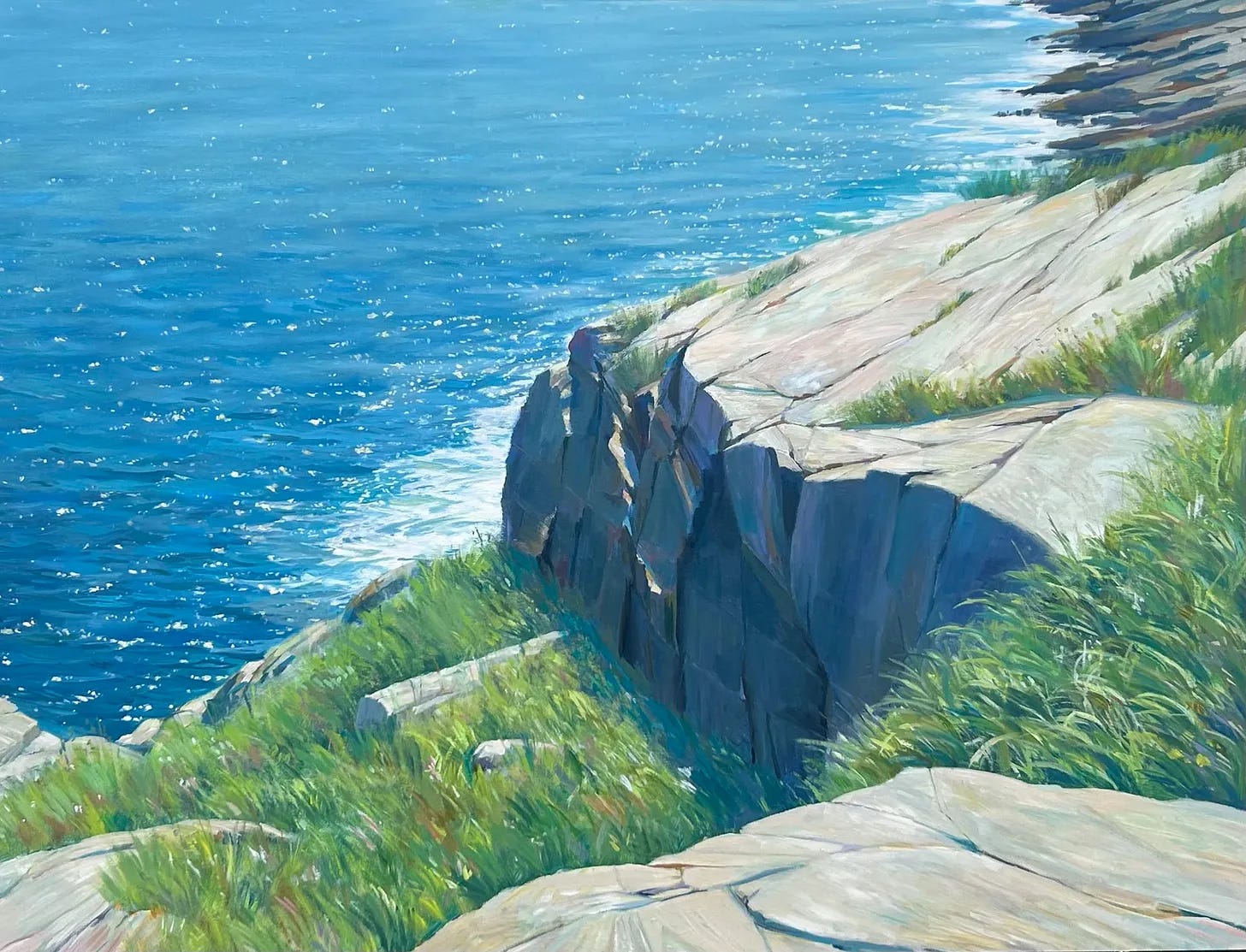
Artists are no different. They choose their materials, and the materials choose them. Before he painted, Cooper Dragonette led wilderness trips, living for stretches out of a duffel bag. When he came home to Maine and set up outdoors with his oils.
"It felt like a natural fit," Cooper told me on Radio Maine. He has worked en plein air ever since.
Cooper spent years learning to stand outside with a brush and create.
I’ve spent years learning to sit with a patient and listen.
Art, like medicine, is not simply a job: it becomes much of who we are.
Each July when the new doctors begin training, everyone moves into roles both new and remembered. The senior residents move to the next phase of their career. The attending physicians adjust their teaching to meet the less experienced learners.
Somewhere, a young doctor writes orders for the first time under a real patient's name.
I was that young doctor once. When I started family medicine residency at Maine Medical Center, I was the mother of two small children, walking each morning into the hospital where my father had taught residents for years.
Even then, I was writing things down: I’ve recently found bits of handwritten poetry on the lined paper we once used for patient notes. As a resident, I published a short essay in a family medicine journal about a baby I delivered, and called it "Along for the Ride."
I have been both doctoring and writing ever since.
Lately, I have been thinking about the history of my chosen specialty. Not long ago I sat with two other family physicians and Dr. Jeff Barkin on A Healthy Conversation. Three of us who practice family medicine were in the room at once, each representing a different generation. Afterward I went looking into the background of my own specialty. It is far younger than I had assumed.
For most of the last century, the general doctor who did everything was slowly disappearing. My father earned his medical degree in 1971, only two years after family medicine became recognized as the twentieth specialty. As a family medicine resident with the Navy in Jacksonville, Florida, he traveled to other locations to speak about the importance of his chosen specialty.
In medicine, names have been an important part of the history and culture. In 1910, Abraham Flexner wrote a report on how American doctors should be trained. Though the goal of ensuring standard medical education was admirable, the schools that taught homeopathy, herbal medicine, and other older traditions began to close. The new system had no place for whole traditions of healing, including the acupuncture and Chinese medicine I practice today.
What we refused to call medicine, we closed.
My father made house calls. He carried a black bag, wrote in paper charts in his own hand, and knew some families across four generations.
I trained in the years that followed, when the paper chart became a screen, the visit grew shorter, and my connection to a patient’s family lineage grew more tenuous.
My son, the third physician in my particular branch of the family line, works now inside a system my father would hardly recognize, focused on portals and dashboards.
Three generations of doctors, three different kinds of medicine. Underneath all three, the work is the same. Someone comes in hurt or frightened, and someone who has years of training tries to help.
Our ability to offer care has evolved. My Pepere had one type of aggressive cancer. Three decades later, my father had a different kind of aggressive cancer. Both had treatment. My father's cancer treatment gave him twice as much additional time, thanks to medical advances.
The tools will keep changing. The sacredness of the patient relationship remains.
We built the specialty of family medicine on the idea of continuity. The same doctor, over years, holding the whole story of a person and a family. At some point in the last three decades, we agreed to be homogenized. First, our offering was renamed “primary care,” then all who specialize in primary care were renamed “providers.” I respect and value the nurse practitioners and physician associates who practice family medicine alongside me, and alongside the nurses and medical assistants who make up our clinical team. I think everyone should be valued for what they bring to the patient relationship.
Just as I think that every artist should be valued for the work they do using their own chosen medium and process.
As someone who thinks a lot about the specificity of language, I believe that assimilation for the sake of simplicity has its costs.
When has the name someone gave your work changed how it felt to do?
The boats went out again this morning, each crew following its own rhythm. The newest doctors started this month, the way I did thirty years ago, and the way my father did when our specialty was brand new.
Many of us will watch our trades change around us, as the doctors and other healing professionals in my family have.
This change may add years to the lives of those we love.
This change may also have unintended consequences, like the discontinuation of beneficial traditions and the disappearance of doctors who care for their patients over decades.
Through these changes, may we keep our focus on the people in front of us who need our care. Our fathers and grandfathers. Our family and friends.
May we use words that reflect our respect for one another.
✨ Thank you for walking this bountiful path with me.
Lisa
This week on The Bountiful Path
Featured on Radio Maine: Tom Mahoney — on friendship and living longer.
Off the Wall: A Mind in Flight — Maine artist Missy Dunaway.
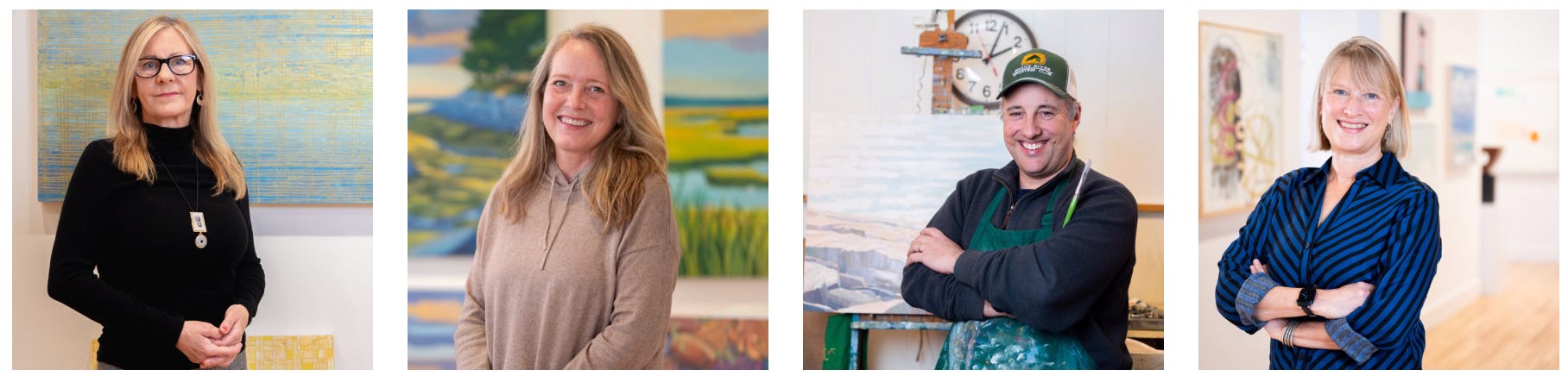
August at Portland Art Gallery: Annie Darling, Catherine Breer, Cooper Dragonette and Susan L. Johnson. Opening reception Thursday, August 6, 5–7 pm. Through August 24.
Radio Maine Live Summer 2026, What Kind of Maine Are We Building? — Thursday, August 20, 5–7 pm, Portland Art Gallery. Free and open to the public.
From the Archive: A Legacy of Healing: The Belisle Family's Journey in Medicine — three generations of Belisle physicians.
You're currently a free subscriber to Dr Lisa Belisle/Bountiful Path. For the full experience, upgrade your subscription.
© 2026 Dr. Lisa Belisle. All rights reserved.
No posts
Comments
Nothing yet. Say the first thing.
Sign in to join the conversation.