
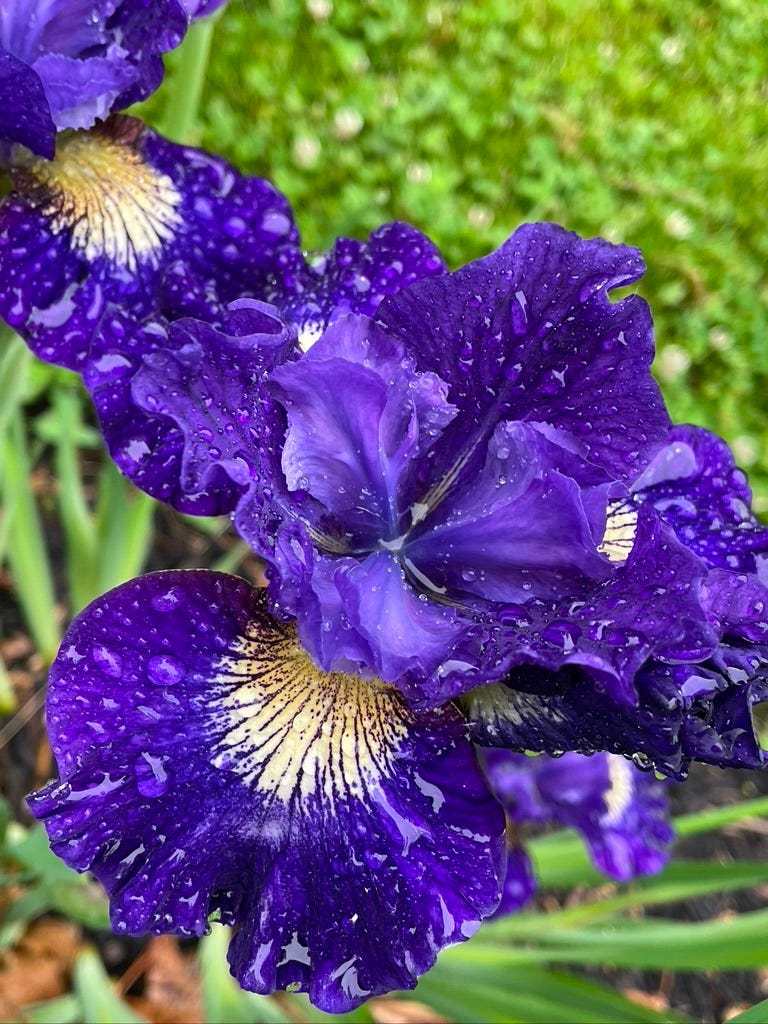
This week on Littlejohn, the island is fully embodying the Rodgers and Hammerstein lyric, “June is bustin’ out all over.” Indigo-hued lupines mingle with daisies on the embankment below our stone wall. Sprays of lavender catmint wave over the flagstones in the yard. Deep violet irises, their centers veined with golden ivory, share the soil with empty daffodil stems near the neighbors’ wooden fence.
Amethyst tones gave way to different sensory forms on Friday, when we taped five Radio Maine episodes. Several of our guests commented on the setting surrounding our Littlejohn Island studio: the proximity to water, to sky, and to natural things in constant change. June makes it all more vivid.
Then, as she prepared to leave, one guest (an artist and former molecular biologist) paused to note the scent of lilacs wafting through the screen door.
As I was reflecting on this preponderance of late spring purples on a run across the causeway, I chanced upon two women clad in mauve walking a white dog. Purple in motion. Patterns, everywhere I looked.
I recently wrote about color as a framework for becoming. This week, what caught my attention was not the color itself but the act of noticing: the way attention, once given, keeps finding similar things to attend to. Psychologists refer to this tendency as the frequency illusion, also known as the Baader-Meinhof phenomenon. It is a combination of selective attention and confirmation bias.
As a storycatcher and word-worker, I draw on this tendency every time I craft a narrative arc. I’ve been doing this since I was a very young girl, watching the clouds and woolgathering as I hefted my L.L. Bean tote full of books home from the Merrill Memorial Library. I’ve never met a pattern I couldn’t find a creative home for.
It also informs my work as a clinician.
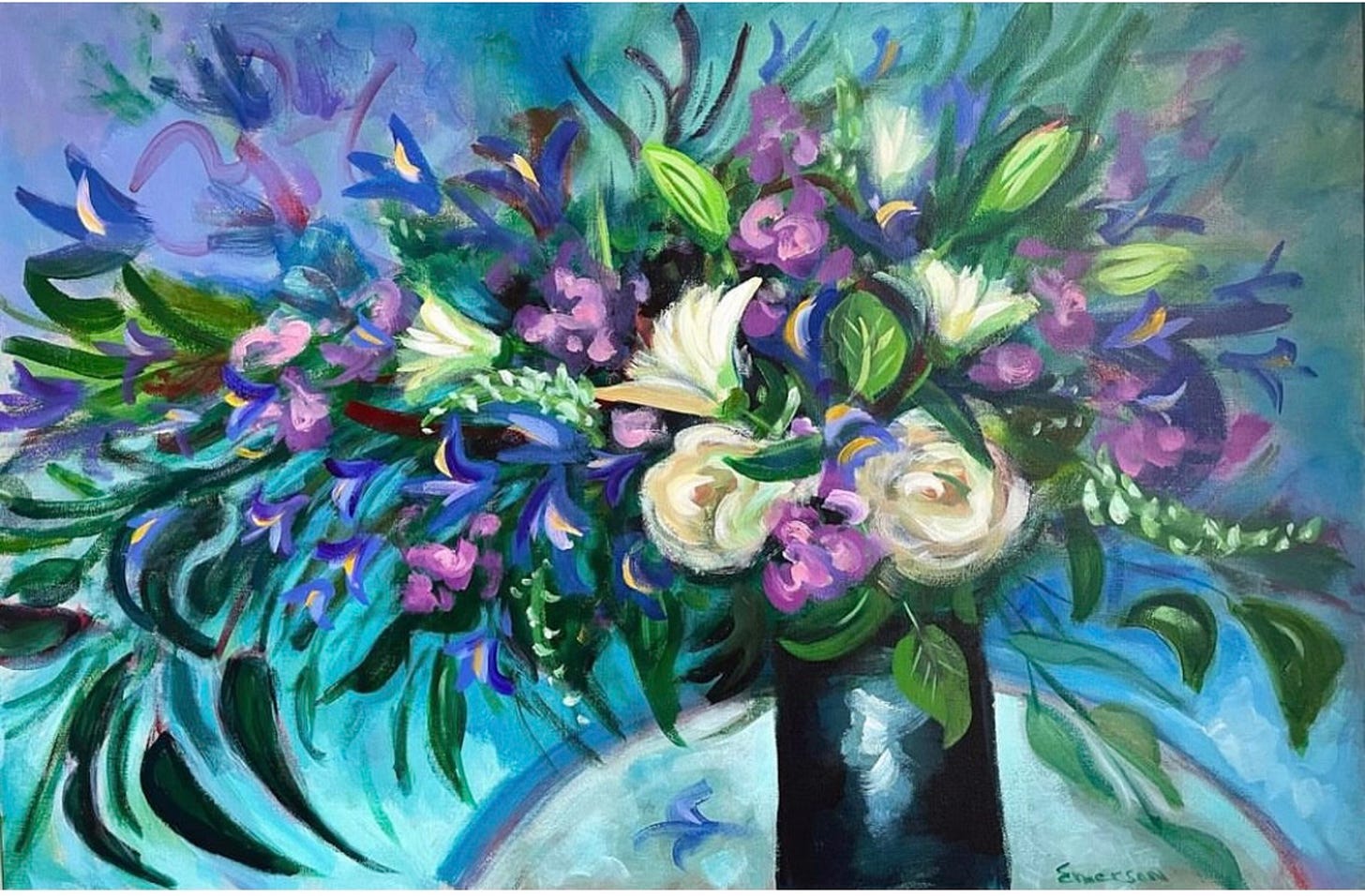
Some of the more procedurally-oriented members of our profession may not think of medicine as story-centric. Yet stories, both spoken and inferred, are the mainstay of our practice. As students, we learn about the seven attributes of a symptom: Location. Quality. Severity. Timing. What makes it better; what makes it worse. What symptoms are associated with it. Taken together, these fragments provide a picture of the mystery we are trying to solve. We have been gathering formalized histories from our patients largely the same way since the time of Hippocrates.
How we ask the questions is as important as the questions themselves. Whether we stand in the doorway or sit at the bedside. Whether we focus on the screen and electronic health record, or on the patient who carries the live data in their own body. Whether we understand that we are impacted by what we bring to the encounter, or believe that we are capable of complete objectivity.
Know someone who marks their days by light, tide, or turning leaf? Invite them to join us on The Bountiful Path.
Our own patterns inform our skills of discernment. Our childhood tendency to notice and distill information, whether from books or our own imagination, follows us into the patient room.
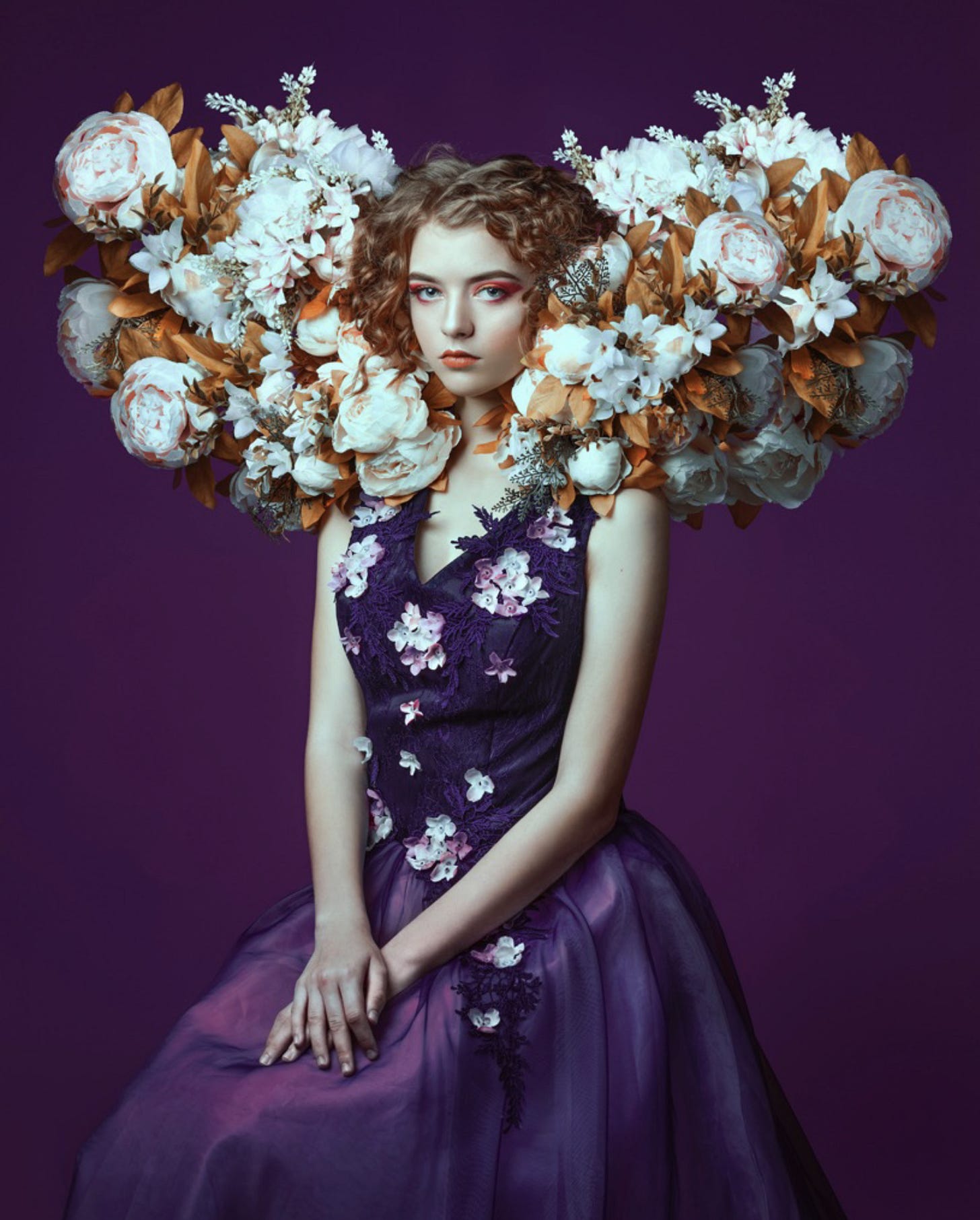
In a recently released Radio Maine interview, Scott Budde, a financial services executive who helped launch Maine Harvest Federal Credit Union, now part of Ancorum Credit Union in Bath, described Maine’s blueberry barrens turning purple after the autumn harvest. “You don’t usually see these vibrant purples and reds in New England,” he said. That sight became a commissioned weaving, made by a Maine artist.
Budde and his wife inherited 400 peony bushes when they bought their farm in Alna, on the Sheepscot River. Those peonies make their way each season into a flower CSA through Daybreak Growers Alliance in Unity. His art collecting began because he once lived near Monument Square in Portland, within walking distance of the galleries. “That put me directly into an art world I didn’t expect,” he said. He counts Portland Art Gallery encaustic painter Dietlind Vander Schaaf among the artists whose work changed what he saw.
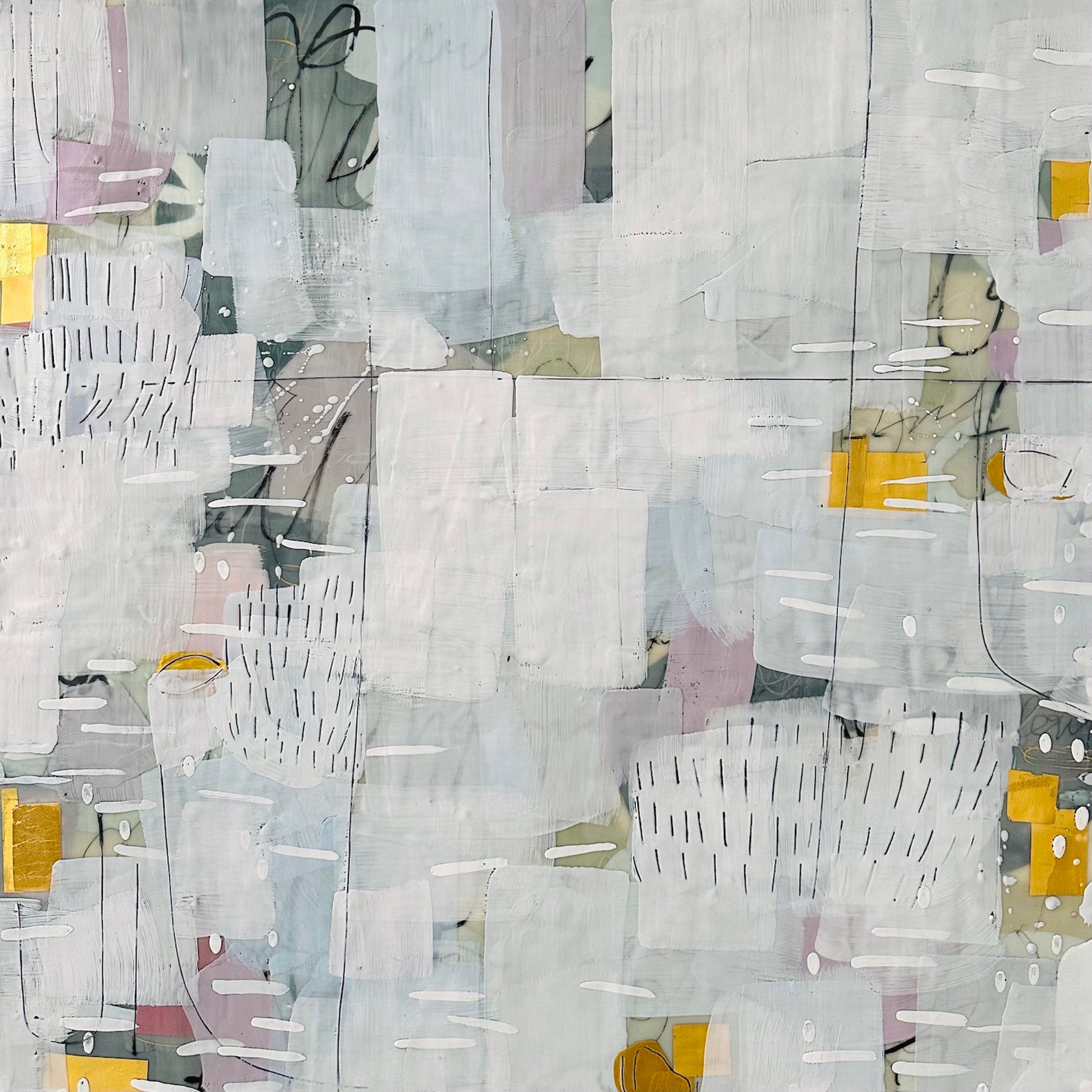
Whether you are painting in purple, pruning peonies, or caring for patients, you may be noticing patterns you hadn’t expected in your own version of bustin’-out June. Perhaps the patterns are cognitive bias and selective attention; perhaps they are a serendipitous opening to creativity. What you do with the patterns is up to you.
Some weeks the work of noticing is the work.
Pause + Reflect:
What are you paying attention to this week that might be pointing toward something larger?
May we notice what is already there before it passes.
May we see the possibility of disparate things, held together.
Thank you for walking this bountiful path with me.
Lisa
More from The Bountiful Path
Featured on Radio Maine: Philip Hussey — of Thos. Moser, on furniture built to outlive the tree.
Bountiful Path Solo Reflection: Transformation — on creativity, care, and connection in the middle of real life.
Off the Wall: Veins of Clay — Artist Paula Stern, working in bronze, resin and other sculptural media, traces human stories through physiognomy and form.
From the archive: Medicine at the Museum — What clinicians learn about observation by looking closely at art.
Continue on The Bountiful Path: Far, and Still Full — A blue micromoon, two birthdays, and what the serial position effect teaches about who we miss.
No posts
Comments
Nothing yet. Say the first thing.
Sign in to join the conversation.