
I used to think that being easy to love meant being easy to say yes to.

Yes to the plan I didn’t want. Yes to the conversation I wasn’t ready for. Yes to staying smaller so the other person could feel more comfortable. I said yes so often and so automatically that I stopped noticing I was doing it.
And for a long time, it worked. Nobody was upset with me. Nobody was disappointed. The relationship stayed smooth on the surface.
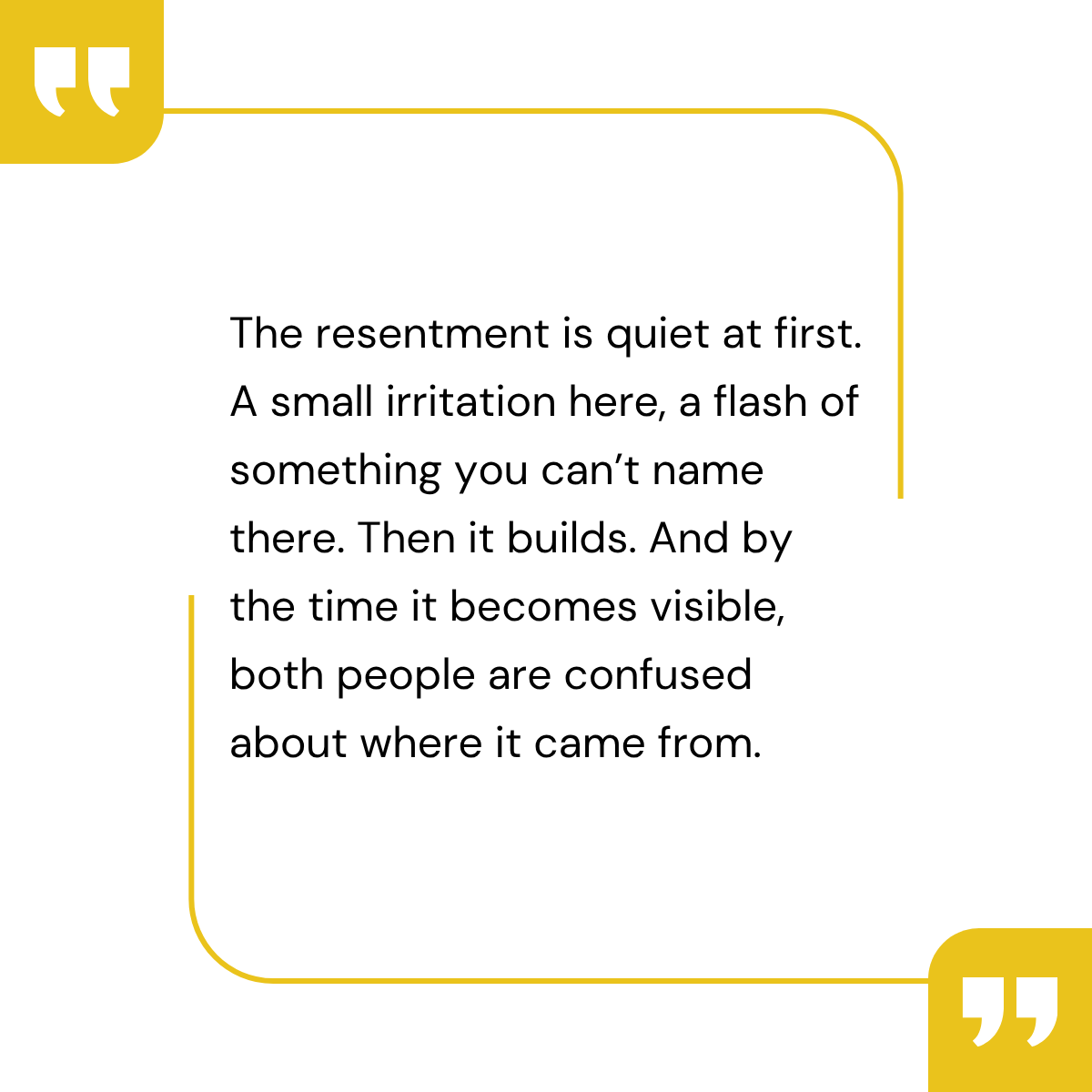
What I didn’t see was the cost of that smoothness. Every yes I gave without meaning it was a quiet no to myself. And those add up in ways you don’t feel all at once. You feel them slowly, as a kind of hollowing out. As a creeping resentment you can’t fully explain. As the strange exhaustion of being in a relationship and still feeling like no one really knows you.
Most people who can’t say no weren’t born that way. Somewhere along the line, they learned that their needs were negotiable and other people’s comfort wasn’t.
Maybe you were the peacekeeper growing up. The one who read the room and adjusted so things didn’t escalate. Maybe someone you loved, early on, made you feel that having limits meant you were difficult. Or maybe the lesson was subtler than that. Just a repeated experience of your needs being treated as less important, until you started treating them that way too.
By the time most people reach adulthood, the pattern is so ingrained they experience it as personality. I’m just not good at saying no. I care too much about other people. I don’t want to cause conflict.
But that guilt you feel when you say no isn’t proof that you’re doing something wrong. It’s the residue of a very old story about whose comfort matters. That’s worth knowing the difference.
The word has been so overused that most people have lost track of what it means in practice.
A boundary isn’t a wall. It’s not a punishment. It’s not something you deploy when you’re angry or use as a way to control what someone else does. A boundary is simply an honest statement about what works for you and what doesn’t. It’s information. It tells the other person something real about who you are.
I think about it this way. When you say yes to something you don’t mean, you’re not protecting the relationship. You’re protecting the other person from having to know you. And you can’t build something real with someone who only knows a carefully managed version of you.
The relationships that last aren’t the ones where both people are endlessly accommodating. They’re the ones where both people feel safe enough to tell the truth.
Here’s what I’ve watched happen repeatedly. The more you say yes without meaning it, the more invisible you become inside the relationship.
You start to feel unseen. Not because the other person doesn’t care, but because the person they’re responding to isn’t entirely you. It’s the version of you that has been carefully adjusted to cause the least friction. And over time, you start to resent the relationship for not seeing you, even though you’ve been the one hiding.
None of this is about blame. It’s just what happens when honesty gets replaced by management, over and over, for long enough.
I’ve come to believe that saying no, delivered honestly and without cruelty, is one of the most connecting things you can do with someone you love.
It tells them: I trust you enough to tell you the truth about me. I’m not going to perform ease I don’t feel. I think this relationship can hold something real.
That kind of honesty requires the other person to show up differently too. They have to decide whether they want the actual you or just the version of you that never disrupts anything. And that is genuinely useful information for both of you to have.
Some people, when you start being more honest, will struggle with it. That’s worth noticing. A relationship that only works when you’re endlessly agreeable is not a relationship built on knowing you. It’s built on needing you to stay small.
It doesn’t have to be long. It doesn’t need a full explanation, a justification, or a defence.
That doesn’t work for me is a complete sentence. So is I need some time before I can commit to that. Or simply, I don’t want to.
What tends to make it harder is the expectation that the other person will be upset, and the belief that their upset is your responsibility to prevent. It isn’t. You can care about how someone feels without making yourself responsible for managing their reaction to your honesty.
The first few times you do it, it will feel bigger than it is. There will be an internal bracing, a waiting for things to go wrong. Sometimes the other person will be caught off guard. That’s okay. People adjust.
The more you practise, the less it feels like a confrontation. It starts to feel like something much simpler. Like just being yourself with someone. Which is, in the end, all a real relationship asks of you.
It makes you invisible. And you deserve to be known by the people you love, not just accommodated by them.
Where in your relationship are you saying yes and meaning something else entirely? That gap is worth paying attention to.
No posts
Comments
Nothing yet. Say the first thing.
Sign in to join the conversation.