
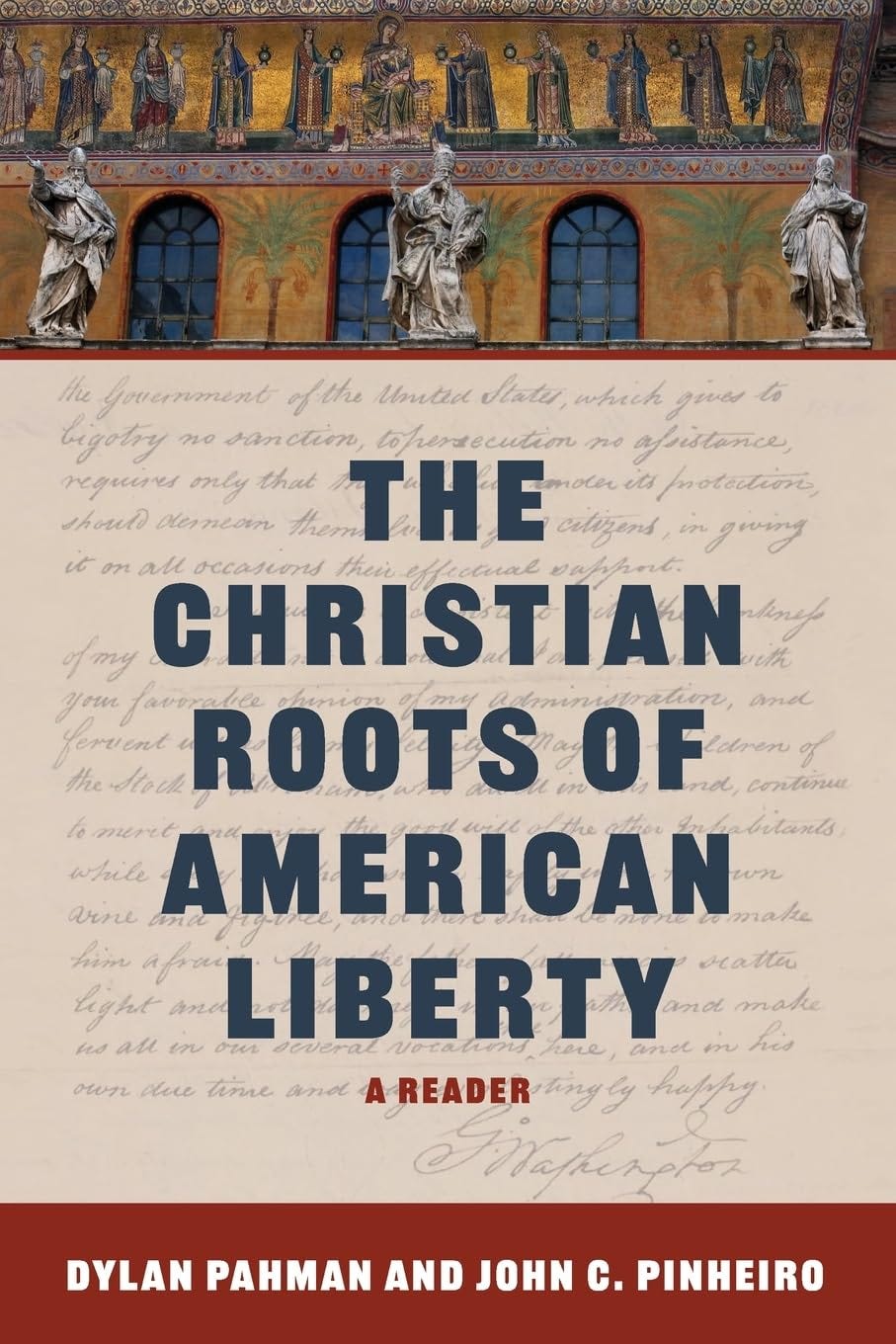
It has been over two months since the release of The Christian Roots of American Liberty: A Reader (Acton Institute, 2026), the book I edited with Dylan Pahman (The Cutting Room Floor).
Dr. Pahman and I set out to let the primary sources speak for themselves on important questions that right now are hotly debated. Some of these questions are:
What is the origin of the deepest principles of the American Founding?
Were ideas like religious liberty, consent of the governed, and limited government a new creation of the secular Enlightenment?
Conversely, was the United States born a “Christian nation”?
To what degree was the Founding a liberal event, the creation of something new?
In answer to these questions, our reader presents the Christian patrimony that fed America's founding principles rather than asserting it. We want you to read the sources for yourself, with as little editorial hand as possible.
I’m pleased to report the book is selling well, folks are reading it in book clubs, teachers are assigning it, and Pahman and I are making the rounds promoting the book.
At the Acton University conference in June, the book sold over one hundred copies.

And the first reviews are now in.
Law & Liberty published a review by Dr. Alexander William Salter. Salter is the Georgie G. Snyder associate professor of economics in the Rawls College of Business at Texas Tech University and research fellow at TTU’s Free Market Institute.
Salter writes, “Pahman and Pinheiro have shown what should always have been clear to those who are intellectually curious and historically literate. They deserve credit for making it easier to teach and discuss American liberalism’s Christian roots. But of course, they did not discover those roots, and did not claim to. The various illiberal Christians who condemn America as rotten from the beginning simply ought to know better.”
Dan Gullotta, writing for Religion & Liberty Online, says the book is “a welcome addition, arriving at a moment when civic centers across the country are increasingly charged with cultivating an understanding of the religious origins that informed the American founding. It is also a timely one, given the ongoing debates over whether America was founded as a Christian nation (and what that phrase even means), alongside the growing discourse around Christian nationalism, post-liberalism, and integralism in media and online conversation. Beyond being educationally useful, it is undoubtedly a volume that speaks to the present moment.”
Still, Dr. Gullotta is critical of our exclusion of some sources that he thinks should have been included but were not. He suggests a second edition more closely matched to what would have been his choice of post-Reformation sources. Will there be a second edition?
Once we start talking about sources, other questions arise.
We know there is a fine book, entitled, The Jewish Roots of American Liberty. Could there be such a book as, “The Pagan Sources of Christian Liberty”?
In this episode of Acton Line, Acton Institute editorial and research fellow, Dan Hugger asks Pahman and me about the book's reception thus far, including how we made our choice of sources.
No posts
Comments
Nothing yet. Say the first thing.
Sign in to join the conversation.