
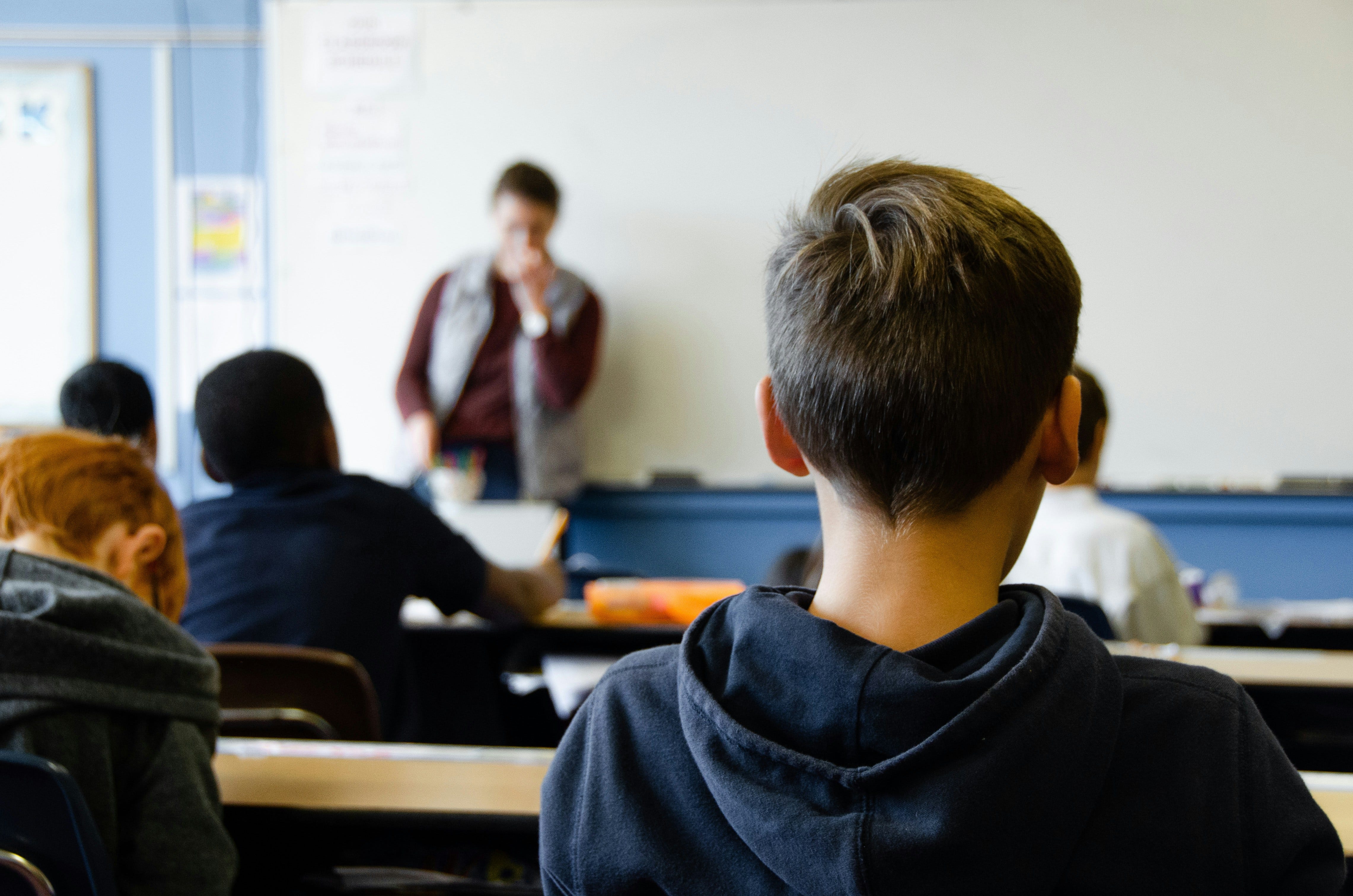
As you likely know, I do a lot of work with high school and college age people. If you scroll back through my little Substack library, you will find a number of my evergreen thoughts about preparing to go back to school:
· Make sure you have some protected space and time to get work done.
· Start academically strong so you can ride that wave into finals week, and mitigate the big, big stress.
· Sign up and participate in something extracurricular: a sport, a play, a group, a club. Paradoxically, this will help academically, a lot. It will also help socially. Parents, make this one non-negotiable. Even if your kid’s not a joiner, they need to join, well, something.
· Starting Day One, greet people in classes, hallways, dorms, and elsewhere. Even if it’s way outside your wheelhouse. And do it early. This is when people are anxious enough socially to want to make connections. You’re helping yourself, and you’re helping them as well. Win, win.
· For parents, talk to your kids about expectations. But make sure those talks revolve around effort, not just grades.
There’s a few more things I encourage: set a sleep schedule, protect time for hanging out alone and with friends, put your phone away when you’re studying, common sense stuff like that. If you’re interested, go back through my Substacks during earlier Augusts, and you’ll find my thoughts there. I encourage this. There’s good stuff back there.
But I want to talk about something else here. As we embark upon a new, fresh, blank slate of a school year, I want you to put yourself in your child’s shoes for just a minute. How would you feel if you were heading back to school right now, in 2026, as a teenager or a young adult? Would you feel invigorated, optimistic, and excited? Would you feel some nervous anxiety and anticipation?
Or, like a lot of young people have been suggesting to me lately, would you feel downbeat and discouraged? Would you wonder what the point is? This is exactly what I want to talk about here. What’s the point?
Let’s start with why I’m asking the question. It’s because it’s a question I am asked so very frequently by our kids:
What’s the point? What’s the point of school? What’s the point of trying? What’s the point of signing up for something? What’s the point of making new friends? What’s the point of any of this?
If we’re encouraging our kids to commit to positive study habits, sign up for some extracurricular things, and adjust their sleep schedule, they are going to need some reasons. Because an awful lot of them don’t see any right now. So with an incorrect set of assumptions now, any efforts we encourage are likely to fall quite flat.
At its core, the impetus for the question sits in a number of my Substack posts over the course of the past few years. So this is going to sound familiar. Far too often, our teenagers and young adults feel precious little hope: hope for themselves, hope for loving and enduring relationships, hope for their futures, hope for the future for all of us.
You might be wondering why they feel this way. After all, we certainly didn’t carry that hopelessness and dystopian attitude around back in our day. So, I’ve been asking kids that question lately. And they are neither unclear nor equivocal:
AI is taking all the jobs, so what am I even supposed to study? Something that won’t even be a major ten years from now? Something that’s becoming irrelevant as I speak? Seriously, what’s the point?
We keep hearing that the economy is broken. We are being told overly that it’s going to be really difficult, if not impossible, for us to afford homes or to have children, or ever put them through school. So what’s the point?
The adults around us, the ones we see on TikTok and Instagram reels, tend to be really awful to one another, outright inhumane, from celebrities to influencers to clergy to the politicians we were raised to respect. Why would I want to join those ranks? What’s the point?
What about the environment? It doesn’t take much to pay attention to the near constant, bizarre storms and wildfires that are marking the rapid climate change the planet is undergoing. So why am I going to learn trigonometry when the earth is burning? Is there a reason to thrive in a dystopian hellscape? What’s the point?
And finally:
I’ve been watching the adults around me, especially my parents. They don’t seem happy. They don’t seem happy with each other. They definitely don’t seem happy in their work. They don’t seem to enjoy music or movies, and they hardly ever laugh. I don’t want their lives. What could possibly be the point?
Now, I can imagine some of you thinking I’m being a bit dramatic here, or perhaps the kids I’m working with are overstating their levels of distress. But I can assure you, with 100% certainty, that I am not. And neither are they.
You may see your kids living their lives, hanging out with friends, scrolling on their phones, laughing at the memes, and expressing far more granular concerns about their summer job or upcoming classes or a social rift. But writ large, these big, big issues are on their minds on the regular. These global, broader concerns are their backdrop, and create a jarring, alarming platform for the building up of depression, anxiety, attention issues, most any mental health problem you can imagine.
So, as we embark upon another school year, the charge I am foisting upon you parents is a big, unpredictable one – we need to provide our kids some fresh hope for this new beginning. These few weeks reflect a big, big opportunity.
Given that this is a primary facet of my job, the installation of hope in our kids, I’m going to provide you a crash course on creating hope in a hurry. Here’s a vibe you can provide over the course of the next few days or weeks before that first bell rings, a vibe that might change the entire landscape and trajectory of your child’s upcoming school year.
First, I need you to consider for a moment the opposite of hopelessness. You may think it’s simply hope, but I’ve learned that, in the end, it’s connection. It’s connection that drives hope for them. Connection with other people. Connection with nature, actually touching grass. Connection with animals. Connection with the world around them. Connection with themselves.
Connection with you.
So a note of clarity is indicated here. I’m not asking you to bullshit your kids. I’m not asking you to present some ideal world that exists outside of their scope. I’m not asking you to prove them wrong. They’re smarter than that. They will see through that. They don’t need to be protected from the realities or the headlines. Rather, they need to know that we can collectively weather the very real storms of life.
And curiously, that happens through, to quote Nick Lowe (and, perhaps more famously, Elvis Costello), peace, love and understanding.
Seriously.
So I would encourage you to listen more than you talk over the next couple of weeks, even if what you’re hearing feels dark and negative. Listening and acknowledging are among our most powerful connectors. That does NOT mean that you need to agree with everything your child is saying. I find that sometimes kids present me with a far darker worldview than mine. Developmentally, your teenagers and young adults are in the midst of years deeply influenced by powerful emotions. Those emotions color their worldview as well.
And those colors often run dark.
But I do find it helpful to acknowledge the way they feel before challenging it. It’s a critical first step. It shows respect for their point of view. And without it, progress is not only truncated, it may prove to be impossible altogether. But to recognize and acknowledge their thoughts and feelings will leave them less alone. And that is huge.
And I would think about the vibes you present around your child these days. Consider music for example. Along with listening to your playlist through your AirPods, I would urge you to play with them. Play music, or let them play you their music. Like it always has, music brings young people to life, opens them up, and yeah, brings them hope.
Think back to when you were your child’s age. If you were lonely, or felt sad, anxious, or otherwise emotional, it was very likely through music that you first felt hope. Your music likely left you feeling less alone. And I would bet that when you’re experiencing those feelings to this day, you go back to that music.
I know I do.
This next one is most definitely important. Consider for a moment the model you’re bringing to your relationships with your kids. They are most discouraged by what they see in us. So take a beat, and consider what your kids see and hear from you. Are you modeling joy? Connection? Industry? Health? Peace? Love? Understanding?
Too often, I work with parents who expect upbeat, engaged kids while they themselves are persistently doomscrolling, or notably unhappy, or overly expressing their own hopelessness. No lecture about firing up for what’s coming is going to work if your vibe is this brand of hopelessness, period.
So oddly perhaps, I am asking you to consider the big picture, and instilling hope as your child embarks on this new phase in their journey. That is going to make all the difference.
And please be creative. You know your kids far better than I do. What might inspire them? What might bring hope to their otherwise troubled worlds? What is your specific child, with his or her unique personality traits, and idiosyncrasies, drawn to? Whatever that is, be it a video game, a sport, a particular song, a certain follow on TikTok, getting into nature, talking something through ad nauseam, or sitting quietly, allow space for that.
Trust that you’ll get to the homework schedule and the test prep and all the rest. And as a cautionary tale, I will remind you once again to skip the lectures - they already know them verbatim. For now, set the stage for a joyful, hopeful year. That alone will buoy everything else.
No posts
Comments
Nothing yet. Say the first thing.
Sign in to join the conversation.