
I’m not sure I’ve ever cried at the National Archive before. I did last month. The stories of the past can be genuinely moving, and fostering an emotional connection to history is as much the job of the historian as describing facts and dates.
In April I had the privilege of co-leading a tour alongside Dr Nicola Tallis (and special guest Prof Kate Williams) for Author Fan Travel. We put together a 6-day tour of some of the most important sites in the story of Elizabeth I and The House of Dudley, and especially the mystery surrounding the relationship between the Queen and her favourite, Robert Dudley, Earl of Leicester.
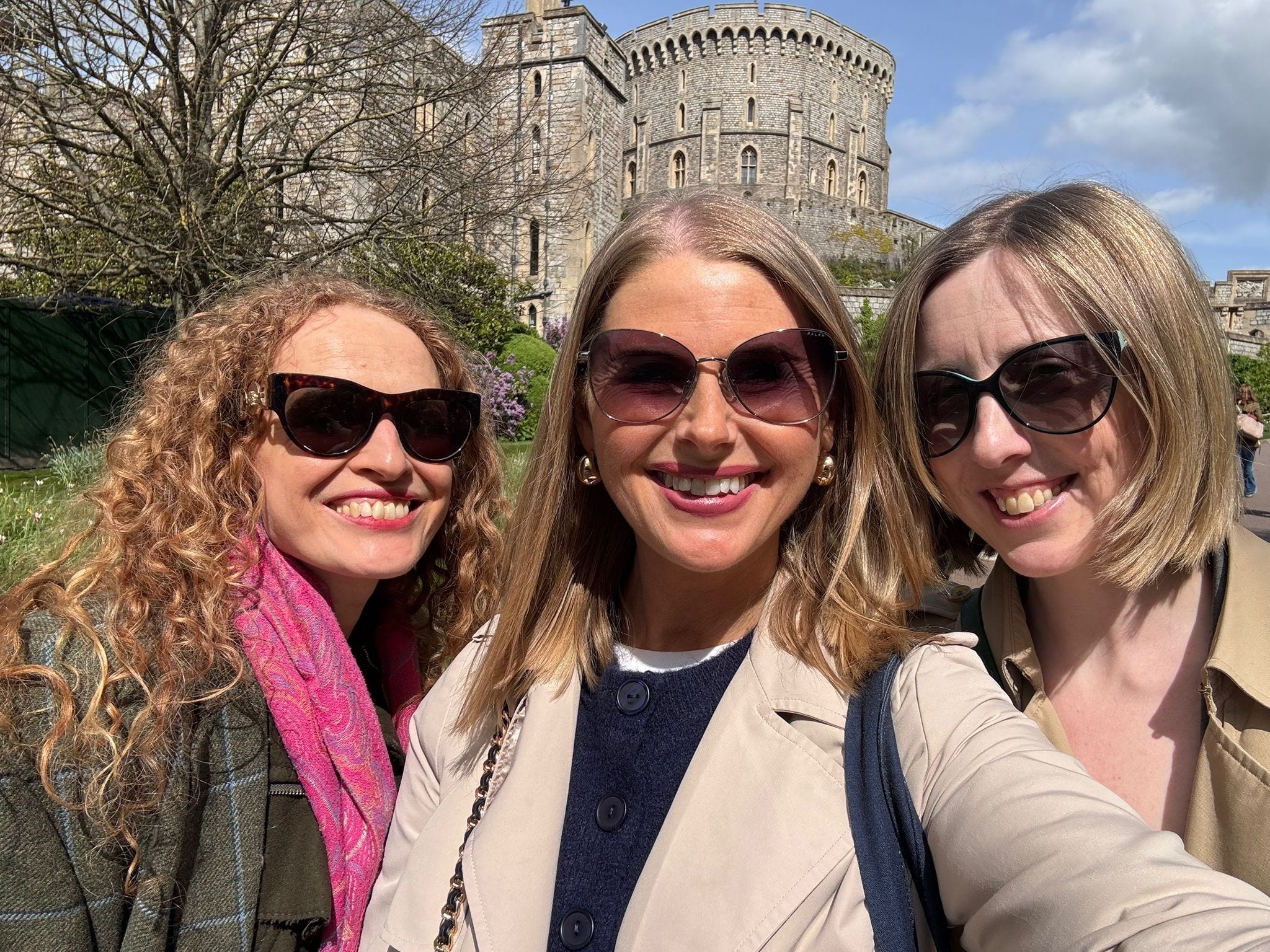
While I can’t detail all of it here (there’s just too much!) I would like to share a few of the sites and artefacts that meant the most to me.
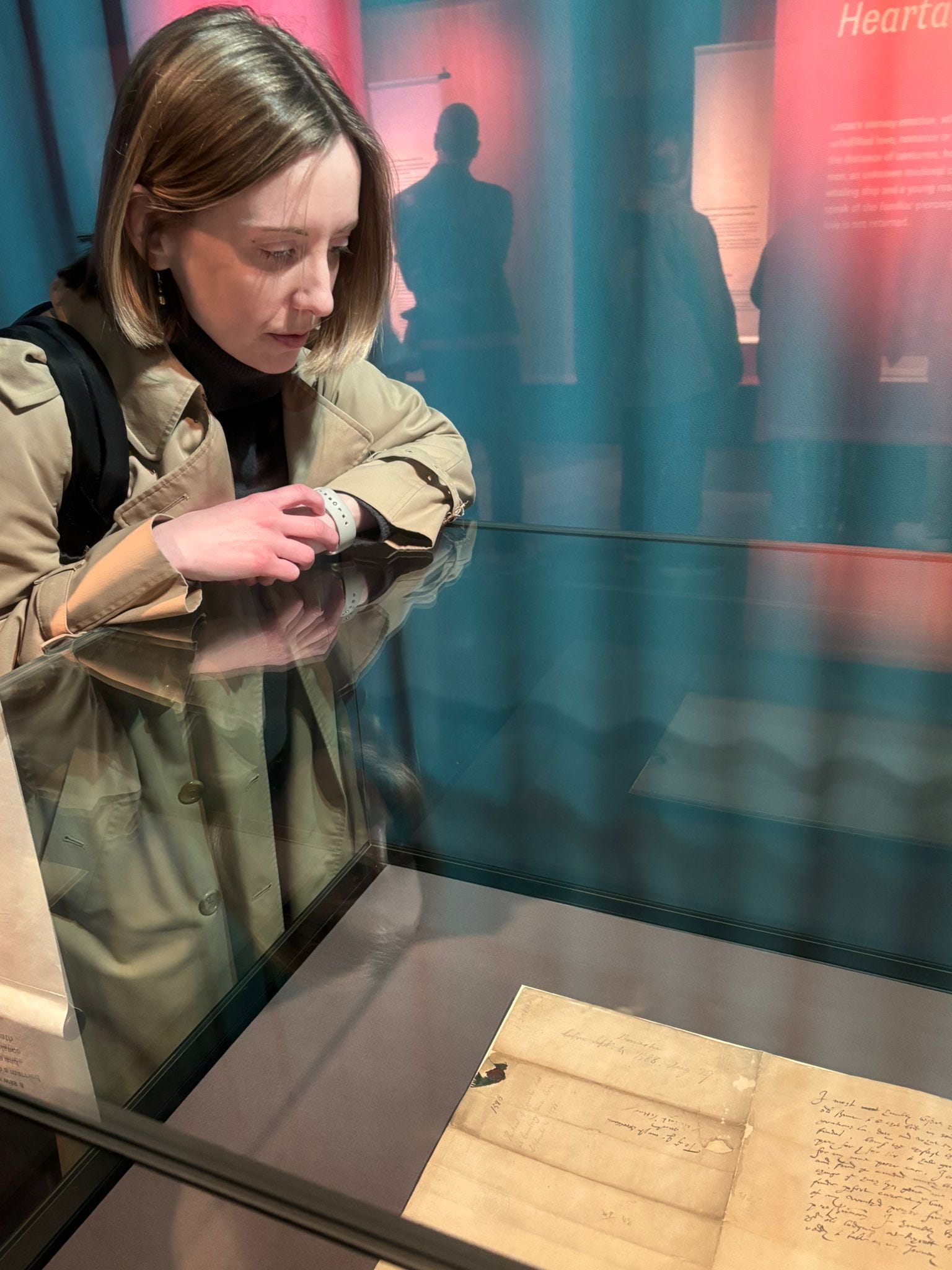
‘His Last Letter’ - The National Archives
I’ve written about it in The House of Dudley, but had never seen it with my own eyes. This is the letter that Robert Dudley wrote to Elizabeth I on the 29 August 1588 from Rycote. As it turned out, it was the last letter he would ever write to her, as he died suddenly a week later, on the 4 September.
I’m not ashamed to admit I teared up seeing it in person. There are a number of reasons it is an intensely moving manuscript.
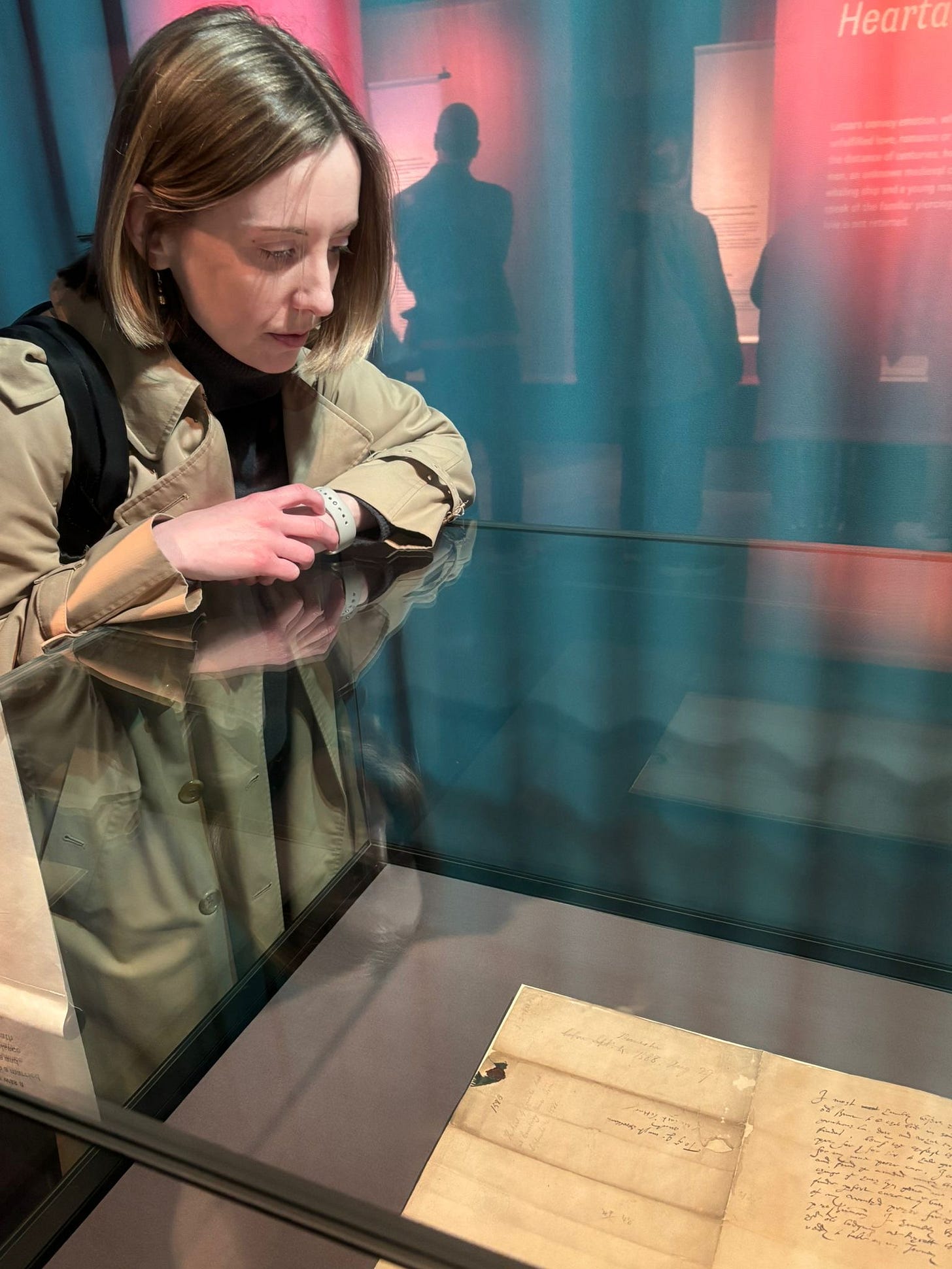
Sometime after receiving it, and hearing the news of Robert’s death, Elizabeth wrote the words ‘his last letter’ on the back, and kept it by her bedside until her own death, fifteen years later. It speaks volumes, I think, to the affection that these two shared over their lives. Whether or not they were ever lovers in the modern sense, there was undeniably love between them.
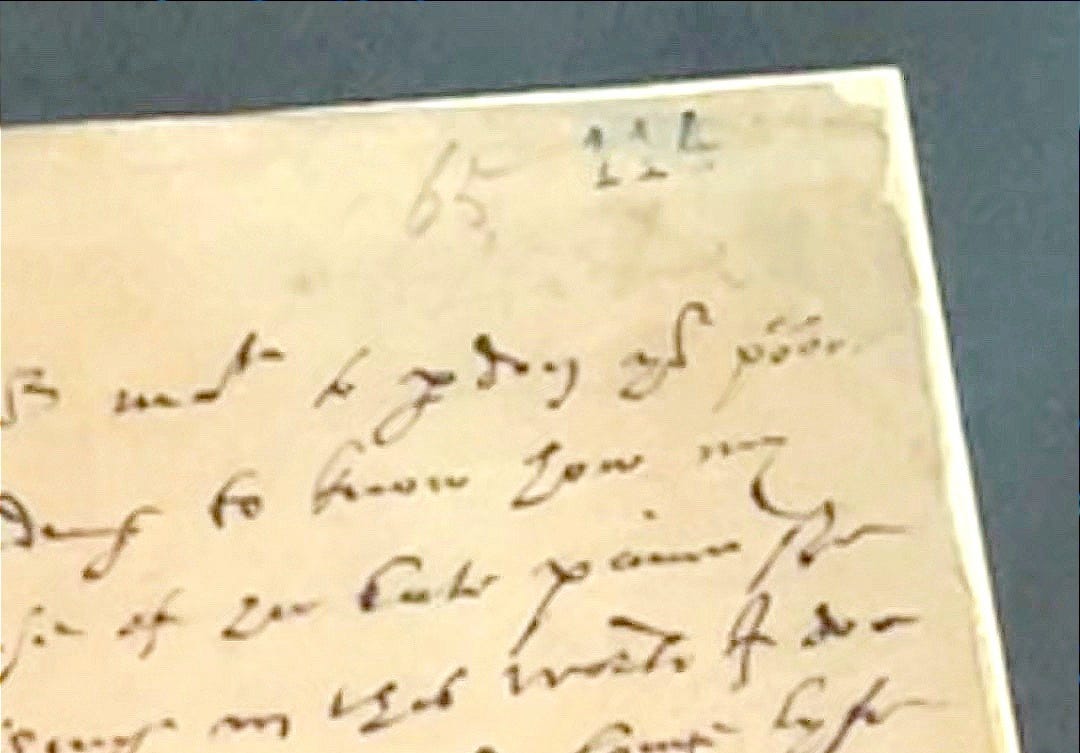
What I think a lot of people miss, and what I made sure to point out to our tour guests, was another sign of their connection, hidden in the first line of the letter. There, Robert writes that he is Elizabeth’s ‘poor old servant’ and adds two little dashes over the ‘oo’s in ‘poor’. This is their secret little symbol between them, a nod to Elizabeth’s pet name for him, her eyes. He is more than just her ‘poor old servant’, he is the man she danced with, flirted with and depended upon. He is and always will be, hers.
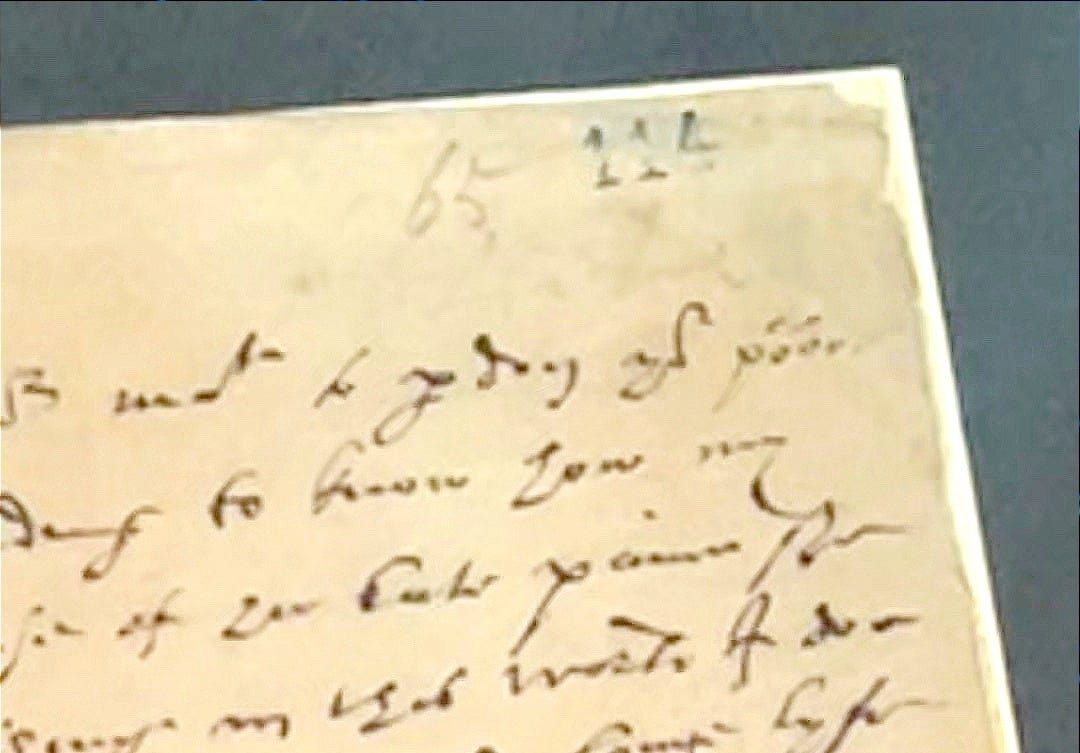
You can see more images and read a transcription here.
‘The Noble Imp’ - St Mary’s Church, Warwick
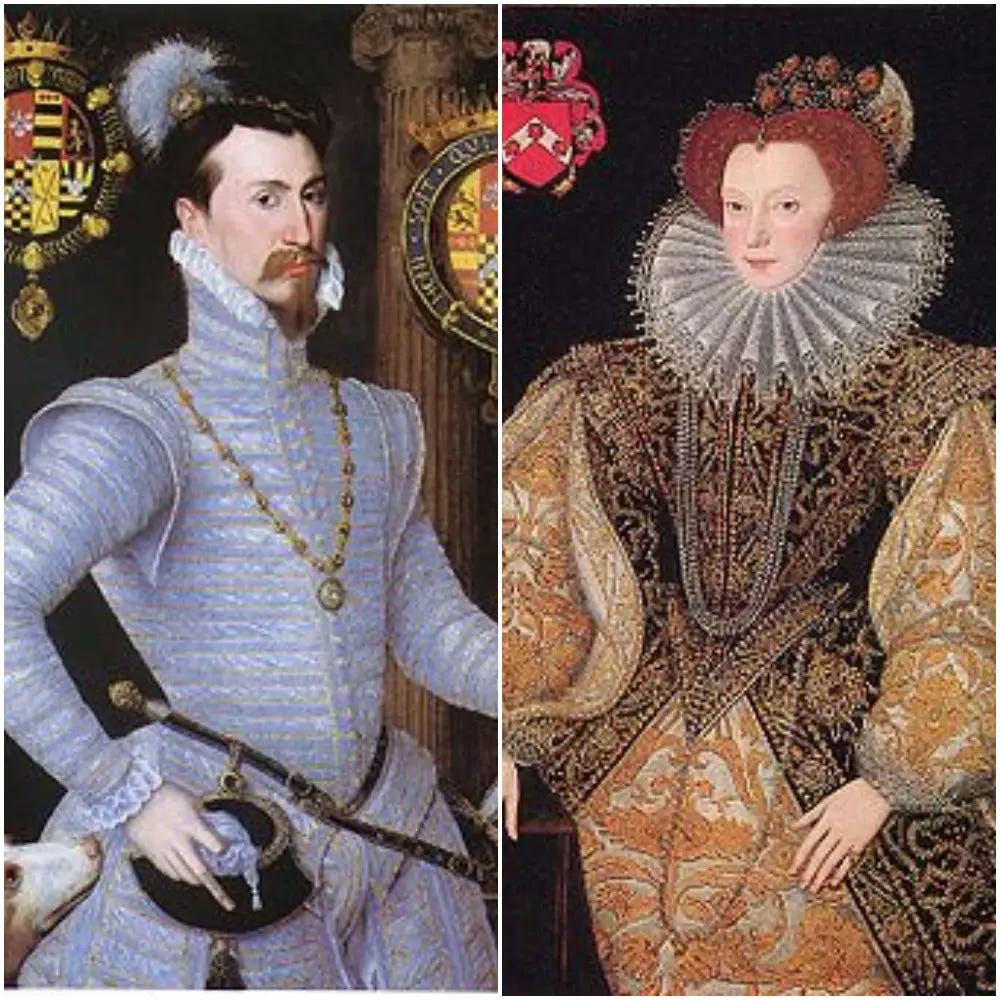
Robert spent most of his life torn between the duty he had to his queen and that he had to his family. Often, they went hand-in-hand. By prioritising service to his queen, Robert ensured her favour and thus his and his family’s standing in the Elizabethan court. But there was a fundamental conflict. Robert was aware that if he married again (and more on the mysterious end of his first marriage soon) he risked displeasing her. As he put it to his mistress, Douglas, Baroness Sheffield, there was nothing he wanted more than to continue his family line “being now the last of my house” except, that was, to retain the favour of his queen. So when Douglas bore Robert a son, he was illegitimate.
But Robert’s awareness that he could have a son - this was his first - might have changed things for him. And in 1578 he married Lettice Knollys, Countess of Essex (for more on her, do read Nicola Tallis’s fantastic book!) in secret. Of course, the queen eventually found out, and threw them both out of court. Robert’s standing recovered, Lettice’s never did, but in 1581, she gave birth to their son, named Robert for his father, and it all seemed worth it.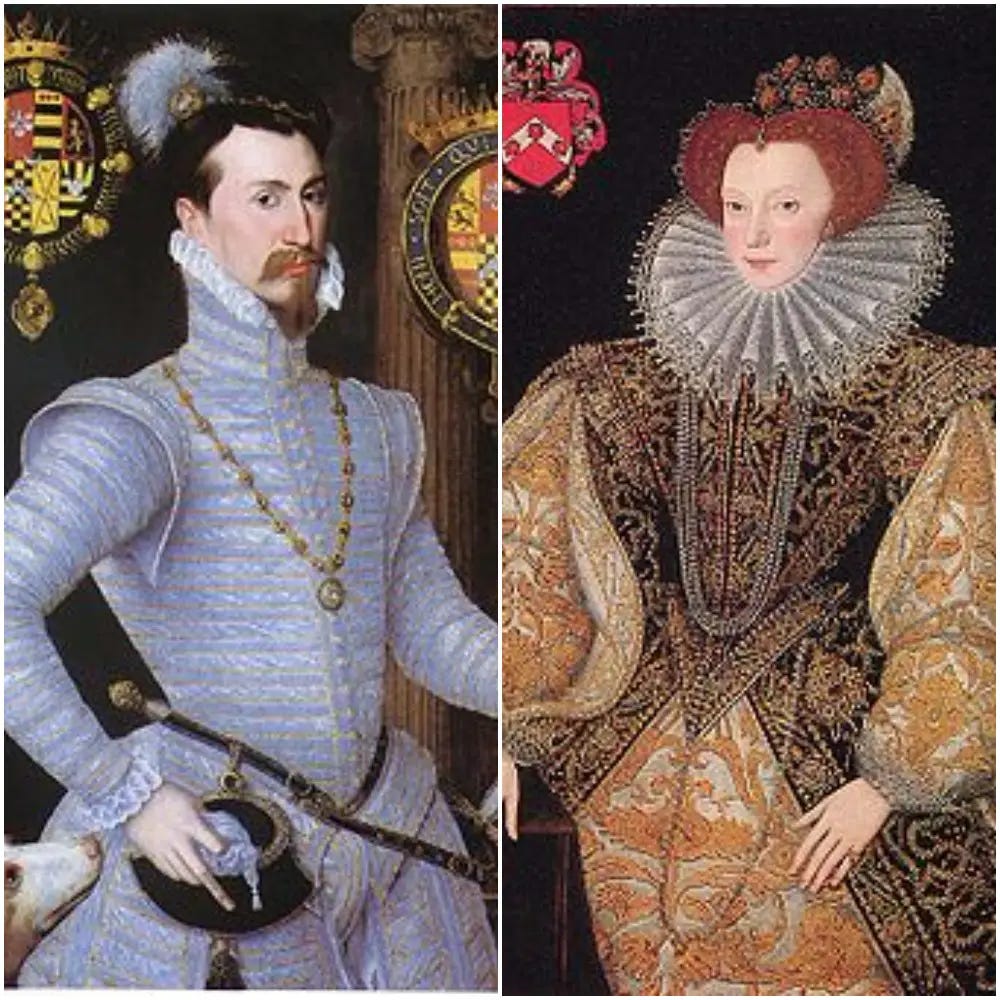
Robert doted on his son, titled Lord Denbigh. No fewer than three portraits were produced of him before he reached the age of three (one where he was naked!), entirely unprecedented for a Tudor child. We also know he destroyed a bit of art toddling around; a portrait of a gentlewoman in their home at Leicester House was ‘All broken and quite defaced by my young Lord of Denbigh’. 1
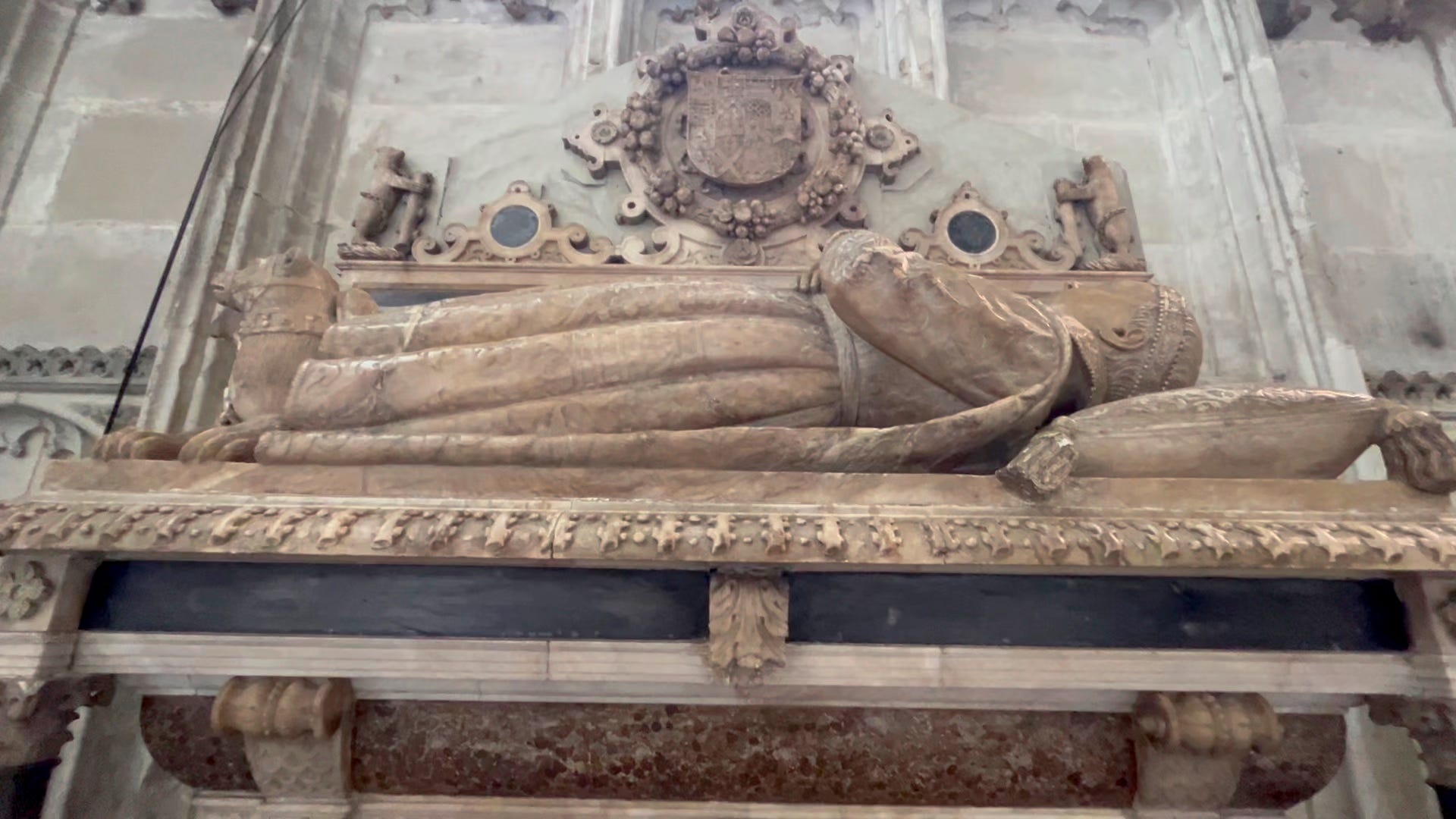
Unfortunately, at the age of three, Robert, Lord Denbigh died. His parents were devastated. When another courtier wrote to offer his condolences, he did so by telling Robert ‘‘God will increase you with many good children, which I wish with all my heart’. Robert responded that ‘I do thank you for the care you take for the loss of my young son, which was indeed, my good Lord, great to me for that I have no more and unlikely to have, my growing old.’ - Lettice was past the age at which she would have children, and thus Robert would not have any more either. They paid for an elaborate tomb in the Beauchamp Chapel at St Mary’s Church in Warwick for ‘the noble imp’ as they called him. When Robert and Lettice later died, they were laid to rest in the same chapel as their son.
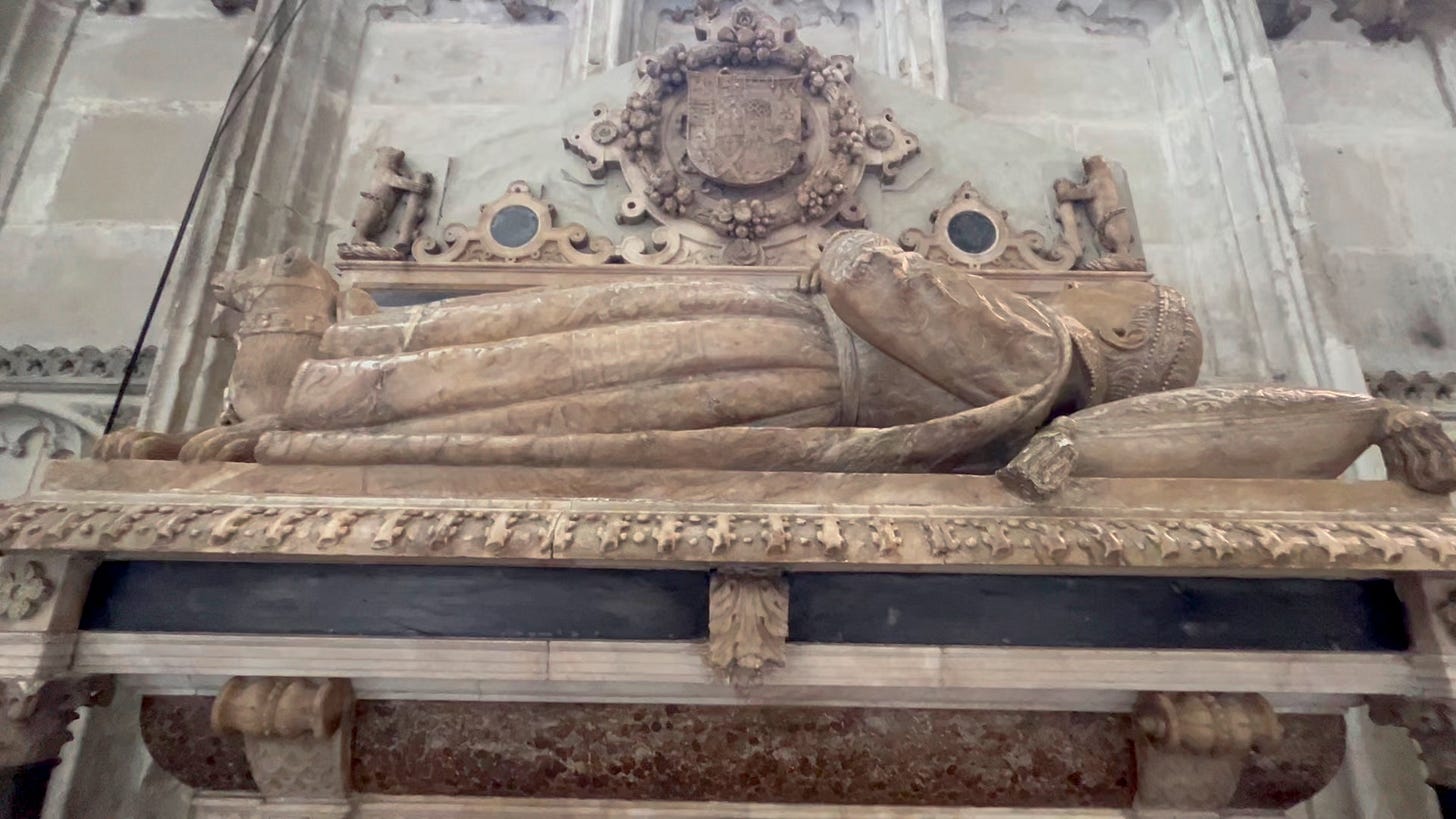
You can feel the grief that Robert and Lettice felt at the death of their son standing next to his tomb, just meters away from their own. It is the grief of any parents at the death of a child, compounded by the fact that there would be no more of their union. The Noble Imp was the last of the House of Dudley.A home for veterans, then and now - The Lord Leycester Hospital, Warwick
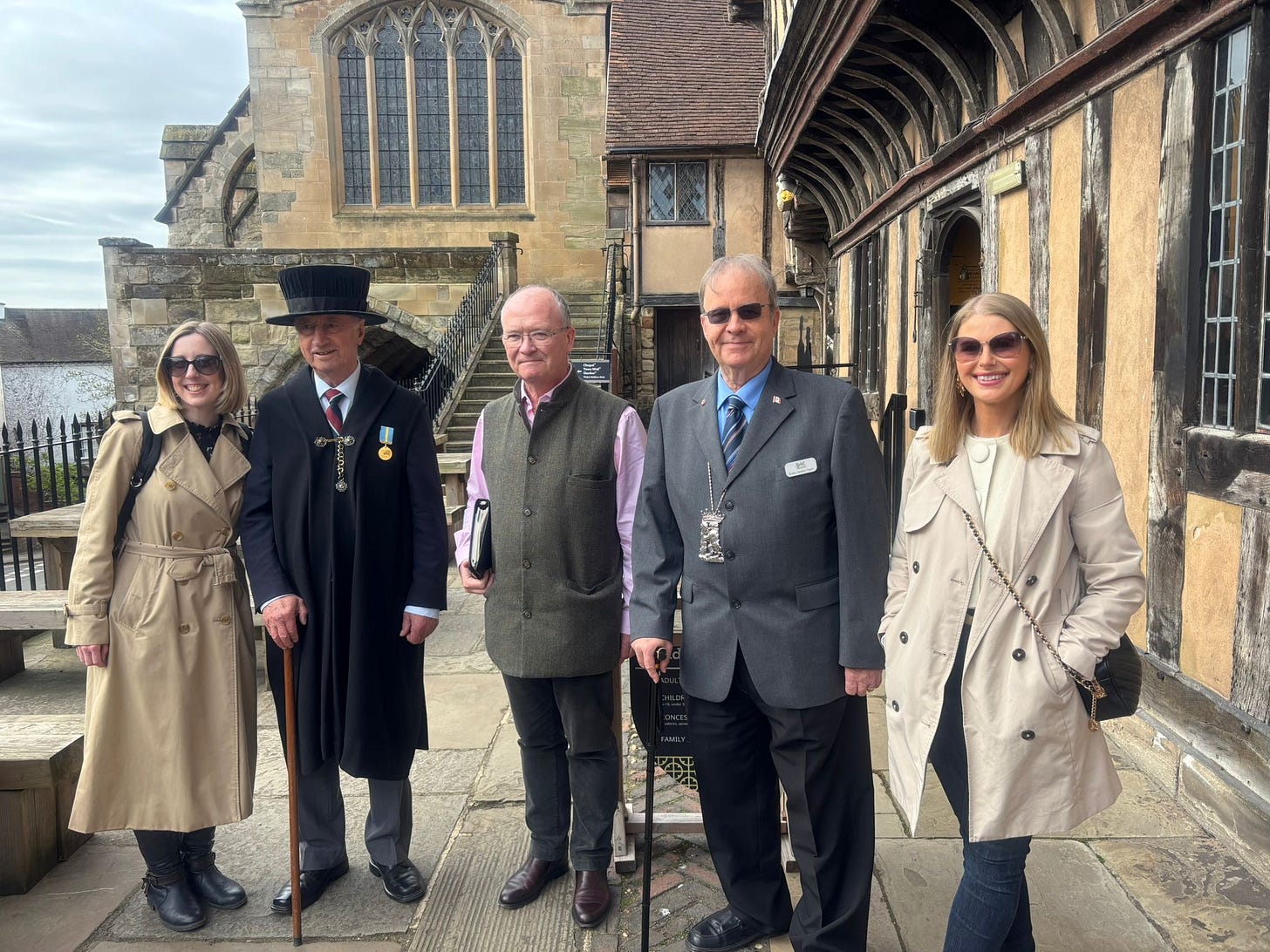
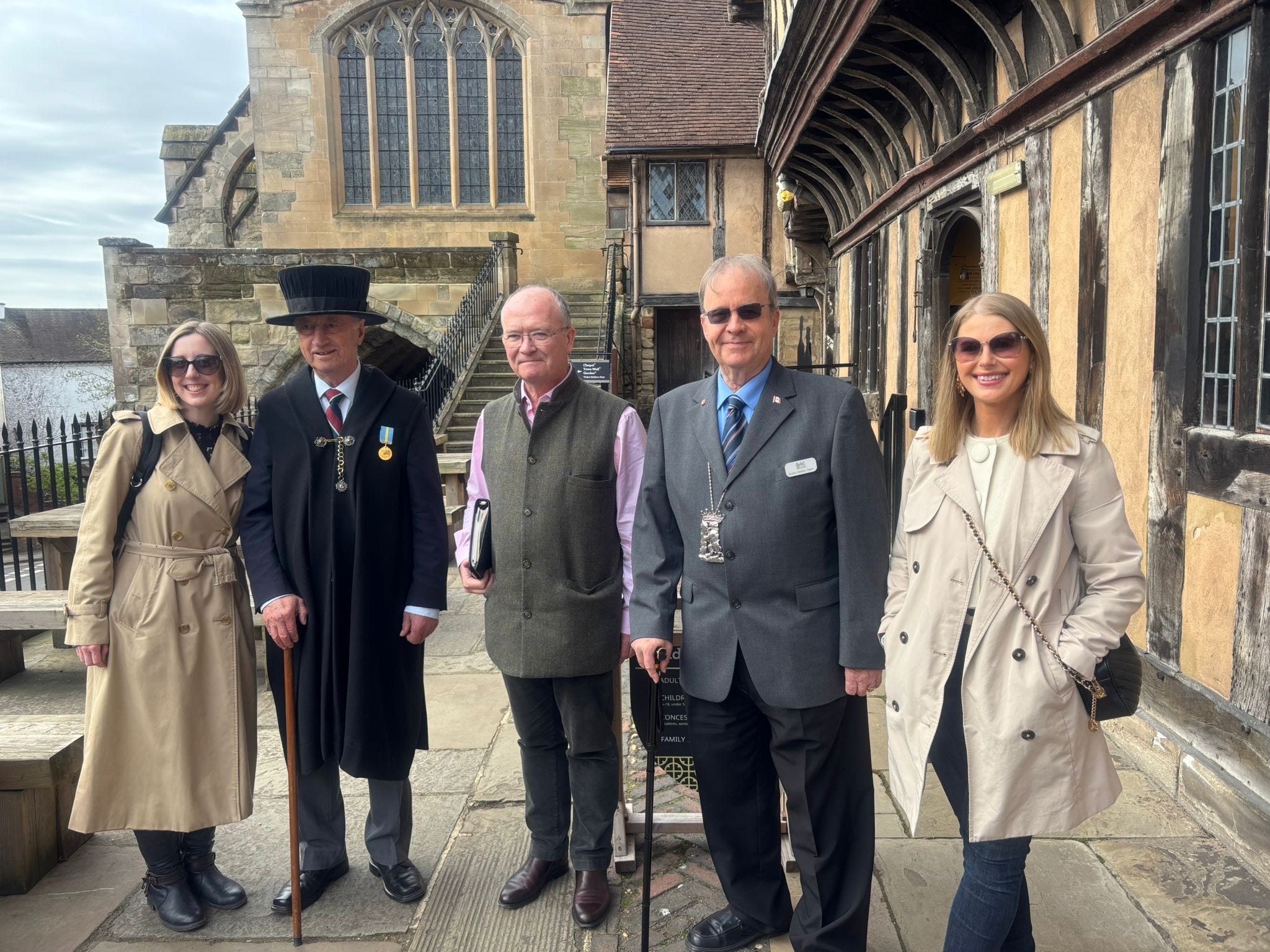
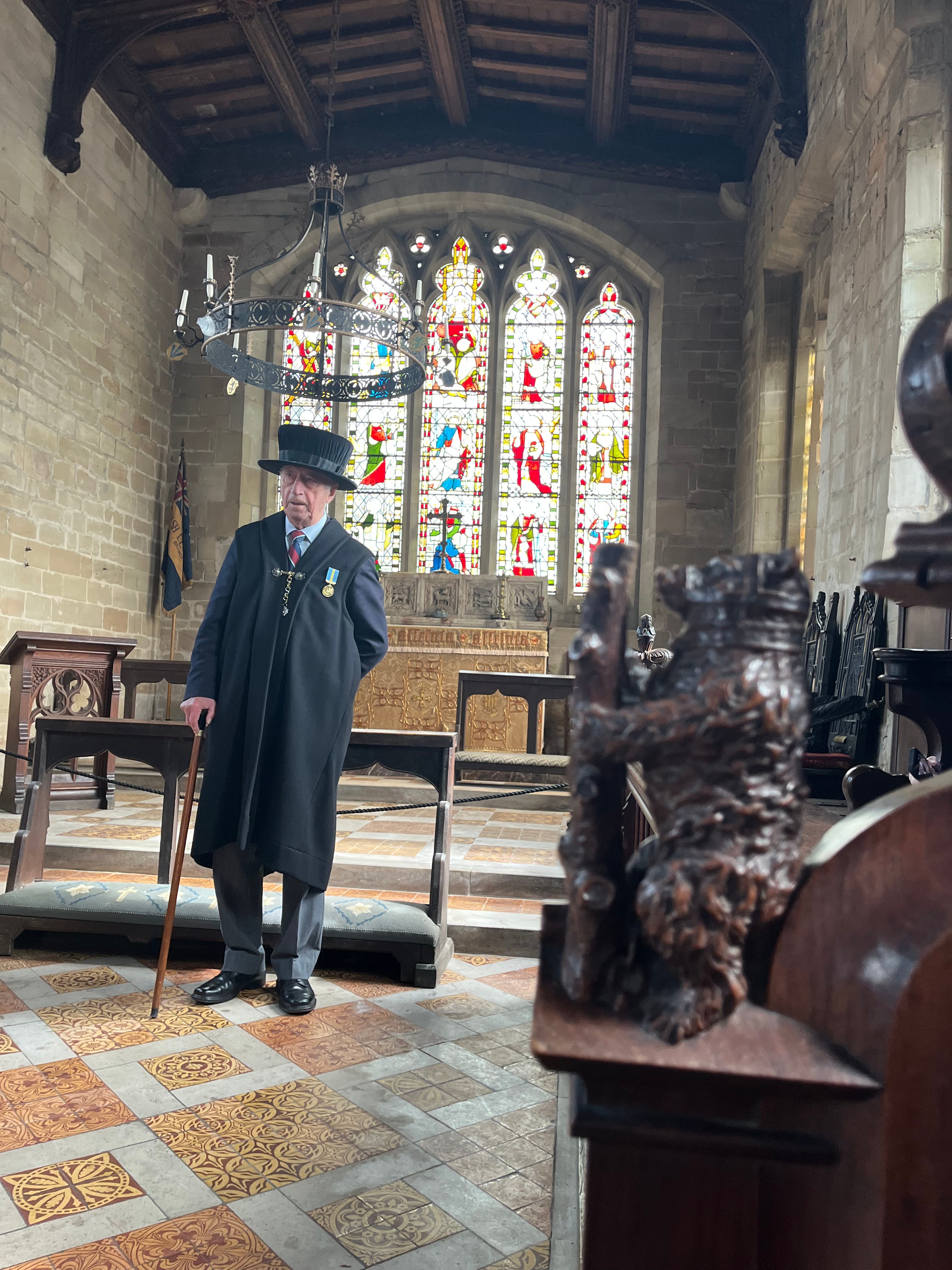
Just a short walk away from Robert Dudley’s resting place at St Mary’s is a ‘hospital’ (from ‘hospitality’, a home) that he established for retired soldiers, the Lord Leycester. Founded in 1571, the Lord Leycester still provides a home for retired British service members, who lead tours of their historic building.
Our tour guide was the brilliant and witty Gordon, who took us through the rooms, courtyard and garden. You could feel what the space offered to those who came to live there - a retreat, a community, a peaceful home. He shared with us that several former residents - and his friends - had asked that their ashes be laid to rest in the garden, and it was impossible to escape the deep, enduring meaning of what Robert Dudley had established on this site, 455 years before.
Robert was a soldier himself, he had first joined his father’s campaign in 1549, at the age of just 17, and one of his last major acts was to oversee preparations for the Spanish Armada in 1588 at West Tilbury, just weeks before his death. He had lost two brothers to war - even decades later he spoke of how the younger’s death, which he witnessed, was always before his eyes - and his elder brother, Ambrose, had been severely injured in battle. Robert knew the costs of being a soldier, and so he established a place of rest and respite for those who had served their country.
That the Lord Leycester Hospital continues to provide this 455 years later is a testament to Robert’s endowment, the work of all who have protected it and the community that has been carefully fostered there over the centuries. It is a living legacy and history in the present, and I would highly encourage giving it a visit, if you have not been already.

Elizabeth Goldring, Robert Dudley, Earl of Leicester, and the World of Elizabethan Art: Painting and Patronage at the Court of Elizabeth I (Yale University Press, 2014), 129-9, 209, 290.
No posts
Comments
Nothing yet. Say the first thing.
Sign in to join the conversation.