
Yesterday a friend emailed me. He’s recently been deluged with dodgy posts (many of them on Substack) making unsubstantiated medical claims. We have a chronic problem here. A large one.
There are several issues. Some are not as obvious as you might imagine:
Most really capable scientists and clinical researchers have spent years (often decades) honing their craft. There are only so many hours in the day, so they are often far less good at ‘selling’ their work, or communicating the finer details of all the things that can trip up the incautious.
Quacks have also spent years honing their craft: deception. This is made a lot easier because it’s far easier to generate right-sounding noises than it is to generate good research. Good research has warts. Deceptive patter is smooth, and honed to perfection.
Most people do not have the depth of knowledge required to tease out the difference. This is not a condemnation of ‘most people’. It’s just that doing good science is hard and really understanding it properly—as opposed to popular science—is harder still!

Fortunately for us, quacks almost always reveal themselves. The problem is that we are often keen to grab the fascinating bauble that is being held in front of us. Too keen. So we miss the signs. Here’s a primer for those not totally sold down the river yet. A few things to watch out for:
A capable clinician is cautious and makes science-based claims | a quack makes ‘cure-all’ claims, often based on anecdotes.
Good doctors tell you about the down-side and admit failure | quacks almost never do.
Sound science starts with a problem and then explores this | quacks start with a grain of truth and then make claims about everything under the sun, finding facts to fit.
Sound ideas should be coherent | quack ideas flock like sex-crazed ducks: disparate, crazy notions are mixed together.
Scientists work with other scientists | quacks are often attracted to other quacks, sporting the water lily of Madness.
Almost all sound scientists are happy to be criticised and acknowledge where they’ve stuffed up1 | quacks often paint themselves as “victims of the medical establishment”, especially when caught deceiving. They rationalise. Only their way works!!2
Solid scientists will often let good ideas pretty much sell themselves | quacks can’t help themselves: sell, sell, sell.
Quacks are so prevalent, we even have dedicated quack spotters, like QuackWatch (around for ages, absolutely hated by quacks, logo above), and other sites like PubPeer and Retraction Watch, where really capable scientists analyse, dissect and criticise pretty much anything that might be potentially dodgy.
So let’s try it with a recent post that afflicted my friend. I do this with a certain amount of trepidation, because the people involved have a large cult following. Before we get to the offending post, some background.
You may have encountered Pierre Kory before. He featured prominently during COVID-19, making outrageously incorrect claims about worm medicine (ivermectin) that started off badly and were established to be clearly nonsensical. But he never admitted he was wrong.
He teamed up with another chap called Paul Marik, who is an interesting fellow. I worked with him in South Africa in 1987, when I was a medical registrar and he was a consultant. He was very bright, and a bit odd, as so many bright people are. He used to haul around one of those old ‘luggable’ computers with a tiny monochrome screen, was correctly keen about once-daily dosing of aminoglycosides, and if I remember correctly, had his ankle broken by an enthusiastic member of the cleaning staff, who swung one of those giant old rotary floor cleaners with more enthusiasm than caution. But later, he left for America.
Where he flourished, publishing ICU papers enthusiastically. Until he seems to have acquired a bee in his bonnet about vitamin C. And this is where things get slightly strange.
Try a little experiment. Go to PubMed and search for this term:
“vitamin c” AND sepsis AND (IV or intravenous)
Remarkably, there should be nearly 200 articles. If you have the PubPeer plugin, then you will immediately notice that eight of them have PubPeer comments. I’m not going to ask you to look obsessively at every paper, even in abstract, though. Life is too short. Here’s a quick trick that can save you valuable time. Using the filters on the left, first try “Randomized Controlled Trial”. This will cut down the list to about 30. Let’s look at these.
Nope, nor am I asking you to read through all of these papers in detail.3 But if you look through the abstracts, several things become clear. Almost all of them are small studies or ‘pilots’. Often, they have soft end-points. A few studies do stand out, though. First, the VICTAS randomised clinical trial of 501 patients:
Among critically ill patients with sepsis, treatment with vitamin C, thiamine, and hydrocortisone, compared with placebo, did not significantly increase ventilator- and vasopressor-free days within 30 days. However, the trial was terminated early for administrative reasons and may have been underpowered to detect a clinically important difference.
Next, the LOVIT study, of 872 patients from 35 Canadian intensive care units. Here’s their main conclusion:
In adults with sepsis receiving vasopressor therapy in the ICU, those who received intravenous vitamin C had a higher risk of death or persistent organ dysfunction at 28 days than those who received placebo.
The VITAMINS trial of 216 patients in septic shock combined vitamin C, hydrocortisone and thiamine, conducted in ICU patients in Australia, New Zealand and Brazil similarly found that this combination “did not significantly improve the duration of time alive and free of vasopressor administration over 7 days.”
Another study of 124 patients published in Critical Care Medicine in 2022 similarly found no significant difference in the primary outcome. And another by Hwang et al from Intensive Care Medicine in 2020, likewise.
There are a few small studies (e.g. Iranian and Egyptian ones) that claim some benefits. Then we have a retracted article. A 2020 study by Shi-Jin Lv et al. which claims a dramatic lowering of mortality (from 43% to 28%), was retracted in 2022.
But strangely enough, you won’t find Paul Marik’s many articles on vitamin C here. And this includes all the abundant claims about Vitamin C and COVID-19. That’s because not one of them was a randomised controlled trial.4
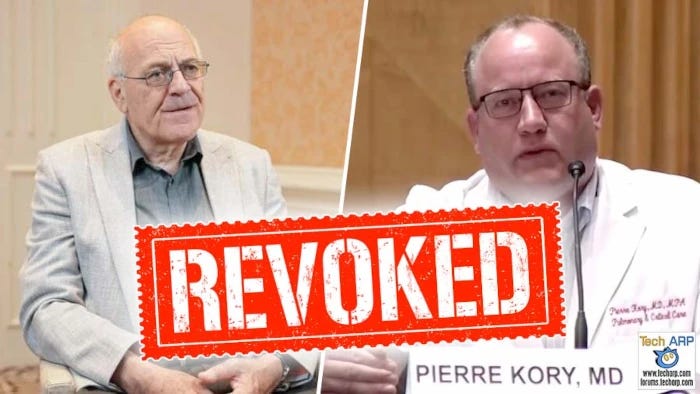
Here’s that post then. Read it with precision and due caution. Your specific task here is to analyse it in terms of clues #1–7 above. Are you ready?
For your convenience, here’s that list again:
Cure-all claims based on anecdotes.
Quacks don’t admit the down-side.
Finding facts to fit.
Flocking of crazy ideas.
Quacks isolate themselves from scientists and work with quacks.
Quacks see themselves as victims.
Sell, sell, sell.
Yep, he starts with an anecdote about a single patient. And then more anecdotes. Charts, but no studies. You will struggle to find him mentioning any down side. Even his finding facts to fit is mainly anecdotes.
And yes, we’re back to crazy therapy for COVID-19. And “victimisation by the medical establishment”. And heck, advertisements for their books, and a volcanic mineral extract.
They can’t help themselves.
Good scientists may use anecdotes, sometimes over-step the mark, and everyone has their own pet ideas that can seem a bit obsessive. We can all get a bit miffed when criticised—and sometimes experts may seem to be selling their ideas a bit too enthusiastically. But when you see these all flocking together, it’s wise to ask “Am I being deceived by a quack?”
Because charlatans hone their craft of deception, susceptible people will still believe. They’ll often miss the signs. They may not realise that therapies that sound too good to be true, almost always are.
Sometimes I think that we want to deceive ourselves. Life is so much easier then, without all this head-hurting science and statistics.
My 2c, Dr Jo.
Thanks for reading! This post is public so feel free to share it.
We all err sometimes. Check out the recent, awesome “Ctrl Z award”.
Walk three times widdershins round the kirk, reciting “toidin a mai” backwards, while administering vitamin C, thiamine and steroids.
Please feel free, if you’re enthusiastic and have the time. This sort of pursuit can be really rewarding …
No posts
Comments
Nothing yet. Say the first thing.
Sign in to join the conversation.