
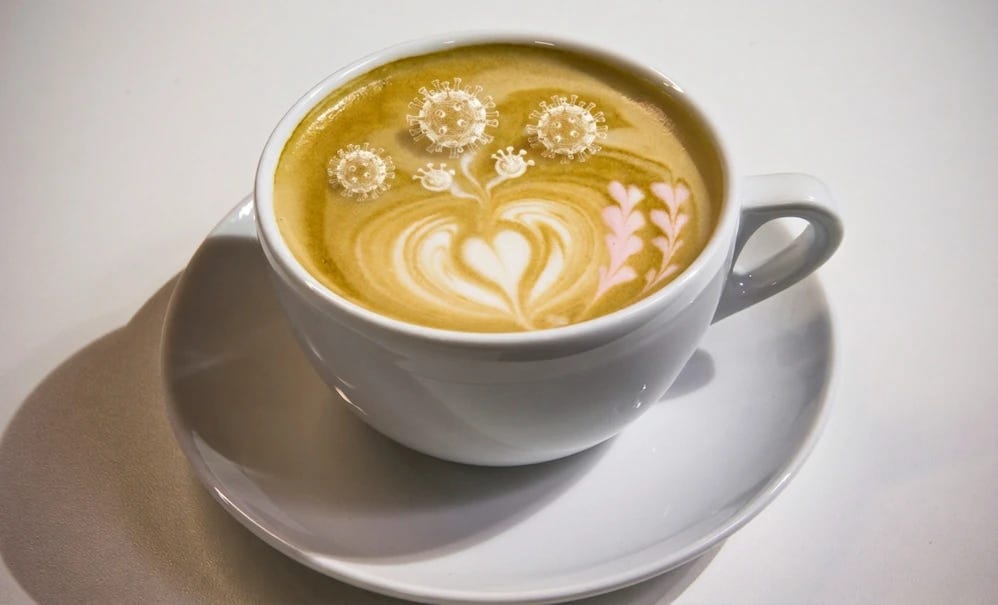
Let’s try this again. But if we’re to explore the origins of the SARS-CoV-2 virus (the cause of COVID-19) reasonably, then we need to get the basics right. I’ll take a little time to set the scene; we’ll examine similar viruses in the past; then I’ll look at the provenance of the various theories and we’ll examine the major possible origins in turn. This will be a long post.
First up, we do not know where the virus came from, with even “reasonable certainty”. We have not found a sufficiently similar virus anywhere. We haven’t found an intermediate animal host carrying the virus, either.
That doesn’t stop us from making a reasoned, reasonable enquiry. The level of polemic about this particular virus has however been so great, and so many people—often people with almost no knowledge of virology, molecular biology, epidemiology and pathophysiology—have been so eloquent and emphatic about every aspect of the virus, including its spread and the disease it causes, and yes, its origins, that we are by default starting off on the wrong foot. Many people have fixed ideas scarified into their skin to a depth that is difficult to justify, given the evidence and indeed, the logic. They should be wearing a rub-off coronavirus tattoo, instead.
Whew! Let’s try, anyway. I doubt I will convince anyone who has opinions that are far stronger than the evidence warrants, but I will at least try to produce a logical exposition that everyone can then carp about :)
Grab a cup of coffee, and let’s begin.
I’d like to start with my conflicts of interest. That’s easy: I have none. I am a specialist physician working at a large quaternary hospital in Auckland, New Zealand. My current focus is perioperative medicine and acute pain; I’ve worked as a consultant physician since 1991. I have published a bit in the archival literature, and I have a deep interest in the principles that underpin Medicine—including things like molecular biology, molecular evolution and the philosophy of science. I can get by in R and other programming environments. I am a former drug company prostitute, having taken gifts and incentives in the past, but I have taken nothing from anyone in the past two decades, not even a lolly. I have written rather extensively on my Substack about corrupt and perverse journals, drug companies, and the malign influence of AI, starting here.⌘
But here’s where the fun really starts. In order to move on, we need to skim some of the froth off the cappuccino. There are (honestly) people out there who believe that the virus doesn’t exist, or even that viruses don’t exist. This is not a tutorial to allow those chaps to catch up on over 100 years of lost microbiology, PCR tech, electron microscopy, and so on. And even if it was, they likely wouldn’t listen, so let’s just abandon them. Sad, but necessary. If you post below saying things like “But filterable viruses don’t exist …” then I will delete your response and ban you forever. Go back to 1928, do not pass Go, do not collect $200.
To prevent this post from becoming ridiculously long, we will however put in links to many of the very basic concepts, so it’s easy to read further if you feel that your current knowledge is not quite up to scratch. Note that this will dissuade or anger some people too—they may be of the disposition that automatically disbelieves anything they read about virology or molecular biology, and then fixate on this disbelief, rather than checking.1 Unfortunately, only they can (through diligent study, self-questioning, and striving for consistency) do the necessary hard yards to get them over their own very special pons asinorum.
We also wish to chase away people who—disregarding the evidence⌘—still maintain that it was better to get infected than get vaccinated. Similarly, if you really still believe that the excess deaths around the world that coincided with the spread of SARS-CoV-2 are not due to the virus, we can’t really help you. Please leave. There’s only so much tolerance we can reasonably extend. In the following, we will also briefly hop back millions of years into the past, so chaps who fervently believe that their God flung everything together a few thousand years ago will also derive nothing of value from the following. Leave now.
I hope that this—and my somewhat frothy and effusive language—has now driven away most of the less well-balanced people who pontificate about ‘Covid’. I also trust that sensible people have stuck around.
SARS-CoV-2 is a positive-strand RNA virus that is about 30 kilobases (kb) long. It is a novel coronavirus. Coronaviruses were named after the halo of little proteins sticking out of the surface of the virus on electron microscopy, reminiscent of the corona of the Sun. They are interesting for several reasons. They are some of the largest RNA viruses, so they can carry a lot of extra information in their genome. For example, influenza A virus, the negative-strand virus that causes ‘flu and kills hundreds of thousands of people every year around the world, is only 13.5 kb long.
The thing here is that coronaviruses have something very special, that supports a larger genome. They have proofreading. RNA is very mutation-prone. SARS-CoV-2 counteracts this by checking the copy, and removing mismatched bits. So they can still survive and thrive despite their larger genome, and all the forces mustered against it. They have found a mutation ‘sweet spot’.
That bigger genome allows the virus to produce 29 proteins, many of which are sophisticated. They don’t just allow the virus to get into cells and do its business; they have many other tricks too. For example, a normal response to viruses is to produce interferon, but coronaviruses damp this down. We have smart defences that pick up unusual RNA in the cell, but viral proteins here tweak its own RNA to make it seem more friendly. Ironically, what sometimes clobbers us is ultimately our own, delayed and exuberant immune response to the virus.
Remember I mentioned a ‘sweet spot’? Mutation still occurs at a far greater rate than happens with DNA, where the rate is under one in a billion for each individual base. The mutation rate for SARS-CoV-2 is about one thousand times greater, facilitating emergence of mutants like delta and omicron.2
We should also mention a few, specific features of this virus. The spike (S) glycoprotein is responsible for viral entry into cells, binding the ACE2 protein on the surface of many cells, including in the nose, lung tissue, parts of the gut, and heart muscle. The entry process is complex. Our immune system prominently responds to this protein, whether prompted to do so by a vaccine, or by the onslaught of the actual virus itself. The immune response to coronaviruses is, however, not that sustained, and as we’ve noted, new variants arise and tend to slip past our defences, at least partially.
We can use the combination of nucleic acid sequencing technology, logic and computer techniques to estimate when two viruses (or other organisms) diverged. If we go waay back, then we can estimate that the ancestors of the Coronaviridae branched off from other members of the Nidovirales tens or even hundreds of millions of years ago, but because of that RNA mutation rate, the confidence intervals are very wide.3 There are four ‘genera’ of coronavirus (Alpha-, Beta-, Gamma- and Deltacoronavirus). A carefully calibrated study from New Zealand suggests that these ‘orthocoronaviruses’ are likely an ancient lineage, going back over 150 million years.4
There are of course many animal coronaviruses that don’t seem to infect humans: lots of pig viruses (TGEV, PRCV, PEDV, PDCoV, PHEV, PEAV); and also ones that infect cows (BCoV), horses (ECoV), dogs (CCoV) and cats (FCoV). There are various bird CoVs, too—and lots of CoVs in wild animals like rodents, marine mammals and especially, bats. But for now, we’re going to focus on the seven that infect us.
Some have been rather nasty. The baddies are all betacoronaviruses. We are all now rather familiar with SARS-CoV-2, which on average seems to kill under 1% of those infected (the infection fatality rate, IFR), with far higher mortality in older people. The original SARS CoV (now “SARS-CoV-1”) IFR was 10%; Middle-Eastern Respiratory Syndrome virus (MERS) kills about one in three. The rest are far milder: HCoV-229E, HCoV-NL63, HCoV-OC43, and HCoV-HKU1. The journal Viruses is an MDPI journal now on the list of predatory journals, but I’d nevertheless tend to trust the Bayesian analysis by Diego Forni et al. that suggests at least two of these four mild viruses arose just 54–72 years ago, more or less.
All three of the current, really pathogenic human CoVs are from the genus Betacoronavirus. This also contains a few rat and hedgehog viruses, and a multiplicity of bat CoVs including Bat Hp-betacoronavirus Zhejiang2013, pipistrellus bat coronavirus HKU5, tylonycteris bat coronavirus HKU4, Eidolon bat coronavirus C704, Rousettus bat coronavirus GCCDC1, Rousettus bat coronavirus HKU9, Bat Rp-coronavirus/Shaanxi2011 and Bat Cp-coronavirus/Yunnan2011. It’s likely that there are thousands of as-yet-unidentified bat coronaviruses out there. The immune systems of bats seem particularly tolerant of multiple viruses.
We know the origins of both SARS-CoV-1 (bats), and MERS-CoV (bats). Human MERS-CoV infection comes via dromedaries, where the virus is prevalent and has been since at least 1980 (Do not kiss camels). Related viruses have been found in bats from South Africa (Neoromicia capensis), China, Romania & Ukraine (Pipistrellus), Mexico (Nyctinomops) and Italy (Eptesicus). Unlike SARS-CoV, MERS-CoV uses the dipeptidyl peptidase 4 (DPP4, CD26) receptor to gain access to cells.
We also have a pretty clear pathway from horseshoe bats to humans for SARS-CoV-1. This took nearly 20 years to work out. There are some subtleties here, too. Jonathan E Pekar and colleagues make an important point:
Genome-wide sequence identity is typically used to compare bat sarbecoviruses with the SARS-CoVs, but because coronaviruses frequently recombine, whole-genome identity of these bat viruses and the SARS-CoVs does not adequately reflect their complex evolutionary histories.
You may have previously come across the “tree of 1%⌘: most micro-organisms and even their viruses ‘recombine’, profligately trading genes or even parts of genes. So you need to compare the non-recombinant regions (NRRs). If you match up the entire genomes of SARS-CoV-1 and SARS-Cov-2, the match is just under 80%, but using more robust concordances they are technically the same ‘species’, with e.g. 95.7% similarity in open reading frame (ORF) 1b. This despite causing substantially different diseases!
Not only do you need to look at NRRs, but the relatively rapid rate of nucleotide changes means that repeated substitutions can occur at the same site, complicating things further. The amount of recombination here is astonishing—Pekar et al however tease out 31 NRRs for viruses resembling SARS-CoV-1, suggesting that for this virus, the most recent inferred date was 2001, just a year before SARS kicked off in 2002. The two most closely related viruses here were YNLF_31C and YNLF_34C, which were only obtained in Yunnan, China, in 2013.
Including genomes obtained from masked palm civets moved things slightly earlier. We’re now pretty comfortable with civets being an intermediate host in the zoonotic transmission of SARS-CoV-1 to humans. They were commonly kept in wet markets in Guangdong Province and a subsequent mass cull was attributed to the efficient containment of SARS. In 2003, the CDC reported that 13% of animal traders in Guandong Province had antibodies to SARS-CoV, as opposed to 1–3% in control groups. A Chinese study found particularly high infection rates in those trading in civets (24/41).
“Do not impute malice where incompetence will suffice” — various attributions
Before we dig into those theories (and the evidence for and against them), I think we need to make a few observations about how humans work. There has clearly been a lot of imputation that various researchers were doing nasty things. This is not utterly unreasonable, given the history of humanity.
For example, polio is still lurking in Afghanistan and adjacent Pakistan. In the early 2000s, the CIA organised a fake hepatitis vaccination campaign in Abottabad, Pakistan, in order to obtain DNA from Bin Laden’s children, to confirm his presence in the area. He was killed on 2 May 2011. Subsequently, there was a series of militant attacks on polio vaccination workers in Pakistan. It may be difficult to recover confidence in vaccination programs there.
It turns out that nasty things happened during the recent pandemic too. According to Reuters, at the height of COVID-19 under Donald Trump, the US military launched a secret campaign in the Philippines, which was particularly hard-hit. They started an anti-vax campaign, intended to discredit China. The slogan #Chinaangvirus translates from Tagalog as “China is the virus”. This campaign was also spread to Central Asia and the Middle East. I don’t need to say how fucking stupid this was, do I?
It also seems clear that the initial Chinese response to SARS-CoV-2 was also one of immense stupidity, without which there may have been potential to contain the virus. On 30 December 2019, 34-year-old Chinese ophthalmologist called Li Wengliang was one of the first clinicians to alert colleagues about early COVID-19 infections. Rather than being praised and his warnings being acted on, he was admonished. He later died from the condition and—too late—was declared a hero. His alert however was picked up on 31 December in Taiwan, and almost certainly contributed to their initial, excellent response.
On 18 January 2020, a massive banquet was allowed to continue in Baibuting, Wuhan. I saw videos (subsequently taken down) of celebrants who were clearly ill, continuing to party. Forty thousand people attended—this is said to have been a “must attend” banquet. A few days later, there was a massive lockdown.
We are not a very bright species, and our forward planning skills are often less than adequate. We also tend to reflexively cover up cockups, rather than fessing up and fixing things. It seems to me that tendencies like this are more pronounced in autocratic societies like the People’s Republic of China, and America under Trump. Fear impedes effective behaviour. Before we move on, though, we need to explore one other human liability.
“It’s what I call common sense, properly understood,’ replied Father Brown. ’It really is more natural to believe a preternatural story, that deals with things we don’t understand, than a natural story that contradicts things we do understand. Tell me that the great Mr Gladstone, in his last hours, was haunted by the ghost of Parnell, and I will be agnostic about it. But tell me that Mr Gladstone, when first presented to Queen Victoria, wore his hat in her drawing-room and slapped her on the back and offered her a cigar, and I am not agnostic at all. That is not impossible; it’s only incredible. But I’m much more certain it didn’t happen than that Parnell’s ghost didn’t appear; because it violates the laws of the world I do understand. So it is with that tale of the curse. It isn’t the legend that I disbelieve — it’s the history.”
― G.K. Chesterton, The Incredulity of Father Brown
Let’s say I get opinions from two people. One is a well-known art expert, and one is a well-known art forger. Whom am I more likely to believe, if they make a statement about a painting I’m about to invest a lot of money in is genuine?
Obviously, this will depend on circumstances. If the forger is trying to sell me the painting as genuine, and the expert says it’s fake, I’ll believe the expert. If the expert is trying to sell me the painting as genuine, and the forger says “It’s fake”, I might well be more inclined to believe the forger, especially if the forger is a friend, and says “I made it”.
But what about someone who has no art knowledge or skills whatsoever? How much certitude should I attach to their opinion? Yeah, you know the right answer. Similarly, it’s very important to know where a virus theory comes from.
And yet … there is the Gettier problem. For a given claim, someone can assert (based on seeming evidence) that something is true, and it may be true, but there still may be a causal disconnect. They may have just been lucky. For example, a thirsty traveller in the desert may believe that there’s water ahead, due to a mirage resembling water; when they get there, there may be water despite their false perception. We do need to bear this in mind, if there are enough ignorant people making assertions, too.
Let’s be frank. The USA in particular doesn’t have a good history of curation of potential “bioweapons”. Conducted in September 1950, Operation Sea-Spray was a secret Navy experiment in biological warfare, where Serratia marcescens was released in large quantities off the coast of San Francisco.
The reason why they used S. marcescens seems to have been that the variant used produced a reddish pigment that makes it easy to identify, it’s not a common bug, and at the time it was not thought to be a pathogen.5 As it turns out, a few weeks later, there was an outbreak of urinary infections in the Stanford Hospital near San Francisco—due to Serratia. Our microbiological techniques then were however not as precise as today. The simultaneous spike in pneumonia in San Francisco was never definitively tied to the bacterium, either.6
The Soviet track record is also less than stellar. On 2 April 1979, there was an accidental release of anthrax (Bacillus anthracis) from a Soviet bioweapons research facility in Sverdlovsk. (The Soviets of course claimed otherwise). At least 68 people died.
But these examples were not loony. The Navy believed Serratia was pretty harmless. The Soviets had malice afoot, but also had malfunctioning equipment. This is all quite different from doing the following:
Finding a novel virus, hiding this, and then modifying it as a “bioweapon”.
Either releasing it or (see below) cocking things up and allowing it out.
Doing the above without any clue about how you would contain it, and having no plan to protect your own people.
Can you see how nuts this already is? When you realise that (a) Coronaviruses are known to be difficult to immunise against; and (b) it’s even more bonkers to use a new virus in preference to one like MERS that you know to be highly lethal, then the enormity of such silliness becomes clear.
Only a crazy person would even contemplate these actions. Even someone from the 1950’s US Navy, or a Russian bioweapons blunderer would not be insane enough to release this in China. It’s just loony. If you were crazy enough to use a virus in the first place, you’d want one that is highly lethal or severely incapacitating, doesn’t spread enthusiastically (to prevent killing everyone on the planet); and where there’s something—a drug or vaccine—you could use to protect your own forces. A novel coronavirus like SARS-CoV-2 is possibly the most stupid choice you could make. But could this be a Chinese cockup?
There was a pretty well-documented smallpox “lab escape” in Birmingham in 1978. Janet Parker, a medical photographer, died of the disease. She worked above the lab where the virus was being grown. We still don’t know precisely how she was infected. The virologist Henry Bedson took responsibility, and subsequently committed suicide. He had been persecuted by the press.
The 1977 ‘Russian flu” epidemic has also been suspected of being of lab origin, although this is more circumstantial. No lab has actually been implicated. It appears to have started in northern China rather than Russia. So why do we believe that this virus was of lab origin? Here’s the thing: although the evidence is circumstantial, it’s pretty damning. When you examine the 1977 H1N1 virus, it’s missing 26 years of nucleotide sequence evolution. It seems that this H1N1 was also circulating for about a year before the 1977 samples were taken, so there is no way of knowing which lab the virus originated in. This thesis is endorsed by experts: Horimoto and Kawaoka in Nature Reviews Microbiology in 2005; and Zimmer and Burke in the New England Journal of Medicine in 2009, among many others.7
Rozo and Gronfall in ASM | mBio in 2015 discuss the possible explanations in the specific context of “gain of function” research. The three options they consider are deliberate release, a lab accident, or a live-vaccine trial escape. We know the Russians were into biological warfare at the time, and the H1N1 was pretty much guaranteed to affect those under the age of 26 years, the age of many military recruits.8 The Omutninsk Chemical Factory made ‘flu vaccines above ground, and researched tularaemia and plague underground. But these authors consider manufacture and deliberate release to be unlikely; they consider the ‘escape’ to more likely represent a live attenuated vaccine gone wrong. This also fits with the finding that many of the H1N1 strains from 1977 are temperature sensitive, a feature of lab manipulations aimed at attenuation.9
There have been other lab escapes. The initial 2002–2003 SARS-CoV-1 pandemic was terminated through international co-operation by 31 July 2003, with 774 deaths among 8096 patients in 26 countries. Sporadic cases then occurred in Guangdong province, but more worryingly, there were several laboratory-acquired cases in Singapore, Taiwan and Beijing.10
So where does this leave us with SARS-CoV-2? One feature of the virus has received prominence, but before we go there, let’s ask the question “Who claimed it’s a lab escape?” What’s the provenance?
On 26 January 2020, the ‘conservative news outlet’ Washington Times (founded by Unification Church leader Sun Myung Moon) claimed that the virus came from a “lab linked to China’s biowarfare program”, quoting a member of the Israeli military (retired) called Dany Shoham. On 17 February, Arkansas Republican senator Tom Cotton claimed a “Chinese coverup” without providing evidence. Then Trump and right-wing bloggers picked this up, including a “Virginia-based pro-life advocate” called Steven Mosher, who (also on no evidence base whatsoever) put forward a bloodstained scenario where a bat was “sold from the lab … to the nearby wet market for a very good price”.
In a word, these claims come from people who know nothing. These are art neophytes commenting on art. More specifically, right-wing Sinophobes who know nothing about virology and epidemiology, and clearly tend to make up their claims as they go along.11 But perhaps we’re dealing with a Gettier problem? Is there something more substantial, somewhere? Why is everyone so angry, and what about that key component of the new virus?
An important component of the virus is the FCS. Furin is an enzyme that splits certain proteins at specific sites. It’s normally important for converting certain precursor proteins to active ones, and also activates various viruses, for example human immunodeficiency virus (when it’s assembled), as well as influenza, Ebola, dengue and the spike protein of SARS-CoV-2.
It is often claimed that an FCS is unexpected here. An FCS is emphatically not unusual in other coronaviruses. MERS-CoV has one, as do HCoV-OC43 and multiple other coronaviruses. Insertions/deletions (indels) are common at the spike cleavage site.
Much is also made of the September 2021 revelation by DRASTIC that in 2018, a grant proposal was submitted to DARPA.12 The authors wanted to explore the possibility of inserting a furin cleavage site into SARS-like bat coronaviruses! The intent was to learn and guard against a pandemic, and the grant was declined. But this has, of course, raised the level of suspicion.
We have also mentioned how common recombination is among coronaviruses. There’s nevertheless been huge argument about the fact that the indel is “out of frame but frame preserving”. So let’s examine this.
Any even vaguely competent molecular biologist inserting a new sequence would insert a new sequence at a codon boundary. Anything else is just loony tunes. But again—why choose a novel virus to manipulate? This is double-loony-tunes, written by a cartoonist on psychedelics.13
Regarding the FCS, there have been other arguments about the fact that the codons within the new sequence are unusual for coronaviruses and the actual sequence of amino acids doesn’t correspond to a usual or ‘canonical’ one14 but this is not very helpful either way. If anything, one would expect an enthusiastic genome-modifier to use conventional sequences that they’d looked up—but conversely we still haven’t found a natural virus with precisely that sequence.
So far, we’ve found that the “bioweapon” scenario is just bonkers, and deduced that no sane person would engineer an FCS like that. But this does not exclude the possibility that (like those multiple, embarrassing lab escapes above), there weren’t simply slack procedures at the Wuhan Institute of Virology, allowing a virus to leak out into the community.15
Early on, the Wuhan institute helpfully provided two virus sequences that closely resemble SARS-CoV-2: RaTG13 and later, RmYN02, respectively 96.3% and 93.3% similar to SARS-CoV-2.16 Hardly the mark of guilt! But subsequently, with accusations flying around, the Chinese became quite unforthcoming. Their local officials also cleaned up that wet market with extreme haste.17 So let’s take a look at that wet market in more detail, as best we can.
If there was an animal harbouring the virus, we just don’t know what it was.18 Perhaps the virus did come from the Institute? A cockup is still a possibility. We’ve seen how these occur, even at ‘biosecure’ facilities.
The Huanan Seafood Wholesale Market was clearly the source of origin. But there are two possibilities. The obvious one is that this is a wet market. SARS-CoV-1 is the same virus species, and clearly emerged from the animal trade in wet markets. Why would SARS-CoV-2 not do the same? The other is the lab leak one: an infected person carried the leaked virus to (of all places) a wet market.
There’s another catch here. There were two lineages19 at the wet market, lineage A and lineage B. It stretches my imagination a bit to impute that there were two lab escapes, to the same market! We could extend the hypothesis though—lab person visits the wet market, infects someone there (but nobody else, anywhere), and then the virus beds down in the wet market, and produces two variants before spreading elsewhere.20
We however have no actual evidence for the lab origin of SARS-CoV-2. Now you tell me, which do you think is more likely? Wet market, or wet market + all that other speculation?
The “bioweapon” theory is clearly nonsense. There is also no solid argument to support the idea that this virus was the product of “gain of function” manipulation—and the GK Chesterton argument against this is as solid as, well, not slapping the Queen on the back and offering her a cigar. The spread of lab variants of the same virus twice to the same wet market 12 km away also seems quite implausible, but there is the remote possibility of lab escape. I guess.
The most straightforward hypothesis is that, just as with SARS-CoV-1, this virus was proliferating in wild animals at a wet market, and was given the opportunity to spread by a wide spectrum of incompetent authorities, starting in China, but then supported with enthusiasm by bewildered Boris in Britain, bolshy Bolsonaro in Brazil, egregious Erdoğan, loathsome Lukashenko, me-first Modi, paranoid & persecutory Putin, and many more. Did I mention tendentious Trump?
But let’s say that we obtain ‘smoking gun’ proof that an undisclosed virus did somehow manage to escape a lab. What should we do? The obvious, correct solution is to improve biosecurity in all such labs. Quality improvement.⌘ But we all know what would happen, in the current climate. Blaming, shaming, recriminations and demands for reparations with further souring of international relations. Anything to distract from the unreleased Epstein files—and now, the Iran war.
We conclude:
There is a seething mass of viruses⌘ in nature, about 1031 virions. Fortunately for us, the vast majority of these are phages that infect bacteria. But there are surely at least ten thousand viruses out there circulating silently in bats and other small mammals. Some of these likely have our name on them. Coronaviruses are particularly worrisome.
Humanity is progressively encroaching on the disturbed remnants of forest and jungle, displacing all sorts of small mammals. There is a massive interface involving tens of millions of people, innumerable bats, and thousands of viruses. It would be surprising if we didn’t see an uptick in viral spillover.
There is now a widespread climate of fear and paranoia. Virus research and epidemiology have already been massively impacted. If we want more answers, we need more research and funding, not less. It now seems quite likely that when the next virus emerges, the responses around the world will be even more tardy, secretive and incompetent than was the case with SARS-CoV-2.
All of this is not helped by so many people being really, really persecutory about this. Vast numbers of enthusiasts are more keen to find a scapegoat than prevent the next big one.
Good luck. You’ll need it. And if most of us die in the next pandemic, well then, we’ve rather earned it, haven’t we?
My 2c, Dr Jo.
⌘ This symbol is used to indicate posts where I’ve discussed the flagged topic in more detail
Flat white image is from Wikimedia Commons, modified in Gemini nanobanana.
I too automatically disbelieve pretty much all unusual assertions that I encounter; but I then try to reconcile these with my prior knowledge base and what others know, using Science.⌘
Those origins are, of course, even more complex, and not that well understood yet.
The taxonomy is ridiculously convoluted: Realm: Riboviria, Kingdom Orthornavirae, Phylum Pisuviricota, Class Pisoniviricetes, Order Nidovirales, Suborder Cornidovirineae, Family Coronaviridae, Subfamily Orthocoronavirinae.
Interestingly enough, one provocative study took a different approach. Rather than comparing mutation-prone RNA sequences, they looked at human DNA from around the world, for evidence of differences in genes that strongly interact with coronaviruses. This suggests that there was a lot of ‘selection’ in human East Asian populations about 25,000 years ago.
They also used another organism that produces black pigment.
The Soviets initially claimed it had been “frozen in the ground” somewhere. Dodgy.
Older people would be immune, from the 1950s outbreak.
The 2009 H1N1 ‘flu was rumoured to be “results of a lab accident” but this was soon discredited.
In Singapore the worker had little training and was working on West Nile virus at biosecurity level 3, but the vial was also contaminated with large amounts of SARS-CoV-1. Two cockups! The last episode was protracted, starting with a 20-year-old nurse, and culminating in 7 infections. There’s a remarkably detailed exploration of all incidents here.
At this point, it might also be worth noting that in 2023 the US Department of Energy (!) leaked their assessment that SARS-CoV-2 “came from a lab, with low confidence” to the Wall Street Journal, with no evidence supplied. For some reason, this was big news, at the time. On 28 February 2023, FBI Director Christopher Wray noted that “The FBI has long assessed the origin of the pandemic was likely a laboratory-associated incident in Wuhan”. Again, no data (p37, but no more than he said on Fox News). I found the 2025 ‘Bayesian’ analysis by Andrew T Levin, an economist from the NBER, even more surreal: allocating “odds” after the event to achieve a ridiculous result. This is a Feynman licence plate!
There’s also a lot of evidence in the virus itself that it was not engineered. Early on, Kristian Andersen and colleagues pointed this out:
It is improbable that SARS-CoV-2 emerged through laboratory manipulation of a related SARS-CoV-like coronavirus. As noted above, the RBD of SARS-CoV-2 is optimized for binding to human ACE2 with an efficient solution different from those previously predicted. Furthermore, if genetic manipulation had been performed, one of the several reverse-genetic systems available for betacoronaviruses would probably have been used. However, the genetic data irrefutably show that SARS-CoV-2 is not derived from any previously used virus backbone.
The codon sequence is CCT CGG CGG GCA, and the expected amino acid sequence is RxxR or RxKR, while what we have is the PRRAR sequence. People have made an unreasonable fuss about the CGG arginines.
Much has also been made of earlier illness in Wuhan, and of similar illness in staff at the Institute. This too is unhelpful, as there was an influenza outbreak at the time.
RmYN02 and SARS-CoV-2 share 97.2% of their genome at 1ab, but receptor binding is very different.
I’d suggest that fear drove this cleanup. Trading unlicensed wild animals in China carries a 15 years jail sentence; I don’t know what the penalty is for looking away while someone else does this (perhaps with some kickbacks) but I’d guess it’s more severe. I can pretty much guarantee that once the shit hit the fan, certain authorities were very keen to clean up. This was, in retrospect, unfortunate.
In March 2023, the Chinese CDC briefly uploaded some raw sequencing data from the market to GISAID—and then promptly pulled it. But not before the data were analysed and found to contain SARS-CoV-2 as well as DNA from raccoon dogs, a fox-like canid bred for its fur. The catch is that the relationship was inconstant: we can’t really implicate the raccoon dog based on this evidence.
For me, the most irritating feature of the whole scenario is how inadequate testing of wildlife was. Xiao Xiao and colleagues in their paper Animal sales from Wuhan wet markets immediately prior to the COVID-19 pandemic report the presence of 47,381 individuals from 38 species at 17 Wuhan wet markets in the 2.5 years prior to the outbreak—but no bats or pangolins. Coincidentally, they were investigating the lethal virus that causes SFTS. Many animals had been wild-trapped, and were being sold illegally. From their Table 1, there were multiple potential SARS-CoV-2 hosts (raccoon dogs Nyctereutes procyonoides, mink Neovison vison, Chinese bamboo rats Rhizomys sinensis, masked palm civets Paguma larvata [discounted by some], and Asian badgers Meles leucurus & hog badgers Arctonyx albogularis). None of these was tested at the Huanan Seafood Wholesale Market, AFAIK. Another investigation around the same time found that Chinese game animals are a stew of viruses, many described for the first time. There is indeed evidence that (at least) civets, bamboo rats and raccoon dogs were present at the Huanan Seafood Wholesale market at the time.
This is all rather reminiscent of the estimated 30,000 species and 2.85 billion individual animals imported into the USA between 2000 and 2022.
No posts
Comments
Nothing yet. Say the first thing.
Sign in to join the conversation.