
Have you ever heard anyone talk about chronotherapy after stroke? Most people haven’t, and honestly, that may be part of the problem. A new study recently pulled me down one of those sneaky little rabbit holes that starts with a simple question and somehow ends with you staring at the ceiling at 2 a.m. wondering if we’ve been overlooking something sitting right in front of us the whole time.
The question was simple: What if the injured brain recovers better when the body’s internal clock is supported? Deep inside we know the answer immediately …
At first glance, that sounds a little abstract, maybe even a little woo. But stick with me, because it becomes very practical very quickly. When someone has a stroke, we naturally focus on the big things: medications, physical therapy, speech therapy, occupational therapy, blood pressure, cholesterol, diabetes management, and preventing another event. All of those things matter, and nobody is arguing otherwise. But what if there is another layer underneath all of that? Not just what treatment the brain receives, but what kind of biological environment the brain is trying to heal inside.
Think about it. If you were trying to repair a house after a storm, would it matter whether the workers showed up during daylight or in the middle of the night? Would it matter if the power kept flickering on and off? Would it matter if nobody knew what time it was?
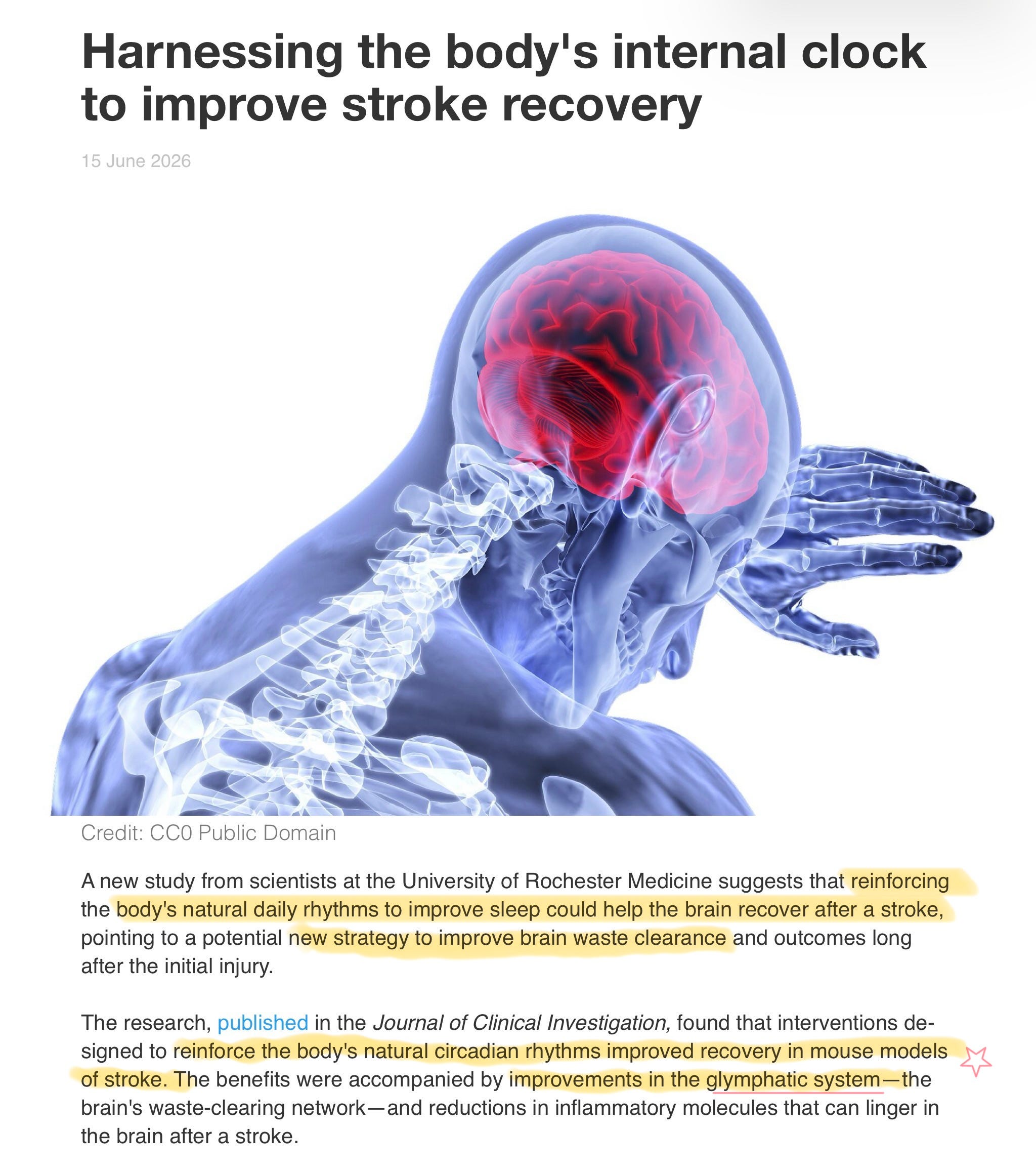
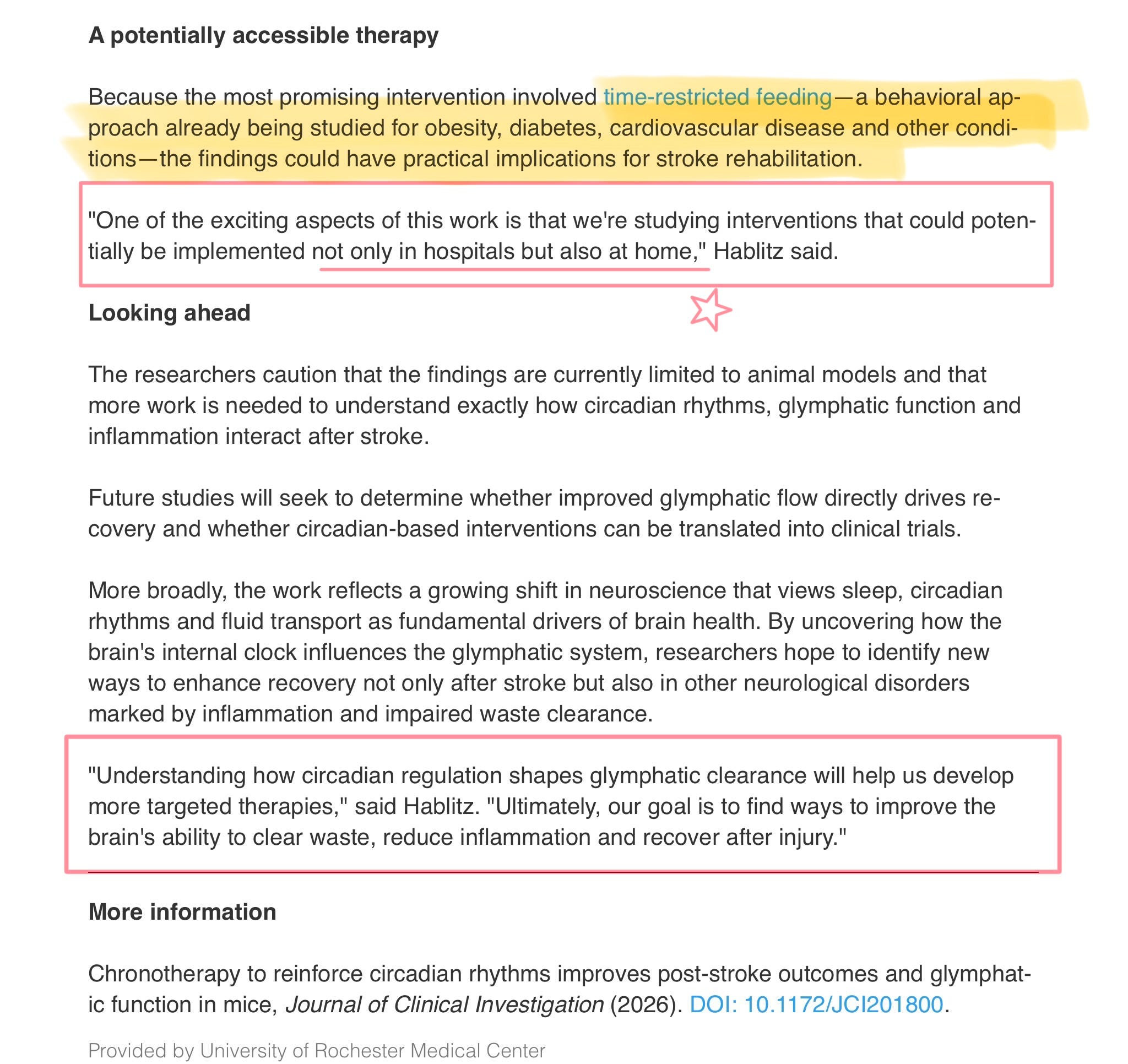
The researchers found that when circadian rhythms were reinforced after stroke in mice, the animals showed better motor recovery, smaller areas of brain injury, less inflammation, and improved glymphatic function. The glymphatic system is basically the brain’s cleanup crew. It helps move fluid and waste products through the brain, especially during sleep and deep rest. I always picture it as a bunch of exhausted janitors clocking in for the night shift while the rest of us are asleep.
And that is where things start getting interesting. The brain doesn’t just need therapy after injury. It needs time to repair, and repair doesn’t happen randomly. Repair follows rhythm.
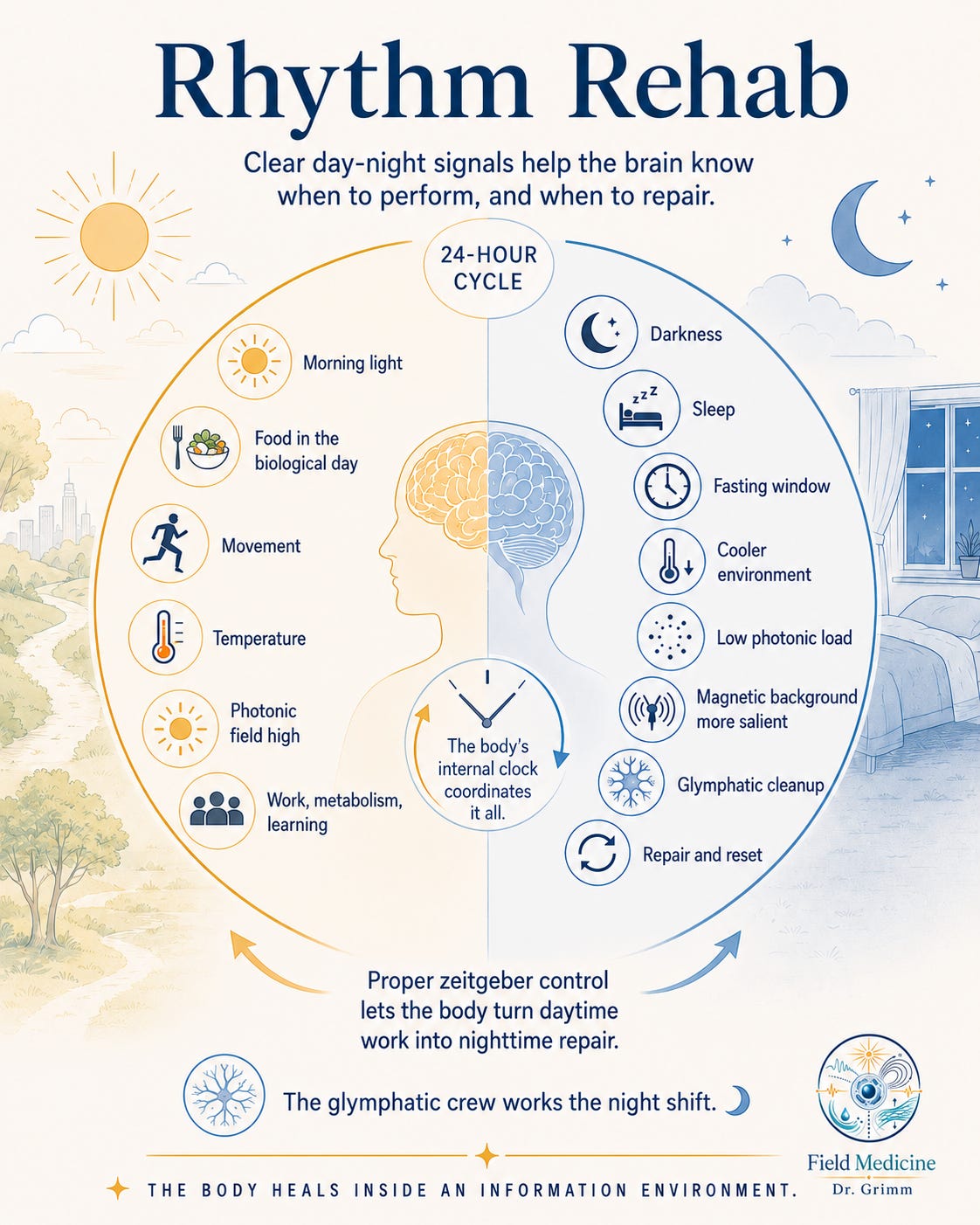
Morning light tells the body one thing. Darkness tells it another. Sleep sends signals. Food timing sends signals. Movement sends signals. Temperature sends signals. Every day, your body is constantly asking one question: “What time is it?” And “What Information am I getting?”
Now here’s the rabbit hole. What happens when the answer is confusing to your body? To your brain? To your nonvisual pathway? To the deep structures that are only touched by either the deeper penetrating signals like IR, Magnetic Field, RF, etc? Is eating a TRF the fix? Doubt it. Bright lights at midnight, television glowing in the bedroom, meals at random hours, no morning sunlight, poor sleep, little movement, and living indoors all day can send mixed messages to the body around the clock. If a healthy brain can get confused by that, what about an injured brain that’s trying to rebuild itself?
That’s the Field Medicine perspective. Recovery doesn’t happen in isolation even though that is how it is prescribed.
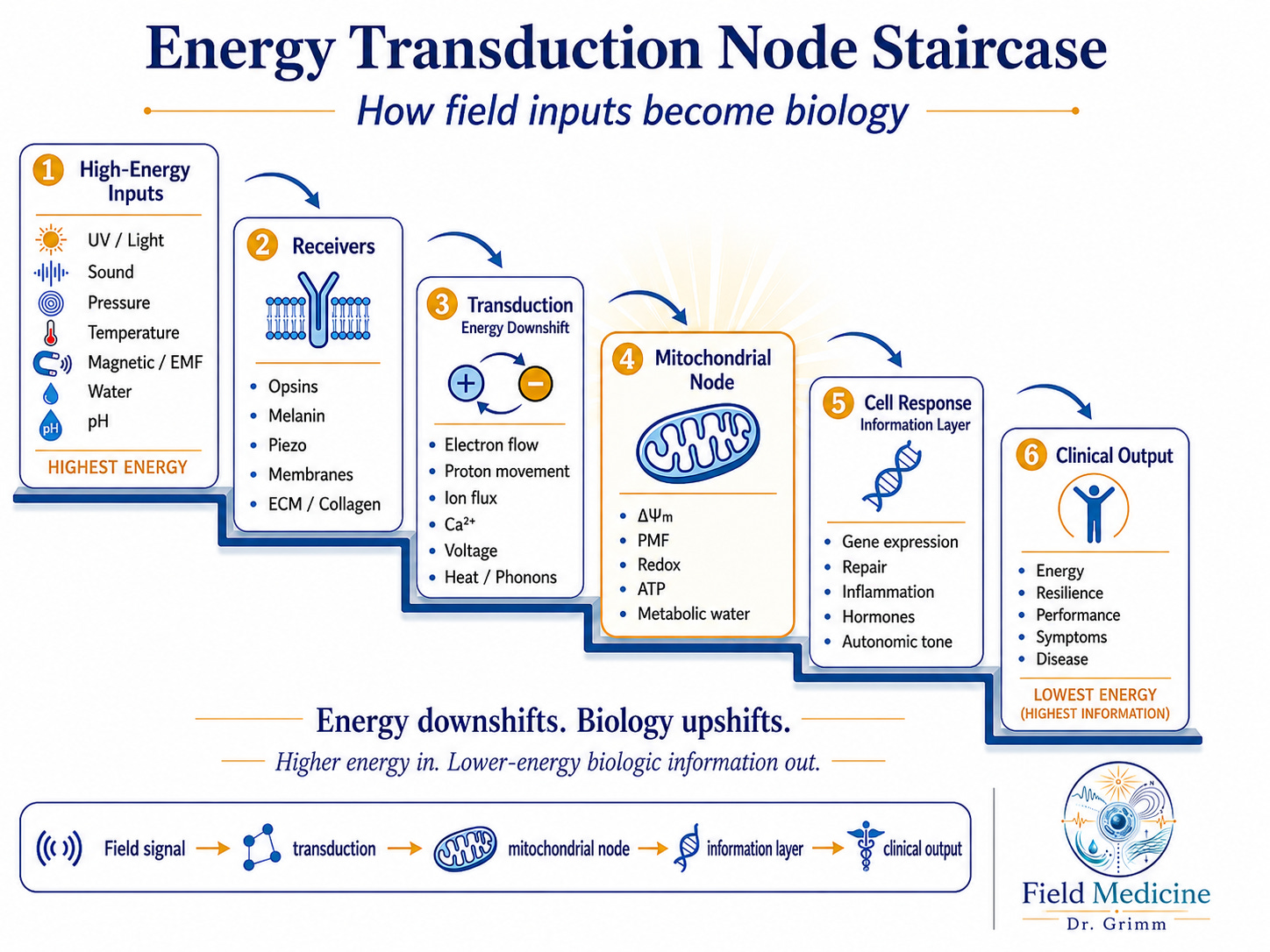
Recovery happens inside an information environment wrapped in an envelope of energy and information signals. Either directly or transduced three steps before.
The brain is constantly collecting signals from the world around it and using those signals to decide what biological programs should be running. Repair mode, alert mode, storage mode, cleanup mode, or inflammation mode—the body is making those decisions all day long. These signals are absorbed-transduced-passed on ultimately to the mitochondria.
Before anybody gets too excited, let’s keep our feet on the ground. This was a mouse study. It does not prove that specific chronotherapy protocols improve stroke recovery in humans. Nobody should stop medications, delay rehabilitation, or start experimenting without guidance from their medical team.
What it does do is raise a very reasonable question: Are we paying enough attention to rhythm during recovery and what recovers that actual rhythm?
Many of the strongest rhythm signals aren’t expensive, exotic, or hidden inside some futuristic laboratory under the label “Trinity Peptide Stack”. They’re surprisingly ordinary: getting outside for morning light, keeping a consistent wake time, eating mostly during daylight hours, reducing late-night eating, dimming lights in the evening, protecting darkness during sleep, keeping the bedroom cool and quiet, and moving during the day when medically appropriate.
And maybe most importantly, treating sleep like it is part of rehabilitation. Not because sleep replaces therapy and not because sleep is magic, but because:
Sleep is one of the primary biological windows where the brain organizes, cleans, repairs, and resets itself. It may be more important and more archaic than the awake state.
Here’s another sneaky question. Why do two people sometimes have similar strokes but very different recoveries? I see it all the time. Many doctors just shrug. Understandibly so. They. JUST. DON’T. UNDERSTAND.
We already know some of the answers. Age matters. Stroke size matters. Location matters. Blood flow matters. Inflammation matters. Access to rehabilitation matters. Yes genetics matter. But could timing be one of the hidden variables? Could the body’s rhythm either support recovery or quietly work against it? Isn’t the adaptive control of epigenetics and what the upstream signaling steps the most important?
That’s where chronotherapy becomes fascinating. Chronotherapy simply means considering biological timing as part of treatment strategy. It doesn’t replace standard care. It asks whether timing itself might influence how effectively the body uses the care it’s receiving. We already know that it can impact certain disease processes like fatty liver, hypertension, CAD, DM, Obesity, psychological health.
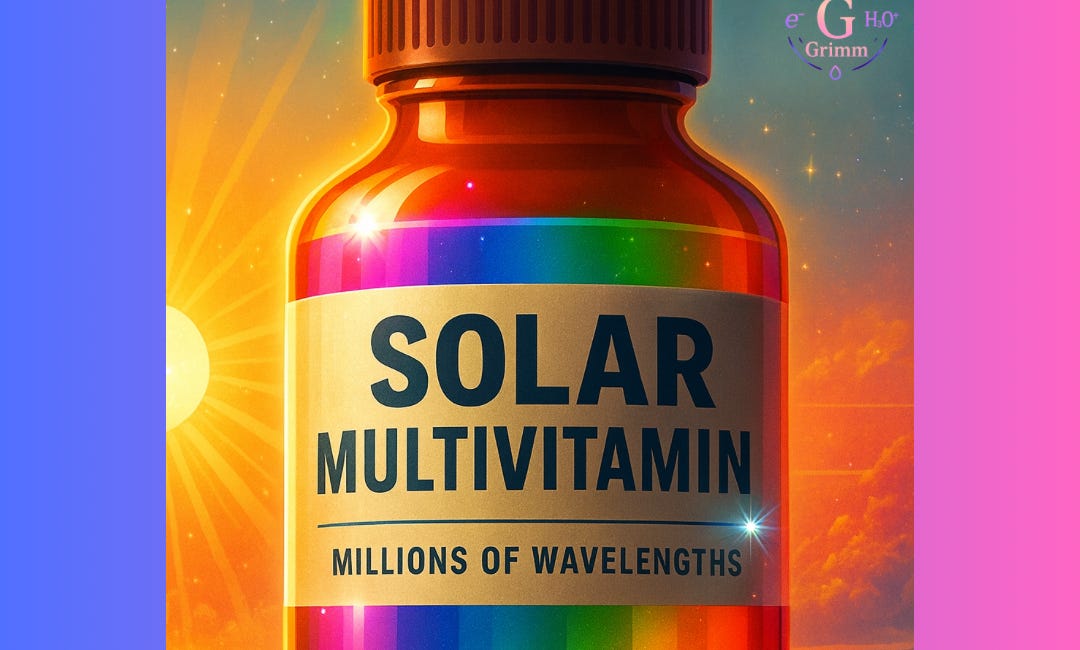
One of the interventions in this study involved active-phase time-restricted feeding. In plain English, the animals ate during the period when their biology expected them to be active. That points us back toward a very old idea that modern life has made surprisingly difficult: eat when your body expects daytime, sleep when your body expects nighttime, see light when the sun is up, and protect darkness when the sun is down. (Review the Solar Multivitamin Below)
☀️ The Solar Multivitamin™
·
September 1, 2025
This Substack is reader-supported. To receive new posts and support my work, consider becoming a free or paid subscriber.
Simple? Absolutely. Weak? Maybe not. But can that expected time be perturbed? You bet it can. Because when you start looking closely, rhythm is everywhere. Blood pressure has rhythm. Hormones have rhythm. Immune function has rhythm. Mitochondria have rhythm. Brain fluid movement has rhythm. Healing itself appears to have rhythm. But they all can be thrown off track by unexpected photons, phonons, EMF, food, temperature.
And that may be the biggest takeaway from this paper.
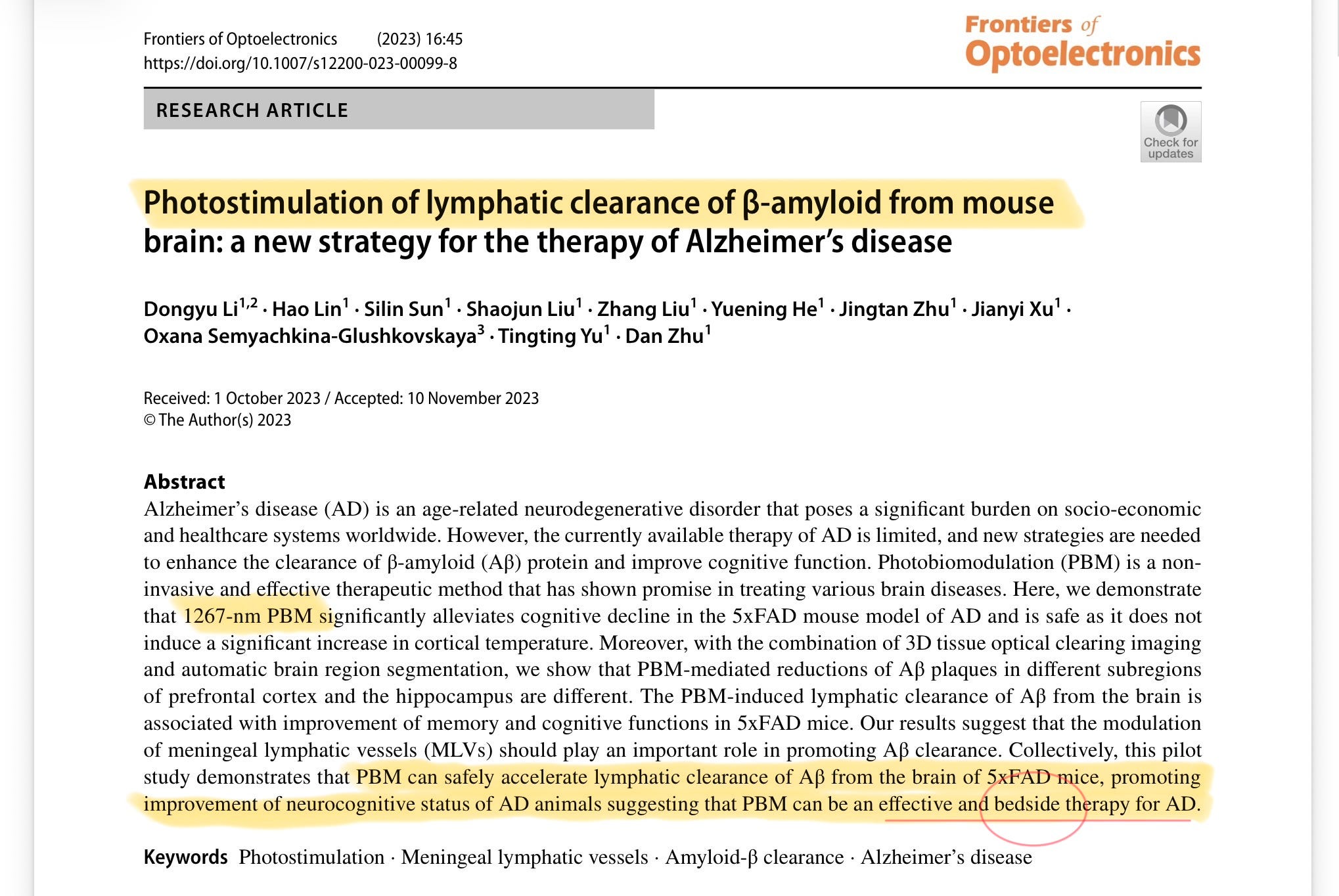
Now let’s wander one level deeper into the rabbit hole. Researchers are beginning to explore whether certain wavelengths of light may influence things like brain lymphatic drainage, amyloid clearance, mitochondrial metabolism, and neuroinflammation. We’re nowhere near the point of making clinical recommendations from that work, but it hints at something fascinating: the brain may be far more responsive to timing and environmental signals than we once believed.
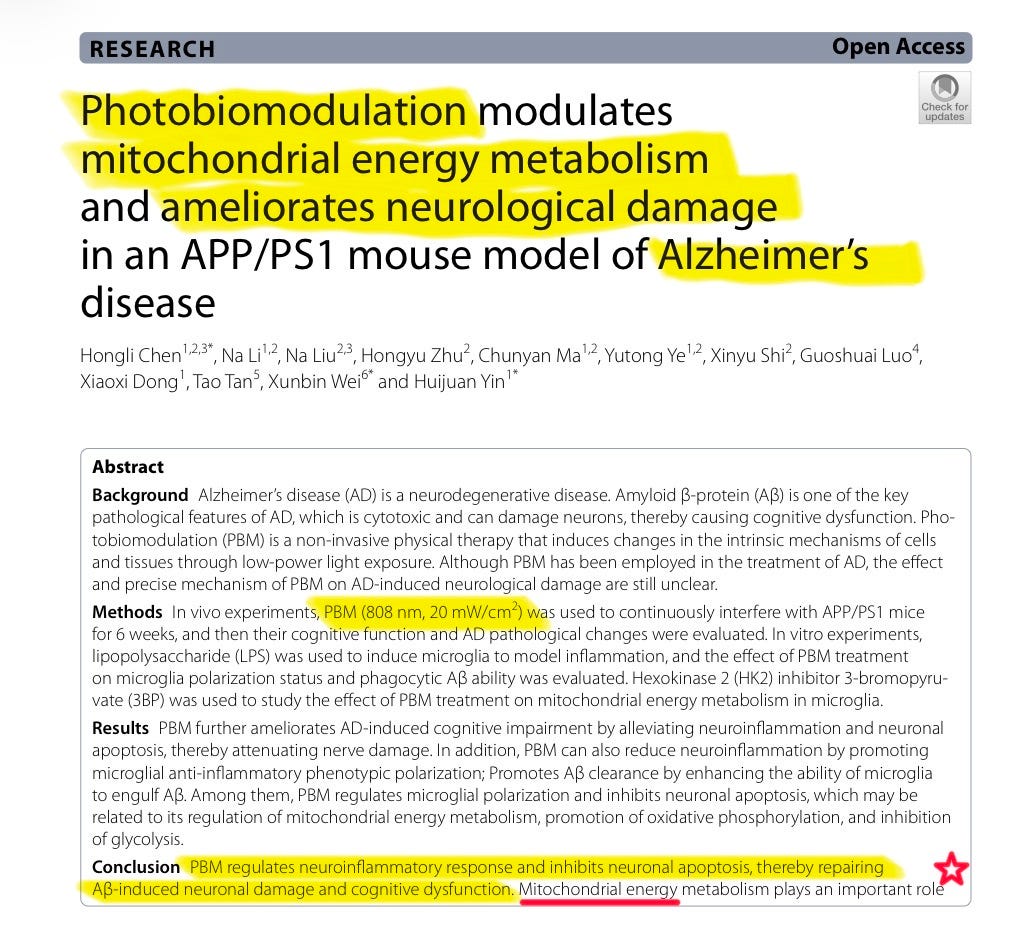
Light, darkness, fluid movement, energy production, sleep, and blood flow all appear to be talking to each other. In Field Medicine language, the brain isn’t just tissue. It’s a timed, water-moving, light-responsive, mitochondrial repair system trying to maintain order in a very noisy world.
So what does all this mean for patients and families?
Maybe it means the boring stuff isn’t boring! Maybe morning light matters more than we thought. Maybe darkness matters more than we thought. Maybe meal timing matters. Maybe sleep timing matters. Maybe the bedroom matters. Maybe daily rhythm matters. Maybe one day the entire medical community will even discover that the timing of rehabilitation sessions matters more than we currently realize. BP medication timing, Check. Chemo timing, Check. Cortisol timing, Check. Insulin Timing, Check.
Remember the TYPE OF LIGHT THAT YOU ARE EXPOSED TO MAKES A DIFFERENCE AT ALL PARTS OF THE DAY.
The injured brain needs more than the current treatment protocol. It may need an environment that repeatedly sends one clear message: Day is day. Night is night. You’re safe. Now repair.
That’s rhythm rehab. The science is still young, but the question is far too important to ignore while being easily implemented.
Thanks for reading! This post is public so feel free to share it.
Comments
Nothing yet. Say the first thing.
Sign in to join the conversation.