
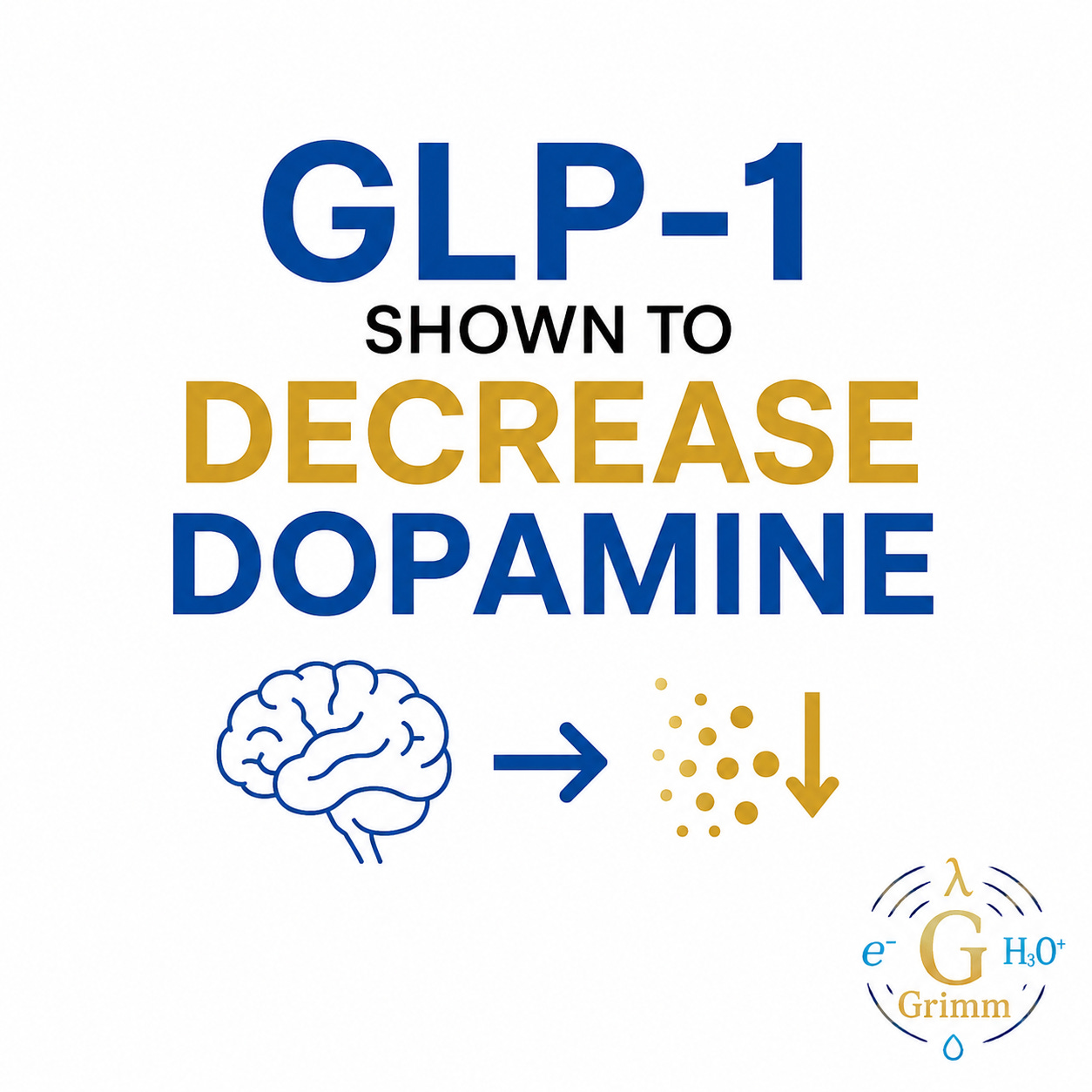
A new 2026 GLP-1 paper caught my eye, and I think the story is bigger than weight loss.
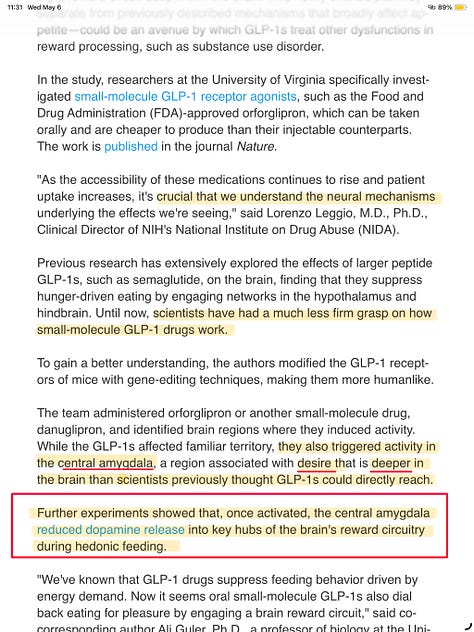
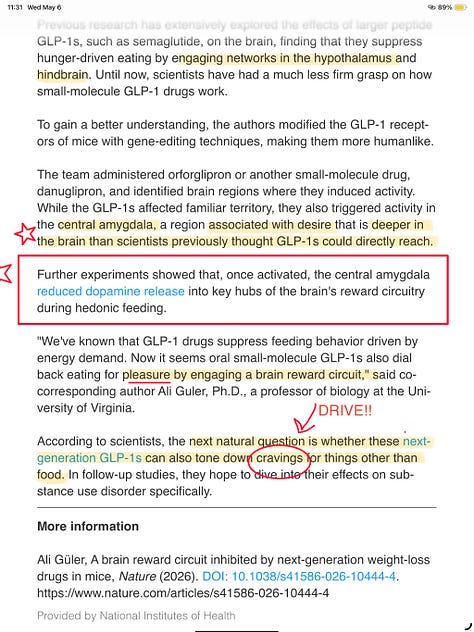
The headline says these newer oral GLP-1 molecules may suppress “cravings.” That sounds clean. Friendly. Marketable. Almost harmless. But when you read deeper, the paper is really talking about something much more interesting. These NEW small molecule GLP-1 receptor agonists appear to reach deeper brain regions involved in reward, including the central amygdala, and the researchers describe reduced dopamine release into key reward hubs during hedonic feeding. In plain English, this is not just stomach fullness. This is desire circuitry. This is the brain’s “go toward that” system getting turned down.
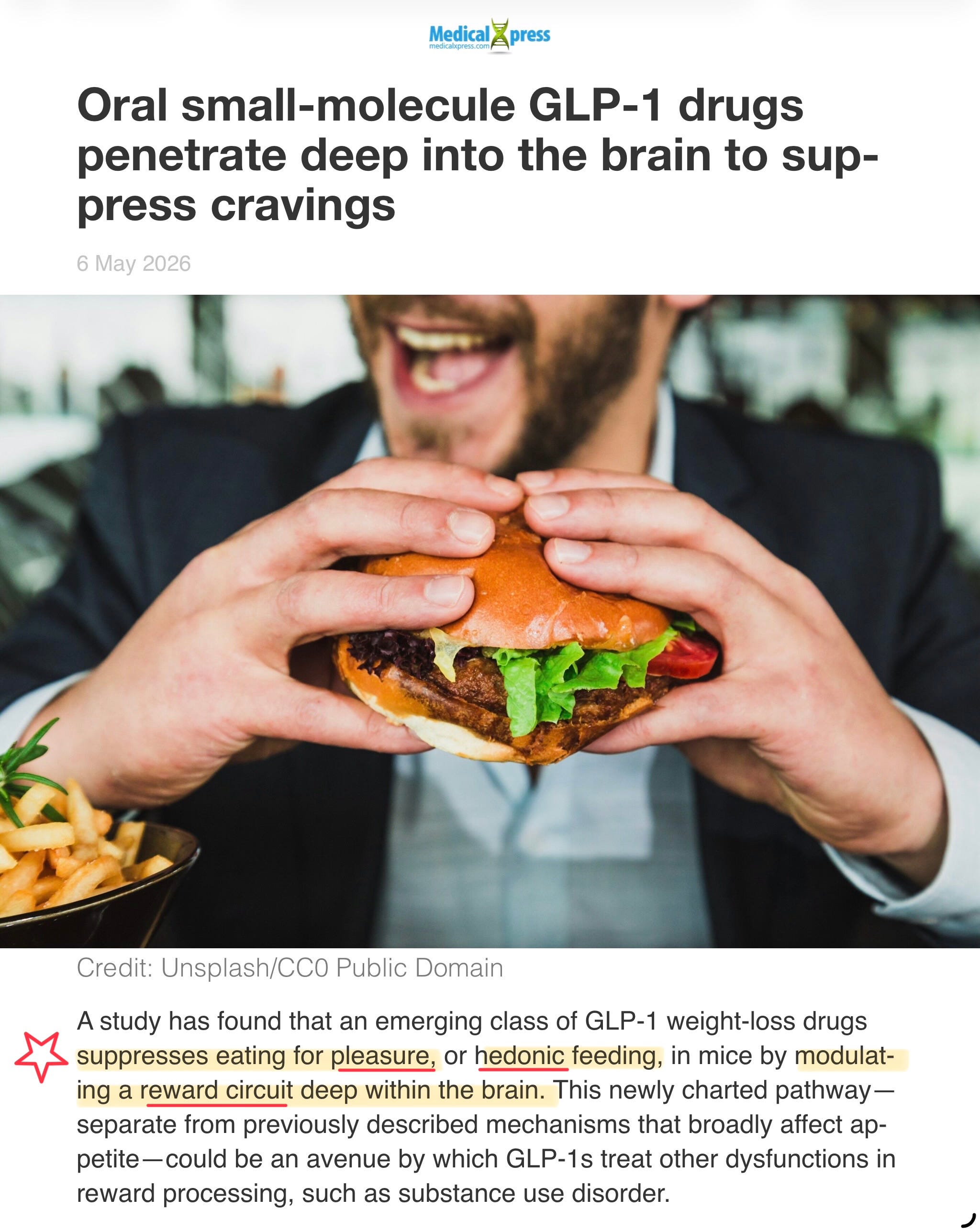
Now before everyone gets weird, I am not saying this is bad. We in medicine have seen these medications help a lot of people. Weight comes down. Glucose improves. Inflammation may calm. Food noise can finally quiet down. For the patient who feels trapped inside compulsive eating, this can feel like somebody finally took the static out of the speaker. All this is great….although something seems off.
Dopamine is not just the “pleasure chemical.” That is the kindergarten version of the molecule. Dopamine helps assign salience. It helps the nervous system decide what is worth attention, movement, risk, effort, pursuit, novelty, learning, and future seeking. It is the little biochemical finger pointing forward saying, “that matters, go investigate.” It’s kinda important.
So when a paper says a drug may reduce dopamine release in reward hubs during pleasurable feeding, my Field Medicine brain hears a deeper question. Are we only reducing pathological cravings, or are we also changing the gain on biological pursuit?
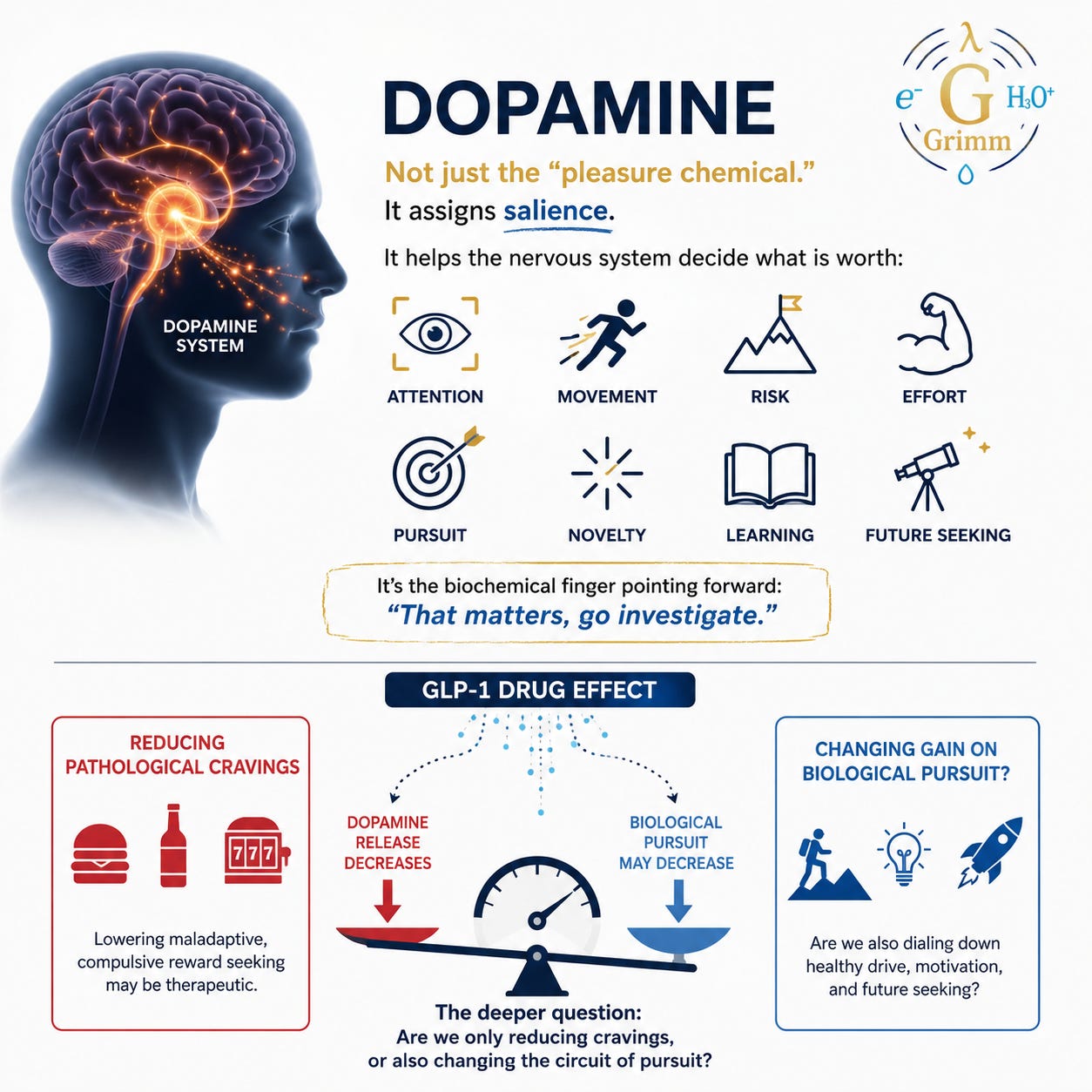
That question matters because many patients describe something broader than appetite suppression. They say alcohol interest goes down. Shopping impulses go down. Gambling urges go down. Scrolling feels less sticky. That may be a gift for some people.
Modern life has become a dopamine casino with fluorescent lighting, processed food, midnight screens, app notifications, fake novelty, and hyperpalatable reward traps everywhere. Some brains are cooked from constant signal theft.
But some patients also describe feeling flatter. Less spark. Less emotional amplitude. Less creative fire. Less “I want to build something.” Less appetite for life, not just food. That does not mean the medication caused all of it in every case. Weight loss itself, calorie restriction, hormone shifts, nausea, fatigue, sleep changes, and altered nutrition can all play a role. But this paper gives us permission to ask the bigger question out loud.
Comments
Nothing yet. Say the first thing.
Sign in to join the conversation.