
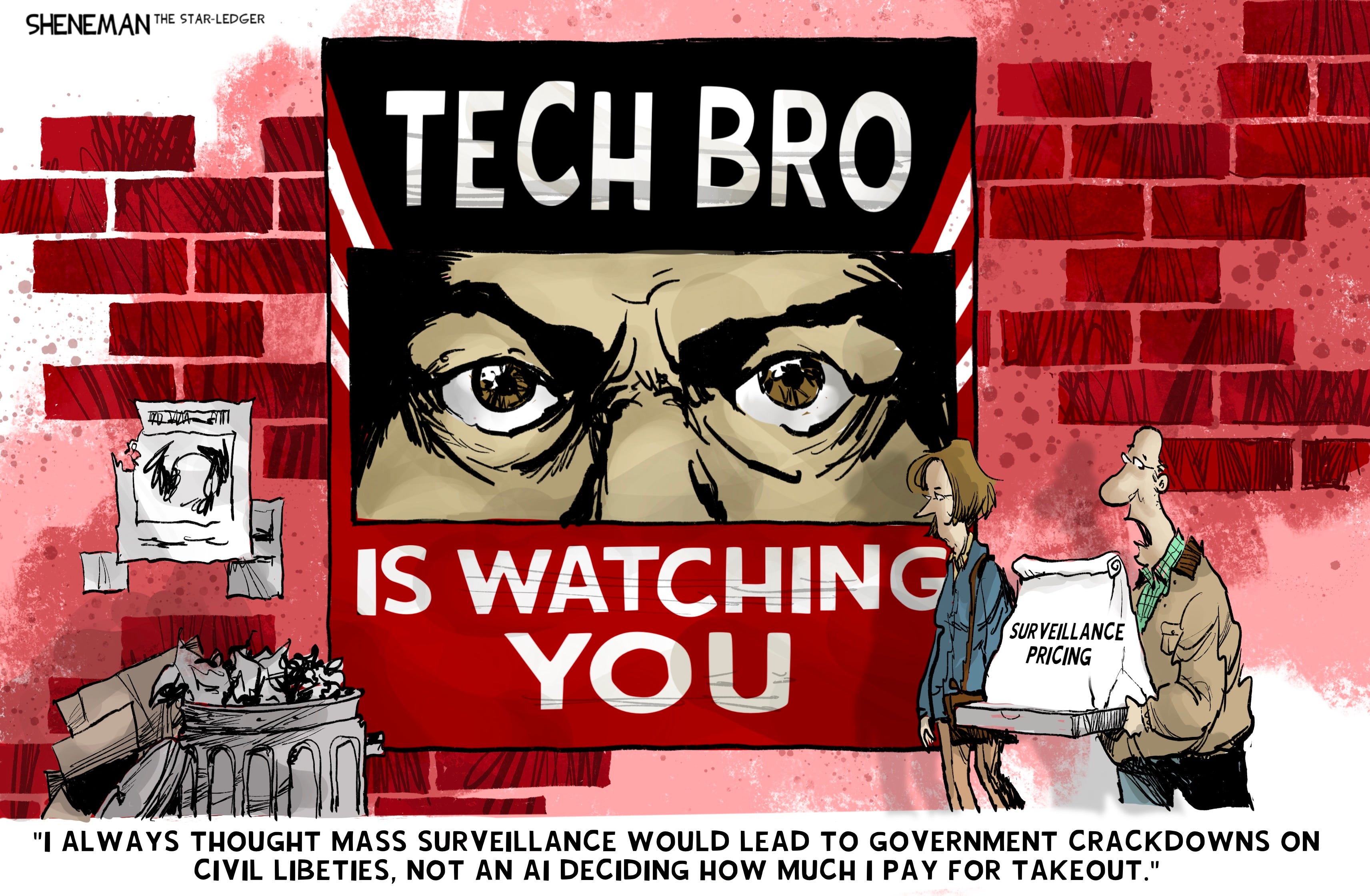
If you need further evidence that we are currently in the throes of late-stage capitalism, look no further than the new, thoroughly dystopian practice of surveillance pricing.
For the uninitiated, surveillance pricing is when companies use your personal data — such as location, browser history and prior purchases — to set a bespoke individual price for goods or services. Simply put, tech bros use your phone to spy on you so they can decide when you pay more. It’s a sinister and growing practice designed to suck every last ounce of surplus value out of consumers to generate revenue and the dreaded shareholder value. God forbid you spend a few hours scrolling three-bedroom midcentury moderns on Zillow; next thing you know, Instacart is charging you $23 for a gallon of milk. As gross as it is, our benevolent corporate overlords are using their new AI-fueled technology for more than deciding how much they can bleed you for eggs.
Gig economy apps are using surveillance pricing to set wages, too. Since COVID-19, a handful of apps have popped up that bill themselves as “the Uber of nursing.” The apps promise a frictionless experience for traveling nurses looking to book their next gig, but according to the nurses, behind the scenes the technology is using personal data like student loans and credit card debt to decide how much — or more to the point, how little — they’ll get paid. Nurses deal with enough of our crap, both literally and figuratively; turning them into UberEats drivers is a worse idea than it sounds, and it sounds terrible. The unofficial motto of Big Tech is “move fast and break things,” which is maybe not the best idea when we’re talking about healthcare.
Luckily, the backlash to surveillance pricing has prompted states to take up the mantle of regulation that the federal government laid down years ago. Here in New Jersey, Gov. Mikie Sherrill recently signed the Fair Price Protection Act, a law that forbids the use of surveillance pricing to charge different customers different prices for groceries. The FPPA came just a few days after the governor signed a similar law to prohibit landlords from using rent-setting software that uses the same types of surveillance-fueled algorithmic pricing. The time to start regulating this stuff was five years ago, but better late than never. If the octogenarians in Congress can’t understand this stuff enough to regulate it, then it’s going to fall to the states to step up.
Comments
Nothing yet. Say the first thing.
Sign in to join the conversation.