
Dr Emma Katz is widely regarded as one of the world’s foremost academic experts in her area of research — how coercive control impacts on children and young people.
Emma specializes in the harms caused by father-perpetrated coercive control, as well as children’s and mothers’ resistance and recovery. Read more in her book Coercive Control in Mothers’ and Children’s Lives, published by Oxford University Press.
Welcome again to Decoding Coercive Control with Dr Emma Katz.
As an academic expert in coercive control, I often emphasize how coercive control perpetrators want to turn their partners from a full human being into a hollowed-out shell that they can control, harm and exploit. This is their secret “goal”.
When most people think about coercive control, they think about a boyfriend controlling his girlfriend’s movements or stopping her from seeing her friends.
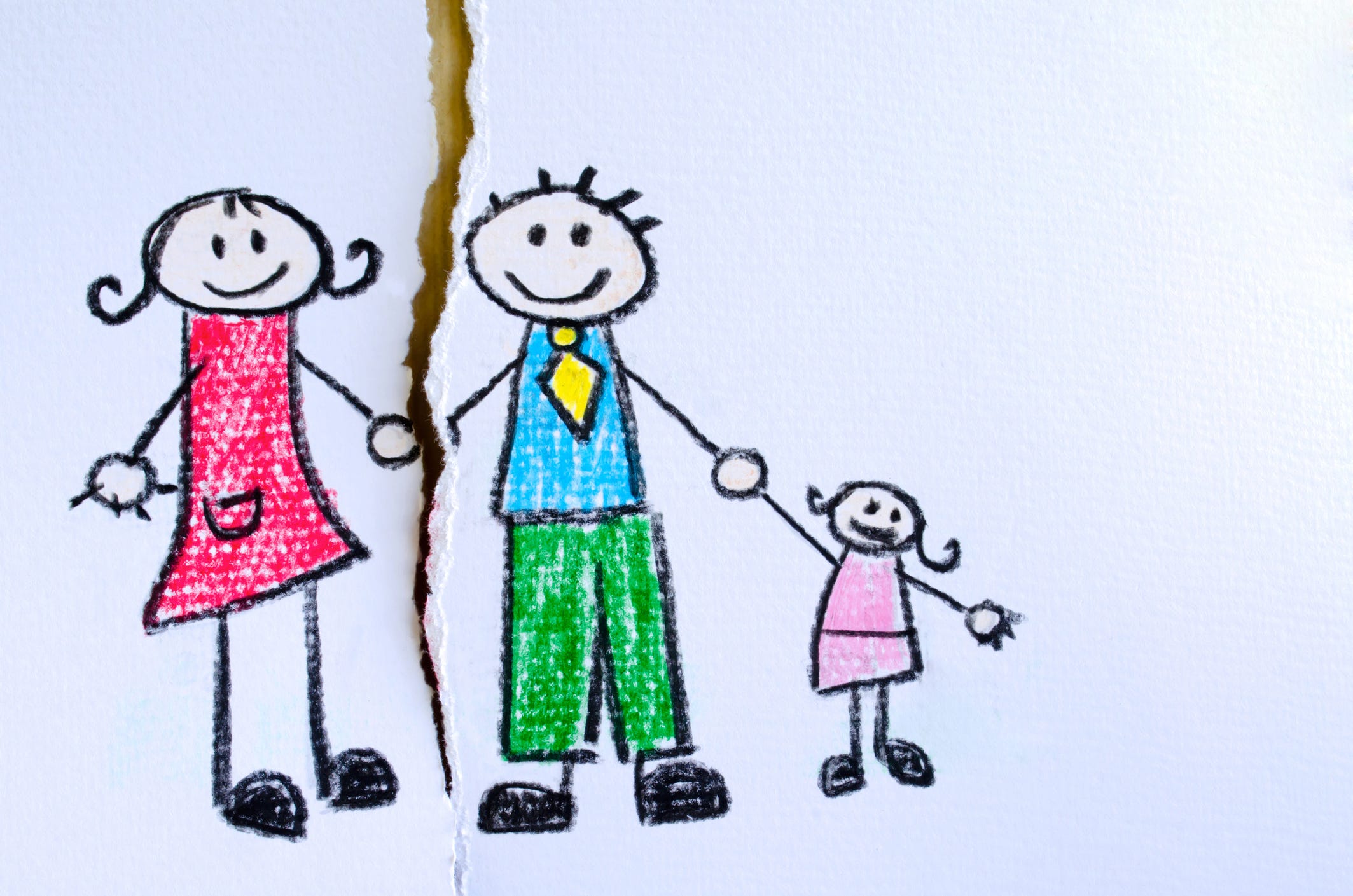
However, when there are children involved, coercive control also typically involves coercively controlling fathers* trying to undermine or even destroy the loving positive relationship between the mother and her children.
*I’m saying “coercively controlling fathers” because males comprise 97% of those convicted in court for the crime of coercive controlling behavior in England where I live. If you happen to be one of those 3% of male victims, I hope you find elements of this post helpful too.
This isn’t a fringe part of coercive control: It’s really central to it.
As I mentioned, the goal for the perpetrator is to turn his partner from a full human being into a hollowed-out shell that he can control, harm and exploit.
This “goal” cannot be achieved very successfully if his partner is feeling strong, confident and effective as a mom, and gets lots of positive feedback, praise and love from her children. Sabotaging mother–child relationships is therefore often a top priority for perpetrating fathers.
The father’s behavior in undermining the mother’s relationships with her children is confusing and hurtful. But the mother, as she is caught in the thick of coercive control, may not be aware of why her partner or former partner is acting this way.
For example, he might be telling the children that their mom is insane, unstable, ill, untrustworthy or irresponsible. The mom might hate that her children’s dad says these things to them, and might beg him to stop because it’s hurting her relationship with the children and affecting her children’s well-being. But she may not know that damage to the mother–child relationship is exactly what he wants to cause.
He’s trying to cause this damage because the consequences of that damage suit his agenda. That agenda is about the mother receiving less warmth or positivity from her children, her feeling sad and worthless, and having the children more firmly under his control.
You’ll notice that I’m not using the term “parental alienation” here. There’s a reason I’m not doing so. That term has a troubling history. (This link opens a PDF to a research article on that history.) It can involve “treatments” that have not been shown to be safe or effective.
The concept of parental alienation tends to worsen outcomes for victim-survivor mothers who are trying to protect children from abuse perpetrators, as seen in research from the USA and the UK and in this report presented to the UN.
There’s a lot of debate about whether we should be using the term “parental alienation”, and many organizations, researchers and campaigners advocating for survivors of domestic violence and abuse argue against it.
Interview research with abusive men by Professor Susan Heward-Belle in Australia found that most of those men “reported deploying deliberate attacks on their partner’s identity as a competent mother in order to lower her self-esteem [and] make her feel inadequate.” In other words, abusive fathers’ attacks on mother–child relationships were found to be part of their domestic violence and coercive control, not separate from it.
Heward-Belle quoted one of these men in particular, “Scott”. Scott admitted that he hoped that verbally attacking his partner’s mothering would have had the same effect as physically attacking her body. (Disturbingly, he also shifted pronouns from “her” to “you” to talk to Professor Heward-Belle, the female researcher-interviewer, as if she was his victim):
Scott: Why her mothering? It was just to assert power over her to let her know I can stop you any time. You know I may not hit you but I may as well hit you ’cause what I’m saying to you is having the same effect; it’s attacking something that probably means the most to her, her identity, being and sense of worth.
In that chilling quote, Scott is “saying the quiet part out loud”. Many perpetrators would deny the truth of what Scott is saying here, which is that he knows exactly what he’s doing, and that the damage he’s causing is strategic.
At present, there is far too little research about exactly how perpetrators damage mother–child relationships. However, there is one brilliant article that I want to share with you in this post.
It is by Dr Laura Monk, who I had the good fortune to get to know a few years ago, and Professor Erica Bowen. The researchers interviewed several mothers who had experienced this kind of abuse from their partners and former partners.
From this research they identified 8 tactics that the fathers used to bring about this “strategic separation”. These tactics were used both during coercively controlling relationships and in the post-separation period.
Below I set out these tactics, and share my ideas about fighting back against them.
I’m having an August sale!
New paid subscribers get 20% off Decoding Coercive Control with Dr Emma Katz. This offer is for people who are not already paid subscribers.
The discount applies for the first 12 months of a subscription. A paid subscription gets you all of my new posts, plus access to my entire archive of posts. As always, you can unsubscribe at any time.
The sale ends 31st August. From 1st September, the full price of $60 a year or $6 a month will apply again.
This Substack depends on paid subscribers, so I really hope this sale will enable more people to upgrade their subscriptions.
As always, I’m so grateful to all my paid subscribers. It’s you who enable me to write content that helps thousands of people each month, and helps to push forward public understandings of coercive control. I know from the messages I get from readers that this Substack is making a real difference in people’s lives.
Comments
Nothing yet. Say the first thing.
Sign in to join the conversation.