
I got this question in my Tumblr ask box today, from a user named LocknessKeychain:
Dear Dr. Price,
I’m in a tough situation. After a lot of rumination, I’m starting to think I may not be queer after all.
I have identified as such for 13 years, but I was quite young and online for much of that time, so it didn’t seem like a problem that my queerness was largely an untested theory. I am asking for your thoughts because I have found your writing illuminating in the past and you know what it means to have to rethink your identity and place in the world.
I’m 25 now, and the older I get the less I feel that my old labels really fit me - but this is the life I have built for myself and I don’t know any other. From middle school on, I identified first as a lesbian, then aro/ace, a trans man, and finally nonbinary. I never came out at work or began a medical transition so I don’t have to worry about rolling that back. But I still don’t really have a script for “coming out” as an ex-queer.
All my closest friends are queer, and that wouldn’t change, but I loathe the idea of no longer having this in common with them when it was something we bonded over, making them feel lied to or alienated, or being joked about as a “token cishet” (which I know they would do unless I acted as a preemptive buzzkill and asked them not to).
I am worried, too, about what my family will think. My mother was supportive at first but she’s been dropping hints over the past year that she doesn’t actually believe anything I say about my identity - “You know women can just dress masculine, right?” - probably because I haven’t transitioned but also because she still believes that people are innately masculine or feminine and this is unchanging, and even trans people must have always been their true gender and always known, which just isn’t the whole story. I can’t stand the thought of her feeling validated in this thinking.
The most challenging aspect, perhaps, is that I can’t fully slot into “normal” cishet culture, either. I don’t hang out with those people, I haven’t dated men, I haven’t truly been part of that world for a long time. I know too much now about the complexities of gender and sexuality.
I roleplay as an ordinary cishet woman at work and in other mundane interactions, but that feels just as much like playacting as introducing myself with he/they pronouns began to feel. All clothes are a costume. Both my chosen name and my deadname feel inauthentic. I am no longer either of those people, but then what am I? That’s something I must decide for myself, but how do I begin to make it legible to anyone else in my life?
Do you have any advice on how to approach this issue with other people?
So, Lockness, let me get this straight: you think that you are, functionally speaking, a cisgender, heterosexual woman…
BUT you haven’t dated any cisgender heterosexual men ever, have no desire to date cishet men, and sound pretty clearly like you would be miserable and suffer from a real lack of belonging if you were to try dating cishet men?
AND you surround yourself almost exclusively with LGBTQ people, have done so since you were a teen, will continue to prioritize LGBTQ people in your life, and feel profoundly misunderstood by the cisgender, heterosexual people around you?
AND you consider your cisgender, heterosexual persona to be a false costume, feel that none of the identities made available to you by society fit, and have tried on a variety of different queer labels for pretty much your entire conscious life?
Are you really sure that ‘straight’ or ‘not queer’ really encompasses the person that you are? The life you are living? The life you’ve lived? Hell, even the kind of life that you want to pursue?
None of what you’ve said sounds like a person I would describe as ‘straight.’ What it does sound like is a queer person who doesn’t have a clear-cut identitarian home, and who has been convinced (perhaps by the bad-faith discourse of other people) that membership to the LGBTQ community is personal attribute to be proven, rather than a form of social recognition that almost anyone who is willing can earn.
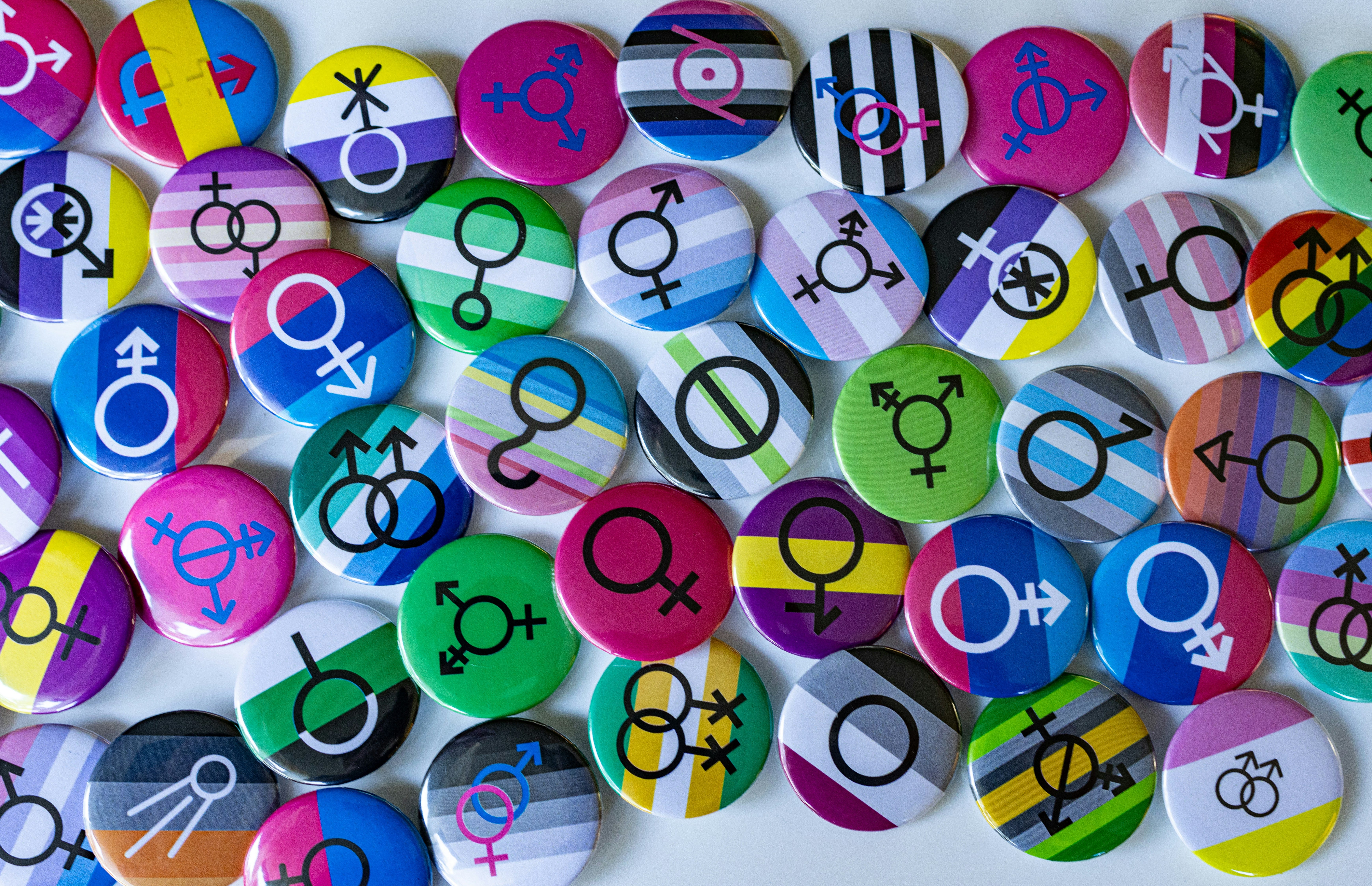
But I understand where you got that impression, Lockness. I even think I might have contributed to it. And that’s because I (and many of my fellow loud transsexuals on the internet) have spoken a lot about how queerness is defined by action.

Devon Price@drdevonprice
queerness is a thing you do. all identities are social in nature! if you feel unseen and unacknowledged in your queerness you probably need to make more queer friends, serve the queer community with what time you can give, transition, have gay sex, make some queer art, etc.
8:15 PM · Jun 24, 2024 · 114K Views
25 Replies · 420 Reposts · 3.14K Likes
A transgender identity is, for the vast majority of us, incomplete without some kind of real-world expression via behavior. We take hormones, get surgery, alter our style, dress, and mannerisms; we use different bathrooms, locker rooms, and check off different gender labels on forms; we have sex with queer people and do so queerly, and build different types of relationships and families than what the cisgender, heterosexual world believes to be the norm.
Similarly, if a person is a lesbian, she is probably not going to be fulfilled from simply knowing in her heart that she is one and throwing an orange-hued flag up on her wall. She probably wants to have sexual and romantic relationships with women, build intimacy with women, interrogate what society has taught her it means to be a woman, and take part in activities that feel culturally lesbian, like going to drag king nights at the local sapphic bar or holding late-night screenings of Bound with friends.
In both cases, until the queer person starts bringing their identity out into external world, their queerness remains largely theoretical. That’s not to say that before they come out, they aren’t queer — if an egg cracks in the woods and nobody can hear it, it’s still trans — only that there isn’t much material to that queerness.
Not knowing and being known by other queer people is a pretty unhappy, disconnected existence. Us out and proud queers on the internet are quite vocal about this because we are desperate to spare other people from the years that we lost to the closet.
Annoying Queer People Are Not Why We're Oppressed
·
April 15, 2024
There’s a type of within-community queer discourse that’s happened quite a lot in the past few years, wherein we determine the importance of attacking another queer person based on how annoying we find them to be.
Under the thinking that ‘queerness is a thing you do,’ some LGBT people’s ‘validity’ might appear to fall by the wayside — hence the endless debates about the bisexual women married to straight men who try to go to Pride, or the non-transitioning nonbinary people that (bafflingly) get called ‘cis’.
There’s this idea (which gets a lot of cachet in the online queer community, not so much IRL spaces) that a person cannot genuinely be queer if they are not doing a ton of queer shit. And ‘queer shit’ is assumed to mean obvious, physical activity like taking hormones and having gay sex.
But this understanding of queerness leaves out a lot of people, like the transgender/nonbinary folks who experience dysphoria that cannot be treated by a medicalized transition: intersex people, trans people who have health issues that prevent medical transition, fat or disabled trans people who are gatekept from transition by their providers, and trans people who live in areas where transition is not accessible.
It also excludes individuals whose identities don’t line up with either male or female genders, and for whom the currently available medical transition options don’t quite work: people who identify as objects, creatures, abstract concepts, or supernatural beings, people who possess multiple genders that cannot be done justice by any singular body, people whose genders are always changing, and people who experience dysphoria from both feminine and masculine traits.
An oversimplified idea that “queerness is a thing you do” leaves out the people who are closeted, or who have to go stealth, and trans people who have assimilated into cisgender society. It makes no space for the queers whose great sexual deviance is a lack of desire for any sex or romance, whose most defiant act may be not doing anything at all.
“Queerness is a thing you do,” when taken too literally, means there is no possible way to be queer if you are trapped in a community with no one else like you, and no one who can safely recognize your identity, with no spaces where you can safely dress how you want to dress and touch whom you want to touch.
If this sounds like a really confining definition of queerness that requires a person be constantly transitioning and/or fucking lots of people at all times in order to belong, that is because it is. And I doubt that very many people actually believe in that. I certainly don’t, and I am someone who has frequently ranted about how important it is to truly live ones queerness!
But ‘queerness is a thing you do’ is not just about sex, or about gender or embodiment, it is about contributing meaningfully to a broader LGBTQ community, and being recognized by members of that community as a person who belongs. And you do not need to eat a pussy or grow a testosterone dick to be able to do that.
In fact, if all you do is have gay sex or transition a little bit but you make no effort to really weave a diverse tapestry of LGBTQ people into your life, you’re actually gonna be a whole lot less meaningfully queer than, say, a sexually abstinent, non-transitioning asexual who constantly shows up to events at the local LGBTQ center, brings baked goods to the queer potluck, organizes sapphic movie nights in their home, and offers the newly-out trans kid in their neighborhood a shoulder to cry on and lots of hand-me-downs.
There are plenty of ‘discrete’ guys on Grindr who have endlessly more gay sex than the bi-straight-ace tenderqueers that people on the internet love to shit on, but I might ask: of the two people, who is more likely to have a number of queer friends? Who is more likely to be out, and advocate for queer issues? Which of the two has shown up when other queer people are suicidal, psychotic, or just consumed with self-doubt?
Who lives more queerly? The straight-acting guy who runs through twinks every weekend and then drives back home to his suburb? Or the silly ‘fake queer’ who has never actually fucked anybody and has like five sets of pronouns? Who do you want to spend time with?
Being queer is ultimately a social identity: it only exists through relationships and the building of interpersonal ties. One of the ways that queer people bond to one another is through sex, sure, but just as many of us find meaningful connection through attending support groups, feeding unhoused gay people, raising children to believe they can do whatever the hell they want with their bodies, showing up religiously to the queer contra night, singing in the gay men’s choir, throwing cash at the drag show on the beach, and just committing to giving a fuck about one another.
It is impossible to live one’s queerness without there being other LGBTQ folks around to witness you. That is why the closet can be so damn crazy-making. Online, we have collectively spent over a decade debating the ins and outs of various microidentities and the rights of various people to claim them, but none of these flags & labels mean anything in a vacuum. They exist to help us find one another in the wild, and when they help us, it is because they give our isolated self some rooting in a larger world:
There is somebody else out there like me. I don’t have to live the way my family said. Thank god. Oh, thank god. There is a word for this feeling.
If you have ever felt alienated by cishet expectations, the queer world is there for you. If it is around other LGBTQ individuals that you feel the most at home, then that is where you belong. If you can give something back to other queer people then you are always wanted. If you work to build queer spaces, archive queer history, celebrate and mourn with us, and keep our culture alive, then you are more than just ‘allowed’ to be in our community. You are our community.
If queerness is a thing you do, then fuck, community is an action — and anybody, really anybody, can make the choice to be a part of it.
I have spent many years researching what it means to belong to Indigenous communities, because I grew up with family stories of mixed Native relatives who made the choice to move up north and pass as white.
When I was younger I had romanticized those stories and what I thought that they must mean about my identity. Since some of my family was Indigenous, I thought I could simply identify as Indigenous.
I knew intellectually that this was offensive to many members of Indigenous groups and had seen many cases of Pretendians getting called out, so I rarely spoke of it out loud, but internally, some profound connection to a community that I barely knew was what I felt. I thought that I had some unseen marginalization that left me neither belonging to the white world or the world of some of my ancestors.
In a lot of ways I was like the bisexual woman in a straight marriage who has no queer sexual experience and no queer friends who is mostly worried with whether her identity is valid. That is to say: my identity was entirely inward-looking, and not community-based.
It was after years of extensive genealogical and historical research as well as lots of conversation with mixed and Indigenous friends that it finally clicked for me: Indigeneity is defined by kinship ties and community recognition.
Who you love and who claims you, that’s it. Not blood, not genetics, not the weird questions I sometimes get about what ethnic group I come from, and certainly not from my romanticized feelings.
Long ago, my family got disconnected from any tribal nation that might have claimed them. This might have been due to anti-Blackness, which kept many Melungeon people from being able to join tribal roles, or it might have been out of the desire to assimilate into whiteness and disappear. Regardless of why it happened, most of my family got to enjoy the benefits of whiteness after they left the community. And it is impossible for me to get our Indigeneity back. I have the legal status and privilege of a settler. That’s not ever going to change.
At the same time, what I do have the power to change is how I interface with Indigenous groups, and whether I build actual relationships with the people of the land that might lead to us mutually recognizing one another as kin of a kind.
In that realm, there is a lot I can do! I can attend Pow-wows (which I do, and I love!), learn Annishinabe words, read from Indigenous scholars, have conversations with friends about Nativeness and mixed identities, develop my own robust understanding of how race functions and my own position in it, be a good steward of the land around me, participate in events run by groups like the Chi-Nations Youth council, educate people when they make stupid blood quantum jokes, and process my complex feelings with the other mixed people I know who have lost connections to their nations.
Most of all, I can just fucking have real relationships with actual Indigenous people. That’s where everything meaningful happens.
My partner has told me, multiple times actually, that they made the choice to be queer. They’re bisexual, and they say that they could have lived a perfectly adequate life dating women, and probably marrying one and having children and for the most part assimilating into cisgender heterosexuality. There wouldn’t have been any down-low skeletons lurking in their closet if they had done this, no big, dramatic flame-out and divorce. Their life could have worked out just fine.
But they wanted something bigger. They had known since they were very young that they liked to act real faggy, and their parents supported them when they put on a dress and make-up and vamped for an audience at their school. As a teen, they dated both girls and boys, then moved to San Francisco and lived as a gay man in college. It didn’t quite fit. They still liked women, and lots of other genders, too, and eventually they settled into a nonbinary, broadly queer identity.
Now they have a mandala made of clitorises tattooed on their upper arm, and they’re dating someone who has been every gender under the sun.
On one of our first dates, my partner told me that they never resonated with stories of queerness that were all about the pain of repression. They’d never had to decide between being queer or dying unfulfilled. Almost every good thing that had come into their life was because they had chosen to be queer. It had helped them connect with people, and unlock a whole spectrum of self-expression and life experience that wouldn’t have been available to them otherwise.
I told them that I felt similarly about being trans. I really feel that I am less innately trans than most of the transsexual people around me. I got by pretty decently as a cishet woman. I was successful professionally and sexually as that kind of being; a lot of the things I liked and was good at made a certain kind of sense in a hazy feminine form. If I hadn’t been so bored and lonely, I probably could have stuck it out that way for a very long time, a sharp-tongued but submissive sloppily feminine thing that never really respected the men that she got with, but knew how to extract what she wanted from them.
But transitioning was a useful way of expressing the unease that I felt in my body. It was a narrative of myself that made sense in the day and age in which I was living. Being trans immediately plugged me into a network of cool, counter-cultural friends. It gave me an excuse to wear sensory-friendly drapey clothing, and cut my hair into weird shapes, and cut my boobs off, and stalk the night looking for hookups.
I’m not exactly transsexual in the way most people mean it, because I don’t think there’s any meaning in either the binary gender I transitioned “to” or the one I was assigned at birth. Like you, Lockness, both binary identities felt to me like roles I was playing.
But I did engage in very transsexual behaviors, and will forever occupy a social position that is trans. And that’s great, because transgender people are some of the only motherfuckers I have been able to stand in this life, and they’re the ones I want to be beside forever. That is the choice that I am making. And it feels like the most natural thing in the world.
I do wonder, Lockness, if there is still something meaningful to be found for you in choosing your queerness. Not trying to live up to some standard or qualify for any particular identity, but to take from queerness what is good for you, and to decide what you want to give back.
You already don’t like your chosen name, so why not try on a new one? You have never tried hormones or dramatic changes in presentation, but are there any you might want to try on? Is there any costume that you think you might like wearing for a while?
It doesn’t have to represent some true, static identity, and it needn’t be transexually masculine either. You can be a flouncy pink Bimbo in a trans way. You can be a creature in the woods. You can be a shape-shifter and have a new identity every year. Maybe you are a straight woman but only for right now. It sure doesn’t sound like that is the whole story. It is a truth, but you contain a lot more.
I cannot be anything other than what I am, LocknessKeychain, and neither can you. But we can choose what we do. We can choose to try new things and evolve in the trying. We can decide who we love. And we can show that love with presence and action every single day.
So ignore the discourse-pilled dunderheads, and tell your mom to shut up. You definitely need to stop listening to that voice inside of you that says you need to isolate from your community. Queerness has but one requirement: to be with us. And you’re already doing it. Don’t stop.
Previously on:
Am I Trans for the Right Reasons? Does it Matter?
·
May 23, 2024
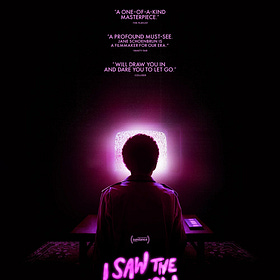
I received this question in my Tumblr ask box the other day, and it got me thinking about the years I spent delaying transition, the damaging rhetoric of detransitioned TERFs that motivated me to do so, and Jane Schoenbrun’s excellent new film about trans longing and self-denial,
Bilateral Dysphoria
·
May 1, 2024
I had been avoiding mirrors for awhile. The man on the other side was a perfectly adequate human being, but he always looked dour, and so boring. I hated smiling as him. Tiredness always clouded his eyes. It made me kind of sad to see him, but I could get away with not thinking about it.
No posts
Comments
Nothing yet. Say the first thing.
Sign in to join the conversation.