
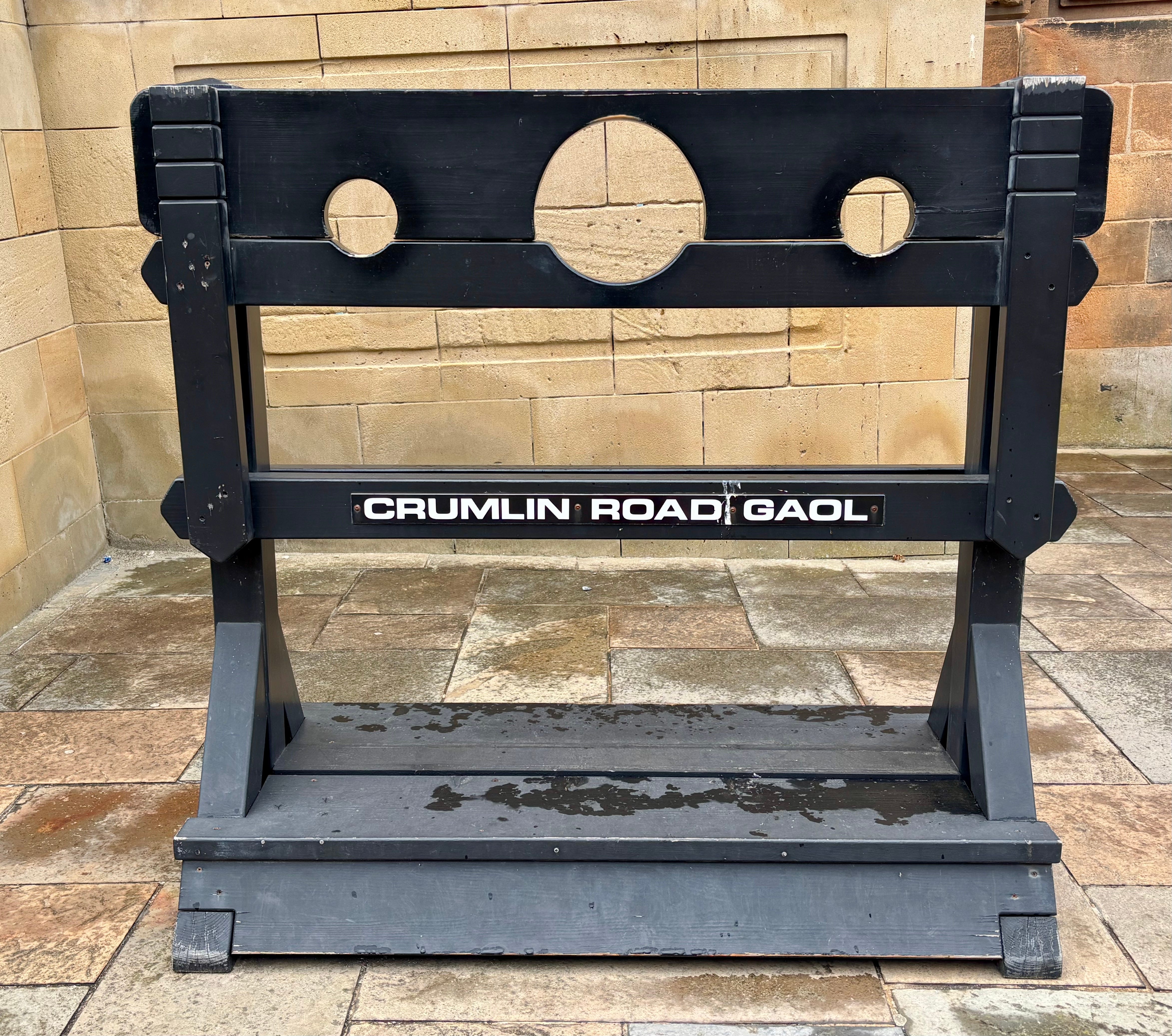
As you enter the historic prison complex at Crumlin Road Gaol in Belfast, there is a quote on the wall:
It is said that no one truly knows a nation until one has been inside its jails.
Long Walk to Freedom, Nelson Mandela, 1995.
Although Nelson Mandela’s observation is set in a different context and time, as I went round Belfast Prison, I was inspired to look more closely at the exhibits in an attempt to remember those who were incarcerated there, and the society in which they lived.
The historic prison at Crumlin Road, Belfast has a complex history spanning over 150 years. Whilst it is intrinsically linked to Northern Ireland’s turbulent past, it is also an example of a typical Victorian penal institution. Both these layers are explored in its interactive displays, videos and visitor experience.
Construction began on the Crumlin Road site in 1843 and its doors opened for the first time three years later, with the arrival of 106 prisoners – men, women and children all in chains – from the county gaol in Carrickfergus, which is some 12 miles along the coast. Like most Victorian prisons, the ‘new’ gaol was modelled on Pentonville.
HMP Pentonville was opened in 1842 in North London. It was designed by Captain Joshua Jebb based on the ‘radial cellular system’ with four wings arranged in a spoke around a central watchtower. One of the most significant features of this ‘modern’ prison was the introduction of the infamous ‘separate system’, which kept individual prisoners in isolation from each other – they remained in their cells for 23 hours a day and all communication was forbidden. This became a blueprint for other prisons throughout Britain, including Crumlin Road Gaol, which has four wards arranged around a tower. It also employed the separate system.
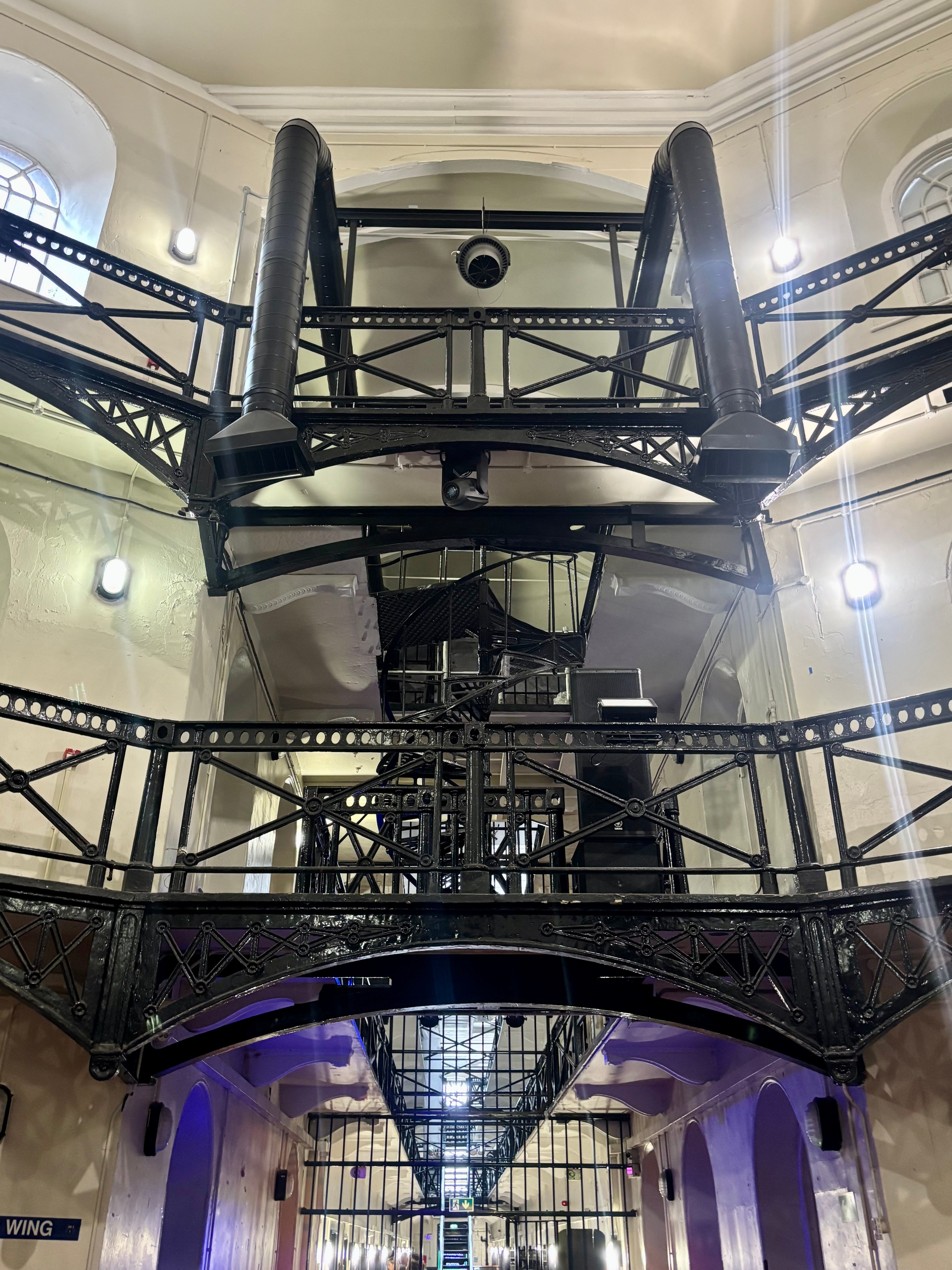
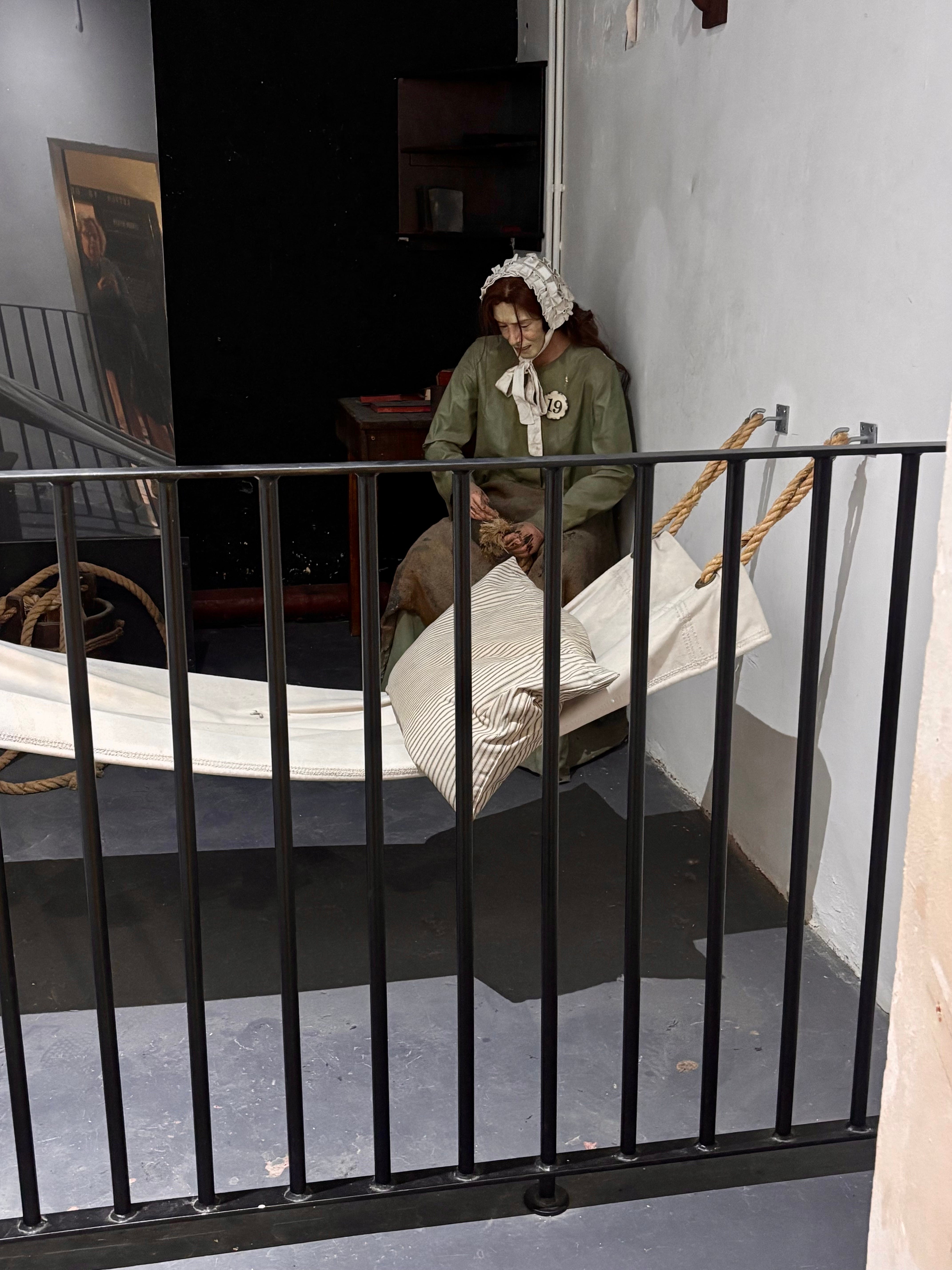
Life for the inmates was harsh. Each cell was 13 feet long by 7 feet wide, and only contained a bed – originally a hammock – a water closet, and a basin. Shockingly, the plumbing and water supply were later removed from the cells, and the prisoners were forced to use a chamber pot – shockingly this practice continued until the prison’s closure in 1996.
There was also a holding cell for prisoners being transferred to the courthouse over the road, and special cells for child prisoners – they could be held at the prison from the age of seven – a punishment cell known as ‘the boards’ because of the wooden pallet used for a bed, and a padded cell for those prisoners deemed to be at risk.
Although Crumlin Road Gaol was originally built to house some 550 inmates with single cell occupancy, in the 1970s and 1980s at the height of the Troubles, the prison population rose to 1,400 which meant there were three prisoners to each cramped cell.
A variety of sanctions were used in Victorian prisons to punish prisoners. These included the treadmill, the hand crank, throwing a cannonball repeatedly, picking oakum from ships’ ropes, and solitary confinement. These were designed to be repetitive and exhausting, and many of them had no practical purpose.
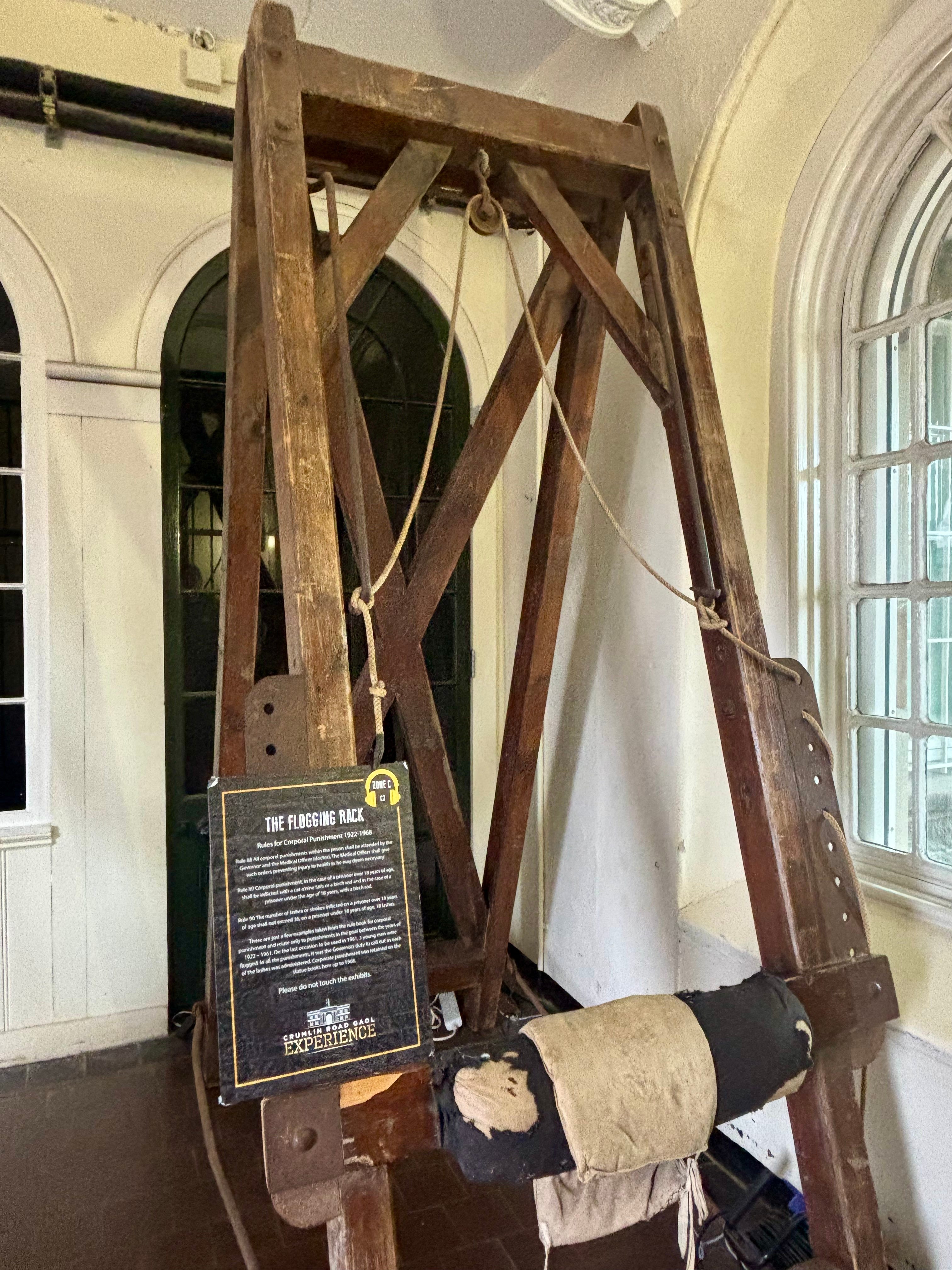
The principal forces of punishment at Crumlin Road Gaol were the hand crank and the flogging rack. The crank was freestanding and prisoners were expected to turn it between 10,000 and 40,000 times during an eight-and-a-half period, which meant about 20 revolutions a minute.
The flogging rack was particularly sinister, and often used on juvenile offenders – I couldn’t help thinking of young Arthur Woodbine, from a previous post, as I stood in front of it. The last flogging, of three young men, at Crumlin Road Gaol was in 1961. The punishment was abolished seven years later.
The ultimate judicial sanction was the death penalty. Crumlin Road Gaol did not originally have its own gallows, and earlier executions were conducted in public outside the prison, until the practice became private in 1868. An execution chamber was added to the prison complex in 1901. Throughout its history, 17 prisoners were hanged either inside or outside the gaol. The first person to be executed, in 1854, was Robert O’Neill, a solider who was convicted of the murder of his corporal, Robert Brown, at the Victoria Barracks in Belfast. All those who faced this penalty were men, and the last convict to meet his death in this way, was Robert McGladdery, in 1961, for the murder of Pearl Gamble, aged 19, near Newry in County Down.
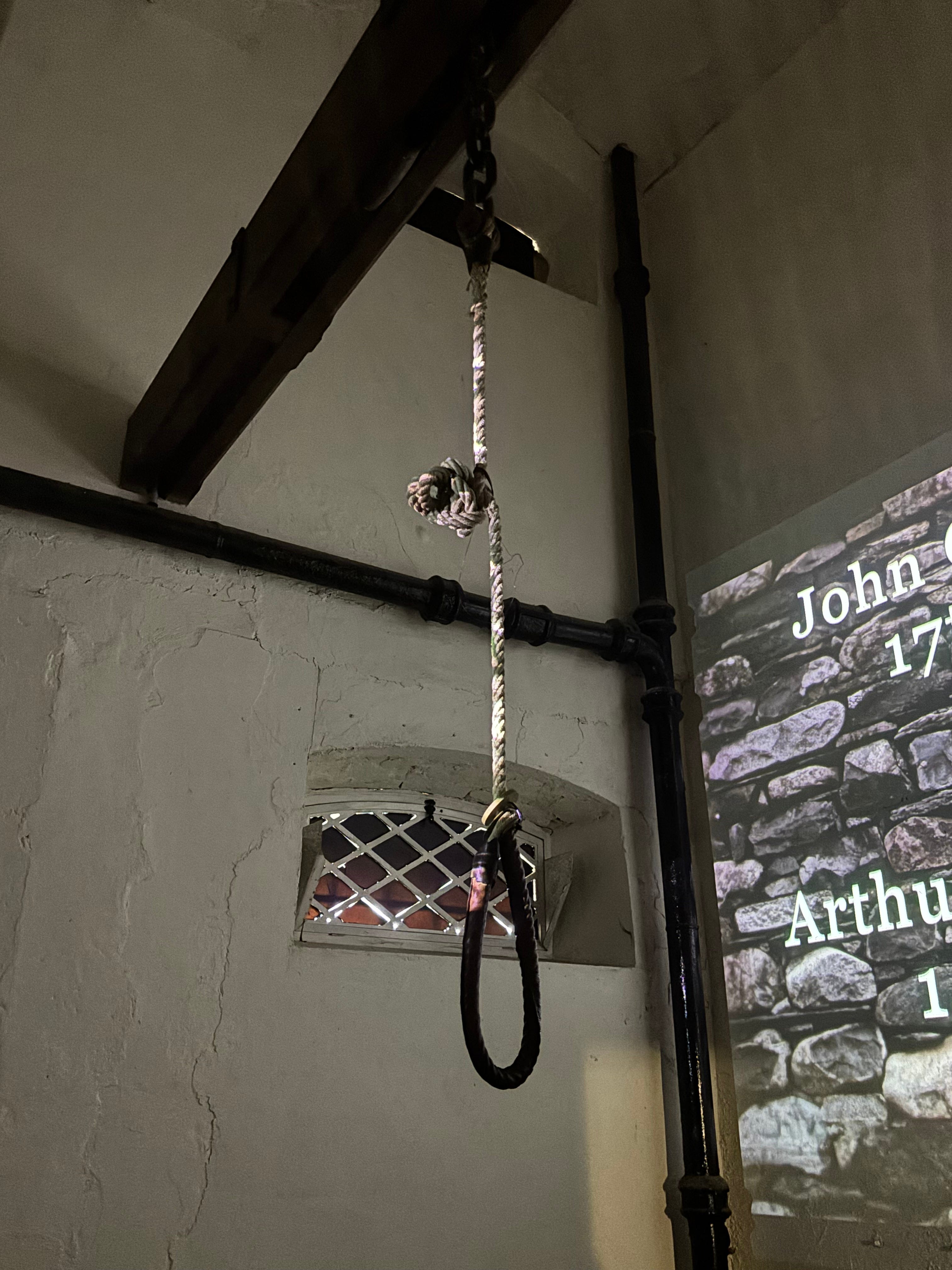
The drop room has been preserved and you enter it through the condemned cell, where those awaiting execution were detained for up to several weeks – a larger cell, with blackened windows, which could accommodate prison officials and family visits. After some time for reflection in the condemned cell, a door slides open and you step into the chilling atmosphere of the execution chamber, with its noose and lever (you can bypass these rooms). The names of those executed are projected onto the wall.
As it was customary for those who were served the death penalty to be buried in the confines of the prison, there are 17 unmarked graves near the perimeter wall. A series of arrows guides you to the burial site, which is a grassy verge, with no plaques marking their names. Two of the prisoners’ remains have been removed and interred elsewhere, but the other 15 have stayed in this anonymous resting place.
The final prisoners left Crumlin Road Gaol in 1996 and, in 2012, it reopened as a visitor attraction and conference centre, sharing the grounds with McConnell’s whisky distillery. Although the prison experience is now dominated by atmospheric lighting, holographic presentations and short information videos, it is possible to see the history behind the modern technology. As well as what you would expect in a historic Victorian prison, there is also plenty of information relating to the gaol’s unique past, such as Irish transportation, the impact of the Troubles, and the stories of the 52 prisoners who managed to escape from ‘Europe’s Alcatraz’.
Like all old prisons, it is said to be haunted, and you can certainly feel a chill as you walk around its empty cells and now quiet corridors.
You can find out more about Crumlin Road Gaol here.
(All images © A Buckley)
From August, I will be restructuring my working work and Wednesdays will become my ‘Substack’ day, when I’ll be researching, writing and posting my crime history newsletter.
This means that I’ll be publishing a post every Wednesday throughout each month – there will be no reduction in newsletters. Free subscribers will have access to two a month, and paid subscribers will be able to read all four, including my original research and more in-depth studies. (Months with five Wednesdays will feature a fifth post). My founding members will receive all four articles as well as an additional monthly personal round up of my work, and free publications as they became available.
I love writing for Substack and this new timetable will give me more time for sharing my ‘criminal’ investigations with you!
Comments
Nothing yet. Say the first thing.
Sign in to join the conversation.