
In writing The Killings at Parrish Station, creator Ben Jenkins spent a considerable amount of time thinking about when he would open the show’s “trap door” – the moment the series shifts from a detective-led murder mystery to something otherworldly and paranormal.
“It’s something Stephen King tends to do very well generally, where he takes a story and the first third of it is extremely human and not supernatural, and then opens the trap door,” he tells me. “One of the best examples of that pact with the audience being broken in a great way was Zach Cregger’s Barbarian, where you are watching a movie for 30 minutes, and it’s a really good movie too, and then it turns out to be a completely different and arguably better movie. But it’s a hard bait-and-switch to pull off without pissing people off.”
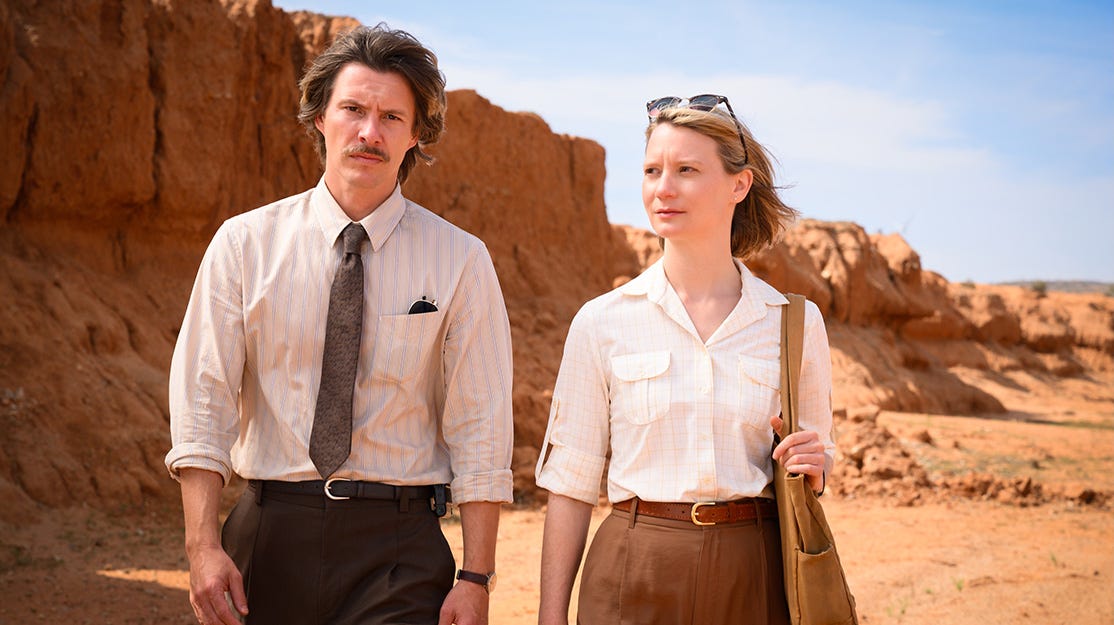
The six-part series, which debuted on Australian streamer Stan in June, introduces Detective Georgia Cooke (Mia Wasikowska) and her partner, Detective Michael Thorne (Xavier Samuel), who are drawn into the inexplicable investigation of four murdered scientists at the titular research facility. The mysterious case drags her into a decades-long spiral of obsession and estrangement, fracturing her grip on reality and costing Georgia her career, her family and ultimately her freedom.
With the series now airing across Europe on HBO Max, I spoke to Jenkins about his path from comedy writing to drama and how he pieced together the mystery at Parrish Station.
Read on to find out:
⦁ Where Jenkins started his writing career and the origins of The Killings at Parrish Station
⦁ How his sketch writing skills inform his writing process
⦁ Which scene he wrote first and how it led him to turn the central crime into a myth
⦁ Who Jenkins worked with in the writers room and what the hardest part of writing the series was
⦁ How involved he was through production – and his interactions with the art department
⦁ What lessons he’s learned from making the series
⦁ Why ignorance might be bliss when it comes to writing television drama
Comments
Nothing yet. Say the first thing.
Sign in to join the conversation.