
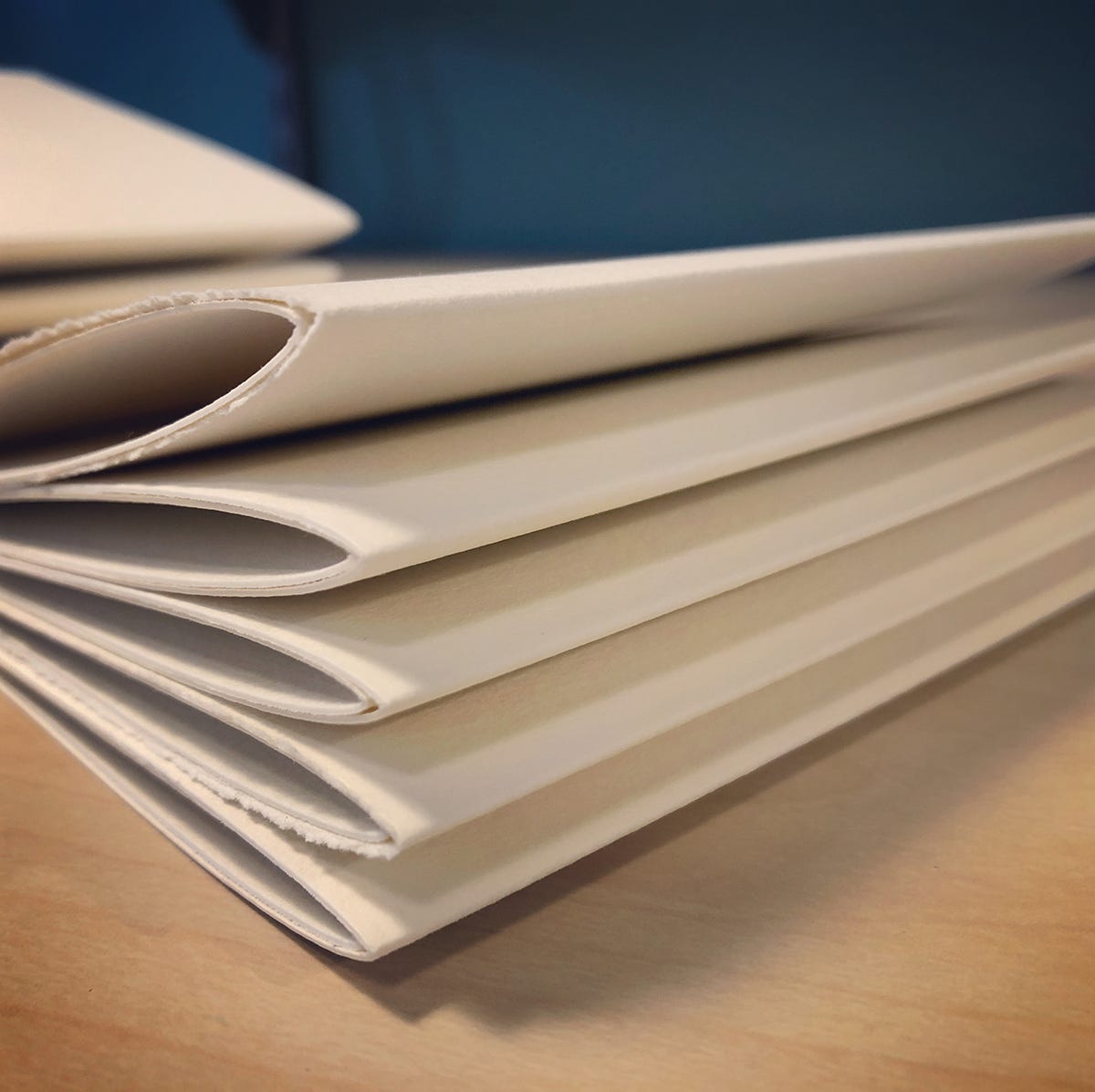
Before I started making books I thought paper was a relatively simple thing. Sure I knew there were many kinds. More, or less it, made sense that there should be paper for copiers, paper for writing, a bunch of different kinds of drawing paper, newsprint etc. That was only the tip of the paper iceberg. There is so much more to the world of paper. Stepping into the world of book making has started to open my eyes to the nuances of paper. Today I’m going to focus on what I know is the beginning of my paper journey. I’m going to tell you about what papers I’m using to make my books. What’s on the covers and in between them. Also a little bit about why I’m choosing to use these papers. I fully expect as I grow my skills and knowledge I’ll change up what I have no doubt that I’ll be making a part two to this post one day. For now, though, let’s begin.
Paper is the main reason I started making sketchbooks. I couldn’t find 100% cotton watercolour paper sketchbooks when I started urban sketching seven years ago. Why does this matter? First off, there is nothing wrong with pulp papers. There are many great pulp papers. The companies that make them do a great job of creating papers that are archival, acid free and sustainably managed. But for someone who loves to paint with watercolour, cotton is the paper of choice for me. No contest. It’s absorbent and it allows the watercolour pigments to create all types of effects on the surface better than pulp papers can. I say this with the disclaimer that if you get the results you want out of a pulp paper then that paper IS the best paper for you. For me, though, pulp based papers aren’t my favourite for watercolour, or many other watercolourists. They tend to warp easily and the water and colour sit on the surface almost in a bead before they soak in. This gives it too much time to do something you don’t want. It’s fine if you want to add some colour quickly and fairly dry. The mixed pulp and cotton papers are my second choice if I can’t have 100% cotton.
At a loss to being able to find a cotton paper sketchbook I finally decided I would make my own book. I had experience building many “prop-ified” books for theatrical productions in my role as a props artisan. I had learned all sorts of bits and pieces about book building over the years so I could make books to stand up to the abuses of being on stage. That’s a story for another time. So I wasn’t deterred by learning to build a proper book. I was sure with some good resources and practice I could make what I was after. As fate would have it, I discovered a woman online teaching a class on how to make your own sketchbooks with any paper you want. It’s exactly what I was looking for.
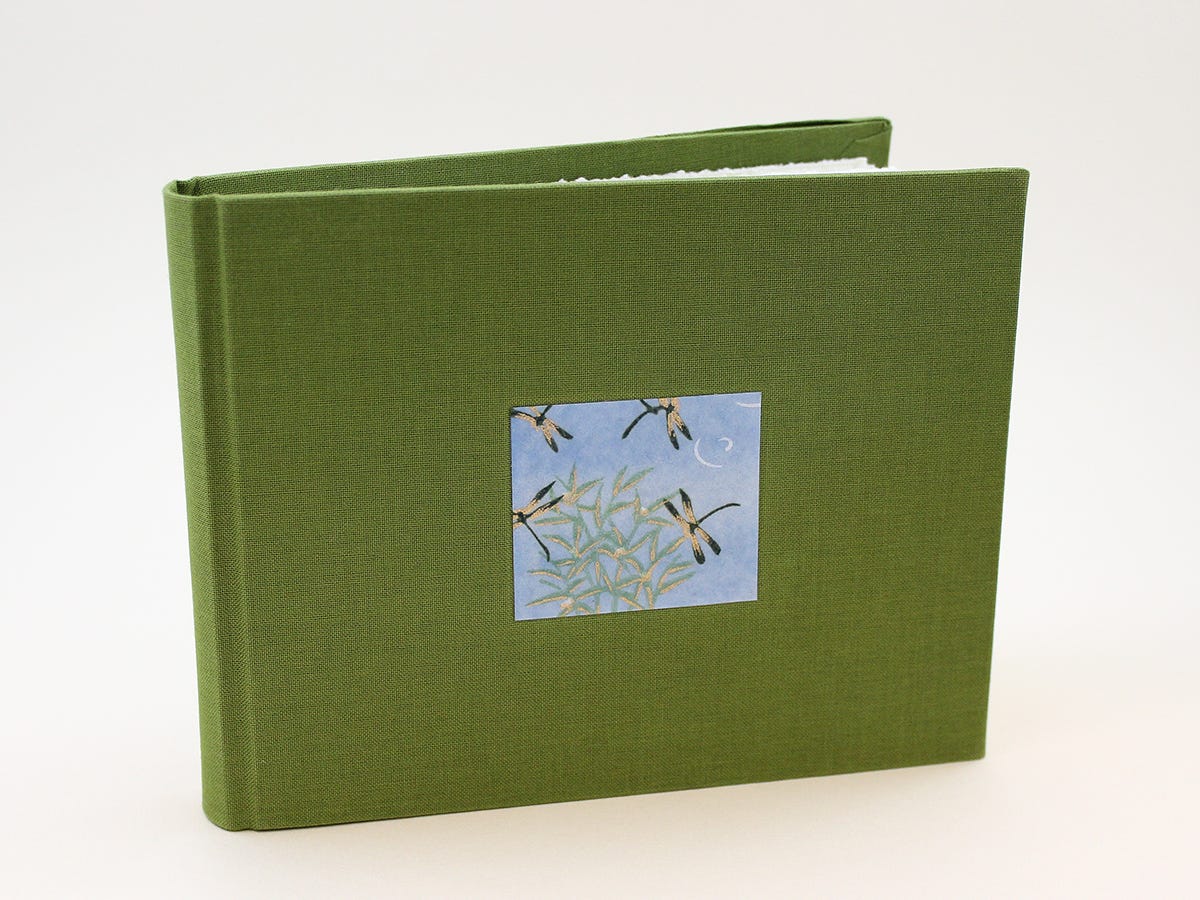
The books we learned to make were cloth covered and strong. It taught me a great deal about the parts of, and construction of, a book. It also gave me the confidence to experiment and try new things with book construction. The first books I made for Dragonfly Book Press are still my favourite style of book for sketching . They are strong, durable and have fun patterns. They do take a lot longer to make so I tend to only make them as a Made to Order option now. Occasionally, a few will show up with in my regular line up of Ready Made books. For the effort involved, though, I’d rather make a custom book to ones liking than try and guess and just hold onto stock.
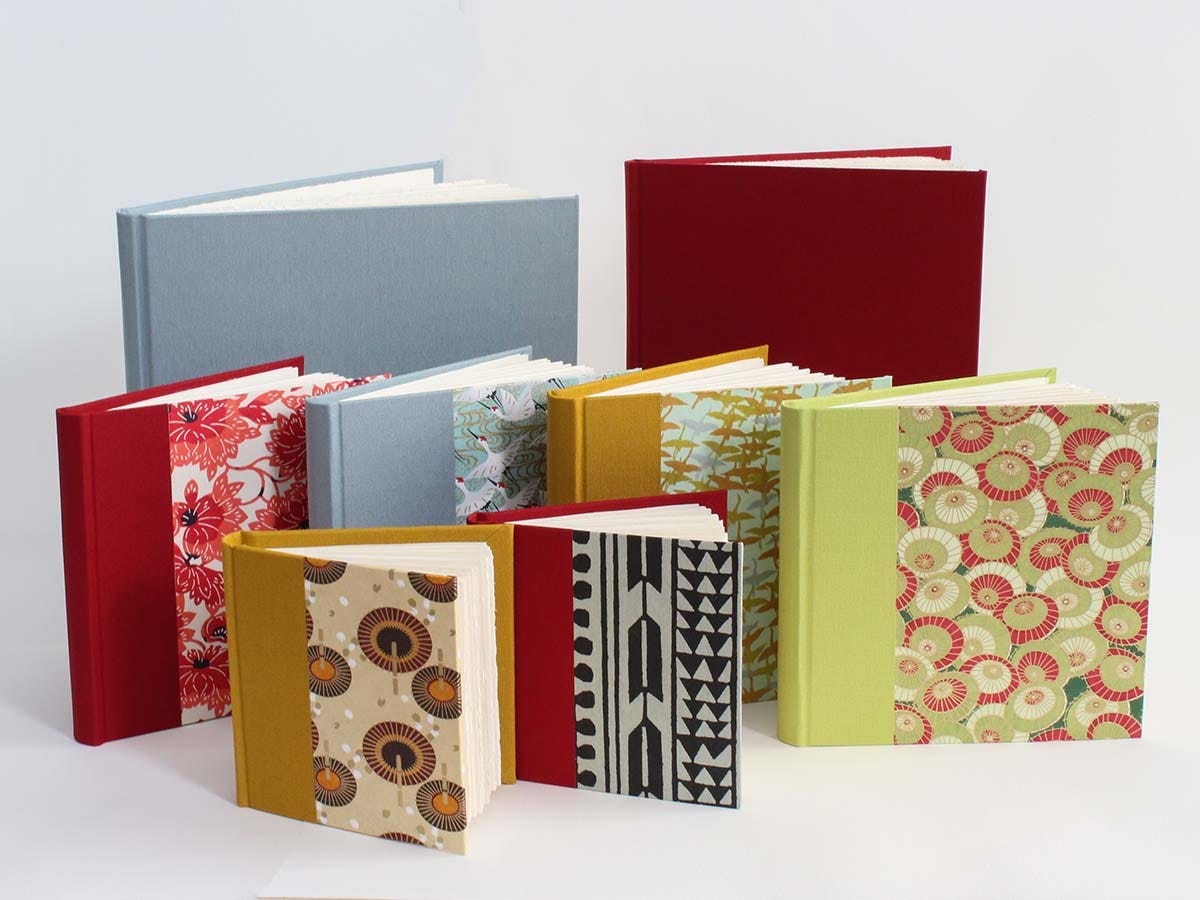
I always felt that if I was going to the trouble of making a book I should make the covers unique. Right from the beginning, I have been in awe of handmade decorative papers. Asian paper makers have a rich history of making thin, strong papers that are ornately printed. Both the making of these papers, and the printing, is still performed by artisans that have learned their skills from master craftspeople that came before them. In my mind, a handmade book deserves to have its covers graced with the work of other artisans working by hand also. A Japanese paper is a dream to handle when wetting it and wrapping it around a board. If I could only work with one type of paper forever I think this may be it. Bold words I know. That being said, I do love trying new things so maybe I’ll change my mind on this. I’m starting to explore and familiarize myself with papers from India and paper made from plant fibres of all types. Time will tell if an new favourite emerges.
Here are the types of cover paper I’m working with currently.
Chiyogami Paper
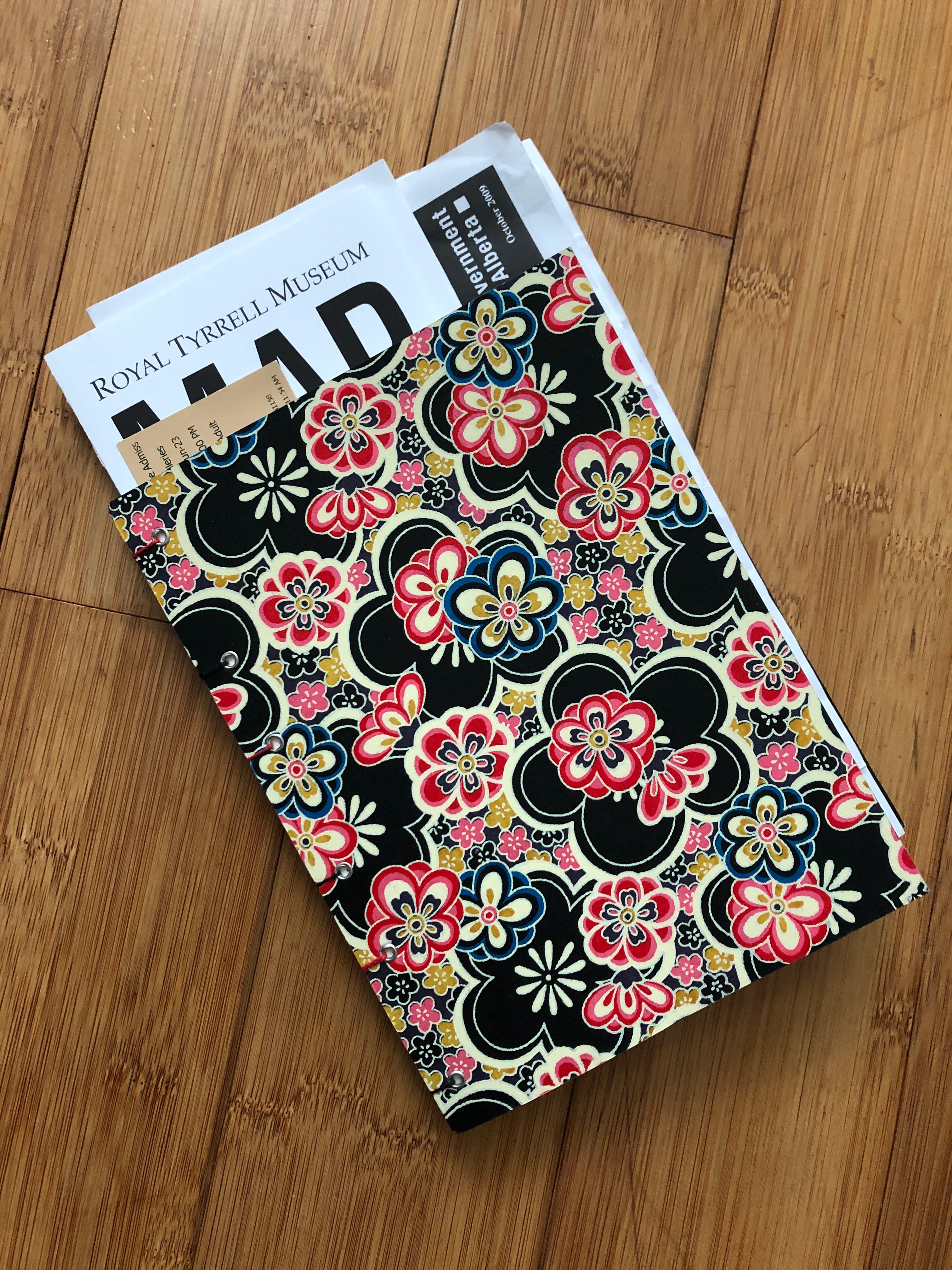
Chiyogami paper is a “widely popular decorative paper that is hand-printed by silkscreen in several small studios around Kyoto, Japan. Made with a traditional base using Kozo, Mitsumata and Gampi fibers, Chiyogami is so strong and durable that you can sew on it and use it in textile art.” With huge selection of traditional and modern patterns there is no shortage of choice with this paper. And, yes, I want to use each an every one of them one day. These covers may look delicate and pretty but this paper is amazingly strong and durable.
Katezome-shi Paper

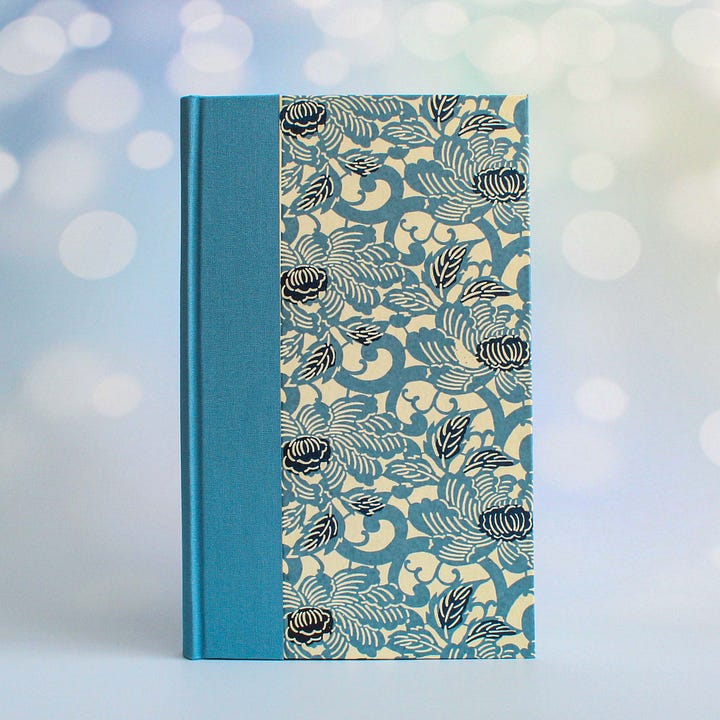
“Katazome-shi means, literally, stencil-dyed papers (also referred to as Wazome). Based on traditional kimono-printing techniques, these beautifully patterned papers were developed in the twentieth century. Producing these special papers is extremely time-consuming and a true art.” These papers are “matte” and don’t have the same sheen as the chiyogami papers but I love the patterns. They have a more limited selection of patterns but most have multiple colour variations that make them feel all very different from one another. Again. Strong and flexible when wet. Wonderful to work with.
Lotka Paper
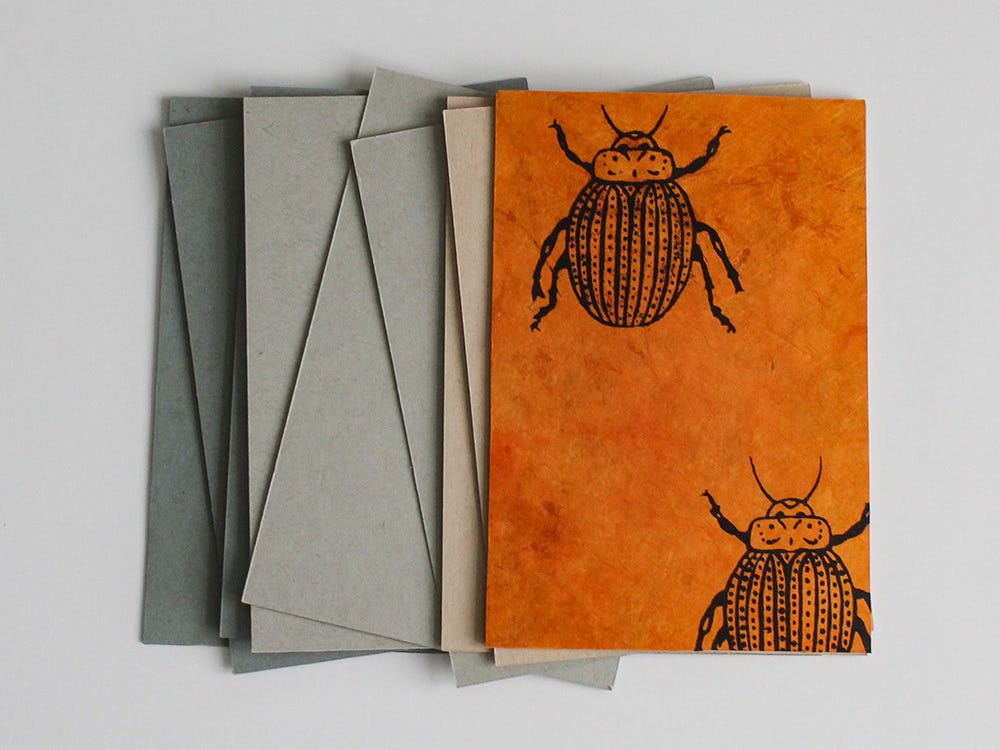
“Lokta paper has been used in Nepal since the 12th century, when it was used to write epic tales, to print mantra for use in prayer wheels, and for religious texts chanted by Buddhist monks. Until 1959, Nepal used this paper for all official government correspondence, and even today it is used for all of their land ownership papers (lal purja) and legal documents.” It is made from the fibre of Daphne Shrub or Lokta Bush. Japanese paper had me curious about papers made with long fibres and how much stronger and flexible they are compared to pulp papers. Lotka papers have me interested in learning about paper made from other plant fibres and how that can be localized. Don’t be surprised if one day you see me making covers that use locally sourced plant fibres. I find the Lotka paper to be a strong paper but a thin one compared to a Japanese paper. It’s fairly strong when wet and a bit translucent.
Ok. Let’s, finally, talk about the paper inside the books. There are probably hundreds of different sketchbooks on the market. I can’t compete with the volume of books that can be made by a machine. Not only do I not want too work that way, why recreate something that already exists en masse. My focus is on making books that have papers inside them that you can’t find in bound form. It’s the whole reason I started making books for myself and what makes what I do unique.
What are these papers then?
Traditional White Papers
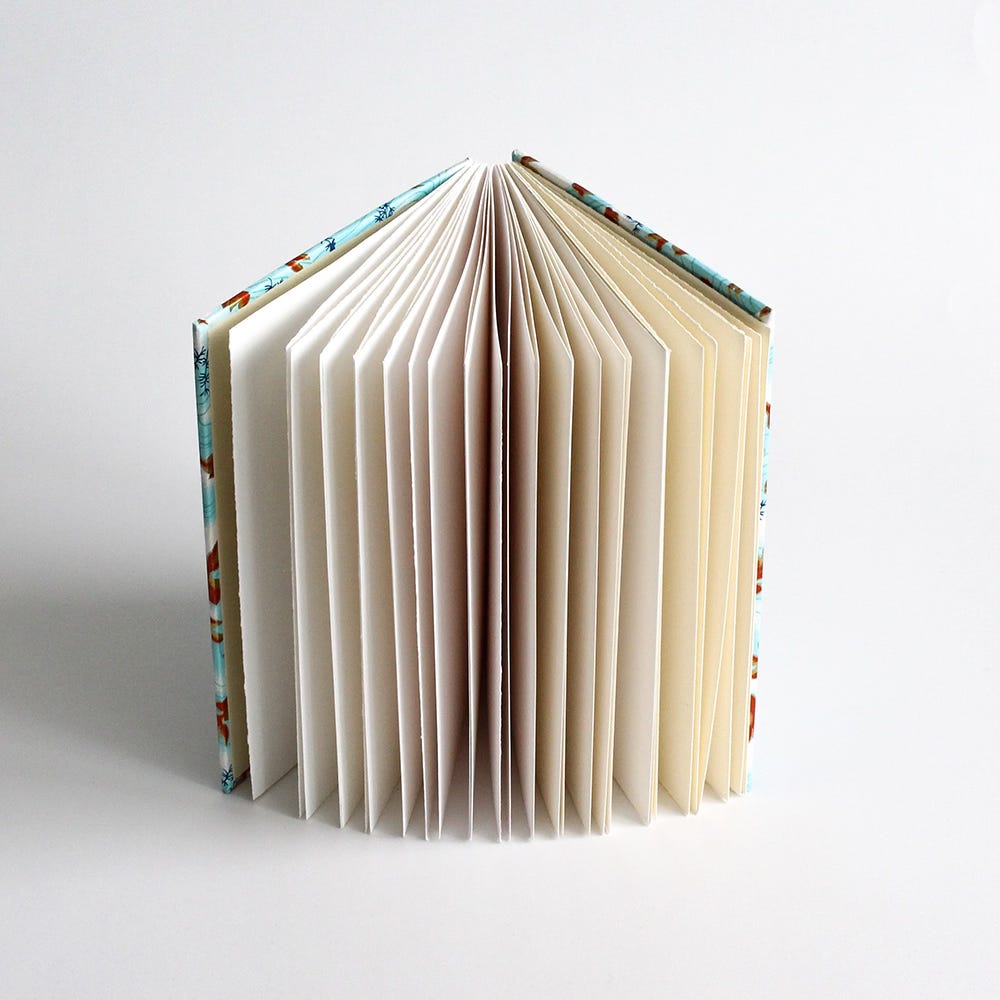
Saunders and Waterford- comes in a hot press, cold press and rough grain finish. In simpler terms this refers to the surface texture of the paper. This is my personal favourite paper to paint on. It’s 100% cotton watercolour paper. Rigid but still a bit soft. The texture on the cold press paper isn’t too rough for my liking either. A fountain pen or fine liner can still run fairly nicely over it. It comes in blocks and sheets. No bound version of this paper. Not even a coil bound. It’s a really wonderful watercolour paper to work with and the whole reason I started binding books this way.
Arches- comes in a hot press, cold press and rough. Available in sheets and blocks. Some would say this is the watercolour paper of watercolour papers. Coveted for use by watercolourists. This paper is a bit more rigid and textured than the Saunders paper. I find it’ll crack a bit in the heavier weights when folding but not much. It too does not come in a bound form so having a sketchbook made with this paper is a real treat.
Fabriano Artistico- come in hot press, cold press and rough finishes. Available in sheets and blocks as well. Fabriano has a variety paper options available in student and professional grades. This paper is beautiful. It is worth the price point. I love it as watercolour paper but coloured pencil artists also love it for the layering you can do with it. I don’t offer this paper as a regular option on my site only because I haven’t found a source for purchasing it that doesn’t just rob me on shipping. When I do look out! It binds beautifully like the Saunders paper.
Toned Papers
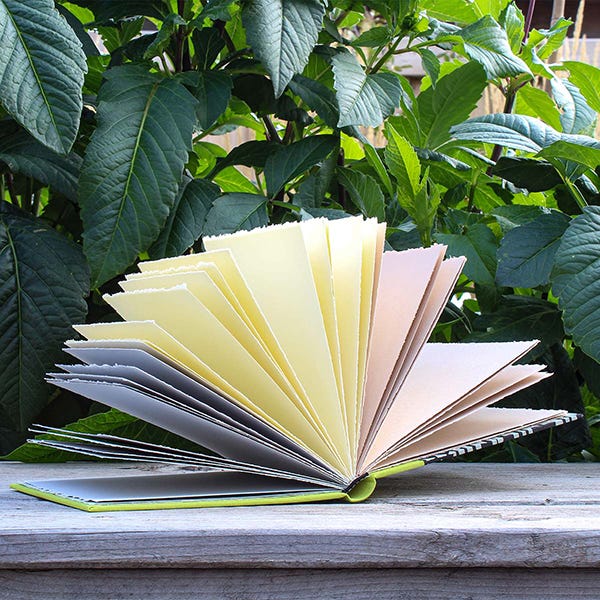
All those great toned papers come in sheets and pads. Hardly any are in bound form.
Strathmore paper is one of the exceptions papers in my paper arsenal that does come coil bound. The toned grey, tan and blue can be found in coil book form easily. They exist in bound form sometimes but are not always easy to find. With these I like to make combination books that contain a more than one tone bound together. These are also pulp papers. Great to use with a range of media so they escape my 100% cotton rule.
Stonehenge paper 100% cotton. Available in sheets and pads for some tones only. This paper is super soft and comes in a variety of tones like grey, tan and a lovely soft pink called Fawn. Originally a printing paper, it’s really nice to use with soft graphite, coloured pencil and paint. They also have a black watercolour paper that is a great way to step outside of the traditional toned drawing and use it with trendy metallic paints, markers or gouache. A little finicky to not “scratch” when binding the black but a teflon folder usually helps me with that. In general it binds up easily and adds a fun new element on the sketchbook front with its colours.
Canson Mi-Teintes Pastel Paper has been used by almost every artist at some point. It’s the first paper that I decided to bind that strayed from the 100% cotton category. It does have a high cotton content but that’s as close as I was able to find out what the ratio of pulp to cotton is. This paper is what inspired the idea of multi paper books. Comes in sheets and pads. A decent mixed media paper even though it isn’t billed that way always. This paper is also fun to sew when each signature is a new colour. It looks especially nice on books with exposed spines.
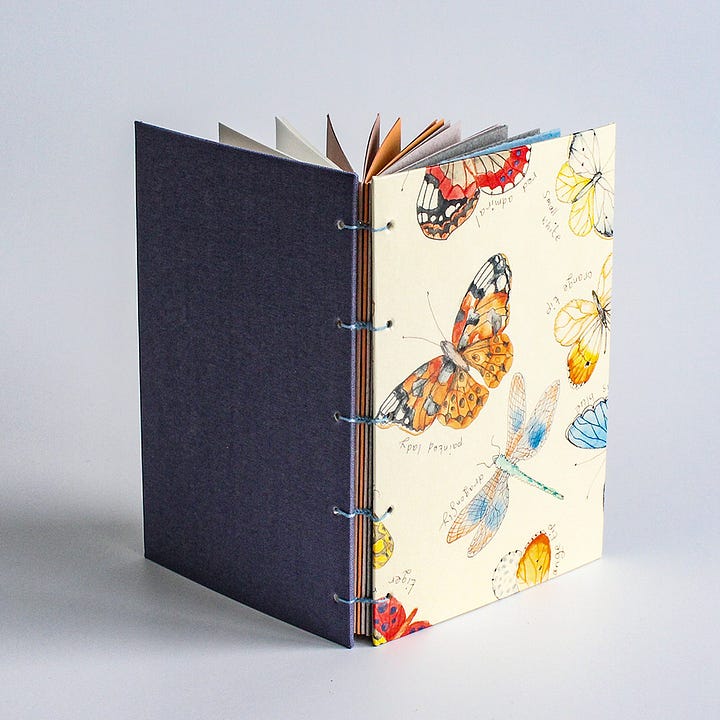

There are so many papers out there. As I’ve already hinted there are a number of Japanese papers I have yet to work with. The world of fruit fibre papers and other plant fibres is beckoning me to learn more. There is a whole world of printed decorative papers from historical pattern sources starting to find a spot on the market and I haven’t even dipped my toe into paper marbling yet. I think you can see where this might all be starting to go. :)
What about you? Do you have a favourite paper? One you loath? Leave me a message on this digital paper about your feelings about physical paper.
See you next post,
Angie
Thank you for reading Dragonfly Book Press. This post is public so feel free to share it.
Comments
Nothing yet. Say the first thing.
Sign in to join the conversation.