
My personal relationship with AI is quite paradoxical. What’s yours like?
I’ve been both appalled and fascinated by AI, just like I am with kerosene burning, climate-destroying airplanes that are also incredible marvels of human engineering.
Think about it. Steel that flies?
Computers that think? Wow.
It also terrified me that when asked what his greatest fear in relation to AI was, Geoffrey Hinton —often called the “Godfather of AI”— replied:
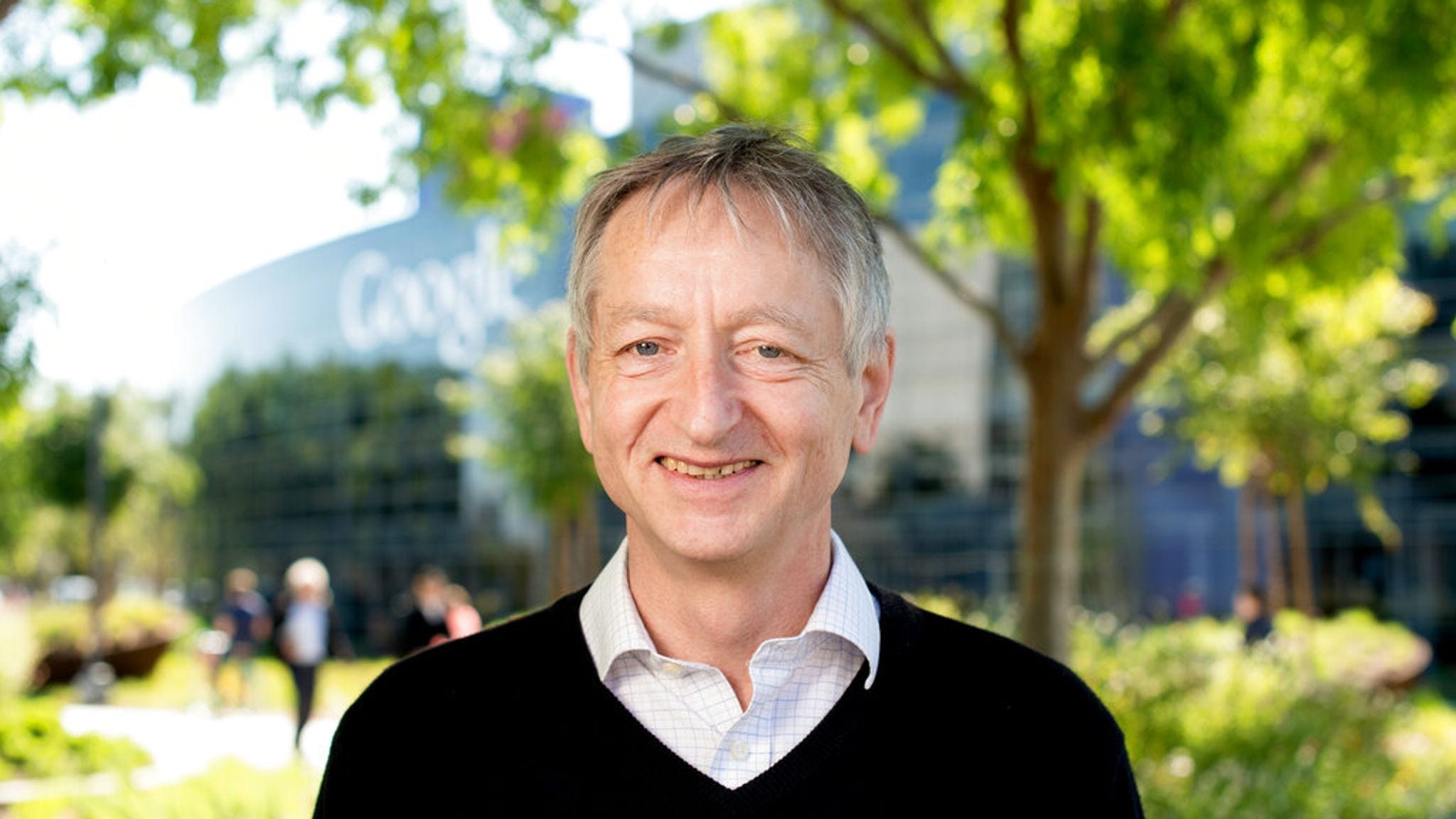
“My greatest fear is that humanity
will turn out to be just a passing phase
in the evolution of intelligence.”
While I believe it would be far better if AI didn't exist, I also have a very easy time getting great results out of it because I’ve explained for the past 20 years what I wanted as a creative director.
While a year ago I sneered at the term ‘prompt engineer’, I have come to realise that the richer the given context window and the more specific the prompt, the better and more useful the results will be, especially with newer models.
However, while I’ve successfully used AI in an assistive capacity, using it still feels like dancing with the devil and you will never see me celebrate AI as the greatest thing of technological progress — it really, really isn't: just ask Ed Zitron.
Rockets can take us very far very fast, but they are also dangerous and emit a lot of toxins, just like AI is very dangerous and uses incredible amounts of energy.
So, was it really needed to attach some AI rockets to our already overstimulated, overworked minds? Was it necessary to create technology that replaces human labour, the arts in particular?
Where are these rockets taking us?
How are human cultures, thinking and experiencing being influenced by AI and where might this be going? I believe it’s important to talk about ‘AI illusions’, the reality-distorting effects on our lives.
Google searches, powered by curation AI, already had meaning-shaping effects on us all, because the links that Google curated were never neutral to begin with. Every algorithmic choice that leads to a single certain URL at the magical top of search results is a choice that excludes millions of other relevant URLs.
Personally, I believe it’s a grave democratic injustice that Google’s (and Meta’s) algorithms aren’t public domain, given how powerful they are in directing human attention at a mass scale.
AI takes the ‘hidden guiding algorithm problem’ quite some steps further, because the AI-vectors that determine the outputs of AI aren’t human-readable by anyone, not even to the makers of AI.
While some people at Google know the search algorithm intimately, no one does when it comes to AI, because AI is ‘grown’, rather than programmed.
Yes, neural networks are black boxes—to everyone.
Apart from the fact that neural networks are not human-readable, which means that no one really knows why AIs make the choices they do, there’s also the possibly unsolvable alignment problem, that by far doesn't get enough attention in public discourse, while being on the minds of probably most core AI-developers.
In a way, AI is like an autistic savant locked in a basement with broadband internet. It informationally knows everything about everything, while never having tasted the classical cuisine it can talk about so beautifully. AI is a disembodied intelligence and therefore inherently lacks empathy I believe, because knowing pain is essential for developing empathy.
On top of all of that, different AI companies are witnessing how complex AI-systems are showing serious signs of deception towards humans.
Should we surrender to the existence of AI because it’s here or should we avoid it at all costs? Well, that’s up to each of us, but I do have some ideas on this.
I teach my teenage kids that —although they want to— they shouldn’t entirely avoid all things AI, because this is now a part of their reality. Also I tell them to always hold a healthy distrust against AI since (depending on which research you look at) their outputs are wrong a staggering 20 to 50% of the time.
Imagine working with someone that lies that much with so much explanatory confidence all the time, every day.

The rather nihilistic French philosopher Jean Baudrillard inspired the Matrix trilogy with his book 'Simulacra and Simulation' (1981), in which he describes a state called 'Hyper Reality', where there are 'referents without sources', in other words: conceptual objects we experience as ‘actual’, that are not meaningfully linked to anything in physical reality.
Now consider AI influencers, virtual realities or cryptocurrencies for instance.
Learn more about Baudrillard?
Check out this podcast:
Baudrillard argues that people are unable to actually recognise the difference between physical reality and simulations and that these differences won't even matter anymore at some point, when we will prefer the simulations because they are so much more engaging, interactive and stimulating than the physical world could ever be. As a result of this changing relationship with reality, the ‘real world’ turns into a 'desert of the real'.
In 2025, take some screen-addicted kids into the forest and the birds and trees might be 'very boring' to them because nature is just so unresponsive and non-stimulating in comparison to the simulations on their screens.
Are we able to continue to see AI as simulated intelligences or will an increasing number of people eventually not care about the kind of intelligence they're interacting with, and use them for moral guidance and emotional support, for instance? Well, I’m guessing it’s highly likely that the scenario depicted in the film ‘Her’ is already happening today, as some people are developing special bonds with the AIs.
In fact, the proof is out already.
Well, I think we must take ownership of how we relate to AI:
Since AI exists, I believe that a healthy perspective on it is important. While I completely understand the total rejection of AI and I'm less favourable towards a full-on adoption, rejecting reality however it is, is rarely a good idea. Perhaps neither fearing nor being enchanted by AI is healthy.
I think it’s important to set clear principles and rules for ourselves. What are the AIs to us and what are they not? What meanings do we ascribe to them for ourselves? If we use them, how do we never use them?
Collectively, I think we should now focus heavily on digital literacy and make it include ‘digital mindfulness’, through which we can stay in charge and maintain agency as humans.
We need to continue to consider how we can secure our free and critical thinking skills as much as we are able to. I would say that book reading is more important than before.
I might drone on about this in future newsletters, but I can’t stress enough the growing importance of getting physically together at every opportunity we have. Just consider the difference between a Zoom call and a meetup.
The real world is always available to us.
Always remember that a lot of freedom can always be enjoyed, by simply stepping away from our devices when exploring nature and spending time with loved ones, right in the here and now, in the physical world.
So… go touch some grass 🌾
Psssht: this article is real in the sense that it was hand-typed by me, a Homo Sapien. It’s also a simulation because it’s entirely built with letters, words and sentences, which are only symbolic simulations of reality.
The word ‘cow’ is not a cow.
I hope you still enjoyed reading it ;-)
Comments
Nothing yet. Say the first thing.
Sign in to join the conversation.