
Yes — if you start out in the gutter.
When I was 41, I had my biological age measured via DNA methylation. It came back as 59.
I had just sold Stories and I was exhausted. Still, it was a slap in the face.
That’s when I finally started doing, systematically, what I’d now call “Longevity Level 1.” The foundation is painfully ordinary: sleep, exercise, and diet. No magic — just the big rocks.
Back then I set a fairly restrictive diet (no sugar, lactose, gluten), lost almost 20 kg (44 lb), and started paying more attention to meditation, sauna, and supplements1. But I still think sleep, movement, and diet easily account for ~80% of the total Level 1 effect. With a few years of steady, “boring” basics, my biological age dropped about 20 years, largely from compounding good habits.
So we could stop here.
Except biological age is mostly about how fast the body ages as a whole — not, for example, the state of the arteries. And that’s where heart attacks get decided. A person who seems “completely healthy” sometimes drops dead in their fifties — and it’s not rare. So what next? We need to look at the body in much higher resolution.
This is not medical advice.
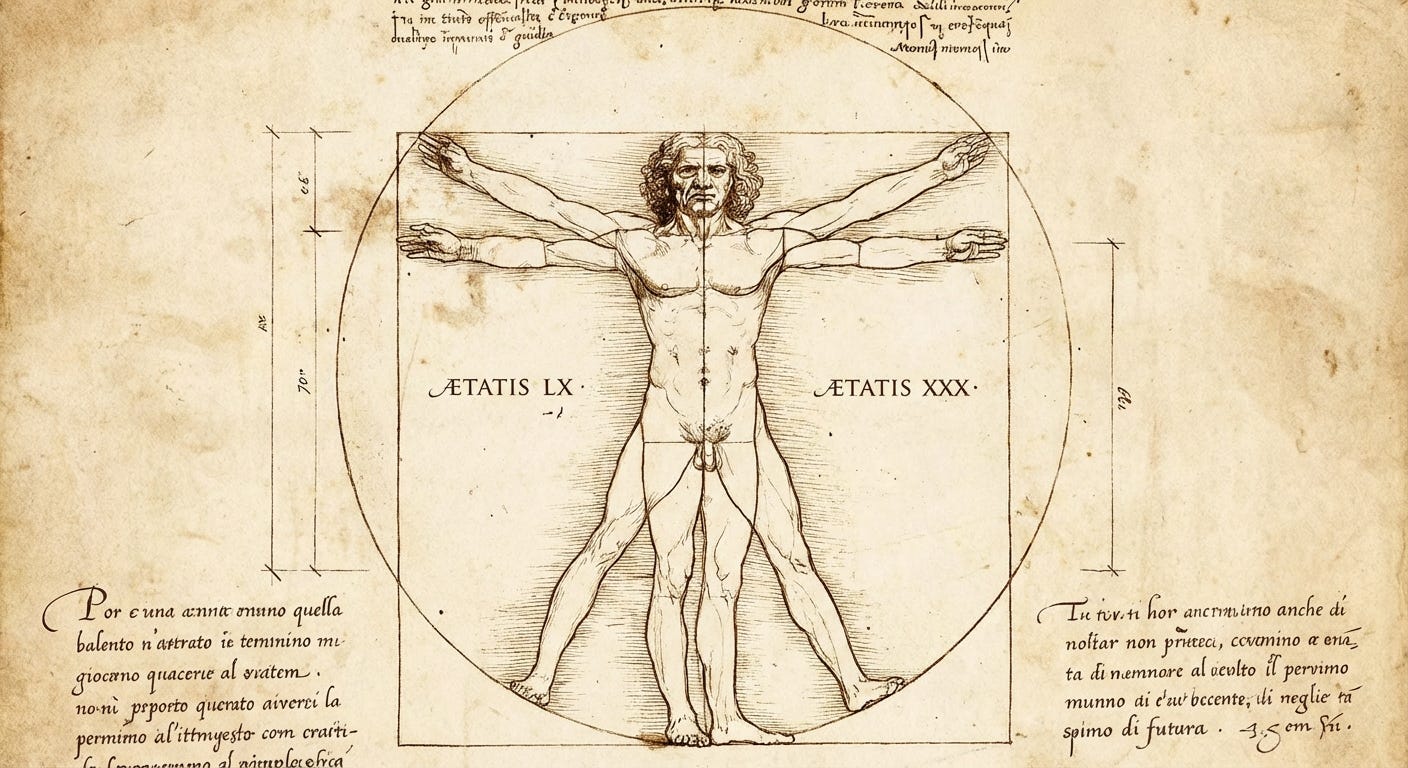
I’ve been around longevity and biohacking for over a decade, watching the scene with its strengths and weaknesses — from Ferriss through Johnson to Attia, and the Europeans (Teemu Arina, Siim Land). What I take from them most is long-term measurement (I have time series across 150+ biomarkers)2, attempts to slow the pace of aging itself (measured, for example, via DunedinPACE), a detailed organ-by-organ view, and genetics. And on top of that, I add AI.
With ChatGPT, one can build a simple system: convert all test results from PDFs into CSV, adding genetics (not just the summary pdfs, but a data dump with ~600k genetic variants), and then run several ongoing conversations on top of that. The most important ones, for me, are about the health of ~30 organs (including which additional tests they “want”) and the main longevity-related risk factors. That’s how I prioritize what to focus on. A similar functionality is now accessible in the Holohabits app by Teemu Arina and Hololife Center (disclosure: I’m an investor), where you can buy well-designed at-home tests and then have the results interpreted by an AI trained on their proprietary content.
The most useful part for me was the risk analysis. It told me what is true for most people: cardiovascular risk is #1.
And that in fact surprised me. My LDL had been elevated for years prior (gradually up to 5 mmol/L), but for about a year and a half I’ve been on Leqvio — an RNA-based shot given twice per year. With it, my LDL dropped to about 3 mmol/L, i.e. a range that’s commonly considered “normal.” So I considered my lipids solved.
But even at those levels, the analysis still kept flagging cardiovascular risk as the main problem. There are people who claim LDL doesn’t matter, and people who say it can even be “too low.” I’m now closer to Peter Attia’s view: the lower the LDL in your blood, the better. LDL around 3 may be considered “normal,” but from an atherosclerosis perspective it’s not low enough — plaques still form at that level. If we want them to at least stop growing (and ideally shrink), LDL must drop below 1.4.
So the question became: how to get there without higher statin doses, where I’ve long had doubts about side effects? This is where personalized medicine begins. With ChatGPT, we ranked options based on my genetics and started iterating:
hypothesis → test before → intervention → test after → dose adjustmentDoctors were surprisingly open and prescribed what I asked for.
The very first hypothesis hit perfectly: based on genetics, I should respond strongly to ezetimibe, so 10 mg daily should lower my LDL by 40–50% with minimal side effects. That’s exactly what happened.
The next trick was microdosing a statin. The usual “lowest” dose is 10 mg daily (often more), which may bring muscle pain and other annoyances. ChatGPT found a small study where 2.5 mg once every two to three days — roughly one tenth of the typical “lowest” daily dose — produced about 60% of the effect of 10 mg daily. That felt worth trying.
Final result: the combination of Leqvio, a minimal dose of ezetimibe, and a microdose of rosuvastatin brought my LDL from 5 down to 0.8 mmol/L, ApoB to 0.5, and PLAC to 75 (basically optimal values). Lp(a) is important too, but largely genetic and stable, so a single measurement is usually enough to assess the associated cardiovascular risk.
After years of elevated LDL, it’s also useful to check for any existing plaque via coronary CT and Cleerly, which analyzes the CT images using AI and distinguishes stable versus risky plaques.
This process significantly reduced my main risk — atherosclerosis and heart attack. I know someone “apparently healthy” who recently had a heart attack in their fifties. Their LDL was around 4, Lp(a) was high, and they started with statins only after the event. They survived — but this kind of risk can realistically shorten life by decades.
This is, in practice, the essence of individualized medicine and longevity. Not waiting for a magical drug that will “solve aging someday,” but detailed data and a system: goal, hypothesis, test, intervention, another test.
This approach also offers more autonomy. Many doctors see LDL 3.0 as “good,” don’t have the time (or data) for genetics, and don’t have room to fine-tune statin microdosing or run CTs through AI. That’s something one can largely only do independently — and then bring doctors in as partners and validators. This n=1 approach is, in my view, fully legitimate today and probably optimal: individual body, individual therapy.
The same tuning loop can be repeated for other risks and organs. That’s how we move beyond Level 1 (sleep, movement, food, supplements) into Level 2: detailed tests, genetics, AI, and targeted interventions. And then there’s Level 3 — system-level interventions into the aging process via newer, less-tested approaches: rapamycin, metformin, peptides, klotho, HGH, plasma filtration, telomere lengthening, stem cells. That gets more expensive, more experimental, and riskier. I may dive into that another time.
For now, my conclusion is simple: Level 1 does a lot. Level 2 does a lot. We don’t have to wait for miracles from Level 3.
Merry Christmas — and good health.
The mix changes over time based on blood tests, but some staples tend to stick: high-polyphenol olive oil, omega-3, a B-complex to support methylation, creatine, and citrulline for NO production.
for general bloodwork in Prague, Synlab works well — as a self-payer you can choose from hundreds of markers
Comments
Nothing yet. Say the first thing.
Sign in to join the conversation.