
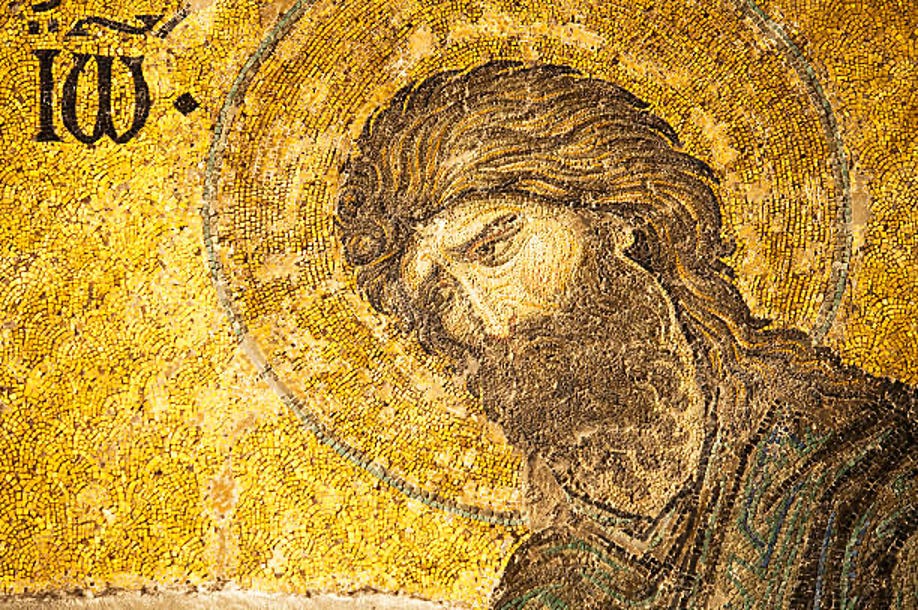
Hagia Sophia
Mercifully, the “Happy Holidays” season is behind us. That sorry abstraction is not a polite nod to the fact that there are Jews celebrating Hanukkah as Christians prepare to celebrate Christmas, or to the fact that pagans celebrate a new year while Christians, whose new year begins a month earlier, are still celebrating Christmas. It is a nod rather to the multiculturalist’s monoculture, to the secularist’s determined indeterminacy. Not only is the secularist not a Christian man, he is a man who will not allow the man who is a Christian man still to be a Christian man. He will not wish him a Merry Christmas. Far more importantly, he will look the other way when this man is persecuted, as Jimmy Lai is being persecuted in Hong Kong, or slaughtered, as Christians in Nigeria are being slaughtered. As for the man who is a Jewish man and not also a Christian man, he is allowed to be a Jewish man, but he doesn’t get a Happy Hanukkah. What he gets is public permission for mobs to clog the streets calling for global intifada against him. No indeterminacy there, or at Bondi Beach; but plenty of dissociation, in both the popular and the psychiatric sense.
The Catholic Church, for its part, does not celebrate holidays in the abstract, holidays from which all that is holy has been removed. It celebrates named feasts and solemnities, devoted to very specific events in the life of Jesus or to particular martyrs and saints. With the Christmas octave complete, it enters a new octave, Epiphany, in which is celebrated (as the old missal tells us) “a triple manifestation of Christ: to the Magi, that is, to the Gentiles; in His Baptism, when the Voice from heaven declared, ‘This is My Beloved Son’; and in the miracle of changing water into wine at Cana.” In these three manifestations, respectively, the divinity of the Messiah is made plain to representatives chosen by God from among the nations, from among the people of Israel, and from among Jesus’ own family and friends. Each entails a sign from heaven that the Creator and the Christ are one, and that God, to his own glory, has determined that “at the name of Jesus every knee should bow, in heaven and on earth and under the earth.” Even the knee in New York, say, or in the New Quebec.
The Feast of the Epiphany is celebrated on 6 January, focusing on the revelation to the Magi. The ensuing Sunday is (in the calendar of the same missal) the feast of the Holy Family, which has its roots in a devotion cultivated by the Association of the Holy Family, founded in Montreal in 1663. (That historical detail is worth noticing, given the leadership the New Quebec has provided in confounding the family.) On 13 January, closing out the octave, is a commemoration of the Baptism of Our Lord. The feast of the Baptizer himself is not until 24 June, but it is fitting to reflect on him now, for it is in the context of Epiphany that his own greatness appears, and his littleness too. Both the greatness and the littleness are bound up with the appearance of that authority to which the Epiphany introit immediately points us: “Behold, the Lord the Ruler is come: and the Kingdom is in His Hand, and power, and dominion.” Or again, from the first after Epiphany in the older form, “Upon a high throne I saw a Man sitting, whom a multitude of Angels adore singing together: Behold Him whose empire is forever.”
To the secularist we say: that is our founding principle, which in no small measure and to no slight effect was operative in the founding of temporal dominions and democracies, morals and habits, arts and sciences, as in our common sense of dignity, honour, and justice. But we will not bore him further with the liturgical details of our celebrations, which he has happily or unhappily forgotten. Let us turn, as promised, to Saint Jean Baptiste and to the historic context in which he may be found, though in truth he is now to be found only in heaven; that is, in the realm of the blessed who behold God in his glory.
John the Baptizer was, of course, a Jew, like his cousin at some remove, Jesus of Nazareth. Most people think of the Jew as far too determinate and resent him for it. Some of his fellow Jews may have thought that of John. But John despised the spiritual indeterminacy of his own people, and called them on it. They were too much like the pagans around them. They did not honour God with all their heart, soul, mind, and strength. Some kept neither the letter nor the spirit of the law, others the letter only. Like pagans, they needed to convert and be washed. So he set about washing those who would convert. This he did along the banks of the Jordan, basing himself perhaps at what is now known as Al-Maghtas, in the region where Elijah caught his heavenly chariot.
The religious authorities in Jerusalem, invested as they were in the status quo, asked John just who he thought he was and by what authority he did this. John the Evangelist records his answer:
And this is the testimony of John, when the ruling Jews [οἱ Ἰουδαῖοι] sent priests and Levites from Jerusalem to ask him, “Who are you?” He confessed, he did not deny, but confessed, “I am not the Christ.” And they asked him, “What then? Are you Elijah?” He said, “I am not.” “Are you the prophet?” And he answered, “No.” They said to him, “Who are you, then? Let us have an answer for those who sent us. What do you say about yourself?” He said, “I am the voice of one crying in the wilderness, ‘Make straight the way of the Lord,’ as the prophet Isaiah said.”
John’s crying in the wilderness was loud enough to evoke that kind of question. Was he “the prophet like Moses” who was supposed to appear in the latter days? Was he Elijah, returning from his heavenly sojourn to prepare the people for the coming of Hamashiach and of the kingdom of God? Was he himself the Messiah, who would bring about that kingdom and rule over it? John denied being any of these. He did not deny being sent by God to prepare the people of God for the coming of God.
Though the prelates in Jerusalem did not like his answer, they could not gainsay his authority. For what he did, he did quite evidently in the power of the Holy Spirit. John was not your ordinary misfit or some clever religious innovator. He was, the people were quite sure, a real prophet of some sort, and no prophet had been seen in Israel for many a year. He was, therefore, a force to be reckoned with politically, even by those who did not wish to wrestle with him spiritually.
After John’s death, his opponents would put the same question to Jesus. But Jesus, Luke tells us, sent them straight back to their unresolved dilemma concerning John.
One day, as he was teaching the people in the temple and preaching the gospel, the chief priests and the scribes with the elders came up and said to him, “Tell us by what authority you do these things, or who it is that gave you this authority.” He answered them, “I also will ask you a question. Now tell me, was the baptism of John from heaven or from men?” And they discussed it with one another, saying, “If we say, ‘From heaven,’ he will say, ‘Why did you not believe him?’ But if we say, ‘From men,’ all the people will stone us; for they are convinced that John was a prophet.” So they answered that they did not know whence it was. And Jesus said to them, “Neither will I tell you by what authority I do these things.”
It was acknowledged there and then, as it ought to be acknowledged here and now, that true authority comes from Almighty God, Maker of heaven and earth. But how does it come? By whom or what is it mediated? How shall it be recognized? This line of questioning, which was vigorously pursued in the messianic cauldron of first-century Israel, is not wrong, though it may go astray. Indeed, it is universally necessary. Authority matters. The legitimacy of a claim to authority matters. There can be no dispute about that, for no society, and no person within society, can function without some commitment to authority. But what is authority, genuine authority? Who holds it and where it can be found? What should be done in the face of competing claims to authority?
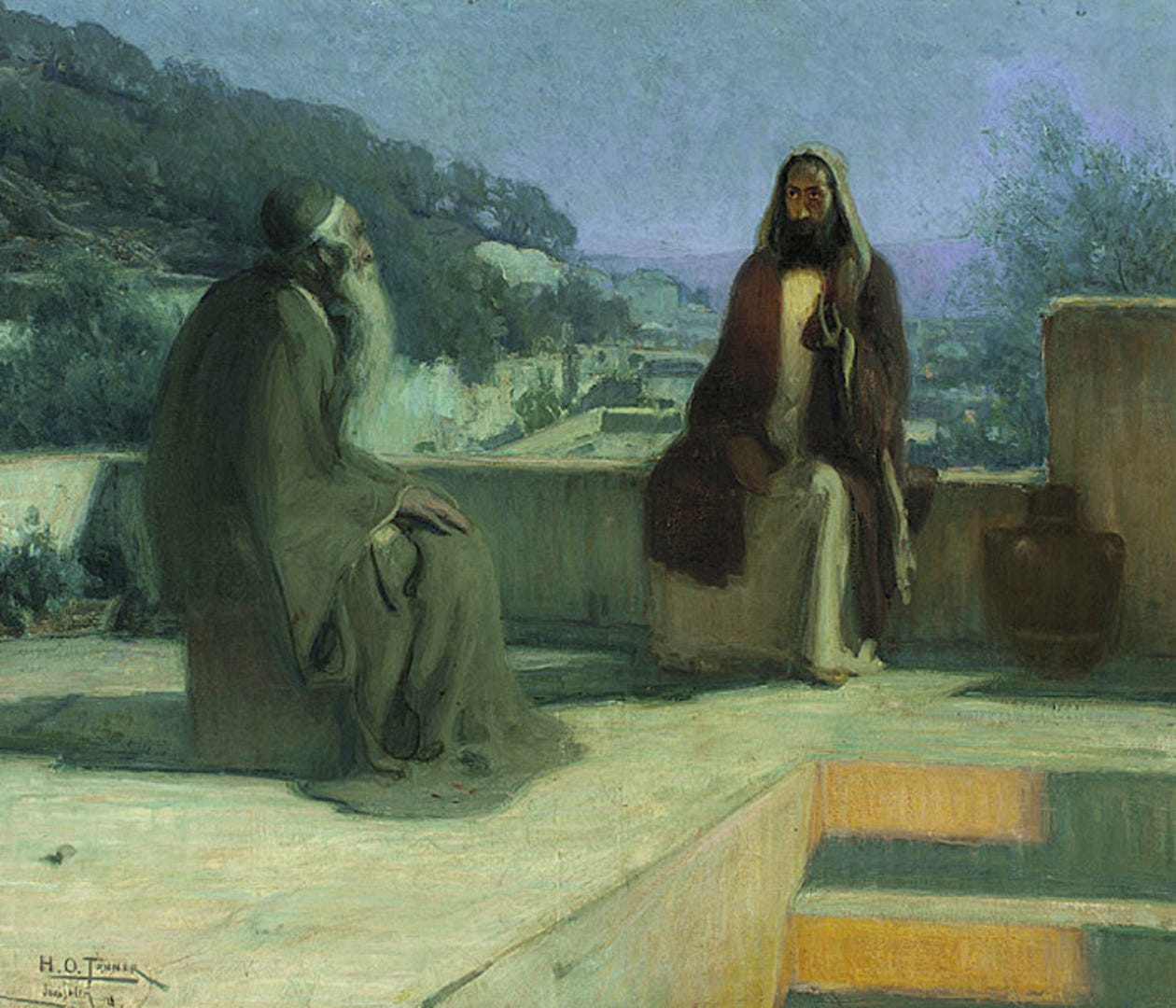
Nicodemus
Neither John nor Jesus believed that the ruling Jews were pursuing their questions sincerely. There were exceptions, such as Nicodemus. But for the most part these men had already decided. In the ministry of John they would not recognize the work and authority of God. They would reserve that work and authority unto themselves, whatever compromises they had to make with Rome, or with the royal family, to keep their hold on it. Jesus did not deny them any authority at all. Insofar as they expounded Moses and carried out the arrangements required in the law of Moses, they were to be respected and obeyed. But he would not explain authority to them on their own terms, which were false terms. Like John, he would demonstrate authority, and let those who were sincere recognize in his words and deeds the voice and hand of God. As for the men in question, they remained in doubt on one point. How were they to deal with those who did believe John and were now following Jesus? That was a political conundrum; the line between religion and politics is a porous one at the best of times.
John himself, to their relief, had been dealt with by the secular authority. The tetrarch of Galilee and Perea, Herod Antipas, had been faced with his own dilemma about John, when the latter rebuked him publicly for his impending marriage to the wife of his half-brother, Herod II. Antipas could hardly leave John running loose, undermining respect for his royal dignity. But neither could he bring himself, for fear of the people, to act more decisively by having him killed. So he settled, for the moment, on incarceration.1
In prison, John himself faced a dilemma. Despite having announced Jesus to Israel with those famous words that are still repeated in every Mass, “Behold the lamb of God who takes away the sin of the world,” he began to be puzzled about Jesus. Reports had doubtless reached him about the latter’s liberty regarding the company he kept, and about his use of parables that seemed sometimes to cloak, rather than to reveal, his meaning. Despite his many miracles and growing popularity, things seemed to go on in the cities and towns pretty much as before. Regime change in Jerusalem did not appear imminent. “The kingdom of God is within your grasp,” Jesus was telling the people, but as yet that kingdom had not arrived. So John sent his disciples to query Jesus. “Are you he who is to come, or shall we look for another?”
To this rare moment of indeterminacy in John, Jesus responded with charity and clarity. “Go and tell John what you hear and see. The blind receive their sight and the lame walk, lepers are cleansed and the deaf hear, and the dead are raised up, and the poor have good news preached to them. And blessed is he who takes no offence at me.”
To paraphrase: Be patient, John. The work of God is being done. And the kingdom is coming, to those willing to receive it. Men took offence at you. Do not take offence at me.
Now, lest we misconstrue this response, let us consider Matthew 11 at more length. I will supply the next three paragraphs, remarking on each in turn, though the reader does well to consider the whole as a whole in its own context.
The first of these paragraphs makes plain that Jesus, for his part, has no doubts about John. The question the religious authorities were so loath to answer, he answers without hesitation, upping the ante by challenging any lingering ambivalence on the part of the people.
As they went away, Jesus began to speak to the crowds concerning John. “What did you go out into the wilderness to behold? A reed shaken by the wind? Why then did you go out? To see a man clothed in soft raiment? Behold, those who wear soft raiment are in kings’ houses. Why then did you go out? To see a prophet? Yes, I tell you, and more than a prophet. This is he of whom it is written, ‘Behold, I send my messenger before thy face, who shall prepare thy way before thee.’
We must note here that Jesus has not, with John, referenced Isaiah 40, but has referenced rather Malachi 3, and that he has altered the wording of the latter to fit the context. That passage begins thus:
Behold, I send my messenger [מַלְאָכִ֔י] to prepare the way before my face, and the Lord [הָאָד֣וֹן] whom you seek will suddenly come to his temple. The messenger of the covenant in whom you delight, behold, he is coming, says the LORD of hosts. But who can endure the day of his coming, and who can stand when he appears? For he is like a refiner’s fire and like fullers’ soap; he will sit as a refiner and purifier of silver, and he will purify the sons of Levi and refine them like gold and silver, till they present right offerings to the LORD… Then I will draw near to you for judgment.
Jesus does two curious things with this already curious text, which seems to have two parties in view: viz., the emissary or herald who announces the visit of the God of the covenant to the temple in Jerusalem, where he will sit in judgment as master of his own house; and this God himself. The former, however, may be a composite figure or one that has multiple exemplars. That is not unusual in such texts. One might find in such a figure an allusion to Elijah, or to the Messiah, or to an Archangel, or even to the Angel of the LORD, who both is the LORD and is not exactly the LORD, whom even the heaven of heavens cannot contain. One might find an allusion to a pagan ruler such as Cyrus, before whom God himself would go to level the rough places. So it is difficult to be sure what or whom Malachi (the prophet whose pseudonym is “Messenger”) may have in view.
Jesus specifies the herald as John the Baptist. John, whom shortly he will link to Elijah, is the one sent ahead to survey the situation and to begin putting the house in order in preparation for the appearance of the Lord. But John sits in prison; he does not sit in judgment at the temple. John, in fact, abandoned his place in the temple for his ministry in the desert, in order to show Israel that, spiritually speaking, it was still wandering in the desert. So John does not fully fit the bill. Why then is Jesus appealing to this text at all? Why was he not content with the text (Isa. 40:3) that John had used to identify himself?
That’s one curiosity. The other is that Jesus alters the text in such a way as to insert a third party into its scheme of things. Where Malachi has God saying, “to prepare the way before my face,” Jesus substitutes “to prepare thy way before thy face.” In his rendition, it is as if God were addressing one who was already present with God in the planning stage, one who will come with or after the herald, to do what the herald could not do; indeed, to do what only God can do. And Jesus goes on to speak and act as if he himself were the one being addressed. The first thing John the Evangelist tells us about him is that he was with God in the beginning.
From his youth, Jesus was a voracious reader and prayerful ponderer of scripture. Malachi 3 may have put him in mind of a further passage in Isaiah, beyond that on which John had drawn. Isaiah, in chapter 63, faces us with another question of identity: “Who is this who comes … in crimsoned garments … marching in the greatness of his strength … mighty to save?” Who is it? It is God himself.
For he said, “Surely they are my people, sons who will not deal falsely.” And he became their Saviour. In all their affliction he was afflicted, and the Angel of his Presence saved them. In his love and in his pity he redeemed them.2
Yet they did deal falsely, and that right often. They habitually dealt falsely, as Isaiah is quick to admit. The chapter culminates, nonetheless, in a plea for a new and more profound salvation, a plea that could only be addressed if the divine potter were prepared to remould the clay into his own image and likeness.
O Lord, why dost thou make us err from thy ways
and harden our heart, so that we fear thee not?
Return for the sake of thy servants,
the tribes of thy heritage.
Thy holy people possessed thy sanctuary a little while;
our adversaries have trodden it down.
We have become like those over whom thou hast never ruled,
like those who are not called by thy name.
Isaiah 40–66 is, in essence, the promise of an answer to this prayer. On what basis? That to which God testifies in Malachi 3 : “For I the LORD do not change; therefore you, O sons of Jacob, are not consumed. From the days of your fathers you have turned aside from my statutes and have not kept them. Return to me, and I will return to you, says the LORD of hosts.” There must be, and there will be, true reciprocity, when the Angel of the Presence comes in person to perfect the covenant. He will anchor that reciprocity in himself.
Now I say all of that to say this: Jesus, Yeshua, “the LORD saves,” understood himself to be the LORD saving. It was through him that the clay would be remoulded and the house rebuilt and the covenant restored once and for all. John, therefore, was the messenger sent before his face, the face of Jesus, who was himself the face of God and the Angel of his Presence. With all their affliction, he would be afflicted. He himself would be consumed and, just so, he would save.
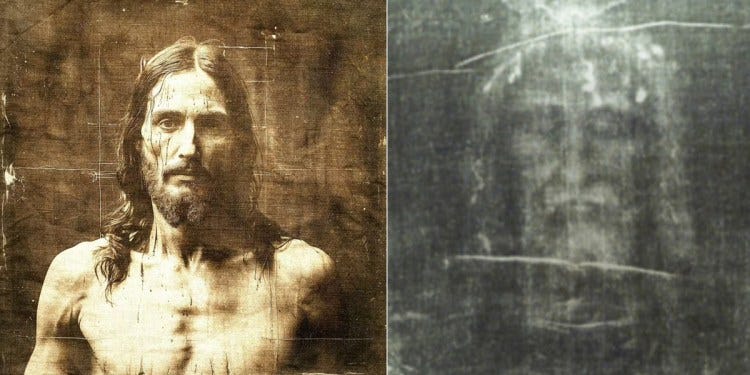
Much offence was taken at Jesus, as John the Evangelist regularly reminds us; far more so than at John the Baptist, which is true to this day. And there was, quite understandably, very heated debate about the authority of Jesus.
“Is not this the man whom they seek to kill? And here he is, speaking openly, and they say nothing to him! Can it be that the authorities really know that this is the Christ? Yet we know where this man comes from; and when the Christ appears, no one will know where he comes from.” So Jesus proclaimed, as he taught in the temple, “You know me, and you know where I come from? But I have not come of my own accord. He who sent me is true, and him you do not know. I know him, for I come from him, and he sent me.”
Some called for his arrest, but those sent to arrest him came back empty-handed, explaining themselves to the chief priests by saying, “No man ever spoke like this man!”
Nor did anyone ever act like this man. Later, at the climax of his ministry, he made his triumphal entry into Jerusalem. He went suddenly, whip in hand, to cleanse the temple of its money-changers and to confront its rulers with their treachery. He instituted at the Last Supper a new form of the covenant and of the priesthood. He identified his own body as the true temple of the Lord, and made of himself a right offering to the Lord on the tree to which they nailed him. Having taken authority over the old temple, and having announced its demise, he took authority over the new temple by dying and rising from the dead. He showed himself to be what the Roman centurion guarding the tree dared to say of him, shocking his rough-looking cohort of cherubim: “Truly this man was the Son of God!”
Had John come to the same conclusion before his head fell into the basket that awaited it in Herod’s gaol? Of that we should not have any doubt whatsoever. The one messenger had received reassurance from the other, and the other knew whereof he spoke, for he had indeed been with God in the beginning. His word will have been sufficient for John – that prophet who was more than a prophet and certainly no reed shaken by the breeze. John likely went back to meditating on Isaiah and Malachi and the prophets who had come before him, that he might understand Jesus better. He did not go looking for another. He had known all along that Jesus was the one, and the reason he himself had been sent.
But Jesus has more to say about John, and so also about the rest of us. We will take up the next paragraph from Matthew 11 in Part Two, after pausing for the Feast of the Holy Family and, yes, to watch a little football with members of my family.
Read Part II: ‘The Violent Seize it by Force‘
Herod II is sometimes called Herod Philip or simply Philip, though he was not the other half-brother Philip who was tetrarch on the east bank of the Jordan. (It was a complicated clan, to say the least.) Herod II had been disinherited by Herod the Great and had no realm of his own. He was living as a private citizen in Jerusalem when Herodias left him for Herod Antipas, tetrarch on the west bank. In his Antiquities, at XVIII.5, Josephus writes of this public scandal that “Herodias took it on herself to confound the laws of our country, and divorced herself from her husband, while he was alive, and was married to Herod Antipas.” In the same place, he also writes of “the great influence John had over the people,” an influence Antipas feared.
Here as elsewhere I am using the RSVCE, while making minor modifications to punctuation, capitalization, etc.
No posts
Comments
Nothing yet. Say the first thing.
Sign in to join the conversation.