
Welcome to the first edition of my new column, Manual Override. A place to come when you’re tired of thinking about technology as a machine and want to start thinking about it as part of a life that’s intentionally, and unapologetically, well lived.
Before we dive in, I want to touch on something that’s been kicking around in my brain for a long time: How can I pull the threads of all the things that naturally connect for me and present them to you in a way that is one, insightful, and two, valuable? All while still being relevant to Double Kick.
Somehow a brand that started out as an outlet for my design practice making feminist, metal, and BookTok tees that I sold almost exclusively through Instagram ads, turned into something I never saw coming but is better and more aligned than I could imagine, even though getting to this point was pure chaos I wouldn’t wish on anyone. Thanks universe.
I have a document in my system, we’ll get into that later, that I reference near-daily. It’s the heart of my brand, and it reads:
Double Kick is an independent gallery and online publication. A body of work so considered and so deeply felt that it changes how other women relate to themselves through the things, and the thoughts, they choose to bring into their lives.
Ancient instinct, contemporary precision, embodied ritual, primal materialism. Severe, intellectual, sensual, architectural. Dark, mineral. Contemporary antiquity. Industrial-luxe, brutalist, archival, and intellectually grounded. Art-object energy. Unhurried. Considered.
Volcanic stone, scorched wood, concrete, oxidized metal, raw silk, linen. Sandalwood, black tea, smoke. Materials that show their age and process honestly.
Daily, unsentimental, grounded reverence. Objects aren’t collected, they’re gathered. Nothing belongs to one era alone. They’re all, simultaneously, ancient and completely of this moment. That’s not an accident of taste but a coherent philosophy.
The aesthetic is the residue of a belief system: that certain things carry accumulated force, that any room can be a temple, and that beauty and utility are not opposites but the same quality at different scales.
Ancient ritual is real. It’s behavioral, material, and object-based. It’s the belief that certain objects carry actual weight, that a vessel is not just a vessel, that the act of selection is, itself, ceremonial. That’s how humans have related to objects for millennia.
Across human history we have always built spaces to hold the things that feel too heavy for the ordinary. Double Kick is the version of that for women who’ve outgrown the labels they’ve been given by others and society.
Double Kick was created for women who have access to a way of knowing that is older than the culture they’re living in. They trust material weight over trend. They select objects the way an initiate selects a talisman - not decoratively, but because something in them recognizes something in the other.
It’s pre-linguistic. It lives below the level of aesthetic categories. This isn’t a traditional brand, it’s a container for a specific kind of knowing.
I built Double Kick as a reliquary for the things that feel too heavy for ordinary space. What I hadn’t done yet, until I started writing this Substack, was ask whether that same belief applies to anything that isn’t sitting on a shelf. Whether a piece of software can carry weight the same way a piece of scorched wood or handmade jewelry can. Whether a notes app is capable of serving you in more aligned way than it seems on the surface. That’s what this column is actually for. Taking the belief system I already trust with physical objects and pointing it, for the first time, at the screen I sit in front of for hours each day.
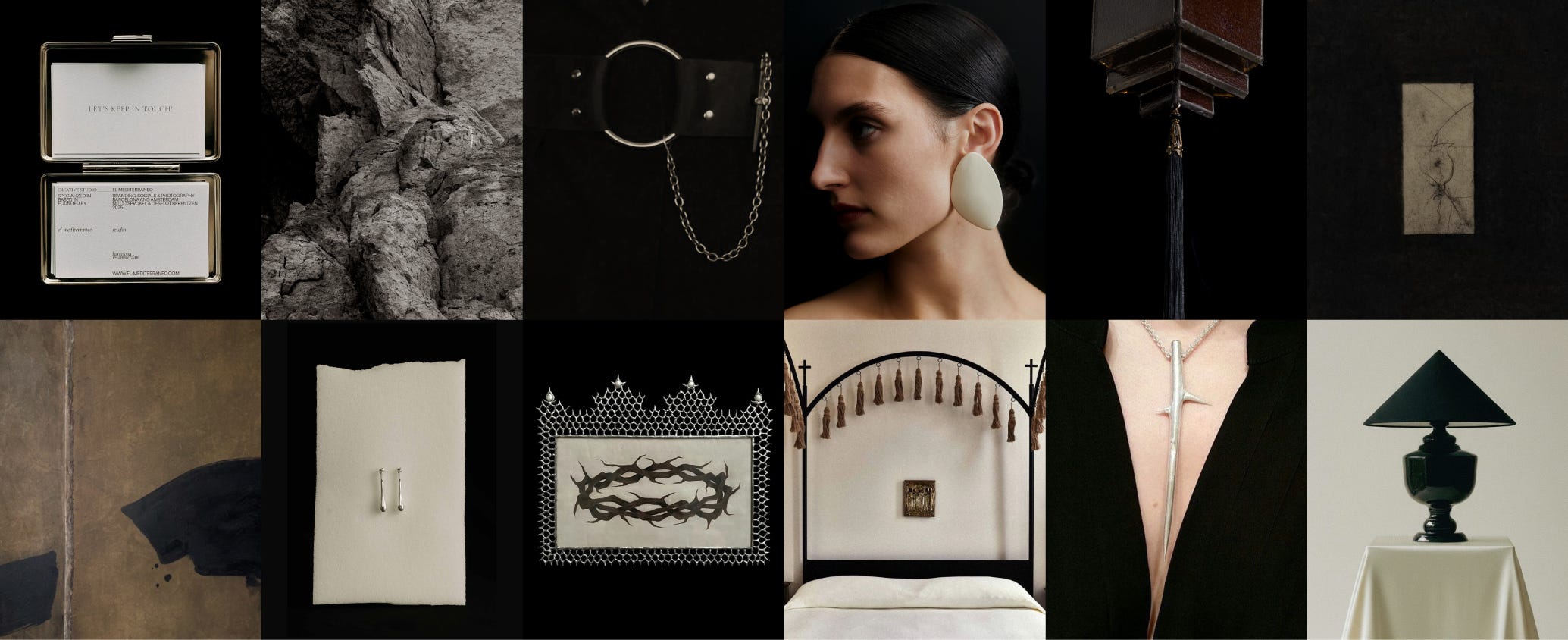
The word for what I’m chasing across all of it is magnalia. It’s Latin, and the closest translation in English is “great deeds, grand achievements, or miracles,” but that greatly undersells it. I see magnalia as the moment an ordinary object, idea, or practice suddenly carries weight it didn’t have previously. It’s what makes the world feel enchanted again, because you consciously built the conditions for it instead of waiting for it to happen to you.
That’s what Manual Override is for. Investigating things like:
How do we reclaim wonder in the digital age?
How do we use the modern tools we already have in ways that deepen our humanity instead of diminishing it? How can we make them work harder for our spirituality and/or intentionality?
What if our digital lives were allowed to be beautiful?
What if AI (if you choose to use it) wasn’t just a faster search engine, but a creative companion?
What if medieval ways of thinking still had something to teach us about living well in the age of algorithms?
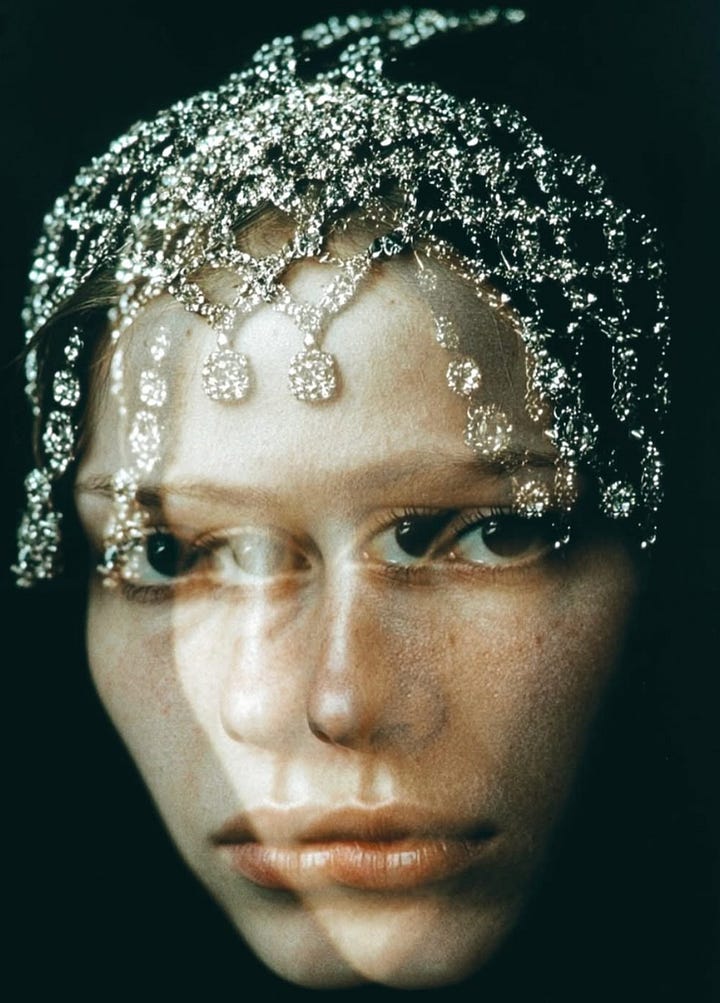
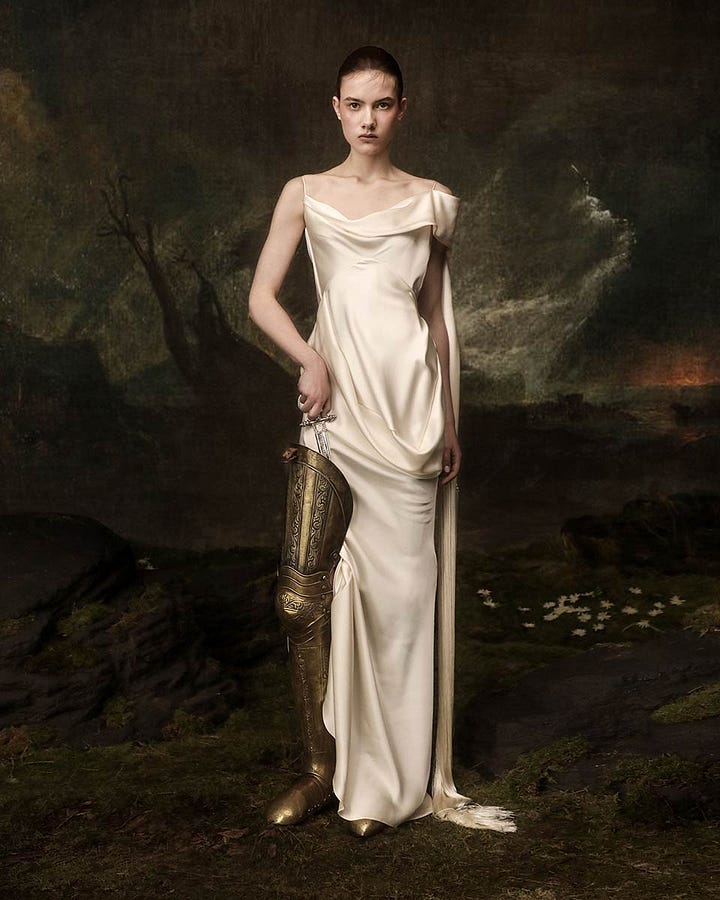
There’s an aesthetic version of this that’s been showing up everywhere the last few years in interiors, fashion, and runways. Design coverage keeps pointing at the same “modern medieval” shift: moody wood tones, hand-forged hardware, pointed arches.

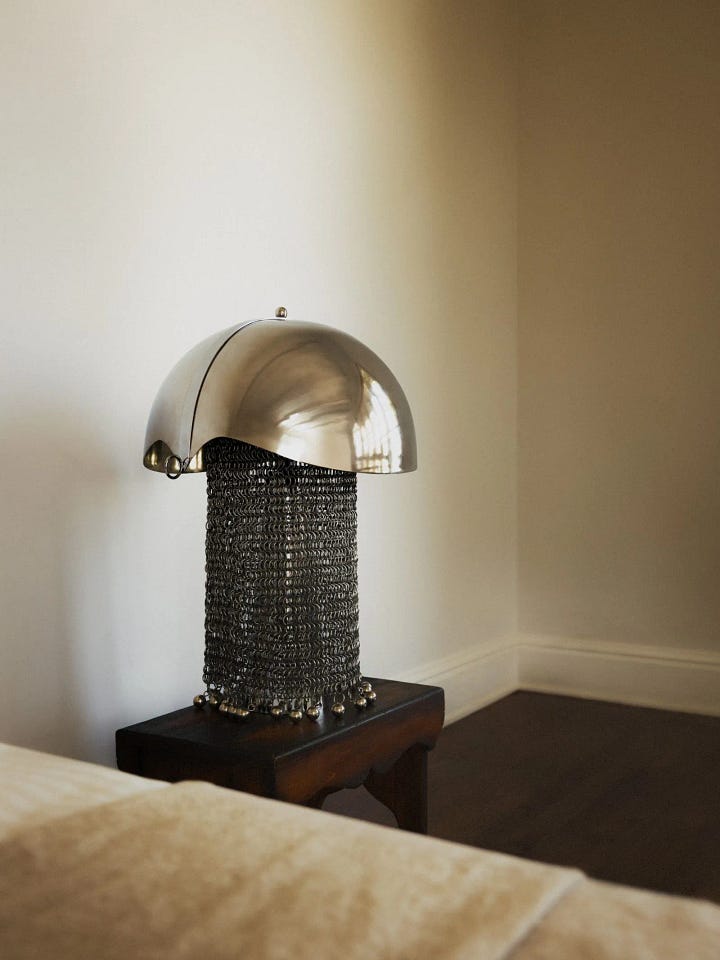
The reason it’s happening now isn’t mysterious, though. Sleek, algorithm-optimized minimalism has had its time. Turns out a life built entirely out of clean lines and frictionless interfaces doesn’t actually feel safe but rather disposable, replaceable, and forgettable. Medieval imagery reads as the opposite of that almost by accident: permanent, handmade, narrative, made by someone instead of generated by something. In genuinely unstable times, that’s compelling.
Double Kick was never chasing the aesthetics of the medieval world, there are plenty of other brands doing that with a heavier and more talented hand than I. I’m committed to pursuing the logic underneath it, the part where objects and practices were trusted to carry actual weight because someone decided they would.
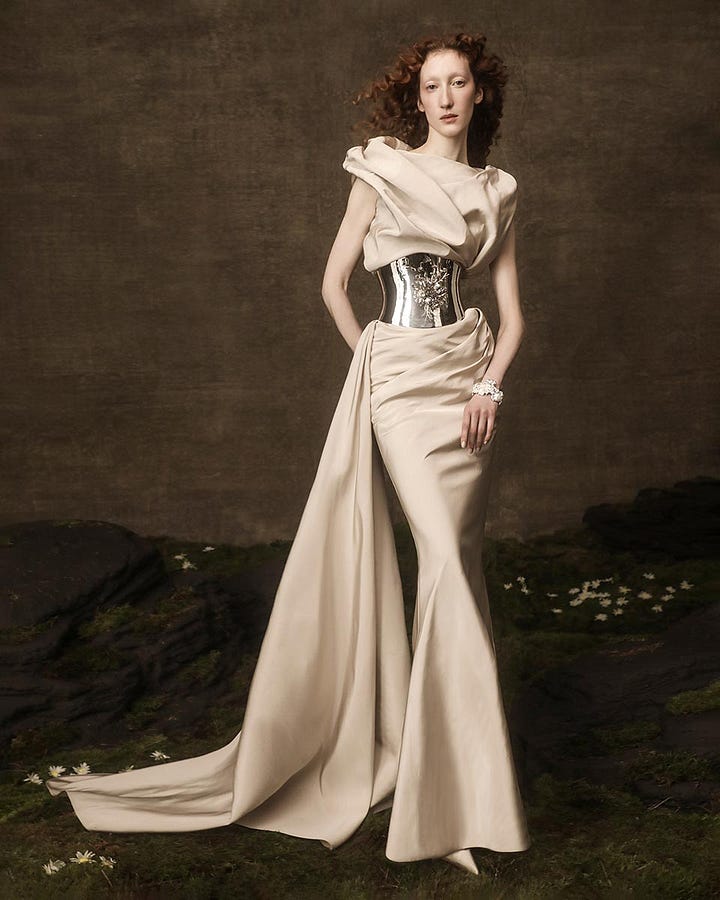
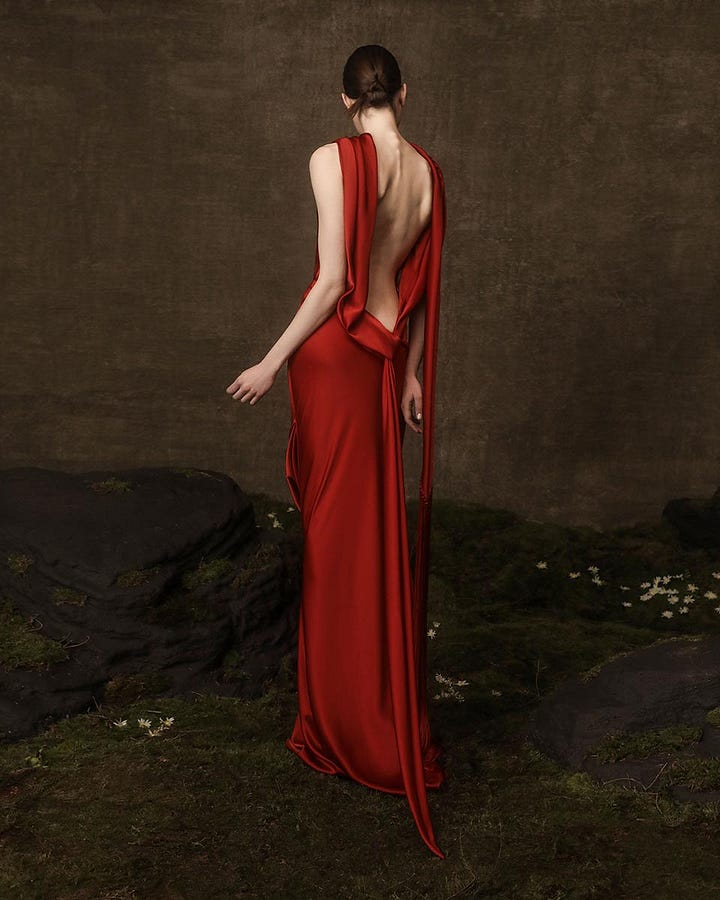
Now, before you go off thinking I’ve fully lost my mind talking about sacred notebooks, just keep reading, you’ll see what I mean…
I have multiple places I write things down.
There’s Google Workspace, where I keep the calendars and the customer surveys and the P&L spreadsheets and my email.
There’s Notion, where I keep the business frameworks and creative direction docs and editorial drafts and the running list of ideas I’ll swear I’ll get back to.
And there’s my Kindle Scribe, which I bought specifically, yes, to read on, but also for the personal stuff, the journaling, the thoughts I don’t want indexed or searchable or accidentally shared with a client.
Looks and functions like a system, most days. And yet, things still get lost.
You know that feeling when you have a brilliant idea out of nowhere (that’s what happened when I thought up this column, actually), but in order not to lose it, you just throw it somewhere so that at least it’s outside of your brain? It’s an innocent idea in theory, but if you don’t have a solid system in place, that brilliant idea might get lost to the ether.
The note you started on your phone at a red light. The five journals in your nightstand drawer, each only half used. The voice memo from eight months ago you’ve never once gone back to listen to. None of these are failures of discipline, they’re failures of consecration, failures of intentional choice.
Which also means the choosing doesn’t happen to you, it has to be done by you, deliberately, against a current that will happily let you drift across countless tools forever if you let it. Intentionality used to be the default setting, back when scarcity did the choosing for us, but isn't anymore. Now it's a decision you have to keep making on purpose or it simply doesn't happen.
There’s research on why this happens, and it’s not because of willpower. The psychologist Barry Schwartz spent years studying what he called the paradox of choice, the finding that more options don’t produce more satisfaction, they produce paralysis and regret, because every choice you make is now haunted by all the ones you didn’t.
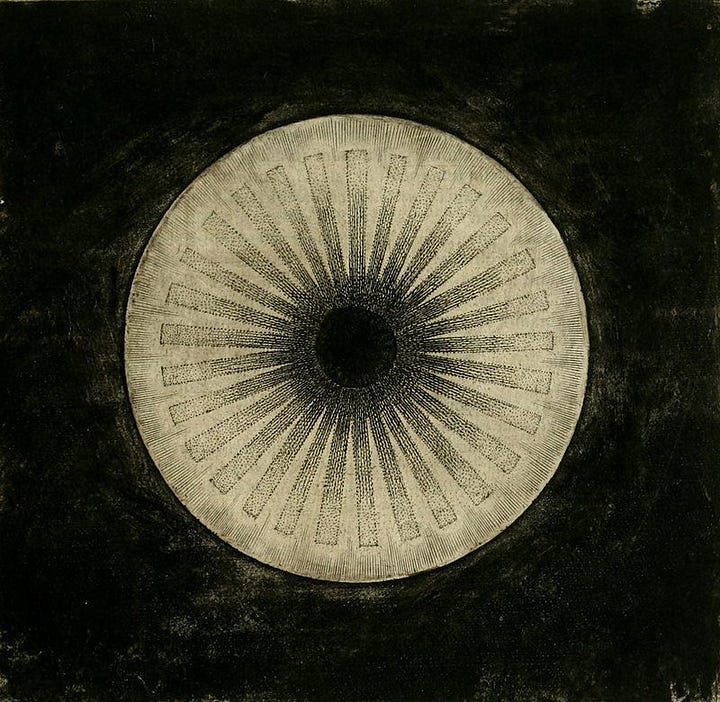
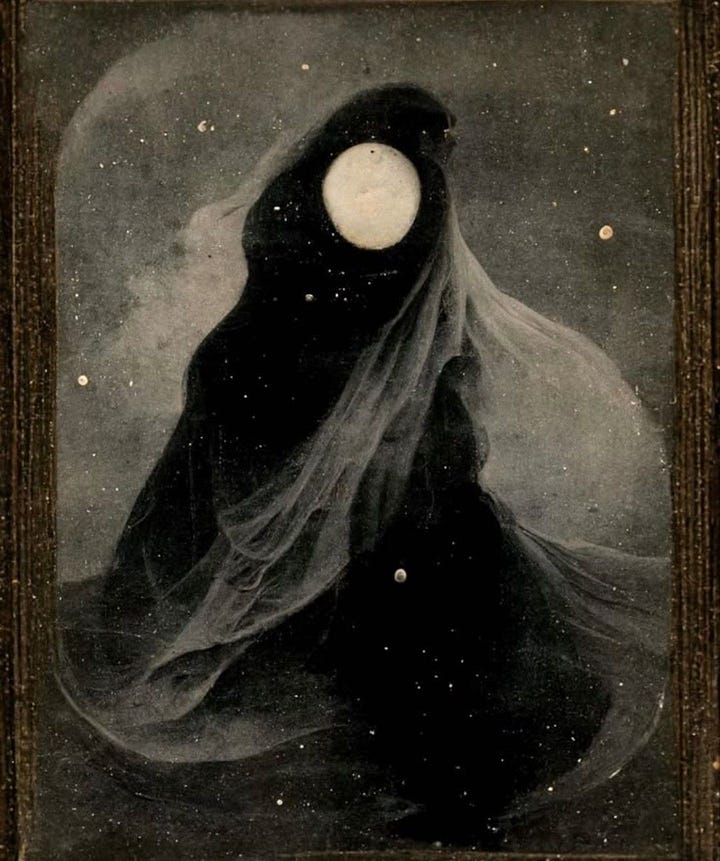
Medieval people didn’t have this problem, and it wasn’t because they were more disciplined. It’s because they didn’t have the option, in a much more literal sense. A single manuscript could take a scribe years to produce, and by some estimates required the hides of well over a hundred animals just for the vellum it was written on. Writing materials weren’t a drawer full of half-used notebooks like they are today, they were an investment measured in livestock and months of labor. A scribe had one manuscript because a second one was closer to a small fortune than a stationery purchase. A merchant had one ledger. A person with something worth remembering had one book they trusted enough to put it in, and they filled that book for decades. The scarcity did the committing for them.
We inherited the opposite condition.
Endless apps, endless formats, endless places a thought could theoretically live, which sounds like freedom and functions like paralysis. Freedom without a container just becomes chaos.
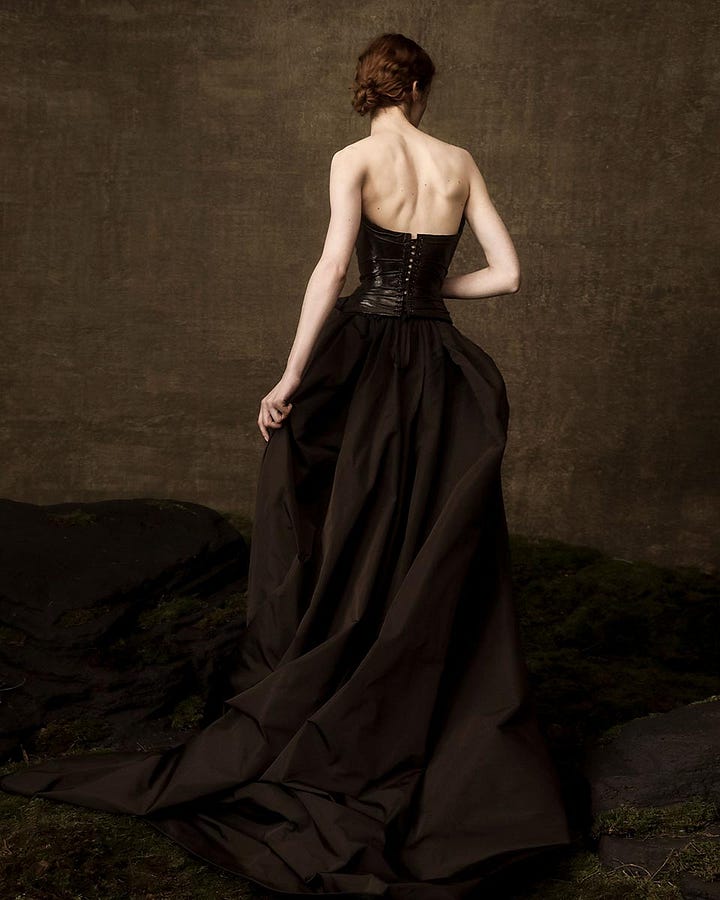
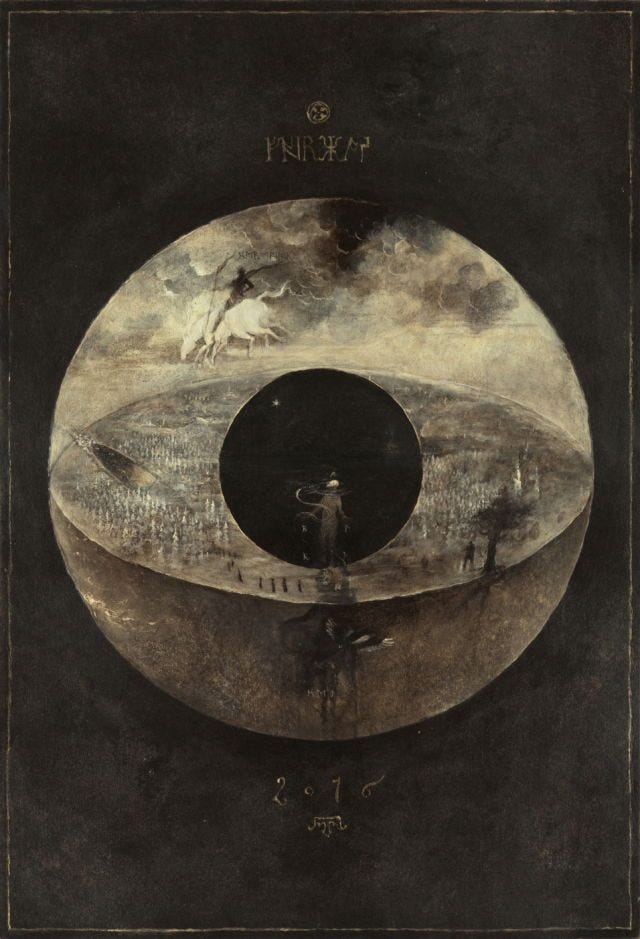
What the medieval world had that we’ve lost is the sacred logic underneath it. A grimoire, for instance, isn’t just a notebook. A notebook is neutral, replaceable, whatever’s closest when you need to write something down. A grimoire is chosen. It’s personal, additive, kept by one person across a lifetime, and treated as sacred. Nobody accidentally has a grimoire, you consciously and intentionally create one.
I don’t think the answer is picking the “right” single app or software. There isn’t one, and hunting for it is just the paralysis wearing a productivity costume (ask me how I know). The answer is picking a path and deciding, on purpose, that this is the one that gets to matter. Not because it’s “the best” tool, but simply because you said so. The commitment is what makes it sacred.
But here’s the hard part: I, myself, haven’t even picked just one, as you saw above.
Because there are also legitimate, practical reasons to keep multiple tools. If I could write as fast as I type, organize images the way I actually need to, and reference any of it from my computer instead of one device, I’d ditch Notion for the Scribe tomorrow. If Notion could handle a real spreadsheet the way Google Sheets does, or enable a client to sign a contract, I’d ditch Google. Every one of these tools is missing exactly the thing the other one has, and that’s not an accident. Modern software is designed to specialize, because a tool that does all the things well doesn’t get you subscribing to numerous separate products. Fragmentation is the business model, unfortunately.
Here’s the actual, unglamorous truth: Knowing exactly what the problem is and exactly what would fix it doesn’t automatically produce the fix. In this case, I think the fix is simply continuing to choose as mindfully and intentionally as we can, in a society constantly pushing us toward the opposite.
Below the Paywall
Everything above the paywall is philosophical, everything below is practical. In this volume:
🏛️ Cabinet of Curiosities
a charming Japanese word
a fine art series spanning decades
a recipe for medieval ink
a fascinating psychological term
some medieval-style pieces from the shop
📃 In Practice
A framework for picking your sacred notebook
What to write on its first page and some starting material
How to keep it from quietly turning back into just another dumping ground
The structure I use myself
Something to listen to while you write
Let’s get these ideas off the screen and into your life.
Comments
Nothing yet. Say the first thing.
Sign in to join the conversation.