
I do not like Alan Wake 1.
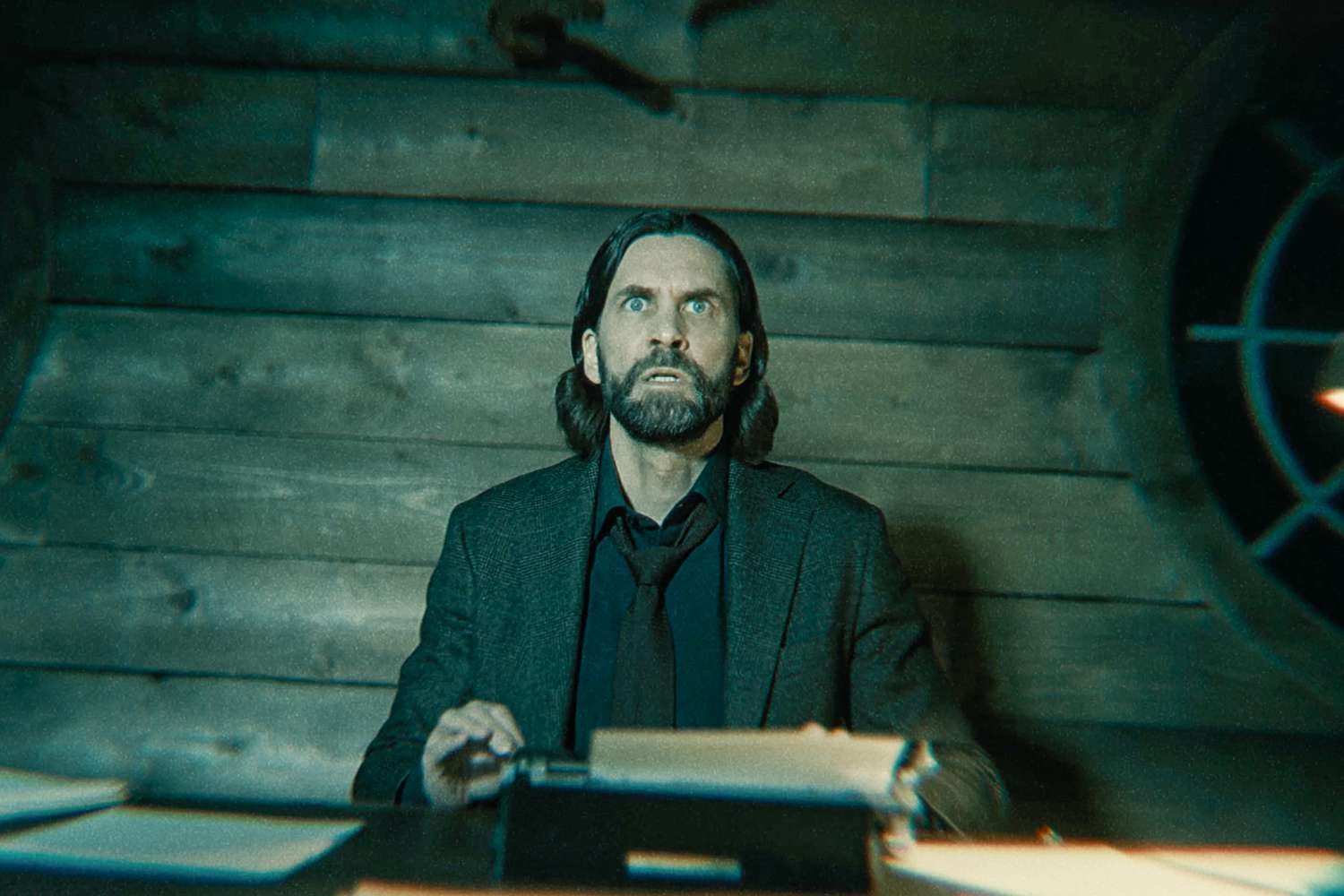
It’s a game where every aspect of its construction exists to confuse me: its story, characters, visual style, and gameplay. Alan Wake’s first journey involves the author retreating to a sleepy seaside Washington town to break through some writer’s block. Instead he is terrorized by a ghostly entity called the Dark Presence, who causes him to develop amnesia about a secret draft of a book he wrote named Departure. The game is a garbled mess of darkness, weird PS3 era gameplay quirks, and every minor character calling Alan some name of a long-dead prolific writer. No thank you I would not like to wield the wonkiest gun mechanic ever put into a videogame while enemies are calling me Hemingway from behind four different layers of lighting that makes seeing anything impossible. The first game has almost reached camp status, and I rarely think that games can be campy – I don’t think we’ve gotten to that point as an artistic medium yet.
Alan Wake 1 is a necessary evil to set up its sequel. For every Dune Part II, Top Gun: Maverick, and Mad Max: Fury Road, there needs to be expository first films to set up a climactic story arc that a sequel of these calibers can deliver. For Alan Wake, its sequel took everything that I hated about the first game and turned it into a strength. Its darkness fits the new survival horror gameplay much better. Alan talking his ass off in the original fit into the narrative much cleaner in the sequel. The annoying side characters of Barry and Alan’s wife, Alice, are replaced with more intelligent and quippier characters in Saga Anderson and Alex Casey.
But what surprised me the most was what Alan Wake 2 didn’t deliver on: its ending. Alan Wake 1’s ending was one of the few things I actually appreciated about its story – it took a self-obsessed auteur and made him have a moment of sacrifice and mental clarity. He throws himself into the lake that the game’s main antagonist, the Dark Presence, came from. He saves the rest of the town of Bright Falls, Washington, he saves his friends, he saves his wife.
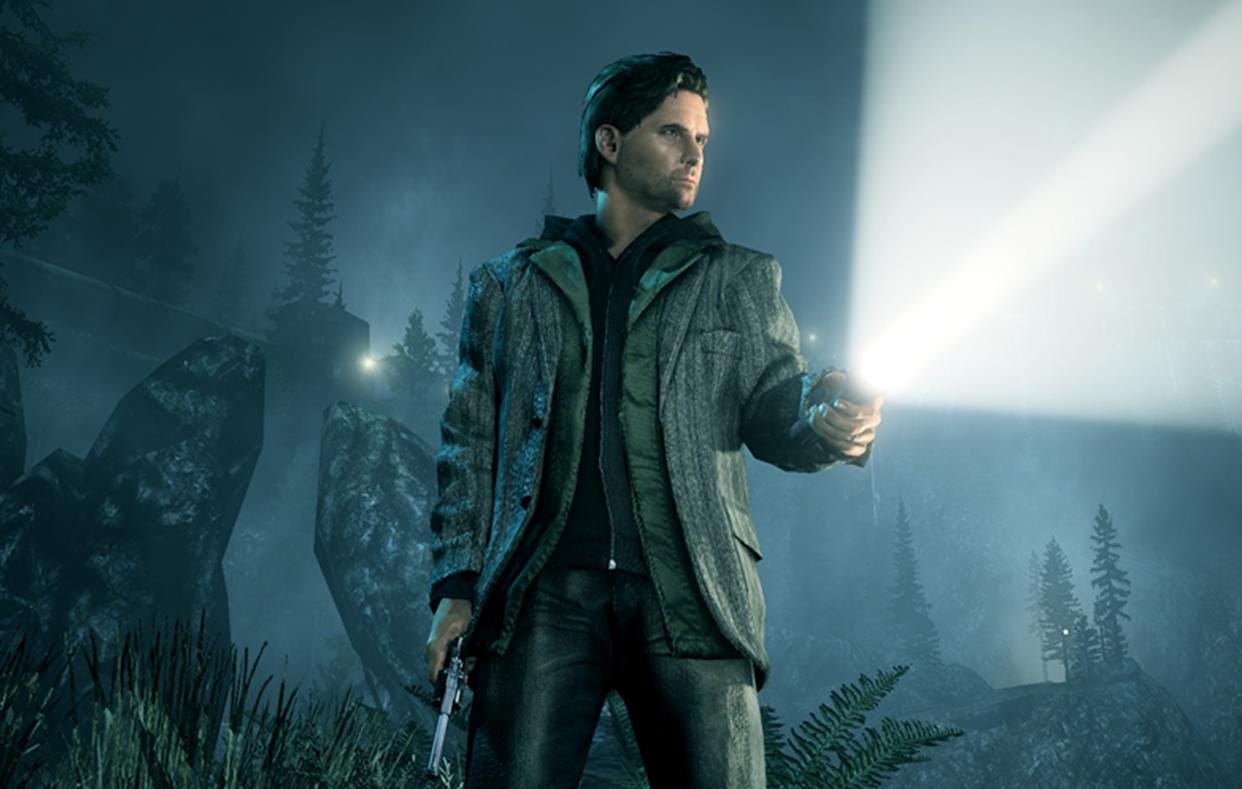
Wake’s follow-up journey ends on a similar note. The Dark Presence terrorizes Bright Falls once again, so Alan must write again to save the world. While he is stuck in the Dark Place beneath the lake in Bright Falls, he loops in a co-writer, FBI agent Saga Anderson, and together they work to write a duology and stop the Dark Presence once again. The story ends with Alan trapping the Dark Presence inside himself, and Saga kills him with a mystical bullet. But it’s not over when Alan kicks the bucket.
At the end of Alan Wake 1, Alan’s final line of dialogue is “It’s not a lake, it’s an ocean.” He’s describing the endless nature of the Dark Presence and the trillions of artistic words fed into its gaping maw. Alan ends his sequel in a similar way: “it’s not a loop, it’s a spiral.” Alan knows that the Dark Presence is too strong to banish it forever, so in a metatextual stroke of mastery, he calls out the player to keep playing the game over and over again, knowing that instead of being stuck in a loop forever, there will be an end to everyone’s suffering at the end of a spiral.
The final version of that spiral is Alan Wake 2: The Final Draft, a New Game + expansion to the base game that delivers an ending that I dislike. Not because it gives an unsatisfying ending, but because it tries to satiate gamers with an overly satisfying one.
Ingrained in every single Remedy title (Max Payne, Quantum Break, Alan Wake, Control) is a sense of melancholy. The design and art direction choices certainly play a part in this suffocating environment. But at each game’s center is a known fact: nothing can come without sacrifice. Everyone must give up something in each story that is integral to the rest of the plot. Life is oppressive in the Remedy universe. Max Payne thrusts the player into a story riddled with drug addiction and dead family members, Control ends with Jesse Faden giving up her freedom as a normal person to sit in the seat of paranatural bureaucracy that may drive her clinically insane like her predecessors.
So then why, at the end of Alan Wake’s spiral, does he get to live out a happy ending?
In the final act of the Final Draft, all seemingly goes as normal. Alan and Saga rewrite an ending to the book that Alan’s evil alter-ego is trying to bring about the end of the world with. The Dark Presence enters Alan’s Writer’s Room in the body of Saga’s partner, Alex Casey, and quickly shifts into Alan’s body. Saga shoots Alan with the “Bullet of Light,” a new plot device meant to put the Dark Presence back where it belongs and kill Alan alongside it. But then after being shot point blank with the bullet, Alan just gets up and leaves?
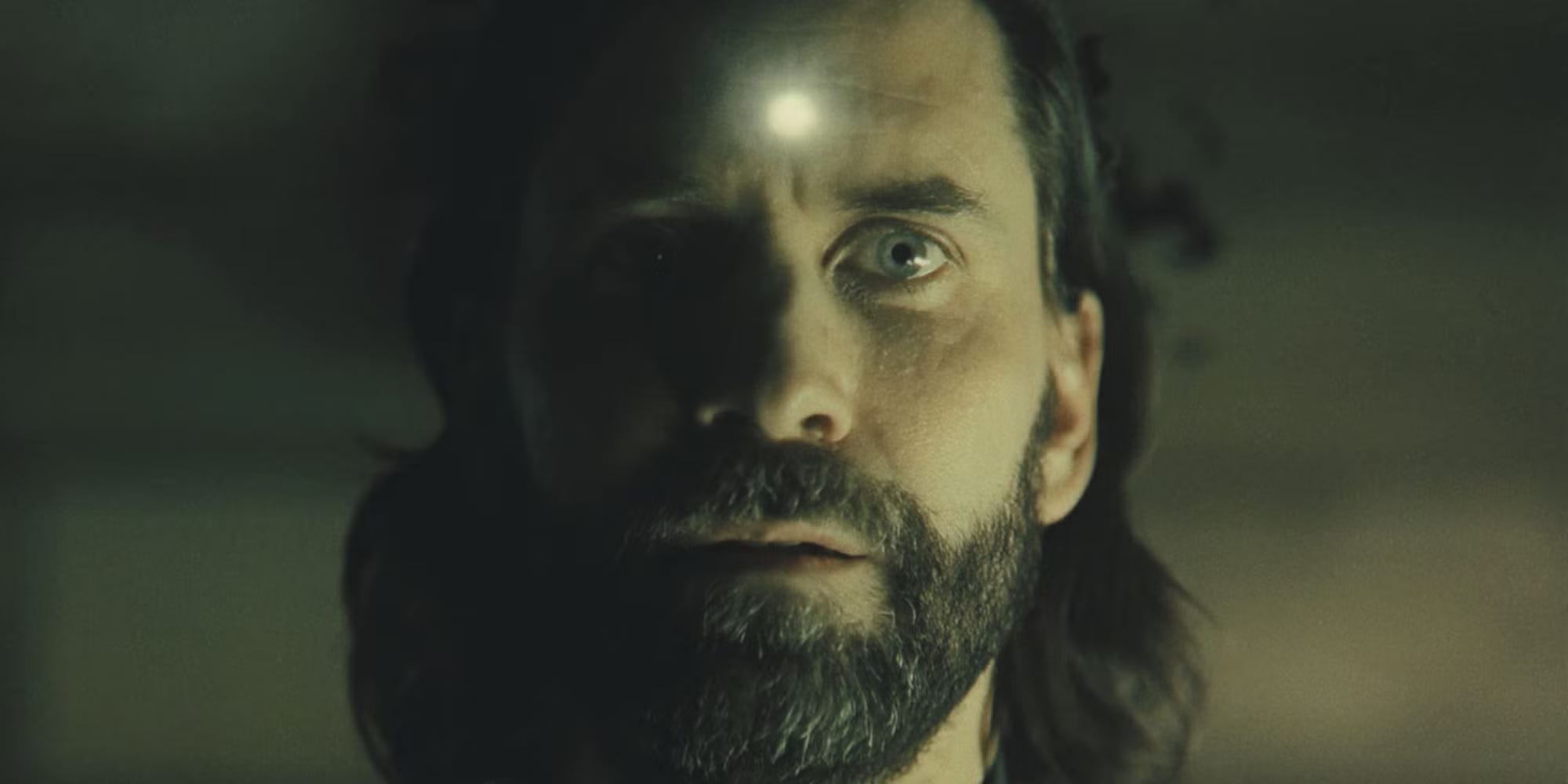
Is Alan deserving of this ending?
When it comes down to it, I think Alan Wake 2 is an interrogation of what it means to be obsessive about one’s creations to the point of ruin. Before the events of the first game, Alan was a bestselling writer with his Alex Casey crime novel series. He was someone who genuinely considered himself to be a great writer, but he still wanted something more. It’s why he went to Bright Falls in the first place – he thought he had writer’s block so bad that he needed to see a doctor to medically fix it. It makes it feel like a miracle that he’s written anything, especially a draft of a novel written by a ghostly entity masquerading as himself. Knowing where Alan’s story went was why I was willing to put up with so much of the game’s flaws in the first place.
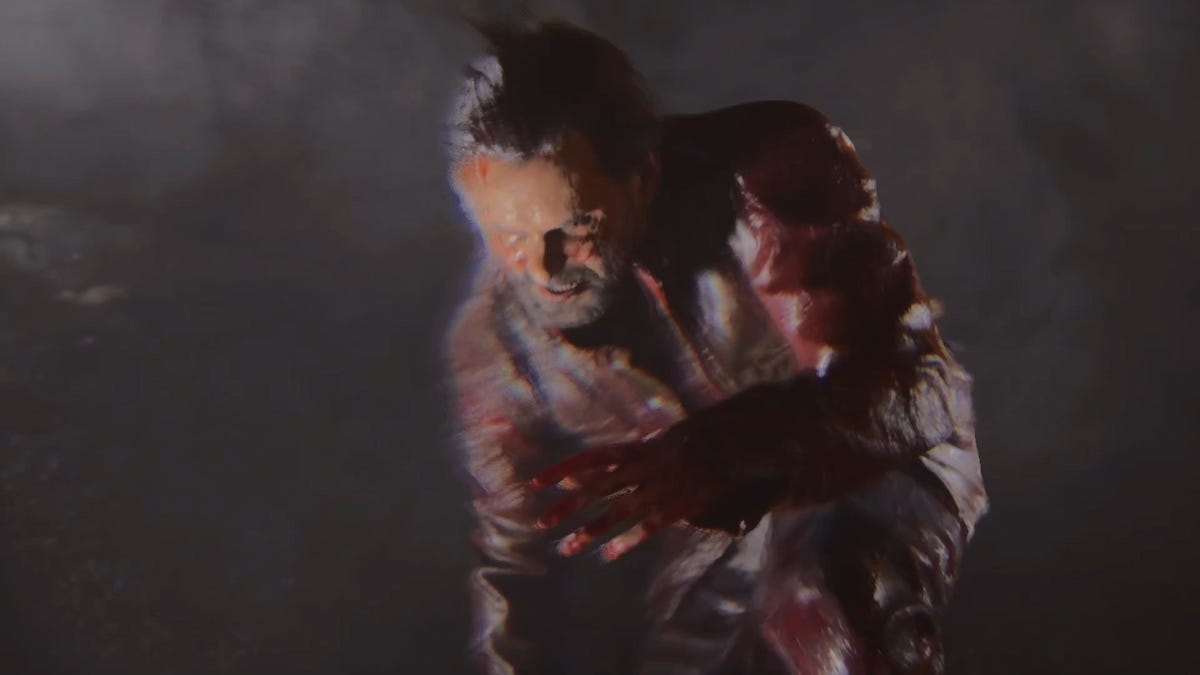
But in the sequel, Alan isn’t just trying to create something, he’s trying to create something perfect. He’s been trying to escape the Dark Place, where he’s been trapped in for over a decade, and he thinks the only way to leave is by creating the perfect story.
What’s worse is that Alan actively brings down people to his level to try to envelop them into his literary nightmare. Alan Wake 2 features dual protagonists, where his counterpart Saga Anderson is an upstanding citizen whose life has been turned upside down by Alan Wake’s story. She is an FBI agent with a loving husband and daughter. But that all changes when her story threads get into Wake’s hands – she becomes part of the Bright Falls community, she has a long-lost great uncle and grandfather, she’s divorced, her daughter drowns to death. It’s not just Saga’s life that’s been turned upside down, Alan’s fictional Alex Casey becomes fully realized as Saga’s partner, tortured by a fictional representation of him. A group of townsfolk in Bright Falls band together to form a cult to fight back against the creatures from the Dark Place, partially because of Alan. The icing on the cake happens in Alan’s third chapter, where we find out that his wife, Alice, allegedly took her own life in response to the creations coming out from the Dark Place.
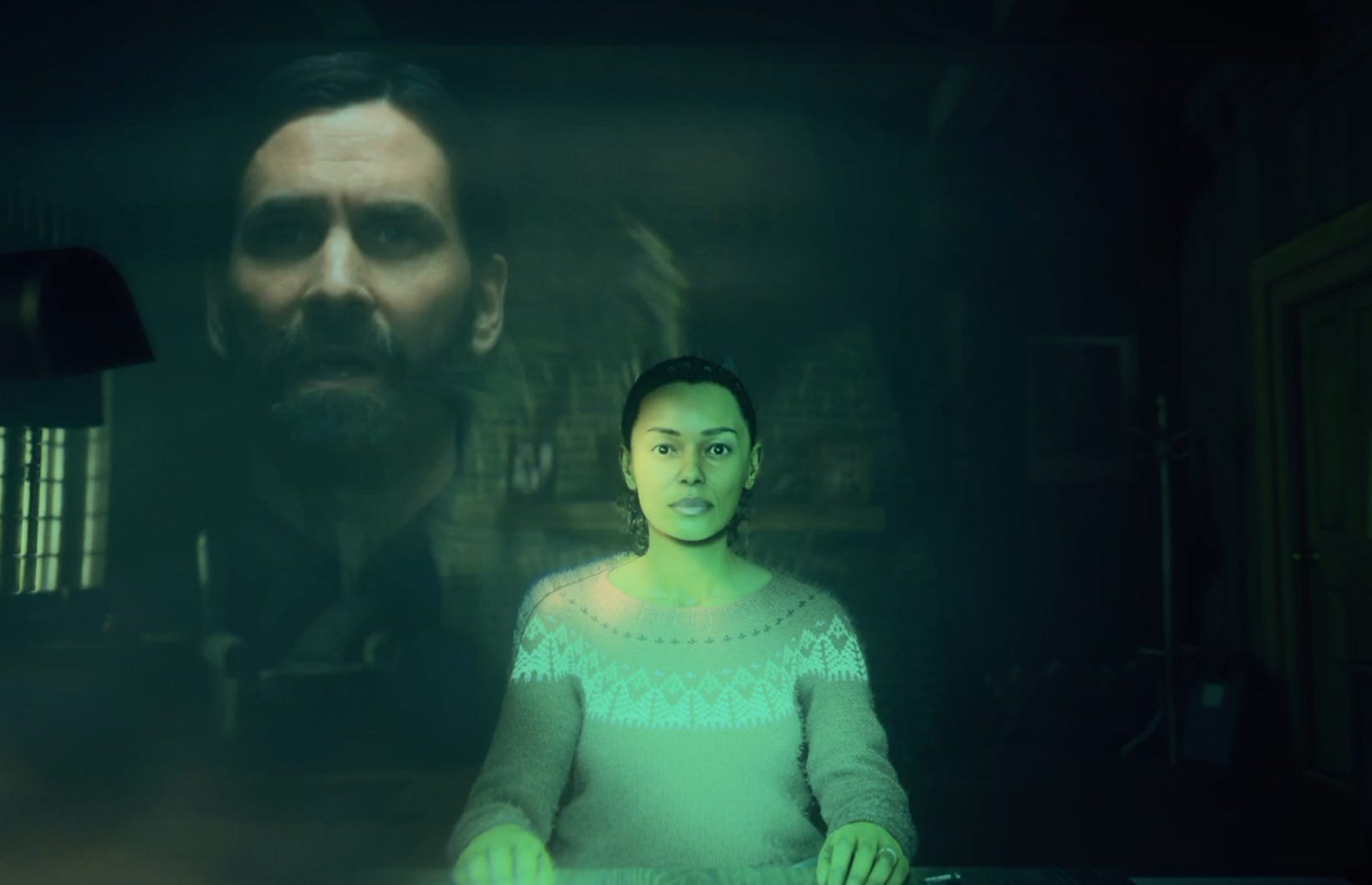
Alan’s persistence in creating draft after draft after draft plunges Bright Falls and the people he cares about into more suffering and darkness. But he’s always willing to take that gamble because these people, at least to him in the short term, will always just be characters in his story. He’s operating from a place of supreme insecurity, where he thinks that everybody is just pawns in his game, so he’s allowed to take the time to create the perfect narrative. So, again, why does he get a happy ending? Where is the justice?
Bad things happen to good people. Good things happen to bad people. People aren’t good or bad, they’re complex beings that contain multitudes – but they’re also easily characterized by their worst or best actions.
Playing Alan Wake 2 reminded me of these truths. Almost as easily as terrible things like Jesse Faden being stuck in the Federal Bureau of Control and Max Payne watching Mona Sax bleed out in his arms, equally good things can happen to characters in the Remedy universe. Alan can find something at the end of the spiral. Did I wish that someone paid the iron price? Yeah, absolutely.
But Alan Wake 2’s core theme that ties everything together is uncomfortability. The uncomfortability that someone else is writing your life story, in the case of Alan. The uncomfortability that every positive aspect of your life can easily be turned into a weakness, in the case of Saga. At the end of the day, having a story that felt like it should reach a dark ending and find light instead makes me feel uncomfortable. Maybe that’s just the Remedy “magic.”
I did not like Alan Wake 1, but I suffered through it to get to its sequel. Now that Alan Wake’s arc finally culminates in the Final Draft, it delivered an ending that I thought missed the mark. But maybe the end goal wasn’t designed to give the characters what they deserved. Maybe it was to leave you suffering instead.
No posts
Comments
Nothing yet. Say the first thing.
Sign in to join the conversation.