
The word ‘suffering’ seems to hold a particular place in the sport of cycling. Put the words ‘suffering’ and ‘cycling’ into your search engine of choice and you will find numerous articles with titles such as:
“5 Ways to Embrace Suffering on the Bike”
“Cycling Mental Toughness: How to Suffer Better”
“Why We Like Suffering”
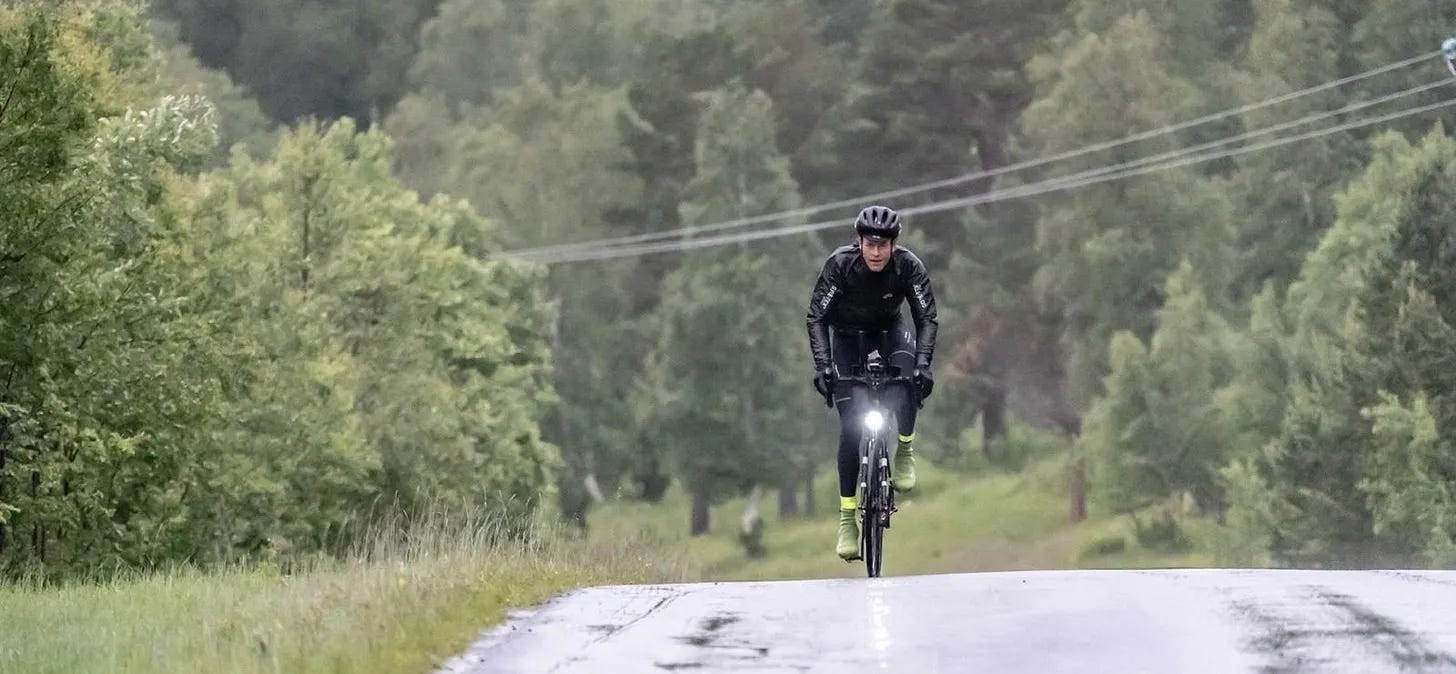
The use of such language isn’t anything new, and the fact that some of cycling’s most celebrated champions have embraced and promoted suffering may have led to it being established as a supposed necessary component of success.
“Cycling is suffering.” – Fausto Coppi
“Cyclists live with pain. If you can’t handle it, you will win nothing. The race is won by the rider who can suffer the most.” – Eddy Merckx
Suffering is thus big business in the cycling industry.
You only have to look at training platforms called “The Sufferfest” and indoor setups nicknamed “Pain Caves” for examples of this.
Ultra-cycling is a different beast to the professional road racing world, but this word still features prominently. Perhaps it is that so many things are often taken to an extreme that the focus centres on the hardships that can emerge. Only recently, a sentence from a high-profile ultra-cycling race report caught my eye:
“Suffering together is better than suffering alone.”
After recoiling from my initial cringe reaction, I shared my views of this word on social media and received a unanimously supportive response:
“It’s just pissing about on bikes, lads. It’s not a war zone or chemotherapy or a million other true hardships.”
“I think the word suffering gets thrown around too much - consciously choosing to do something hard and finding it difficult and challenging is not the same as suffering. They need a better word.“
Doing hard things that require effort is part of the reward that we seek when entering self-supported ultra-cycling events, but the idea shouldn’t be gratuitous self-flogging to prove something to oneself or others.
I am keen to promote a positive image of this sport, which chimes more with my personal experience and the one that I aim to help the athletes I work with achieve. Therefore I was interested to explore whether ‘suffering’ is really the right word to use, why the use of language matters when describing the experience of ultra-cyclists, and what a more positive narrative should look like.
When the terms pain or suffering are used to describe what someone is going through when riding a bicycle a long way, are we in fact mixing up the sensation with something else?
Physical endeavours aren’t always easy, and we frequently face forces (tangible or otherwise) working against us in order to continue. Much of this is focused on the distinction between effort, which researchers have defined as “the struggle to continue against a mounting desire to stop”, and pain, which, in the context of exercise, is “the conscious sensation of aching and burning in the active muscles”.
One example study subjected cyclists to a test to exhaustion where they were asked to rate their pain and their sense of effort each minute. Both pain and perceived effort drifted upwards as the test progressed, but by the time the cyclists gave up, their pain rating was, on average, only a 5 out of 10. On the other hand, effort reached, on average, 19.6 out of 20, implying that the subjects quit because their effort was near maximal.
Considering this study involved a maximal test to failure, the logical way to make this a more sustainable effort would therefore be to reduce effort. This is what riders are consciously (or subconsciously) doing during ultra-cycling events to manage their energy accordingly. Clearly, during an ultra-cycling event there are many other factors that can cause pain beyond simple muscular fatigue and managing, or better still, preventing these also forms part of the challenge.
I often wonder whether those who are truly in pain, or suffering, are finding themselves in an unsustainable state, whether of their making or due to something beyond their control.
If it is the former, then adjustments need to be made - usually by adjusting one’s pace (effort) or by eating something (most issues on the bike can be brought back to pacing and/or nutrition!).
If the cause is beyond their control, then it still needs addressing, whether that be treating an injury, making positional adjustments or putting on an extra layer to protect against the elements. By changing nothing, nothing changes.
Gail Brown, who was a guest on Episode 014 of Dot Comms and is a veteran of races such as the Tour Divide and GBDURO, has spoken openly about how she finds that pushing the suffering narrative “uncomfortable” and that it isn’t what ultra-cycling is about. Speaking to Cycling Weekly, she said:
“I find it frustrating that a lot of the narrative around ultra-cycling is sleep deprivation, sufferfest stuff. I actually think prioritising self-care means thinking about sleep. I think the macho stuff is off-putting for a lot of people.”
Sofiane Sehili, winner of races such as the Silk Road Mountain Race and the Tour Divide, who gained a reputation for pushing sleep deprivation to its limits in his earlier races, has also spoken out against the goal of ultra-cycling being to suffer. In a video posted on his Instagram profile, he had this to say:
“These adventures cannot be reduced to suffering. The pain is only a by-product. What we see, what we find, is the joy of being outside, and the pride of achieving the seemingly unachievable.”
These quotes, the studies carried out on pain vs effort, and the definitions of pain and suffering all come back to this concept of suffering not being the point of such endeavours.
Ultra-cycling isn’t easy, but neither would we want it to be. Part of the attraction is doing something that requires effort. And I use the word ‘effort’ deliberately here in place of pain or suffering.
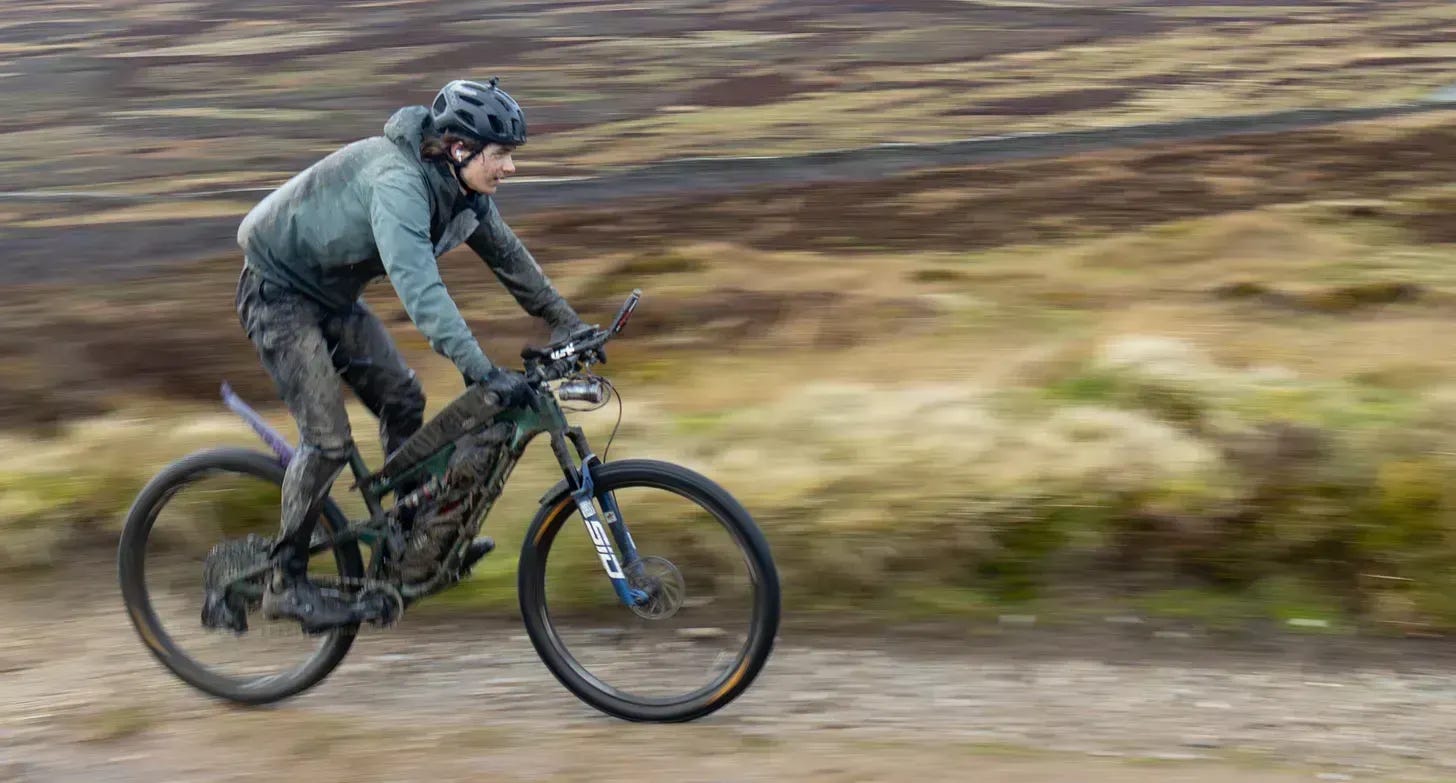
Enjoyment isn’t mutually exclusive with performance and success. Enjoyment itself is a performance enhancer. There is ample evidence in the research literature to support this statement.
The concept that if you enjoy what you are doing, you are likely to be motivated to continue doing it certainly transfers. This doesn’t necessarily mean making it easier, but rather finding a sustainable balance between exertion and pleasure.
Ultra-cycling is objectively a very physically and mentally hard thing to do. The demands stretch far beyond physiology. Despite all my promotion of the promise of enjoyment, we should also be honest about this. Ultra-cycling should be open to all, but it may not be for everybody.
The very nature of ultra-cycling also means that participants will often have to deal with unexpected, often undesired, circumstances which they did not plan for. These can be very hard to overcome, and not entirely enjoyable at the moment.
Nevertheless, considering our previous definitions, hard does not have to imply suffering. Testing ourselves, doing our best, and retaining concentration on the overall goal require willpower and physical effort.
This is certainly not easy. However, this does not have to involve the experience of acute physical pain and one isn’t being forced to put in more effort than one is capable of. These are very different things to being unwillingly subjected to true suffering.
There is a trend of people doing hard things with no training or specific preparation. I occasionally see this worn as a badge of pride for some, as if their unpreparedness is going to make their outcome even more impressive if they succeed, whilst having a ready-made excuse to hand should things turn sour.
The harsh truth is that if you don’t properly prepare for any endeavour, you are putting yourself at a greater risk of experiencing physical pain.
I would extend this to include the psychological aspects of ultra-cycling. Without experience of similar situations or developed mental coping strategies, riders face a dive into the unknown. When reading accounts of people highlighting their ‘suffering’ during an ultra-cycling event, ask yourself whether they were simply unprepared for what they were taking on.
It need not be this way. There is much that you can do to improve your ability to have a positive overall experience in ultra-cycling endeavours.
It should all start with realistic event selection. Know what you are signing up for, the level of preparation it entails and the potential risks. Ensure your training and preparation are specific to your goal event. This goes beyond just the physical aspects.
Embark on your event with ambition but also pragmatism. Reaching unrealistically far beyond your means is unlikely to result in a favourable outcome.
Suffering isn’t the point. Nor is it the correct word in most situations. Terms such as ‘suffering’, along with language that promotes pain and glorifies unpleasant experiences, are clearly off-putting. This is off-putting not just to those participating, but to those watching the dots.
This language doesn’t do justice to the manifold positive elements of our sport, and doesn’t reflect the experience of those who are getting the most out of their practice. Many of us are participating in this sport as a pastime, using precious annual leave in the process. We want the overall experience to be a positive one and, by its very definition, suffering alone does not offer this.
Neither should we be glossing over the fact that self-supported ultra-cycling is often hard, entails risks, and requires effort. It isn’t for everyone.
Being properly prepared for such events also entails effort. However, the better prepared one is, the more control they will have over their experience and the more enjoyable it will be. Performance and enjoyment aren’t mutually exclusive, and ‘suffering’ is not an inevitable part of the experience.
🚨 Before you go! Help support our work and…
Click below to Like ♡ and Restack ⮂, and help us grow.
Leave a comment 🗨️ with your thoughts, we love reading them all.
No posts
Comments
Nothing yet. Say the first thing.
Sign in to join the conversation.